
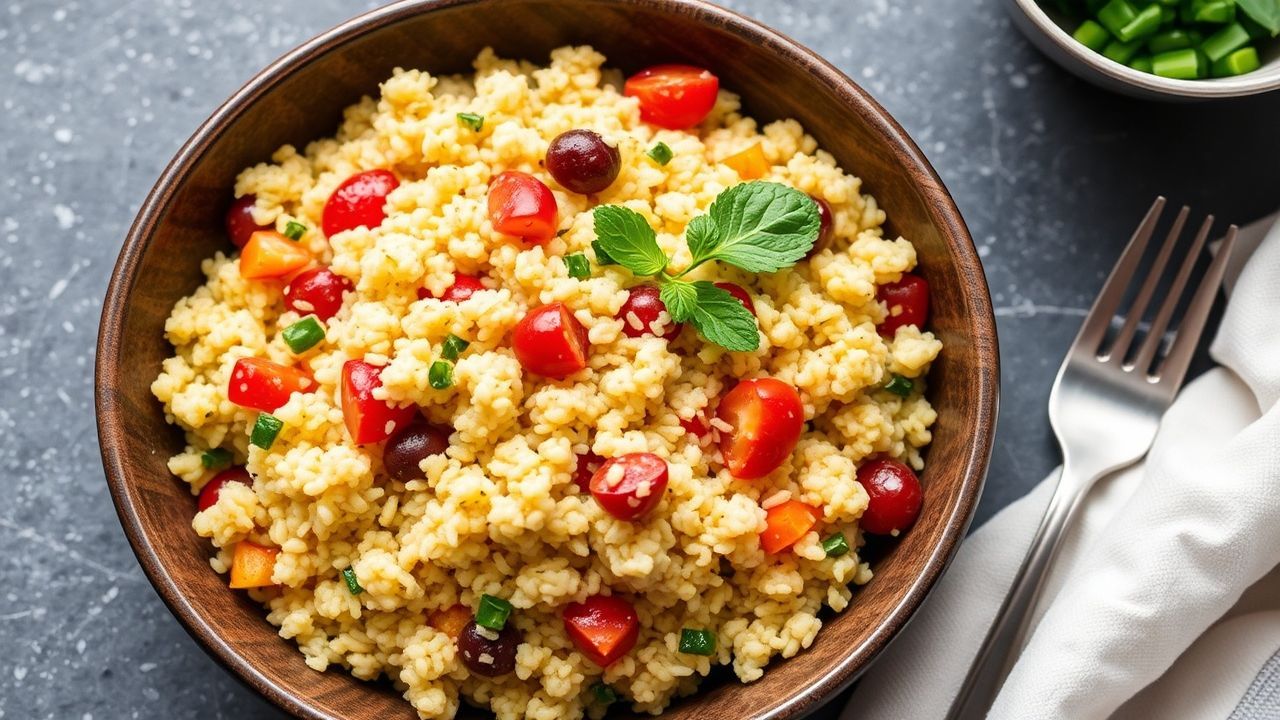

10 Amazing Couscous Dinners: The Ultimate Best Quick 10-Minute Recipes
Instant couscous cooks in under five minutes, a simple fact that saves busy cooks time compared with many pantry staples. This speed makes couscous dinners a practical weekday weapon: they require minimal stirring and deliver consistent texture while soaking up vibrant flavors.
- 10 Amazing Couscous Dinners: The Ultimate Best Quick 10-Minute Recipes
- Why couscous dinners work for busy cooks
- Quick 10-minute couscous dinners: core recipe and cultural history
- Step-by-step: assemble 10-minute couscous dinners
- Nutrition and portioning for couscous dinners
- Expert pro-tips for improving couscous dinners
- Conclusion: Final plating and serving notes for quick couscous dinners
- FAQ
- Fast foundation: Instant couscous rehydrates in about five minutes.
- High versatility: It pairs with proteins, roasted vegetables, and bold sauces.
- Meal efficiency: Ten minutes from pan to plate keeps dinner on schedule.
Why couscous dinners work for busy cooks
Couscous responds instantly to hot stock or boiling water, which means you get an edible base while you finish quick pan-seared proteins. That rapid hydration creates a neutral canvas that absorbs spices and dressings without breaking texture or adding effort.
Busy cooks value predictability: couscous holds its crumbly, tender structure when fluffed properly. Using prepped vegetables or canned ingredients lets you finish a full, balanced plate in under ten minutes without sacrificing taste.
Quick 10-minute couscous dinners: core recipe and cultural history
Couscous is a staple in many North African and Mediterranean kitchens—notably Morocco, Algeria, and Tunisia—and historically served as a fast, nutritious grain substitute long before instant varieties appeared. For cultural context and history, consult this concise overview on couscous cultural history, which explains origins, regional variations, and traditional techniques that informed modern quick recipes.
Modern instant couscous is a practical adaptation: pre-steamed granules allow home cooks to preserve tradition while saving time. These recipes keep authentic flavor profiles—like preserved lemon or ras el hanout—while using speed techniques suited for weeknights.
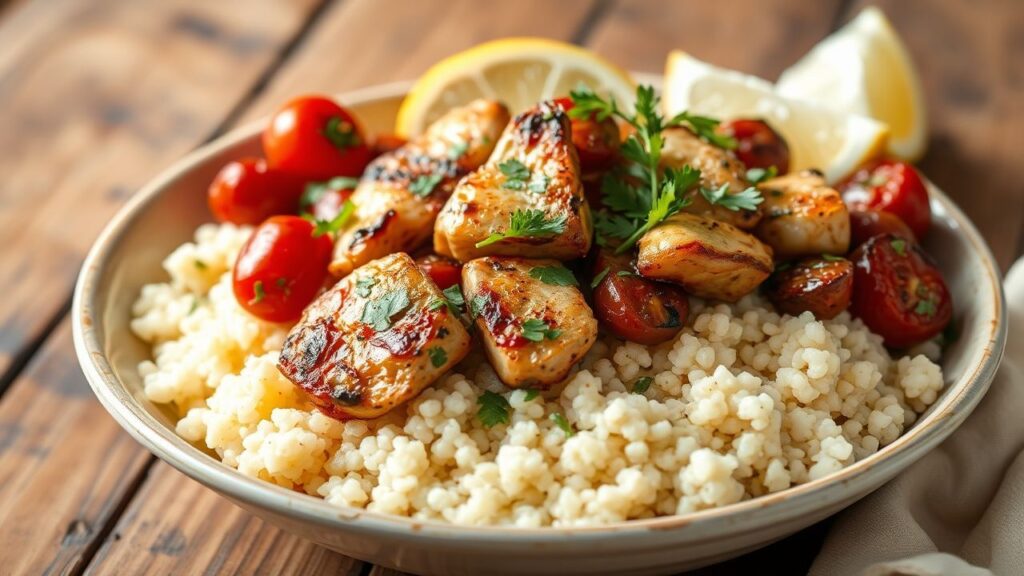
Ingredients for quick couscous dinners
Below is a compact, fail-safe ingredient list designed for 2-3 servings. Quantities use metric and imperial units for precision and fast shopping. Keep staples like stock cubes, olive oil, and a lemon on hand to vary profiles quickly.
- Instant couscous: 180 g (1 cup)
- Vegetable or chicken stock (hot): 240–300 ml (1–1¼ cups)
- Extra-virgin olive oil: 15 ml (1 tbsp)
- Fresh lemon juice: 15 ml (1 tbsp)
- Salt and freshly ground black pepper: to taste
- Protein (choose one): pan-seared chicken breast strips 200–250 g (7–9 oz), canned chickpeas rinsed 240 g (1 cup), or frozen shrimp 200 g (7 oz)
- Quick veg options: halved cherry tomatoes 150 g (1 cup), baby spinach handful 30–40 g (1 cup), or a pre-chopped bell pepper 120 g (1 cup)
- Optional flavor boosters: crumbled feta 50 g (1.75 oz), chopped parsley 15 g (about 1/2 cup loosely packed), toasted pine nuts 30 g (1/4 cup)
Detailed Preparation Method for quick couscous dinners
Follow the method below to guarantee light, separated couscous grains and a balanced plate in under ten minutes. Timing and sequencing are crucial: hydrate the couscous first, then use those five minutes to finish proteins and vegetables.
- Bring stock—measure and heat 240–300 ml (1–1¼ cups) to a rapid simmer or boiling. Use salted stock for depth; reduce added salt later.
- Place 180 g (1 cup) instant couscous in a heatproof bowl. Add 15 ml (1 tbsp) olive oil and 15 ml (1 tbsp) lemon juice; toss to coat.
- Pour hot stock over couscous, cover with a lid or plate, and let sit 5 minutes. Do not disturb while it absorbs liquid.
- While couscous steeps, heat a skillet on medium-high with 10–15 ml (2–3 tsp) oil; sear your chosen protein for 2–4 minutes per side until cooked through, or sauté quick veg until just wilted.
- Fluff couscous with a fork to separate grains; fold in vegetables, herbs, and optional feta or nuts. Adjust seasoning with salt and pepper.
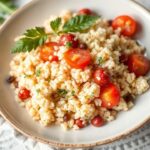
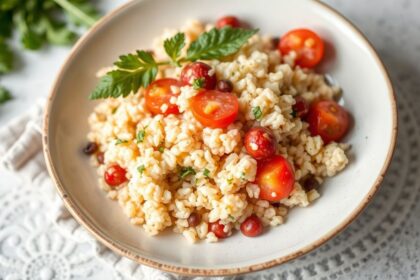
- Plate couscous as a base; finish with protein, a squeeze of lemon, and a drizzle of extra-virgin olive oil.
Chef’s note: If couscous gets gummy, spread it on a warm baking sheet and let steam escape briefly before fluffing; this restores separation quickly. Use boiling water for faster rehydration but keep the lid tightly sealed to trap steam.
Step-by-step: assemble 10-minute couscous dinners
Beyond a single recipe, adopt this numbered routine for consistent ten-minute results. These steps are optimized for parallel cooking—hydrate, sear, toss, and finish—so every action contributes to the final plate.
- Prep all ingredients on the counter before heating anything: measure couscous, stock, spice, and protein.
- Heat stock while heating the skillet for protein; multi-task to shave minutes.
- Hydrate couscous by pouring boiling stock and covering—this is your five-minute timer.
- Cook protein or quick veg while couscous steeps; aim for one- or two-pan finishes.
- Fluff and season couscous; combine and plate promptly to maintain warmth and texture.
Use pre-cooked proteins (rotisserie chicken, canned beans) to reduce active cook time to under five minutes. Small prep habits—like pre-cut veg and portioned spice mixes—compounded over a week save hours.
Nutrition and portioning for couscous dinners
One assembled couscous dinner (recipe above, with chicken and vegetables) typically yields about 2–3 servings with balanced macros. Couscous provides primarily carbohydrates, while the protein and vegetable add essential amino acids, fiber, and micronutrients.
Estimated nutrition per serving (1 of 3): Calories 420–480 kcal; Protein 28–32 g; Carbohydrates 45–50 g; Fat 12–15 g; Fiber 4–6 g; Sodium varies by stock used. Tailor portions to activity level: reduce couscous portion for lower-calorie meals and increase protein for higher satiety.
Expert pro-tips for improving couscous dinners
Treat couscous like rice: hydrate with flavorful liquid and finish with acidity and fat to lift the dish. A splash of lemon, a scatter of fresh herbs, and a finishing oil transform neutral grains into restaurant-quality sides.
Use fast flavor systems: preserved lemon, harissa, store-bought zhug, or a quick herb pesto. Add toasted nuts or seeds for texture contrast. For vegetarian weeks, swap chicken for spiced roasted chickpeas to boost protein and crunch.
Pro-tip cluster: Use concentrated sauces sparingly; they penetrate couscous and amplify flavor with minimal prep. Keep a jarred spiced yogurt or tahini lemon sauce in the fridge for instant dressing.
Time-saving routine: batch-cook spiced roasted vegetables on a weekend and freeze in flat bags. Reheat briefly while couscous steeps and assemble a bright, varied meal in minutes.
Food-safety note: cool leftovers rapidly and store in airtight containers for up to 3–4 days. Reheat thoroughly and add a splash of water or stock to revive moisture.
Conclusion: Final plating and serving notes for quick couscous dinners
When executed with timing discipline, couscous dinners deliver a gourmet plate in minutes. The secret is sequencing: hydrate first, finish proteins and veg, then combine with bright acid and fat for balance.
Keep a short list of interchangeable proteins, sauces, and veggies to rotate flavors without adding decision fatigue. With a few pantry staples and a consistent routine, you can sustain varied, nourishing couscous dinners every weeknight.
FAQ
How long does instant couscous take to cook?
Instant couscous hydrates in about five minutes when covered with boiling stock or water. Brief steaming while covered ensures the grains absorb liquid fully and separate easily when fluffed.
For best texture, use a fork to fluff and add a small fat (olive oil or butter) to separate grains. Avoid stirring during hydration to prevent gluey results.
Can I make couscous dinners gluten-free?
Traditional couscous is made from durum wheat semolina and contains gluten, so it is not suitable for gluten-free diets. For a gluten-free option, use pearl millet or millet-based couscous alternatives, quinoa, or other quick-cooking grains that mimic couscous texture.
When substituting, adjust liquid ratios and cook times to the chosen grain’s package instructions. Quinoa, for example, requires more water and longer simmering than instant couscous.
What are the best proteins for 10-minute couscous dinners?
Quick proteins include thin chicken strips, peeled shrimp, canned tuna, and rinsed canned chickpeas. These options sear or warm rapidly and pair well with the tender grain.
Keep pre-cooked rotisserie chicken or grilled tofu on hand to hit the five-minute mark consistently. Heavier proteins like thick steaks require pre-cooking or slicing thin for fast finishing.
How do I keep couscous fluffy instead of sticky?
Use boiling stock for hydration and avoid stirring until fully absorbed. After the water absorbs, fluff with a fork, then fold in a tablespoon of oil or butter to coat grains and prevent clumping.
Over-hydration is the most common cause of stickiness; measure liquid precisely and time the covered rest period to five minutes for instant couscous. If the dish still appears sticky, spread it on a warm tray for a minute to release steam.
Can I make couscous dinners in advance?
You can prepare couscous and store it refrigerated for up to three days in an airtight container, but texture will change. Reheat with a splash of water or stock in a covered pan to restore moisture before adding fresh toppings.
For best results in meal prep, store cooked couscous separately from wet sauces or dressings and add them just before serving. Assemble fresh herbs and crunchy toppings at plating time to retain texture contrast.
See also: couscous dinners