
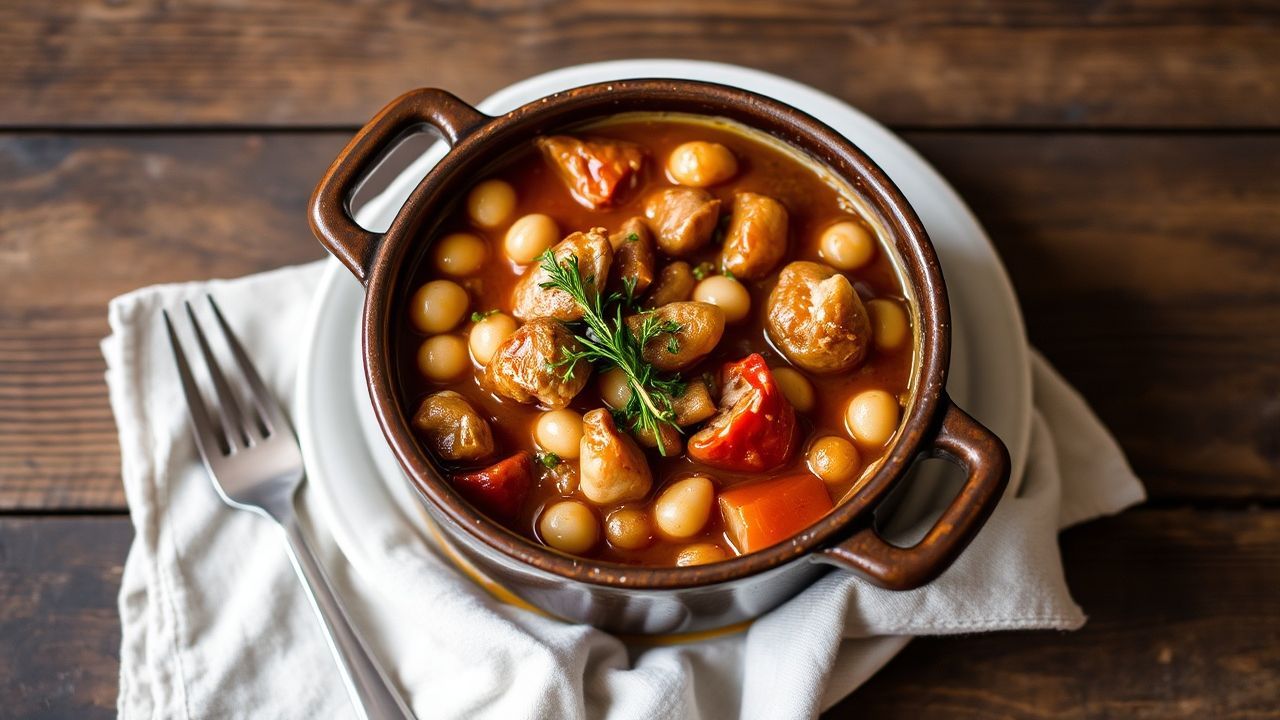

Nestled in the Languedoc countryside, cassoulet stands as one of France’s most respected slow-cooked dishes. It combines white beans, cured and confit meats, and a crisp baked crust that defines the final mouthfeel.
- Key takeaway: Cassoulet relies on patient cooking and careful layering of flavors.
- Bean tip: Use Tarbais or another creamy white bean for the best texture.
- Make ahead: Cassoulet improves after resting; reheat slowly to preserve texture.
Origins and Regional Variations
The dish traces to the south of France, centered in towns such as Castelnaudary and Toulouse. These towns each claim a regional method and ingredient emphasis.
Scholars and food historians link cassoulet to rural peasant kitchens of the Languedoc region, where casseroles cooked slowly to stretch ingredients. For context on the region, see Languedoc.
Castelnaudary, Toulouse, Carcassonne
Castelnaudary often focuses on white beans and pork; Toulouse includes sausages; Carcassonne sometimes adds mutton or lamb. Each variation emphasizes a specific balance of meat and bean.
Understanding local priorities clarifies why authentic techniques vary. For a broader cultural reference, consult the general article on cassoulet.
Ingredients and Technique
Good ingredients deliver clear returns: quality beans, properly cured meats, and rendered duck fat or pork fat. Choose ingredients that deliver both umami and texture contrast.
Technique matters as much as components. Browning, slow simmering, and the crust ritual combine to build the layered profile cassoulet demands.
Beans and Meats
Tarbais beans are the traditional choice for their thin skins and creamy interior. If unavailable, use Great Northern or Cannellini beans made from Phaseolus vulgaris varieties.
Common meat choices include salted pork shoulder, garlic sausage (Toulouse-style), and duck confit. Each provides fat and collagen that the beans absorb during long cooking.
Layering, Browning, and Crust
Layer beans and meats deliberately: half the beans first, then meats, then the remainder of beans. This order helps the starchy beans absorb rendered juices.
Browning meat provides Maillard complexity, while the baked crust concentrates flavor and supplies a contrasting texture. The crust ritual—breaking and reincorporating the top—keeps the dish moist and integrated.
Step-by-Step Method
Start by soaking beans overnight, then par-cook them with a bouquet garni until just tender. Par-cooking prevents the beans from disintegrating during the long final bake.
Brown the pork pieces and sausage in rendered fat, then quickly sauté aromatics until soft. Assemble in a heavy casserole: beans, meats, vegetables, and stock.
Slow Simmering and Baking
Simmer gently for several hours. Maintain low, consistent heat so collagen breaks down into gelatin without aggressive agitation that can mash the beans.
Finish uncovered in a moderate oven to form a crust. After 20-30 minutes, break the crust and press it back into the casserole; repeat this ritual during the last hour to meld flavors.
Timing and Temperature
Expect active preparation and total cook time of 4 to 6 hours, including gentle oven time. Use an oven thermometer and a low simmer on the stovetop to hold steady heat.
If the casserole dries excessively, add small amounts of hot stock. The goal is a glossy, slightly saucy finish rather than a dry mass.
Chef’s Notes for Consistent Results
Bean handling: Do not overcook during the initial simmer. Slight firmness prevents collapse during the final bake.
Meat choices: Use a mix of fatty and lean cuts. Duck confit adds richness; pork shoulder gives structure and collagen.
Rest the finished cassoulet for 10–20 minutes. Resting lets gelatin settle and flavors integrate, giving cleaner portioning and a better mouthfeel.
Serving and Pairings
Serve cassoulet in shallow, warm bowls to showcase both the beans and the crispy top. Garnish sparingly with chopped parsley and a thyme sprig.
For wine, select medium- to full-bodied reds from southwest France; their acidity and tannin cut through richness. Regional pairings such as Cahors or Madiran suit the dish’s rustic profile.
Sides and Presentation
A crisp green salad with a mustard vinaigrette balances the dish’s fat. Provide crusty bread to soak up juices and to offer textural contrast.
Plate portions modestly. Cassoulet is dense; smaller servings allow diners to enjoy the dish as part of a multi-course meal.
Nutritional Snapshot
Cassoulet is calorie-dense and high in protein and fat, thanks to meats and confit. Beans provide fiber and complex carbohydrates, while meats contribute iron and collagen.
Adjust portion sizes and side choices to match dietary goals. Substitute leaner meats or reduce confit portions for lower overall fat when needed.
Practical Sourcing and Substitutions
Seek out local butchers for cured pork shoulder and high-quality sausages. For duck confit, buy from a reputable source or confit your own to control salt and fat levels.
If Tarbais beans are unavailable, choose beans labeled for casseroles or stews. Texture matters more than origin; aim for beans that hold shape after long cooking.
For additional recipes and regional techniques, visit our French Country Cooking hub or explore related dishes on our cassoulet recipes page.
FAQ
What is traditional cassoulet?
Traditional cassoulet is a slow-baked casserole of white beans, pork, and preserved meats such as duck confit. It originated in southern France and emphasizes long, gentle cooking.
Which beans work best?
Use Tarbais beans when possible for a silky interior and thin skin. Good substitutes include Great Northern and Cannellini beans, both members of the common bean family.
Can I make cassoulet without meat?
Yes. Create a vegetarian version using smoked mushrooms, roasted root vegetables, and umami-rich ingredients such as miso or smoked paprika to replace the depth usually provided by meat.
How far ahead can I make it?
Make cassoulet a day ahead; flavors deepen overnight. Reheat gently in a low oven and refresh the crust ritual before serving for best texture.
Where can I taste an authentic cassoulet?
Visit towns in southern France known for the dish. Historic centers like Toulouse and Castelnaudary preserve regional methods and host restaurants that serve traditional versions. For historical background on the towns, see Toulouse and related regional notes on cassoulet.
See also: Cassoulet