

When you serve deviled eggs, presentation reinforces flavor. The right tray secures each half, limits spills, and makes plating faster for hosts and caterers.
- Choosing the Ideal Material for Durability and Style
- Exploring Design Features That Enhance Presentation and Serving
- Top Recommendations for Different Occasions and Budgets
- Maintenance Tips to Keep Your Deviled Egg Tray Spotless and Ready
- Recipe: Simple Classic Deviled Eggs (Fits Most Trays)
- Serving Suggestions and Styling
- At-Event Logistics: Transport and Replenish
- FAQ
- Choose material for durability and ease of cleaning.
- Look for design that stabilizes egg halves and adds serving convenience.
- Match tray size to guest count and storage needs.
- Maintain trays properly to extend service life and hygiene.
Choosing the Ideal Material for Durability and Style
Material determines how a tray performs in service and storage. Ceramic, stainless steel, melamine, bamboo and BPA-free plastics each have clear pros and cons you should weigh.
Ceramic offers a glossy surface that resists staining and photographs well for social menus. Read care labels: many ceramics are oven- and dishwasher-safe, but thermal shock can crack some items. Learn more about ceramics on Ceramic.
Stainless steel brings strength and longevity to frequent-service kitchens. It resists chipping and can take knocks during transport, but it shows water spots unless polished. For technical background, see Stainless steel.
Melamine and BPA-free plastics weigh less and often cost less, making them smart for outdoor events and high-volume catering. Choose thicker gauge plastics with non-slip bases to reduce tipping. For single-use alternatives, consider compostable bamboo trays for light duty and eco-friendly appeal.
Exploring Design Features That Enhance Presentation and Serving
Design matters: recessed wells, rim height, handle placement and modular inserts all affect stability and presentation. Wells sized to standard egg halves keep fillings from spreading, while deeper wells suit stuffed variations.
Raised rims and sturdy handles speed service and protect edges during transit. Multi-tiered stands expand capacity without a large footprint and work well on buffets. Modular inserts simplify washing and storage, reducing lifecycle costs for busy hosts.
Color and finish influence perceived freshness. Neutral palettes and matte finishes draw attention to the filling; glossy white or pastel bases make yolks and garnishes pop. Use color strategically to match your table decor and menu style.
For portion control at events, trays with defined rows help servers count servings and refill predictably. That practical advantage reduces waste and helps you plan staffing and replenishment during service.
Top Recommendations for Different Occasions and Budgets
Match tray selection to event type: formal dinners, casual brunches, outdoor setups or budget-conscious gatherings. Each context demands a different balance of style, durability and cost.
Formal events: Choose glazed ceramic or porcelain trays with refined detailing. They support plated service and photography-friendly presentation.
Casual gatherings: Use high-grade BPA-free plastic or melamine trays with anti-slip feet. They resist chips and clean quickly for backyard parties.
Outdoor entertaining: Stainless steel or heavy-gauge melamine works well—both resist wind and accidental drops during transport.
Budget-conscious hosts: Multipurpose melamine trays provide color and durability at lower cost. Look for stackable models to save storage space.
For special presentations—deviled eggs topped with substantial garnishes or layered bites—pick trays with larger wells or removable inserts to house sauces and toppings adjacent to each egg.
If you need buying benchmarks, test a tray with six filled halves first to confirm well depth, spacing and balance. For related recipes and plating tips, see our internal resource on How to Make Deviled Eggs and explore ideas on Table Setting Ideas.
Maintenance Tips to Keep Your Deviled Egg Tray Spotless and Ready
Routine care protects finish, prevents odors and extends service life. Follow manufacturer guidance for washing, drying and storage to avoid premature wear.
For ceramic and porcelain, avoid abrupt temperature changes and hand-wash when recommended. For stainless steel, remove water spots with a soft cloth and mild polish. Plastic trays clean well with warm soapy water; remove yolk oils quickly to prevent staining.
Use a baking soda soak to neutralize lingering odors and air-dry trays fully before stacking. Consider tray liners or cushioned separators to protect finishes when storing multiple pieces.
Label trays by use if you rotate models between food types and non-food tasks. Clear labeling reduces cross-contamination and keeps foodservice compliant with basic hygiene protocols.
If you serve deviled eggs frequently, invest in trays with replaceable inserts or lids; they cost more up front but lower long-term replacement and cleaning costs. The lifetime value often justifies the higher initial expense for busy hosts.
Recipe: Simple Classic Deviled Eggs (Fits Most Trays)
This basic recipe fills standard wells and fits most tray dimensions. It uses classic emulsifiers for a stable, pipe-friendly texture.
Use high-quality eggs for firm whites and bright yolks. For background on eggs as an ingredient, refer to Egg (food).
Prep and Cook Time
Prep Time: 15 minutes. Cook Time: 10 minutes. Total time remains short, so plan chilling time if you plate ahead.
Yield
Serves 12 deviled egg halves when using standard tray wells. Adjust quantities proportionally for larger trays or multi-tier stands.
Ingredients
- 6 large eggs, hard-boiled and peeled
- 3 tbsp mayonnaise — commercial or homemade; see Mayonnaise for emulsion basics
- 1 tsp Dijon mustard
- ½ tsp white vinegar
- Salt and freshly ground black pepper, to taste
- Paprika, for garnish
- Chives or parsley, finely chopped (optional)
Instructions
Hard boil the eggs: Place eggs in a saucepan with cold water. Bring to a boil, then simmer 10 minutes and chill in ice water to stop cooking.
Prepare the filling: Halve eggs lengthwise and remove yolks to a bowl. Mash yolks, then blend with mayonnaise, Dijon, vinegar, salt and pepper until smooth.
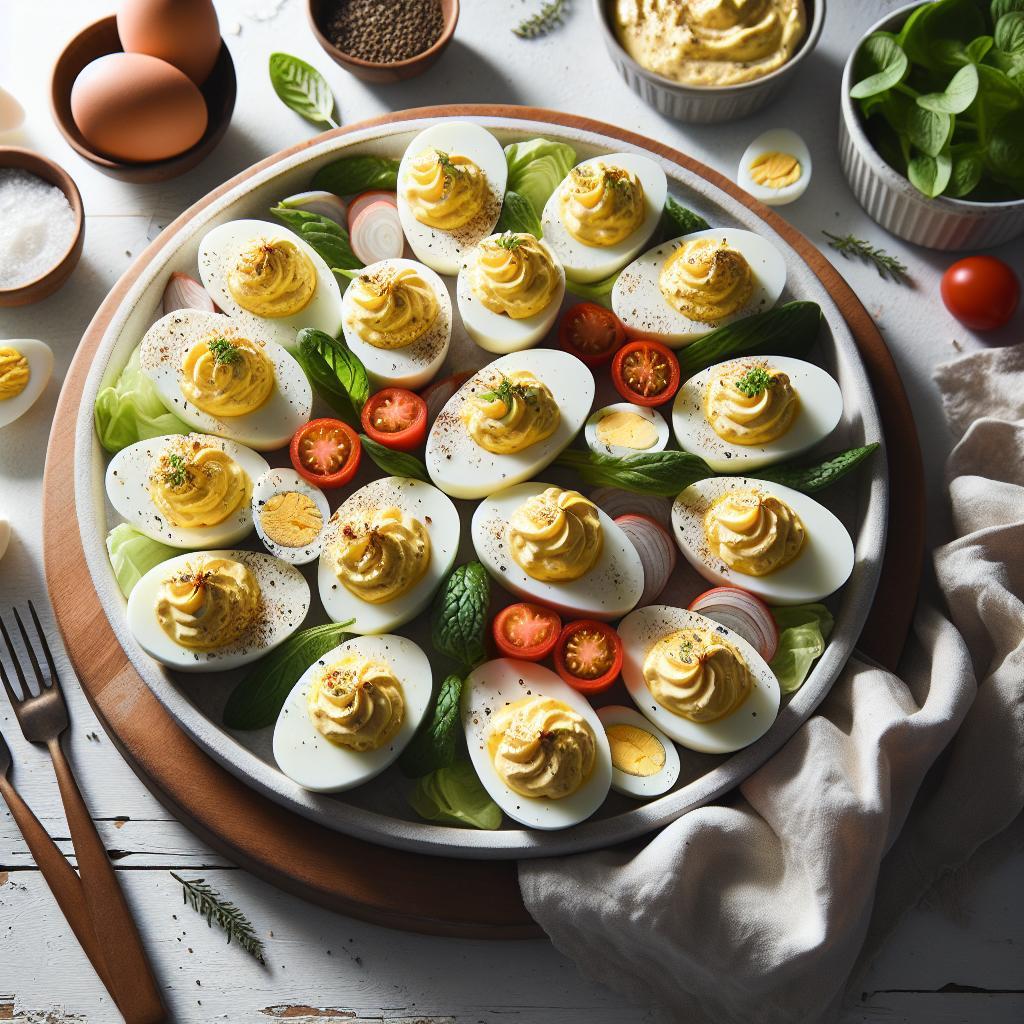
Fill the whites: Spoon or pipe the filling into white halves. Use a star tip for a decorative swirl that fits nicely in most wells.
Garnish and chill: Sprinkle with paprika and herbs. Chill on the tray for 15 minutes before serving to firm the filling and allow flavors to meld.
Serving Suggestions and Styling
Place trays in well-lit spots to highlight yolk color and garnish contrast. Arrange complementary sides within reach—sliced cucumbers, pickles, or small lettuce sprigs work well.
For themed events, coordinate tray color and garnish. A dark tray makes pale fillings stand out; a white tray emphasizes golden yolks. Small signage noting flavors helps guests select preferred variations during self-service.
At-Event Logistics: Transport and Replenish
Transport trays on flat, stable surfaces and secure them to prevent sliding. Use non-slip mats and lids when moving through crowded spaces.
Plan replenishment: keep extra filled trays chilled in a cooler or refrigerator and rotate them in as displays empty. This practice maintains food safety and reduces visible gaps on the buffet line.
FAQ
How do I choose the right tray size for my party?
Start with guest count and portion size. For small gatherings, a 6–12 half tray keeps food fresh. For larger groups, use modular trays or stacks of 24–30 halves to reduce trips to the kitchen.
Can I use deviled egg trays for other dishes?
Yes. Wells suit bite-size desserts, condiments and hors d’oeuvres. Versatile trays increase ROI by serving multiple menu functions across events.
Are there trays that work with stuffed or non-traditional deviled eggs?
Look for trays with deeper, wider wells to hold larger garnishes or stuffed variations like avocado or crab. Some trays include adjacent compartments for sauces and toppings.
How should I store trays to avoid damage?
Stack only like models and use soft separators to prevent scratches. Store trays in a dry area with lids or covers to keep dust and pests away.
Where can I learn more about deviled egg history and variations?
Explore historical context and regional recipes on the Deviled egg page. That page outlines classic preparations and international names.
Final note: Select a tray that balances stability, ease of cleaning and visual impact. Proper material and design choices reduce waste and elevate any table, whether a casual brunch or plated reception.
See also: deviled eggs