

Fig Vinaigrette pairs concentrated fig sweetness with aged balsamic acidity to produce a bright, balanced dressing that elevates greens, grains, and grilled proteins. Use precise ratios and a short rest to stabilize texture and extract maximum flavor from dried or fresh figs.
- Flavor profile and culinary context for Fig Vinaigrette
- Prep and cook time for Fig Vinaigrette
- Yield and difficulty for Fig Vinaigrette
- Ingredients for Fig Vinaigrette
- Instructions for Fig Vinaigrette
- Tips for crafting the perfect Fig Vinaigrette
- Texture control and finishing options for Fig Vinaigrette
- Storage and shelf life for Fig Vinaigrette
- Serving suggestions to elevate salads with Fig Vinaigrette
- Nutritional snapshot of Fig Vinaigrette
- Why figs and balsamic work together in Fig Vinaigrette
- Why quality ingredients matter for Fig Vinaigrette
- FAQ
- Bright, balanced flavor: Sweet figs and aged balsamic create layered acidity and body.
- Versatile: Use as a salad dressing, marinade, or finishing glaze.
- Make ahead: Resting melds flavors; shake before use to restore emulsion.
Flavor profile and culinary context for Fig Vinaigrette
The Fig Vinaigrette blends three core elements: fruit sugars from figs, acidic lift from balsamic, and fat from olive oil. Proper emulsion distributes aromatics and coats leaves evenly, delivering consistent flavor in every bite.
Figs bring jammy, honeyed notes that contrast balsamic’s tang and molasses-like depth. For botanical background, see Ficus carica for fig details and Balsamic vinegar for how aging concentrates its sweetness.
Prep and cook time for Fig Vinaigrette
Total time: About 10 minutes active work; rest at least 30 minutes in the refrigerator to let flavors marry. No prolonged cooking is required unless you reduce figs into a glaze for roasting.
If you prefer a silkier texture, pulse briefly in a blender to shorten resting time. A short blend smooths fig fibers and gives a glossy finish while keeping aromas bright.
Yield and difficulty for Fig Vinaigrette
Yield: Roughly 3/4 cup, which dresses 4–6 salads depending on pour rate. Scale ingredients linearly to make larger batches.
Difficulty: Easy. Techniques include rehydration, whisking, seasoning, and resting. A bowl and whisk suffice; a small blender or food processor speeds emulsification.
Ingredients for Fig Vinaigrette
Choose high-quality components: aged balsamic and extra virgin olive oil determine most of the dressing’s flavor and mouthfeel. Small changes in oil or vinegar vastly affect balance, so taste as you build the vinaigrette.
Core ingredients for about 3/4 cup: 1/4 cup dried figs, finely chopped; 1/3 cup balsamic vinegar; 1/2 cup extra virgin olive oil; 1 tbsp honey or maple syrup; 1 tsp Dijon mustard; 1 small garlic clove, minced; salt and pepper to taste. For olive oil characteristics, reference Olive oil to match intensity with your vinegar choice.
Instructions for Fig Vinaigrette
Follow steps in order to build a stable emulsion and distribute figs evenly. Start by softening dried figs so they release sugars and aromatics into the vinegar base.
- Rehydrate figs: Place chopped dried figs in warm water for 5 minutes, then drain thoroughly.
- Mix acidic base: Whisk balsamic vinegar, honey, Dijon mustard, and minced garlic until homogeneous.
- Emulsify: While whisking the vinegar mix, drizzle in olive oil in a steady stream to form a smooth vinaigrette.
- Fold in figs: Stir softened figs through the vinaigrette so each spoonful carries fruit.
- Season and rest: Add salt and pepper gradually, taste, then refrigerate at least 30 minutes so flavors marry.
For a silkier finish, pulse briefly in a blender or food processor. If you prefer texture, leave fig pieces intact and skip the blender.
Tips for crafting the perfect Fig Vinaigrette
Small adjustments create big improvements. Taste and tweak acidity and sweetness incrementally to avoid overshooting the balance between fruit and vinegar.
Key techniques include controlling texture, using an emulsifier like mustard, and allowing resting time for fig fibers to hydrate and thicken the dressing subtly.
Use quality figs and measure by taste rather than strict volume when you switch between fresh and dried fruit. Fresh figs yield a lighter body; dried figs increase sweetness and viscosity.
Texture control and finishing options for Fig Vinaigrette
Texture dictates how the vinaigrette performs on salads and cooked dishes. A fully blended Fig Vinaigrette will coat leaves evenly, while a chunky version adds chew and visual interest.
To thicken for a glaze, reduce balsamic slightly and simmer figs with a splash of water until the mixture concentrates. Strain if you want a smooth gloss for roasting vegetables or finishing meats.
Storage and shelf life for Fig Vinaigrette
Store the Fig Vinaigrette in a sealed glass jar in the refrigerator. Glass jars with tight lids let you monitor separation and clarity over time.
Expect freshness for about 10–14 days refrigerated. Always check aroma and appearance before use; discard if you detect off-odors, visible mold, or unusual cloudiness.
If you prepare a large batch, portion out a small serving jar for daily use and keep the remainder sealed. Separation is normal; a vigorous shake or quick whisk restores emulsion without reheating.
Serving suggestions to elevate salads with Fig Vinaigrette
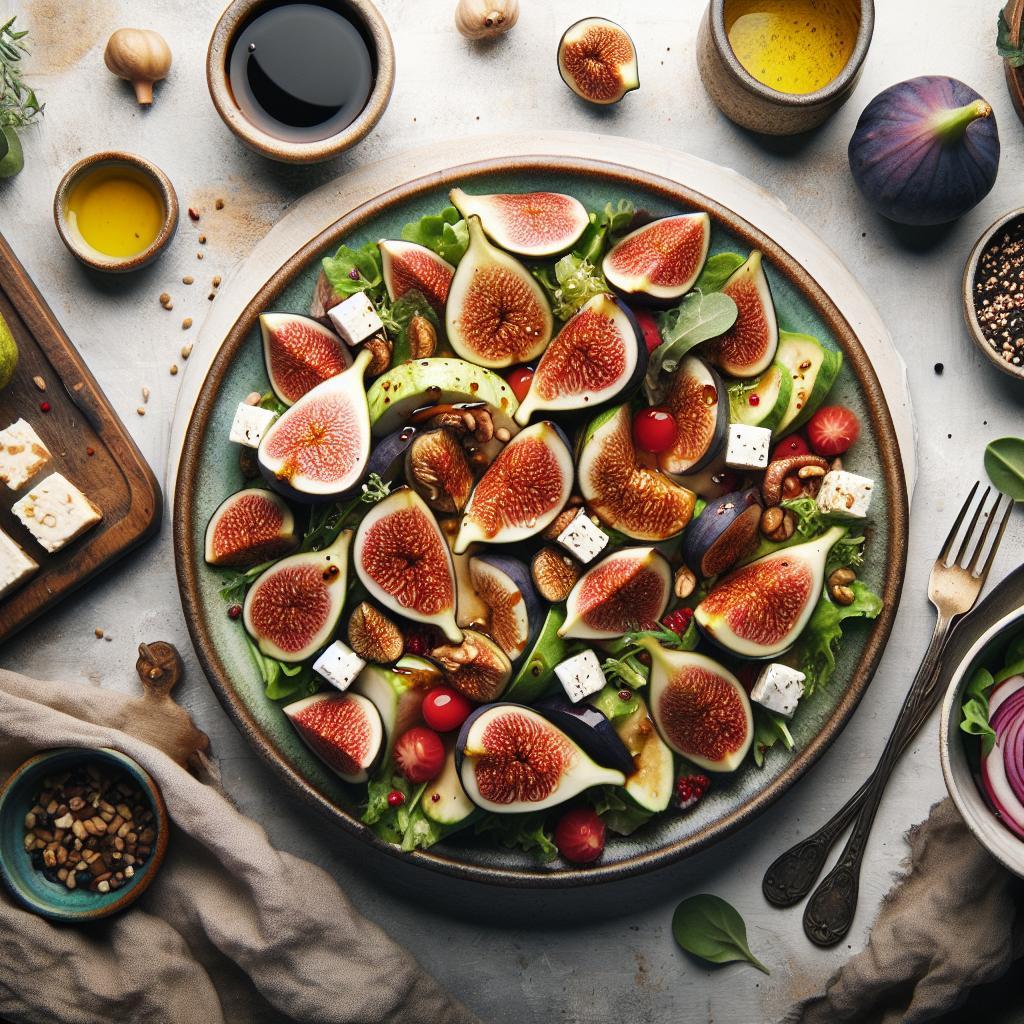
Pair the Fig Vinaigrette with peppery arugula, bitter radicchio, or tender mixed greens. The sweet notes contrast tangy cheeses and crunchy nuts, building a layered mouthfeel.
Recommended combinations include arugula + toasted walnuts + goat cheese, roasted beets + farro + pistachios, or grilled chicken + mixed greens for a hearty main salad. These pairings maximize textural contrast and flavor clarity.
Nutritional snapshot of Fig Vinaigrette
The vinaigrette provides monounsaturated fats from olive oil and modest calories per tablespoon due to oil content. Dried figs contribute small amounts of fiber and micronutrients while adding sugars.
Measure portions to control calories; start with a tablespoon per serving and adjust. A standard estimate is about 80 kcal per tablespoon, primarily from fat.
| Nutrient | Per 1 Tablespoon |
|---|---|
| Calories | 80 kcal |
| Protein | 0.1 g |
| Carbohydrates | 3 g |
| Fat | 8 g |
Why figs and balsamic work together in Fig Vinaigrette
Figs deliver concentrated sugars and an earthy undertone that balances balsamic’s acidity and aged sweetness. The pairing reflects Mediterranean techniques where fruit and vinegar appear together in sauces and preserves.
For fundamentals on vinaigrette technique, consult the classic preparation overview at Vinaigrette. Use that method as a baseline and then fine-tune ratios to your palate and intended texture.
Why quality ingredients matter for Fig Vinaigrette
Ingredient quality drives the dressing’s final aroma, acidity, and mouthfeel. A mediocre balsamic or rancid oil cannot be rescued by technique alone, while excellent components magnify simple technique.
Match oil intensity to vinegar concentration: a robust extra virgin olive oil pairs well with aged balsamic, while a milder oil suits lighter vinegars. Adjust honey or syrup sparingly for precise sweetness control.
FAQ
What is Fig Vinaigrette made of?
The Fig Vinaigrette combines dried or fresh figs with aged balsamic vinegar, extra virgin olive oil, honey or maple syrup, Dijon mustard, garlic, and salt and pepper. Mustard helps emulsify the oil and vinegar for a stable dressing.
How do I adjust sweetness or acidity in Fig Vinaigrette?
Add small increments of honey or maple syrup to increase sweetness and a teaspoon of balsamic at a time to raise acidity. Taste between adjustments to maintain balance.
Can I use fresh figs instead of dried in a Fig Vinaigrette?
Yes. Fresh figs offer a lighter texture and less concentrated sugar, so use slightly more fruit or a touch more honey. Blend briefly for smoothness or leave figs chunky for texture.
How long will Fig Vinaigrette last?
Refrigerated in an airtight jar, the Fig Vinaigrette stays fresh for about 10–14 days. Separation is normal; shake or whisk before using. Discard if you detect off odors or mold.
What else can I do with Fig Vinaigrette?
Use this vinaigrette as a marinade for pork or chicken, a finishing glaze for roasted vegetables, or a dip for crusty bread. It also pairs well with grain bowls and warm roasted root vegetables.
See also: For additional context on salads, consult Salad.

See also: Fig Vinaigrette