

Hearty Roasted Squash Stew: A Cozy Fall Flavor Journey
As the air turns crisp and kitchens invite warm aromas, this hearty roasted squash stew delivers both comfort and clear technique. The recipe balances caramelized squash, framed spices, and fiber-forward chickpeas to create sustained satiety and layered flavor.
- Caramelize the squash: Roasting concentrates sugars and builds depth.
- Layer spices: Toasting spices briefly releases essential oils for richer aroma.
- Make-ahead friendly: The stew improves after resting and freezes well.
Overview and Seasonal Context
This stew highlights seasonal produce, focusing on butternut and winter squash varieties that store well into autumn. Use firm, mature squash for the highest sugar content and best texture during roasting.
For background on the ingredient, see the butternut squash entry, which explains varieties and culinary uses. Also consider reading about autumn produce cycles to plan harvest-forward meals.
Prep and Cook Time
Preparation: 25 minutes. This includes peeling, seeding, and cubing the squash plus chopping aromatics. Keep all mise en place measured to maintain a steady cooking rhythm.
Cooking: 1 hour 15 minutes active time; Total Time: 1 hour 40 minutes. Roast the squash at high heat first to build Maillard reactions, then simmer the stew to meld flavors.
Yield
This recipe yields 6 generous servings, suitable for a family meal or small gathering. Portions provide a balanced plate when paired with a starch or leafy side.
Portion planning is useful for meal prep. Leftovers reheat evenly and make reliable weekday lunches.
Difficulty Level
Ranked Medium—it demands basic knife skills, timed roasting, and spice-toasting technique. Home cooks with one to two prior stew or roast recipes will find this recipe approachable and instructive.
The technique focus lies in sequential flavor building: roast, sweat aromatics, toast spices, then simmer. That structure yields predictable, repeatable results.
Ingredients
Gather ingredients before you start to ensure even cooking and accurate seasoning. Precision with salt and spice balance matters more here than complex technique.
The core ingredients are simple and pantry-friendly. Substitutions work well without derailing the final texture.
- 1 medium butternut squash (about 3 pounds), peeled, seeded, and cubed into 1-inch pieces
- 2 tablespoons olive oil, divided
- 1 large onion, finely chopped
- 3 cloves garlic, minced
- 3 medium carrots, peeled and sliced
- 2 stalks celery, sliced
- 1 large sweet potato, peeled and cubed (about 2 cups)
- 1 can (15 oz) crushed tomatoes
- 4 cups low-sodium vegetable broth
- 1 tsp smoked paprika (use paprika for origin notes)
- 1 tsp ground cumin
- 1/2 tsp ground cinnamon
- 1/2 tsp ground coriander
- 1/2 tsp dried thyme
- 1 bay leaf
- Salt and freshly cracked black pepper to taste
- 2 cups cooked chickpeas (canned, drained, rinsed; see chickpea for nutrition)
- Fresh parsley for garnish
Instructions
Follow a clear sequence: roast, soften aromatics, toast spices, combine, then simmer. This sequence extracts maximum flavor from relatively few ingredients.
Work with hot pans and timed steps. Read each step fully before starting so you maintain the correct temperatures and timings.
Roasting the Squash
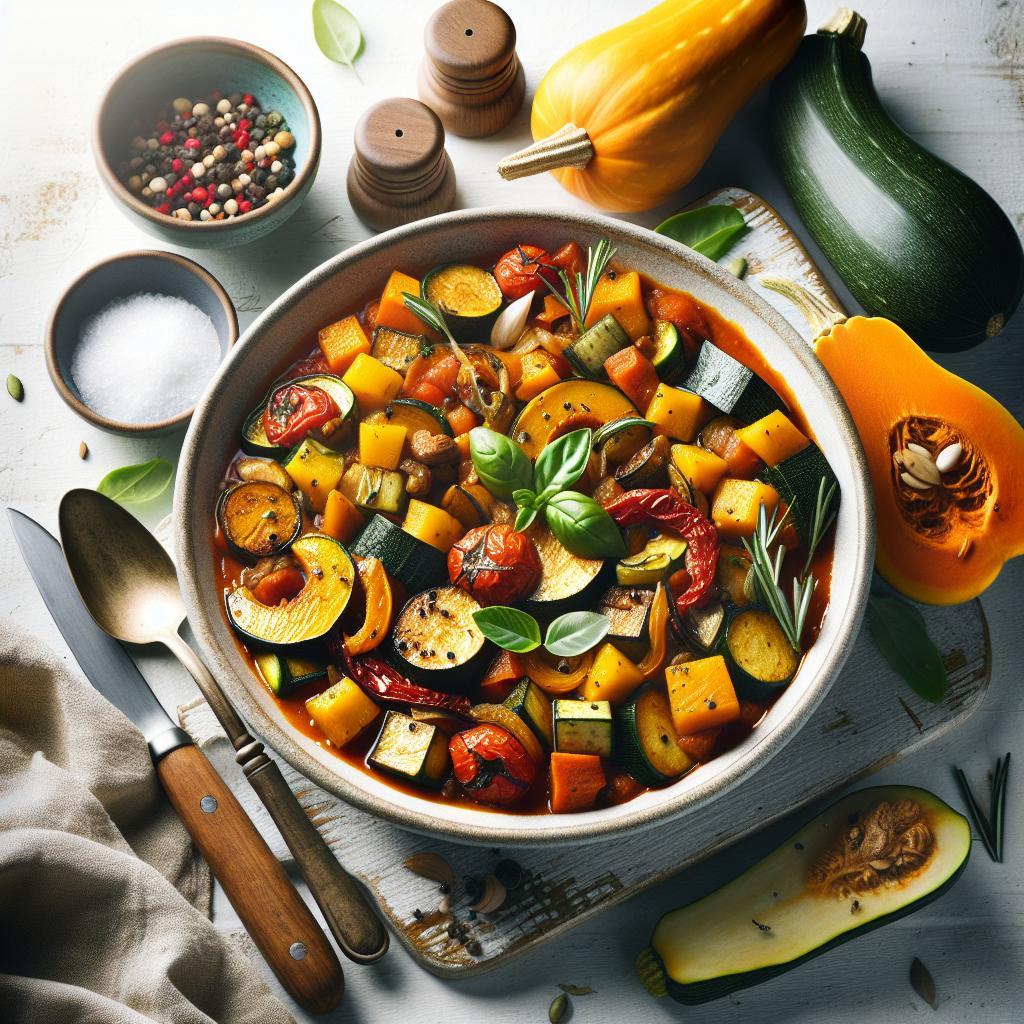
Preheat the oven to 425°F (220°C). Toss the squash cubes with 1 tablespoon olive oil, a pinch of salt, and cracked pepper. Arrange in a single layer on a rimmed baking sheet for even browning.
Roast for 30–35 minutes, turning once. You want golden-brown edges and tender flesh; this caramelization delivers depth and natural sweetness that will carry the stew.
Building the Stew Base
While the squash roasts, heat the remaining tablespoon of oil in a heavy-bottomed pot over medium heat. Add the onion and sweat until translucent, about 5–7 minutes, stirring to prevent sticking.
Add garlic, carrots, and celery and cook another 4–5 minutes until softened. Stir in the sweet potato and sprinkle in the smoked paprika, cumin, cinnamon, coriander, and thyme to coat the vegetables evenly.
Combining and Simmering
Toast the spice blend 1–2 minutes to activate aromatic oils, then add the crushed tomatoes, the roasted squash, and the vegetable broth. Add the bay leaf and bring the mixture to a gentle boil.
Reduce heat to low, cover, and simmer for 30–40 minutes so the vegetables break down and meld into a cohesive stew. Add the chickpeas in the last 5–7 minutes to heat through and adjust consistency.
Tips for Success
Roasting matters: Don’t skip high-heat roasting; it creates caramelized notes that boiling won’t. The Maillard reaction on edges gives savory-sweet complexity.
Use low-sodium broth so you can control salt progressively. Taste late in the simmer and finalize seasoning before serving.
Texture and Thickness Adjustments
To thicken, mash a few pieces of roasted squash against the pot wall or add a cornstarch slurry (1 tbsp cornstarch + 1 tbsp cold water). Both methods increase viscosity without altering flavor dramatically.
For a silkier finish, pulse a portion of the stew briefly with a hand blender and return it to the pot. That technique preserves chunk while increasing mouthfeel.
Serving Suggestions to Elevate Your Cozy Fall Meal
Serve the stew hot in rustic bowls and garnish with chopped parsley and toasted pepitas for crunch. A spoonful of plain yogurt or crème fraîche brightens the dish when desired.
Pair with crusty bread, warm cornbread, or creamy mashed cauliflower to create contrast in texture and temperature. These accompaniments help scoop and carry the thick broth.
Vegetarian and Gluten-Free Options
This recipe naturally fits vegetarian and gluten-free diets when you use vegetable broth. For extra protein, add shredded cooked chicken or extra legumes.
Swap thyme for rosemary or sage for a piney note if preferred. Keep adjustments moderate to preserve the stew’s central flavor profile.
Nutritional Information
Per serving estimates are approximate and based on standard ingredient sizes and preparation. Use your own ingredient labels to refine values for dietary needs.
This stew offers fiber from squash and chickpeas, plant protein from legumes, and vitamins A and C from root vegetables—an efficient nutrient-dense meal for cold-weather eating.
| Nutritional Info (per serving) | Calories | Protein | Carbs | Fat |
|---|---|---|---|---|
| Hearty Roasted Squash Stew | 320 | 10g | 50g | 8g |
Make-Ahead, Storage, and Freezing
Store cooled stew in an airtight container in the refrigerator for up to 3 days. Reheat gently over low heat to maintain texture and avoid separating the broth.
For longer storage, freeze in portioned containers for up to 3 months. Thaw overnight in the refrigerator and reheat on the stove for best results.
Final Thoughts
This roasted squash stew combines simple technique with clear flavor-building steps to produce comforting, nutrient-forward meals. The recipe rewards precision in roasting and measured spice use to produce consistent autumnal depth.
Use this stew as a template for seasonal variations and scale easily for meal prep. Its balance of sweet roasted vegetables and warming spices makes it a dependable, repeatable recipe for colder months.
FAQ
Is this stew naturally vegan?
Yes. When made with vegetable broth and without dairy toppings, the stew remains fully vegan. It also accommodates gluten-free diets when you avoid gluten-containing thickeners.
Can I substitute other squash varieties?
Absolutely. Kabocha, acorn, or other winter squashes work, but adjust roasting time according to density. Denser squash may need slightly longer roasting to reach caramelized edges.
How can I make the stew more protein-rich?
Add cooked legumes, extra chickpeas, or shredded cooked poultry. For plant-based protein increase texture, stir in cooked lentils during the last 10 minutes of simmering.
What if my stew is too thin?
Mash several roasted squash cubes in the pot or add a cornstarch slurry to thicken. Simmer uncovered for 5–10 minutes to reduce excess liquid and concentrate flavors.
Can I roast the squash earlier in the day?
Yes. Roasted squash holds well at room temperature for short periods or refrigerated. Reheat before adding to the simmer to maintain color and texture.
See also: Roasted Squash