
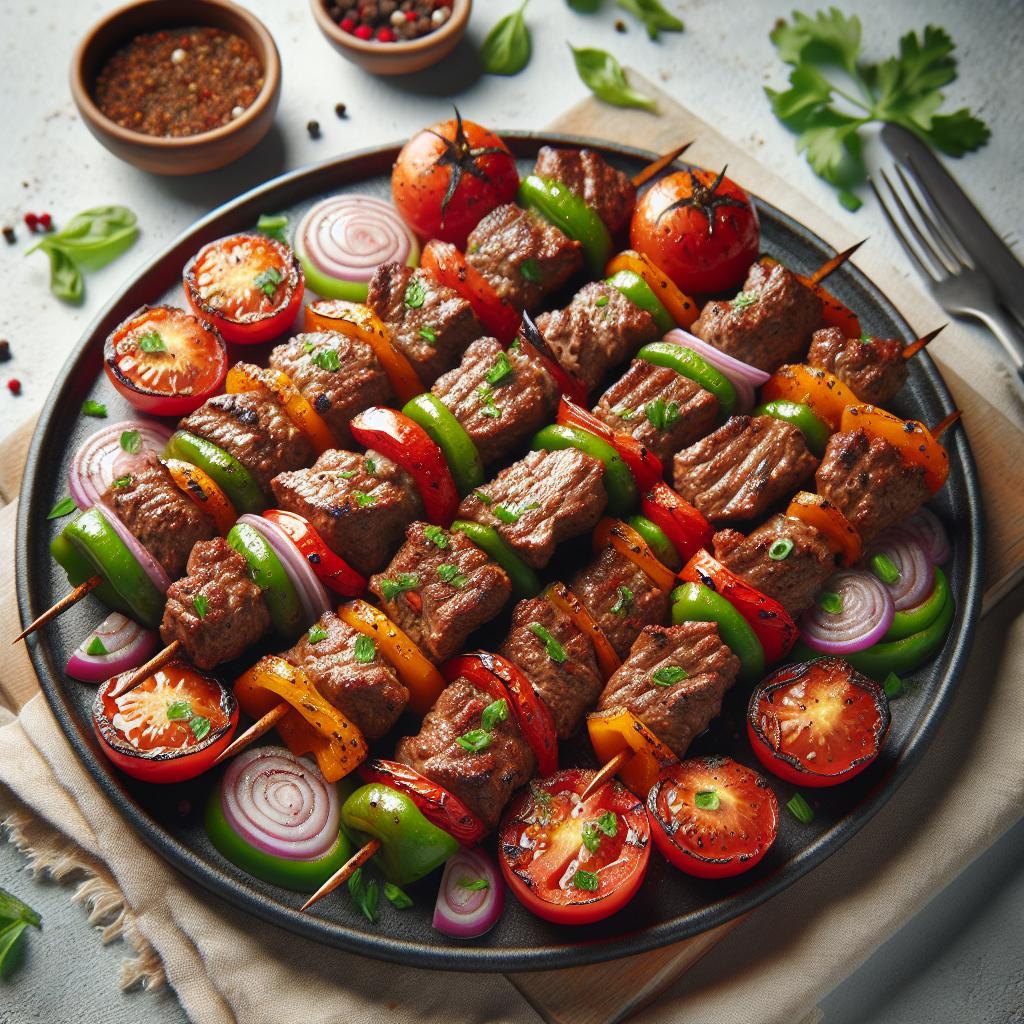

There is a defining moment in every perfect kebab—the bite that reveals tender, juicy meat layered with bright, balanced flavors. Understanding how acids, oils, and aromatics interact turns simple skewers into consistently excellent results.
- Why Marinades Matter
- Prep and Cook Time
- Yield and Difficulty
- Ingredients
- Instructions
- Expert Tips to Elevate Your Kebabs with Bold and Balanced Flavors
- Chef’s Notes
- Serving Suggestions
- Nutritional Information (approx.)
- Q&A
- Why are marinades essential for making perfect kebabs?
- What are the key ingredients that make a marinade effective?
- How long should kebabs marinate for optimal flavor and texture?
- Can I create great marinades with pantry staples?
- FAQ
- Balance acid and oil to tenderize without drying.
- Timing matters: short for delicate proteins, longer for hearty cuts.
- Layer flavors: aromatics, spices, and finishing herbs create depth.
- Food safety: do not reuse raw marinade without boiling.
Why Marinades Matter
Marinades do two practical jobs: they modify texture and add flavor. The acid component alters surface proteins to help tenderness while fats lock moisture and carry fat-soluble aromas deep into the meat.
For context, a traditional kebab relies on marinade chemistry to deliver consistent juiciness and char. A good marinade preserves the meat’s structure while amplifying natural taste.
Prep and Cook Time
Preparation: 15 minutes active time to mix and assemble components. Allow additional marination time depending on protein.
Cooking: 10–15 minutes on a hot grill or pan, depending on cube size and heat source. Rest kebabs 5 minutes after grilling to redistribute juices.
Yield and Difficulty
This recipe yields enough for 4–6 servings, an efficient portion for gatherings or family dinners. Adjust quantities linearly for larger groups.
The technique rates as medium difficulty. Home cooks should be comfortable with knife work, skewer handling, and basic grill temperature control to hit ideal char without overcooking.
Ingredients
Use quality fundamentals. A simple, well-balanced list gives the best return: protein, acid, oil, aromatics, and seasoning.
Essential items include:
- 1 lb boneless chicken thighs or lamb shoulder, cut into 1-inch cubes
- 1/3 cup extra virgin olive oil (olive oil)
- 1/4 cup freshly squeezed lemon juice (lemon)
- 3 cloves garlic, minced
- 1 tsp smoked paprika
- 1 tsp ground cumin
- 1 tsp ground coriander
- 1/2 tsp chili flakes (optional)
- 1/2 tsp sea salt, plus freshly ground black pepper to taste
- 2 tbsp chopped fresh parsley or cilantro
- Metal or soaked wooden skewers for grilling
Substitutions work: swap olive oil for another neutral oil, or use yogurt as a milder acid for delicate proteins (see tips below).
Instructions
Combine the Marinade
In a medium bowl, whisk together lemon juice, olive oil, minced garlic, smoked paprika, cumin, coriander, chili flakes, salt, and pepper until the mixture emulsifies. The acid gently modifies protein fibers; the oil suspends fat-soluble aromas and improves mouthfeel.
Measure ingredients rather than approximating when you first practice this technique. Consistency in acid and oil ratios produces predictable tenderness and flavor penetration.
Marinate the Meat
Add the cubed meat to the bowl and toss until each piece is evenly coated. Transfer to a covered container and chill for the recommended time window for that protein.
Timing guidance: 30 minutes to 2 hours for chicken, 2–24 hours for lamb or beef. Avoid exceeding 24 hours with strong citrus-based marinades to prevent mushy texture.
Preheat, Skewer, and Grill
Preheat a grill or heavy grill pan to medium-high. If using wooden skewers, soak them for 30 minutes to prevent charring and splintering.
Thread meat and optional vegetables, leaving small gaps for even heat exposure. Grill kebabs 4–6 minutes per side until charred outside and still juicy inside, then rest 5 minutes before serving.
Expert Tips to Elevate Your Kebabs with Bold and Balanced Flavors
Control the acid-to-oil ratio to balance tenderizing action with moisture retention. A practical rule is roughly 1 part acid to 3 parts oil for robust proteins; reduce acid for delicate cuts.
Layer aromatic ingredients. Use minced garlic, grated ginger, or whole spices toasted and ground fresh to strengthen the marinade’s aromatic profile without adding harshness.
For smoky depth, add smoked paprika or a touch of ground sumac. Alternatively, finish over live coals briefly to deposit flavorful polycyclic aromas via controlled charring.
When experimenting, change only one variable at a time: acid source, marination time, or a single spice. This controlled approach helps isolate which adjustments improve texture and flavor.
Chef’s Notes
Substitutions: Use beef sirloin cubes for heartier texture or firm tofu for a vegetarian alternative. Adjust marination time to match density and porosity.
Make-ahead: Prepare the dry spice blend in advance and store airtight. You can also mix the marinade up to 24 hours ahead and refrigerate for convenience.
- Common pitfall: excessive acid or over-marinating causes a mealy or mushy surface.
- Enhance smokiness: add a small amount of liquid smoke or finish briefly over an open flame.
- Resting: give kebabs 5 minutes under loose foil to let juices redistribute before plating.
Serving Suggestions
Serve kebabs with warm flatbread, a cooling yogurt-cucumber sauce, and a crisp salad to contrast texture and temperature. A simple citrus finish brightens the plate and cuts through fat.
Classic accompaniments include pita or flatbread; for context see the pita entry for regional variations. Fresh herbs and a sprinkle of sumac add visual appeal and acidity balance.

Nutritional Information (approx.)
Per serving estimates depend on protein choice and oil quantity. Use these numbers as a planning guide rather than exact values.
| Nutrient | Per Serving (approx.) |
|---|---|
| Calories | 260 kcal |
| Protein | 28 g |
| Carbohydrates | 2 g |
| Fat | 15 g |
Q&A
Below are concise answers to common questions experienced cooks ask when refining marinades and grilling technique.
These responses draw on basic protein science and practical grilling experience to offer reproducible results.
Why are marinades essential for making perfect kebabs?
Marinades infuse flavor and assist tenderness by altering surface proteins. They ensure each bite delivers a consistent combination of moisture and aroma.
Without a proper marinade, kebabs risk drying out or tasting one-dimensional, especially on lean cuts.
What are the key ingredients that make a marinade effective?
An effective marinade balances acid, fat, and flavor. Acids like citrus or yogurt tenderize, fats like olive oil lock moisture, and herbs and spices create an aromatic matrix.
Salt is essential: it seasons and helps brine the surface to retain juiciness during cooking.
How long should kebabs marinate for optimal flavor and texture?
Short marination (30 minutes to 2 hours) works for chicken and fish; tougher cuts benefit from longer times up to 24 hours. Monitor acid strength to avoid over-tenderizing.
Use refrigeration and covered containers to ensure both food safety and even flavor absorption.
Can I create great marinades with pantry staples?
Yes. Simple combinations of lemon, olive oil, garlic, salt, and a single dried herb often outperform complex blends. Quality and balance trump exotic ingredients.
Focus on proportions and fresh aromatics to elevate pantry basics into memorable marinades.
FAQ
Practical, quick-reference answers for cooks refining their approach to marinades and kebabs.
Is yogurt better than lemon for marinating?
Yogurt provides a gentler, enzyme-based tenderizing action and adds creaminess. It suits delicate proteins and longer marination without the harsh surface breakdown citrus can cause.
Lemon delivers brighter acidity and a punchier flavor. Choose based on desired texture and flavor profile.
Can I marinate vegetables on the same schedule as meat?
Vegetables absorb marinades quickly and can become too soft if left overnight. Marinate most vegetables 15–60 minutes depending on density and desired texture.
Harder vegetables like peppers and onions tolerate longer contact times than delicate mushrooms or tomatoes.
Should I baste with marinade while grilling?
Basting with raw marinade is unsafe unless you reserve a separate, unused batch. Boil any used marinade thoroughly before reusing for basting or sauce.
A reserved baste made from the same ingredients preserves flavor without introducing pathogens.
How do I adjust the marinade for beef versus chicken?
Increase marination time and slightly reduce acid concentration for beef to allow deeper flavor penetration without surface breakdown. For chicken, err on the shorter side to maintain texture.
Use oil-heavy marinades with bold spices for beef; keep chicken lighter with bright citrus and fresh herbs.
What is the simplest way to improve a bland kebab?
Add a finish: a squeeze of fresh lemon, a sprinkle of chopped herbs, or a pinch of coarse salt immediately before serving will lift flavor. A quick char over high heat also adds desirable complexity.
For next time, increase marination time within safe windows and layer aromatics into the marinade for deeper flavor infusion.
Marinating is a repeatable culinary method. Apply these measured adjustments, and your kebabs will deliver predictable, restaurant-quality results every time.
Further reading on marinade chemistry and regional kebab styles can clarify advanced techniques; for foundational context see marinade, kebab, and yogurt.
See also: Marinades