- Predictable results: Control of hydration and fat gives repeatable texture and flavor.
- Simple tools: A scale and probe thermometer remove guesswork.
- Short workflow: Hydrate crumbs, mix gently, shape uniformly, and bake on a hot sheet.
- Food safety: Monitor internal temperature rather than relying on color alone.
The science of texture and moisture
Understanding why baked meatballs turn out juicy or dry starts with protein and water behavior. Heat causes protein denaturation, which firms the matrix and traps juices when done properly.
Fat renders during cooking to lubricate the interior while hydrated binders hold liquid in the center. These physical changes determine chew, collapse resistance, and slice integrity.
Ingredients for baked meatballs
Choosing the right meat blend gives the baseline for texture. Aim for an 80/20 lean-to-fat proportion in beef paired with a fattier pork to balance structure and juiciness.
Binders like eggs and hydrated breadcrumbs control moisture migration and prevent a dry crumb. Cheese, salt, and aromatics adjust flavor and influence surface browning.
Ingredient list
Assemble measured components to avoid improvisation at the mixing stage. Exact quantities promote uniform results across batches.
- 1 lb ground beef (80% lean)
- 0.5 lb ground pork
- 1/2 cup fresh breadcrumbs
- 1/3 cup whole milk
- 1 large egg, lightly beaten
- 1/4 cup grated Parmigiano-Reggiano
- 2 cloves garlic, finely minced
- 2 tbsp chopped parsley
- 1 tsp kosher salt
- 1/2 tsp freshly cracked black pepper
- 1/2 tsp smoked paprika (optional)
- Olive oil for drizzling
Prep and cook time for baked meatballs
Plan active and passive moments: hydration, shaping, and baking. Efficient sequencing cuts handling time and improves uniformity.
Preparation: 20 minutes. Baking: 20–25 minutes. Total: About 45 minutes for 1.5-inch meatballs at recommended temperature.
Yield and difficulty
This method yields roughly 24 uniform baked meatballs and serves six to eight people depending on portions. The technique rates as intermediate because of ratio attention and thermometer use.
Uniform shaping and measured times beat culinary improvisation. A scale and probe thermometer convert intuition into reproducible results.
Step-by-step baking method for baked meatballs
Follow a sequence that preserves tenderness and encourages even browning. The workflow below limits protein over-development and maximizes internal moisture retention.
Each step contains an action and a short rationale so you can adjust variables according to size and oven behavior.
- Hydrate breadcrumbs: Combine breadcrumbs and milk; let sit 5 minutes. Hydrated crumbs act as internal reservoirs and reduce dryness.
- Combine meats: Place beef and pork in a bowl and fold gently until just combined. Low-energy mixing minimizes protein tightening and chewiness.
- Add binders and seasonings: Fold in the hydrated crumbs, egg, cheese, garlic, parsley, salt, pepper, and smoked paprika until evenly distributed.
- Form balls: Weigh or size into uniform 1.5-inch spheres to ensure predictable heat penetration. Uniformity shortens checking time and improves batch consistency.
- Preheat oven: Heat to 400°F (200°C) so the exterior browns while the interior cooks through. Controlled heat promotes the Maillard reaction and flavor development.
- Bake: Arrange on a parchment-lined sheet, drizzle lightly with oil, and bake 20–25 minutes. Use a probe thermometer and remove meatballs at 160°F (71°C) for safe, juicy results.
- Rest: Let meatballs rest 4–6 minutes to redistribute juices and stabilize texture. Resting reduces immediate moisture loss when cut.
 Expert Insight
After shaping, you can chill meatballs briefly or freeze them on a tray for storage. Bake from frozen but add 5–7 minutes to the time and verify temperature in several pieces.
Tips for success with baked meatballs
Small technique adjustments produce large improvements in final texture and flavor. Focus on binder hydration, gentle mixing, and accurate temperature control.
Avoid overcrowding the tray so convection and browning remain even. Rotate the sheet halfway through the bake to equalize color and heat exposure.
 Pro-Caution
Common adjustments and troubleshooting
If meatballs feel dense, you likely overworked the mix. Stop mixing as soon as ingredients appear uniform to retain tenderness.
If the crust overbrowns before the center reaches temperature, lower the oven 25°F and extend time, or start on a hotter sheet then finish on a cooler rack.
Serving suggestions for baked meatballs
Serve these baked meatballs over al dente pasta, creamy polenta, or in toasted buns for sliders. Fresh herbs and a finishing cheese brighten aroma and presentation.
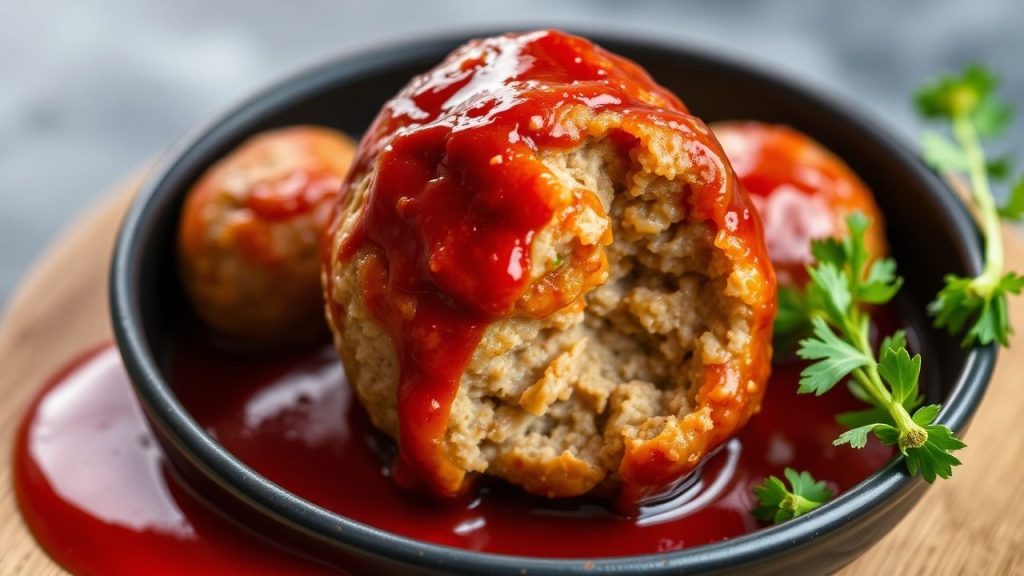
For restaurant-style finish, briefly broil to tighten the crust or glaze lightly with sauce and return to the oven to concentrate flavors. Finish time depends on size and oven intensity.
Nutritional snapshot
A typical serving of three medium baked meatballs contains approximately 320 kcal with a protein-heavy profile and moderate fat. Exact values depend on the meat blend and added toppings.
Use a nutrition calculator when altering meat ratios; leaner mixes lower calories but change mouthfeel and juiciness.
| Nutrient | Per Serving (3 meatballs) |
|---|---|
| Calories | 320 kcal |
| Protein | 22 g |
| Carbohydrates | 7 g |
| Fat | 22 g |
Final notes on reliability and flavor of baked meatballs
A methodical approach removes guesswork and produces repeatable results. Precise hydration, measured ratios, and thermometer use turn a home recipe into a consistent staple.
Respect ingredient function and thermal mechanics and the oven will deliver juicy interiors and caramelized exteriors. Adjust time by size and rely on temperature rather than guesswork.
FAQ
Below are focused answers to common questions about baked meatballs to help troubleshoot and refine your technique quickly.
Each answer gives practical steps and the underlying reason so you can apply the fix immediately.
What oven temperature yields the best browning without drying?
Set the oven to 400°F (200°C) for a balanced result where the exterior browns via the Maillard reaction while the interior cooks through. This temperature promotes efficient browning without excessive time in the oven.
If you see overbrowning before the center reaches 160°F (71°C), reduce oven temperature by 25°F and extend time, or move the tray lower in the oven to slow surface coloring.
How do I prevent meatballs from becoming dense?
Mix ingredients only until evenly distributed and avoid vigorous handling. Hydrating breadcrumbs and using a mix of beef and pork limit shrinkage and compressive toughness during cooking.
Chilling briefly before baking firms shape but avoid extended resting at refrigerator temperature as very cold meat can tighten and reduce tenderness.
Are baked meatballs safer than fried?
Baking reduces added surface oil and allows excess fat to render away from the meatballs on the sheet. For reliable safety, monitor internal temperature rather than cooking method alone.
Target 160°F (71°C) for ground beef and pork blends for safe consumption. Use a probe thermometer to verify temperature in several pieces to avoid undercooked pockets.
Can I scale this recipe for larger meatballs?
Yes. Increase bake time for larger diameters and rely on a probe thermometer to reach the target 160°F (71°C). Larger pieces require slower heat penetration, so monitor temperature rather than time alone.
For very large meatballs, consider lowering oven temperature by 25–50°F and extending bake time, which allows the center to reach temperature without the surface overbrowning.
What role does resting play after baking?
Resting lets juices redistribute and internal temperature stabilize, reducing moisture loss when cut. A brief 4–6 minute rest materially improves perceived juiciness and texture.
Serve immediately after resting for the best balance of warm interior and intact structure. Long resting times will cool the center and slightly firm the texture.
For related technical concepts see meat composition and general food safety guidance to align ratios and temperatures with established standards.
See also: meatball baking techniques and ratio tuning for larger batches.
See also: baked meatballs
]]>