- Cold fats and minimal handling are the two fastest fixes for toughness.
- Flour type and hydration control gluten development; choose wisely.
- Chill and rest the dough to relax gluten and firm fats before rolling.
Why Pie Crusts Turn Tough
Tough pie crusts result from excess gluten formation, lost fat barriers, or moisture imbalance. Each factor interacts during mixing, resting, and baking to change texture.
Flour protein content and temperature play large roles. For background on gluten chemistry, see gluten.
Overworking the Dough
Mechanical action develops gluten. The more you mix, knead, or press, the firmer those networks become, which produces chew instead of flake.
Use a pastry cutter, two knives, or quick pulses in a food processor to limit development. Stop when the dough barely holds together.
Warm Ingredients and Melted Fats
Warm butter blends too smoothly into flour, removing the chunks that steam and create layers. That means fewer laminated pockets and a denser crumb.
Keep butter and shortening cold until baking. For context on fats and texture, read about butter.
Wrong Flour and Excess Protein
High-protein flours like strong or bread flours form stronger gluten. That strength works for bread, not pastry.
Use all-purpose or pastry flour for crusts. For general background, see the flour article.
Practical Fixes You Can Use Today
The following steps address the common failure points directly. Each item focuses on controlling gluten, preserving fat, or correcting moisture.
Apply these fixes in order during your next bake to test improvement and learn what matters most for your oven and ingredients.
1) Keep Everything Cold
Chill your fat, equipment, and work surface when possible. Cold fats stay solid and create distinct pockets that steam into flakes during baking.
Splash only a tablespoon of very cold water at a time to bring dough together. If you want a scientific context for heat and cooking, see baking.
2) Measure and Choose Flour Wisely
Use the correct flour and measure by weight when possible. Excess flour will increase gluten; too little gives a sticky mess and potential overworking while correcting it.
Swap to pastry flour if you find consistent toughness with all-purpose. Pastry flour reduces protein content and limits gluten strength.
3) Limit Handling and Mixing Time
Combine until the dough just holds. Stop mixing the moment pea-sized fat pieces remain visible—those pockets make flake.
When rolling, lift and chill the dough rather than kneading. Gentle handling preserves the layer structure you want.
4) Rest and Chill Properly
Rest dough at least 1 hour in the refrigerator so gluten relaxes and fats firm up. Resting prevents shrinkage and improves flake.
If you make dough ahead, wrap discs tightly and let them rest for 24–48 hours or freeze for longer storage. Thaw slowly in the refrigerator before rolling.
[having separated blocks — see below for expert tips and cautions]
After chilling, handle the dough only enough to roll and fit into the pan. Stretching causes spring-back during baking and a tougher edge.
 Expert Insight
Use floured parchment or silicone surface to roll with minimal extra flour. That reduces the tendency to overwork the dough while preventing sticking.
Baking Techniques That Prevent Toughness
Baking method influences final texture. Uneven heat or overbaking can dry the crust into chew instead of crisp break.
Start at a moderate temperature and watch for golden color. Use a preheated baking sheet to help the bottom set quickly and form flaky layers.
Shielding and Timing
Use a shield or foil on edges to prevent overbrowning while the center finishes. Rotate the pie halfway through for even color and doneness.
Remove the foil in the last 10–15 minutes if you want a deep golden finish. Avoid overbaking; crumb moisture retention matters for tenderness.
 Pro-Caution
Allow the pie to rest briefly after baking; short rest improves slicing without compressing layers. Serve while warm for best textural contrast with cold accompaniments.
Recipe Notes and Chef’s Tips
Use a fat blend—about 50/50 butter and shortening—for taste and reliable structure. Butter gives flavor; shortening offers a higher melting point for stable flake.
Acid like a teaspoon of vinegar or lemon juice slightly weakens gluten and can improve tenderness without changing flavor. Add it with the cold water.
For troubleshooting, keep a baking log: note flour brand, butter temperature, water amount, chill times, and oven behavior. Small changes often reveal the core issue.
For more technique pieces on dough and pastry, reference your site’s internal resources: pie crust ingredients guide and pie baking basics.
Serving and Salvage Strategies
If a crust comes out slightly tough, present it with a soft component: ice cream, custard, or a sauce. That contrast improves perceived texture.
For future bakes, apply one change at a time—cold fat, less mixing, or different flour—so you can identify the effective adjustment.

| Nutrient | Per Serving |
|---|---|
| Calories | 320 |
| Protein | 4g |
| Carbohydrates | 28g |
| Fat | 22g |
FAQ
Why does overworking make crust tough?
Mechanical action aligns gluten proteins and forms a network. The stronger that network becomes, the more chew you will taste rather than flake.
Limit handling and stop mixing when the dough just holds together to retain a tender crumb.
Can I fix a crust after it is already tough?
If the crust is already baked and tough, you cannot fully reverse the structure. Use moist or fatty accompaniments to soften each bite and improve enjoyment.
For future bakes, change one variable at a time—temperature or flour—to isolate the cause.
Does butter really make a better tasting crust than shortening?
Butter provides superior flavor because of milk solids and water. Shortening can improve lift and flake due to its higher melting point.
Combine fats to get both flavor and structure: many professionals use a mix for consistent results.
How important is chilling time?
Chilling relaxes gluten and firms fat, which reduces shrinkage and improves lamination. At least one hour is a practical minimum for most doughs.
Longer chill times—up to 48 hours—can improve handling and flavor. Freeze for longer storage and thaw in the refrigerator.
What flour should I use to avoid toughness?
All-purpose or pastry flour gives a balanced protein level that limits strong gluten development while providing structure. Avoid bread or high-gluten flours for pie crust.
Measure flour by weight for consistency, and adjust water in small increments to avoid overhydration.
Apply these focused adjustments and you will correct most causes of a tough crust. Keep notes and test methodically to build reliable, flaky results every bake.
See also: pie crust
]]>Cookie scoops are a small investment that delivers large returns in consistency, yield control, and visual appeal. Use the right scoop and you get uniform cookies that bake evenly and present professionally.
- Even portions mean predictable bake times and consistent texture.
- Right material and mechanism reduce sticking and speed release.
- Scoop size matters for edge crispness versus chewy centers.
Choosing the Right Cookie Scoop for Every Recipe
Select a scoop by size, material, and release mechanism to match your dough type. Small scoops (about 1 tablespoon) produce bite-size cookies; large scoops (2–3 tablespoons) yield bakery-style cookies best for dunking.
Material affects release and durability. Stainless steel scoops resist staining and maintain a smooth bowl; plastic scoops are light and inexpensive but may need light greasing. For more on materials, see stainless steel.
For sticky or dense dough, choose a spring-loaded scoop with a scraping arm to clear dough without finger contact. Measure by tablespoon or ounces to keep portioning consistent across batches.
Professional bakers often keep a set of three sizes to match recipe goals: small for crisp cookies, medium for balanced chew, and large for soft-center cookies. Keep lids or covers for nested scoops to prevent kitchen grime.
Mastering the Art of Perfect Cookie Shapes
A neat, round dough ball bakes more predictably than an uneven clump. Dispense dough onto a lined sheet and space portions to allow for spread; spacing prevents collision and uneven browning.
Gently roll or smooth dough balls with lightly floured hands when recipes call for a tidy edge. For soft doughs, chill scooped dough on the sheet for 20–30 minutes to firm fats and slow spread during baking.
For recipes like classic chocolate chip cookies, scoop size directly affects crumb and edge texture. Learn how size shifts bake behavior by testing one tray with different scoop sizes and noting time and mouthfeel; refer to guidance on the chocolate chip cookie for style examples.
When you need perfect domes, slightly underbake and allow resting on the sheet. The residual heat firms centers without overcooking edges, delivering that ideal soft center versus crisp edge contrast.
Tips and Techniques for Even Baking Results
Uniform portioning reduces variance in bake time and texture. Always preheat the oven fully and position racks in the center for even convection under standard home conditions.
Rotate sheets halfway through the bake on conventional ovens to counter hot spots. Use parchment paper or silicone mats to promote even browning and simplify cleanup.
Chilling dough reduces spread by solidifying butter and shortening melting window in the oven. For crisp edges and soft centers, remove cookies when edges show color but centers remain slightly soft.
Invest in a reliable oven thermometer to verify temperature. Many ovens run off by 10–20°F; consistent temperature yields repeatable results across batches.
Cleaning and Maintaining Your Cookie Scoops for Longevity
Proper cleaning preserves function and prevents flavor transfer. Wash scoops with warm, soapy water and a soft brush for moving parts; avoid abrasive pads on polished surfaces.
Dry metal scoops thoroughly to prevent corrosion and, if manufacturer-recommended, apply a light film of food-grade oil for long-term storage. Store scoops in a dedicated drawer or utensil holder to prevent dents.
Spring-loaded mechanisms can trap dough. Use a small brush or wooden pick to clear crevices after each use, then test the release before next batch. Regular maintenance avoids sticky buildup that degrades release performance.
Replace worn scoops; a warped bowl or sticky arm increases scrap and slows production. For commercial environments, maintain an inventory of backup scoops to ensure uninterrupted service.
Recipe Timing, Yield and Tools
Prep Time: 10 minutes is typical for scoop-and-bake recipes when dough is ready. Efficient portioning cuts hands-on time and keeps production steady.
Cook Time: 12–15 minutes depending on scoop size and oven behavior. Monitor the first batch closely and adjust minutes for your oven and sheet type.
Yield: About 24 medium cookies using a 1.5 tablespoon scoop; scale linearly with dough weight. Weigh a single scoop if you need precise batch counts for events or baking sales.
Tool checklist: cookie scoops in 3 sizes, silicone mats or parchment, oven thermometer, wire rack for cooling. These items create a workflow that minimizes second-guessing and waste.
Ingredients (for the example cookie)
- 2 1/4 cups all-purpose flour, sifted
- 1 teaspoon baking soda
- 1/2 teaspoon salt
- 1 cup unsalted butter, softened
- 3/4 cup granulated sugar
- 3/4 cup packed brown sugar
- 1 teaspoon vanilla extract
- 2 large eggs
- 2 cups semi-sweet chocolate chips
These ingredients form a versatile base. You can vary sugar ratios or add egg yolk to tune chewiness or crispness.
Instructions
- Preheat the oven to 375°F (190°C). Line baking sheets with parchment or silicone mats for even heat distribution.
- Combine flour, baking soda, and salt in a bowl and set aside.
- Cream butter and both sugars until light and fluffy, about 3–4 minutes with a mixer. Add eggs and vanilla, mixing to combine.
- Fold dry ingredients in gradually and stop when just combined to avoid gluten overdevelopment.
- Stir in chocolate chips evenly. Use a 1.5 tablespoon scoop to portion dough about 2 inches apart on the sheet.
- Optional: Chill scooped dough 20 minutes to reduce spread. Bake 12–15 minutes or until edges are lightly golden.
- Cool on the baking sheet 5 minutes, then transfer to a wire rack to finish cooling.
Scaling: for larger batches, portion dough directly onto multiple sheets and freeze trays before bagging for long-term storage. Bake from frozen by adding 1–2 minutes to bake time.
Chef’s Notes and Variations
For chewier cookies, substitute half the butter with a butter-substitute or add one extra egg yolk. For crisper edges, increase bake time by 1–2 minutes while watching color carefully.
Swap mix-ins—nuts, dried fruit, or white chocolate—to vary flavor. If dough sticks to the scoop, dip the scoop in warm water or spray lightly with nonstick spray between portions.
Expert Insight
Use parchment or silicone mats to reduce turnaround time between batches. They improve browning consistency and remove the need for repeated greasing.
Pro-Caution
Serving Suggestions
Serve warm cookies with cold milk or coffee for classic pairings. A light sprinkle of flaky sea salt lifts chocolate flavors and balances sweetness.
For presentation, arrange cookies on a platter with fresh berries or a small pot of jam. Use doilies or parchment circles to keep display neat and avoid grease stains.
Nutrition Snapshot
| Nutrient | Per Cookie |
|---|---|
| Calories | 140 kcal |
| Protein | 1.5 g |
| Carbohydrates | 18 g |
| Fat | 7 g |
Use the table to plan portions and label baked goods for sale or events. Adjust ingredient amounts for dietary needs or batch scaling.
Q&A
Q&A: Cookie Scoops Unwrapped – Scoop, Shape, and Bake Perfect Treats
What is a cookie scoop and how does it differ from a small ice cream scoop?
A cookie scoop is a handheld portioning tool sized for cookie dough and often includes a scraping arm for release. It differs from ice cream scoops by size, bowl shape, and release mechanism optimized for thicker batters and dough.
Which scoop size should I use for different cookie textures?
Smaller scoops (1 Tbsp) make crisper cookies while larger scoops (2–3 Tbsp) yield thicker centers and softer, chewier interiors. Test sizes to match your desired texture and adjust bake time accordingly.
Can I use a cookie scoop for other kitchen tasks?
Yes. Cookie scoops work well for portioning muffin batter, shaping meatballs, and filling muffin tins. Their consistent portioning speeds prep and creates uniform results across many recipes.
How should I maintain and store cookie scoops?
Wash with warm, soapy water and dry thoroughly. Lubricate moving parts if the manufacturer recommends it and store scoops uncompressed in a drawer to avoid warping.
Where can I learn more about baking techniques and cookie styles?
Consult reliable references for foundational techniques, such as the general practice of baking and the variety of styles summarized under the entry for cookies. These resources clarify ingredient roles and heat behavior.
Concluding Remarks
The right cookie scoop clarifies portioning, speeds production, and improves presentation. Small changes in scoop size and dough handling produce measurable differences in texture and bake time.
Practice portioning and bake one tray as a test to lock in time and temperature for your oven. Once you find the right combination, you will produce consistent, bakery-quality cookies every time.
See also: Cookie scoops
]]>
- Quick prep: Ready in about an hour including a brief marinate for deeper flavor.
- Healthy choice: High in protein and omega-3s while staying naturally low-carb.
- Flavor balance: Lemon zest and herbs enhance the trout without masking it.
- Consistent results: Simple timing and a hot tray yield restaurant-quality texture.
Prep and Cook Time
Preparation: Plan for 15 minutes active work and a 30-minute marinate to let citrus and herbs infuse. This schedule keeps hands-on time short and fits typical weeknight cooking.
Cooking: Bake at 400°F (200°C) for 20–25 minutes, adjusting for fillet thickness. Thinner fillets finish closer to 12–15 minutes while thicker pieces need the full range to reach safe doneness.
Yield
This recipe yields four plated servings, ideal for a family dinner or a small gathering. Portion size emphasizes a balanced plate with a protein-forward main and light sides.
Scale ingredients linearly for more guests, keeping fillets in a single layer on the tray. Crowding slows heat transfer and increases bake time, so use multiple pans if needed.
Difficulty Level
Skill: Easy to medium. The techniques are straightforward but timing and temperature matter for optimal texture. A short marinate and careful baking deliver a professional finish.
Home cooks with basic knife and oven skills succeed reliably. For crisp skin, pat fillets dry and preheat the tray; that prevents sticking and helps the skin render.
Ingredients
Use fresh, high-quality items: whole trout fillets with skin on, fresh lemon zest, extra-virgin olive oil, garlic, and thyme. These elements create a bright, balanced profile without heavy sauces.
Below are measured components for four servings; substitute herbs like dill if preferred to vary aroma. Note that citrus zest provides concentrated oils that elevate the surface aroma during baking.
- 4 whole trout fillets, skin on, cleaned and patted dry
- 2 tablespoons fresh lemon zest (about 2 lemons)
- 3 tablespoons extra-virgin olive oil
- 2 cloves garlic, minced finely
- 1 tablespoon fresh thyme leaves
- 1 teaspoon freshly ground black pepper
- 1 teaspoon sea salt
- 1 lemon, thinly sliced for garnish
- Fresh parsley for finishing
- Optional: 1 tablespoon capers for a savory, saline kick
Instructions
Follow the sequence to preserve moisture and build layered aroma. Efficient, even coating of the marinade ensures consistent seasoning across all fillets.
Keep the fillets cold until the oven is ready to maintain food safety and uniform baking. Preheat the tray or skillet to promote crisp skin and even heat entry.
- Prepare the marinade: Whisk olive oil, lemon zest, minced garlic, thyme, salt, and pepper until well combined.
- Marinate the trout: Place fillets skin-side down in a shallow dish and spoon the marinade over them. Cover and refrigerate for at least 30 minutes.
- Preheat the oven: Set to 400°F (200°C) and place a tray or cast-iron skillet inside to heat.
- Arrange for baking: Lay fillets skin-side down on parchment or a lightly oiled tray and top each with a lemon slice.
- Bake: Slide the tray into the hot oven and bake 20–25 minutes until flesh flakes easily with a fork.
- Garnish and serve: Rest fillets five minutes, sprinkle parsley, and serve with fresh lemon wedges to finish.
Marinade and Seasoning Details
Use zest, not only juice, to capture citrus oils that cling to the fish surface. Zest provides volatile aromatic compounds that juice lacks and helps the finished fillet smell brighter.
Control salt early and adjust at plating. Capers contribute saline umami; add sparingly so they complement rather than overpower the lemon-herb balance.
Baking and Finishing Techniques
Position the tray on the middle rack for even heat circulation. For crisp skin, finish briefly under the broiler for 60–90 seconds while watching closely.
Rest fillets five minutes out of the oven to let juices redistribute, then squeeze a little fresh lemon for an immediate lift. This preserves moisture and brightens the final bite.
[CODE NOT ALLOWED REMOVED]
Chef’s Notes & Tips for Success
Small technique choices change texture and flavor measurably. Drying the skin, measuring oil, and limiting acid time preserve the fish’s delicate structure.
Pay attention to fillet thickness: thin pieces need 12–15 minutes while thick fillets take 20–25 minutes. Use a fork to test doneness gently to avoid overbaking.
- Marinating time: Thirty minutes brightens flavor; overnight deepens infusion but monitor acidity.
- Freshness matters: Choose trout with firm flesh and mild aroma for best results.
- Substitutions: If thyme is unavailable, try fresh dill or rosemary for different aromatic notes.
- Heat tool: Preheat a cast-iron tray for superior sear and even baking.
- Make-ahead: Prepare marinade and refrigerate fish for up to 24 hours; bake just before serving.
[RIGHT AFTER CHEF NOTES: EXPERT CALLOUT]
[ITEM: Expert Insight follows]
[NOTE: BLOCKS BELOW ARE FORMATTED AS REQUIRED]
Expert Insight
Switch herbs seasonally to vary aroma: thyme gives earthy depth while dill reads brighter and more maritime. Adjust quantities conservatively because fresh herbs intensify when heated.
Pro-Caution
Serving Suggestions to Complement the Lemon Zest
Pair this baked trout with light, textural sides that echo the citrus-herb theme. A peppery arugula salad or a simple quinoa pilaf balances the plate without adding heavy sauce.
Roasted baby potatoes tossed in olive oil and herbs make a hearty counterpoint, while steamed green vegetables finished with a squeeze of lemon keep the meal bright. Toasted nuts add crunch and complexity.
Nutritional Snapshot
Per serving estimate: This portion supplies lean protein and omega-3 fats with minimal carbohydrates. Exact calories vary by fillet size and added oil.
Below is a typical macronutrient breakdown for a standard fillet portion prepared as directed. Adjust for side dishes and cooking method changes.
| Nutrient | Amount per Serving |
|---|---|
| Calories | 280 |
| Protein | 34g |
| Carbohydrates | 2g |
| Fat | 14g |

Background & Ingredient Notes
Understanding key ingredients helps apply the method beyond this recipe. Trout characteristics and citrus chemistry inform timing and technique choices.
For quick reference, consult reliable background entries: trout biology and varieties, lemon properties, olive oil classes, and thyme profiles. These sources inform ingredient selection for consistent results.
Relevant references: trout, lemon, olive oil, and thyme.
Q&A Clarifications
Use this short Q&A to adjust timing and troubleshoot texture or seasoning issues. Answers are concise and actionable for cooks at home.
Keep these tips handy while cooking to make small corrections that preserve the trout’s natural qualities.
FAQ
What makes baked trout with lemon a popular dish?
The combination of delicate trout and bright citrus creates a clean, satisfying plate. Lemon balances natural fattiness and adds aroma without heavy sauces.
That simplicity appeals to cooks seeking a fast, healthy meal that still reads as refined on the plate.
Why is trout a good choice for baking?
Trout cooks evenly and tolerates modest oven heat without drying quickly. Its moderate fat content helps preserve moisture during a short bake.
Fillets accept direct flavoring like citrus, olive oil, and fresh herbs, which keeps the final dish lively without masking the fish.
How should I test for doneness?
Use a fork to check if the center flakes easily and appears opaque. If the flesh still looks translucent, return to the oven for a few minutes and recheck.
Internal temperature for cooked trout should read about 145°F (63°C) at the thickest point if you prefer metric precision and food-safety confirmation.
Can I substitute another fish?
Yes. Thin white-fleshed fish like sea bass or cod work with similar timings, while thicker fish such as salmon need slightly longer and yield a different mouthfeel. Adjust bake time to thickness.
Maintain skin-on preparation where possible to protect fillets from direct heat and to gain texture benefits from a preheated tray.
Is this suitable for special diets?
Yes. The recipe is naturally gluten-free and low in carbohydrates and fits many heart-healthy plans due to the omega-3s found in trout. Adjust sides to meet specific dietary goals.
Use measured oil and minimal added salt to control calories and sodium for stricter dietary needs.
See also: For deeper technique on herb pairing and side dishes, review trusted culinary references on herbs and grain preparations. Use the listed Wikipedia links above for concise background on principal ingredients.
See also: baked trout
]]>
- Key takeaways: Classic assembly flips fruit into a glossy crown.
- Timing matters: Brown sugar and butter must caramelize before you bake.
- Texture tips: Fold gently to keep the cake light and moist.
- Modern twists: Spice, fresh fruit, and alternative flours broaden appeal.
This piece explains the recipe, technique, and focused variations that preserve the cake’s identity while improving consistency. Expect clear steps, safety notes, and tested tips you can use immediately in the kitchen.
History and Origin of Pineapple Cake
The pineapple cake rose to popularity in the early 20th century when canned pineapple became widely available. Canning made the fruit affordable and stable, which changed how home bakers used pineapple in desserts.
Early recipes used a skillet or cast-iron pan and inverted the cake to display caramelized fruit on top. For background on the ingredient and technique, see pineapple and cake history for context.
Prep and Cook Time for Pineapple Cake
Plan your workflow: prep takes about 20 minutes, baking runs 35–40 minutes, and a brief cool-down prevents a messy inversion. Good timing ensures the brown sugar-butter layer sets enough to release cleanly when you flip the pan.
Preparation time: 20 minutes. Cooking time: 35–40 minutes. Cooling time: 15 minutes before unmolding. Use a kitchen timer and test with a toothpick to confirm doneness.
Yield for Pineapple Cake
This standard version yields a 9-inch round cake that serves 8 generous slices. Adjust pan size or divide batter for minis; reduce baking time for smaller portions and test with a toothpick for doneness.
If you prefer cupcakes or individual servings, portion into muffin tins and reduce bake time to 15–20 minutes. Individual portions speed serving and make neat single-serve presentations that are easier to transport.
Difficulty Level: Pineapple Cake Basics
Difficulty rates as easy to intermediate because the steps are simple but timing and inversion require care. Novices will succeed by following measured steps and avoiding overmixing.
Cast-iron or heavy, well-greased pans work best for even caramelization and release. Use room-temperature eggs and warmed milk to assure batter blends smoothly and avoids broken emulsions.
Ingredients
Ingredient quality influences final texture and flavor. Use fresh butter and pure vanilla for the best caramel depth and stable crumb.
- ¾ cup (1½ sticks) unsalted butter, melted and slightly cooled
- 1 cup packed light brown sugar
- 1 (20-ounce) can pineapple slices in juice, drained, or 1 fresh pineapple, peeled and sliced into rings
- 8 maraschino cherries, drained
- 1½ cups all-purpose flour, sifted
- 1 teaspoon baking powder
- ½ teaspoon fine sea salt
- 2 large eggs, at room temperature
- ¾ cup granulated sugar
- 1 teaspoon pure vanilla extract
- ½ cup whole milk, warmed
- Optional: ½ teaspoon ground cinnamon or ¼ teaspoon ground ginger
For a lighter crumb, substitute part of the all-purpose flour with cake flour. For dietary swaps, use a one-to-one gluten-free blend tested for baking to preserve structure.
Instructions
Preheat the oven to 350°F (175°C) and prepare a 9-inch round pan by greasing it thoroughly. A film of butter prevents adhesion and supports clean unmolding.
- Pour the melted butter into the prepared pan and spread it to coat the bottom evenly.
- Sprinkle the brown sugar over the butter and press lightly to form a level layer.
- Arrange pineapple slices on the sugar layer and set a cherry in each ring center.
- Whisk flour, baking powder, salt, and spices in a bowl until uniform.
- Beat eggs and granulated sugar until light, then stir in vanilla.
- Alternate adding the dry mix and warm milk to the eggs, starting and ending with dry ingredients. Fold gently to keep the batter airy.
- Pour batter over fruit, smoothing the top with an offset spatula.
- Bake 35–40 minutes until a toothpick inserted near the center comes out clean and edges pull slightly from the pan.
- Cool in the pan for 15 minutes, run a thin knife around the edge, then invert onto a plate. Lift the pan carefully to reveal the glossy top.
After unmolding, let the cake sit a minute before slicing so the caramel sets slightly. Serve warm or at room temperature for the best texture contrast with cold accompaniments.
Pro-Caution
Tips for Success
Small technique choices make the difference between sticky frustration and a flawless release. Melted butter and evenly packed brown sugar create the ideal caramel layer under the fruit.
Use fresh pineapple when you want bright acidity and texture; canned fruit gives consistent sweetness and predictable caramelization. If using fresh, blot excess juice to preserve the crust and avoid sogginess.
Expert Insight
Keep eggs at room temperature to achieve a stable batter and uniform rise. Also, warm milk mixes more quickly into the batter and reduces the chance of lumps or overmixing.
- Fresh vs. canned: Fresh gives brightness; canned provides even caramel color.
- Moisture control: Warm milk blends more evenly; do not overmix batter.
- Make-ahead: Bake one day ahead, cover at room temperature, and reheat gently uncovered.
Flavor Variations
Add small amounts of warm spices like cardamom, ginger, or cinnamon to the batter for aromatic depth. These spices complement pineapple and work well with toasted coconut or macadamia nuts as a finishing touch.
For an adult twist, soak fresh pineapple slices in a little rum or dark spirit for 10–15 minutes before assembling. Reserve excess liquid and reduce it to a glaze for brushing over slices at service.
Serving Suggestions
Serve each slice with whipped cream, vanilla ice cream, or a drizzle of coconut cream to balance the caramel’s richness. Contrast temperature by pairing warm cake with chilled ice cream for high sensory appeal.
Garnish with a sprig of mint or a scatter of toasted coconut for texture and visual lift. For the classic red accent, use maraschino cherries; read more about the preserved fruit at maraschino cherry.
Caramelization and Science
Caramelization occurs when sugar breaks down and forms brown, complex-flavored compounds under heat. Understanding this helps you predict how the brown sugar will transform under butter and fruit.
Control heat and time to favor deep flavor over bitterness. For a technical overview of the reaction, consult caramelization and adjust your stovetop or oven technique accordingly.
Nutrition
Per-serving nutrition varies with portion size and ingredient swaps. The estimate below reflects the standard recipe using full-fat dairy and standard sugars.
| Nutrient | Per Serving |
|---|---|
| Calories | 320 kcal |
| Protein | 4 g |
| Carbohydrates | 45 g |
| Fat | 12 g |
To reduce calories, swap half the sugar for natural sweeteners and use lower-fat milk or plant-based milk. Whole-grain flour options increase fiber but may require slight hydration adjustments.
FAQ
What is the origin of the pineapple upside-down cake?
The cake gained popularity in North America when canned pineapple became widely available in the early 20th century. Home cooks adapted inverted cake techniques to showcase the fruit and caramel layer attractively.
Why does the cake bake upside down?
Baking inverted places the fruit and sugar at the heated pan base so they caramelize during baking. After flipping, that caramel sits on top as a glossy, flavorful crown.
Can I use fresh pineapple instead of canned?
Yes, fresh pineapple offers a brighter, juicier bite but requires draining and blotting to prevent a soggy base. You can briefly macerate slices in a splash of rum or juice to boost flavor before assembling.
How do I prevent the cake from sticking when I flip it?
Grease the pan thoroughly and press the brown sugar into melted butter to form a cohesive layer. Cool the cake for 10–15 minutes before inverting and run a thin knife around the edge to release it cleanly.
Can I make the cake gluten-free or lower-sugar?
Use a tested one-to-one gluten-free flour blend to maintain crumb and structure. For lower sugar, substitute part of the sugar with honey or maple syrup and reduce liquids slightly; expect a different texture and bake time adjustments.
For technique primers, consult the baking overview for standard methods and terms. For ingredient details, the pineapple entry helps explain flavor profiles and seasonal differences.
With a solid method and a few careful choices you can produce a pineapple cake that is both classic and distinctively yours. Follow the steps, respect the heat, and enjoy a reliably glossy finish every time.

See also: Pineapple Cake and Cake Basics
See also: pineapple cake
]]>
- Quick bake: Air fryers produce a crisp exterior in minutes.
- Texture control: Fresh ingredients and correct mixing yield a tender crumb.
- Simple swaps: Use frozen blueberries or gluten-free flour with small adjustments.
- Serve warm: A short reheat in the air fryer restores crisp edges.
Perfecting the Balance Between Crispiness and Fluffiness
Achieving a crisp top with a tender interior begins with batter hydration and heat management. Use room-temperature dairy and eggs so steam creates lift during baking, producing an airy crumb.
Also, control the surface by applying a light coating of melted butter and a dusting of coarse sugar before baking. This method caramelizes the top quickly, improving crunch without drying the center.
Choosing the Freshest Blueberries and Ingredients for Bold Flavor
Blueberry selection matters because berry quality affects both taste and moisture in the batter. Choose firm, plump berries for fresh bursts, or use well-drained frozen berries to avoid purple batter streaks.
Use fresh baking powder and properly sifted flour to ensure even rise and structure. For background on the fruit and its varieties, see the Blueberry entry on Wikipedia for cultivar notes and seasonality.
Step-by-Step Air Fryer Techniques for Even Baking and Texture
Preheat the air fryer to stabilize heat; most models need at least five minutes at 350°F (175°C). A preheated chamber ensures the top sets quickly, creating a crisp shell while the interior rises.
Space muffin cups to allow consistent airflow and avoid overcrowding the basket. Rotate the tray halfway through baking if your model shows hot spots, which helps uniform browning.
- Preheat: 350°F (175°C).
- Mix: Fold wet into dry until just combined; do not overmix.
- Fold berries: Add blueberries at the end to prevent color bleed.
- Fill: Fill cups 3/4 full for proper rise.
- Bake: 12 minutes, check with a toothpick for moist crumbs.
Expert Tips for Customizing Your Muffins with Add-Ins and Toppings
Modify texture and flavor safely by selecting add-ins that stay stable during baking. Nuts, citrus zest, or chocolate chips enhance crunch and aroma without upsetting batter balance.
For dietary swaps, choose measured substitutions: replace 25–50% of all-purpose flour with a gluten-free blend that contains xanthan gum, or substitute up to half the sugar with maple syrup while reducing liquid slightly.
Expert Insight
Prep, Cook Time, Yield, and Difficulty
These muffins require little hands-on time, making them ideal for busy mornings. Expect about 15 minutes to prepare and roughly 12 minutes to bake, depending on your air fryer model.
Yield is eight muffins from the ingredient list below, and the recipe rates as easy for novice bakers. For additional air fryer dessert ideas, check the site’s internal collection linked below.
- Preparation: 15 minutes
- Cooking: 12 minutes
- Total: 27 minutes
- Yield: 8 muffins
- Difficulty: Easy
Ingredients
Use accurate measurements and room-temperature wet ingredients for consistent results. Fresh baking powder ensures lift and prevents flat muffins.
Below is a reliable ingredient list you can scale. For context on leavening agents, consult the Baking powder article.
- 1 1/2 cups all-purpose flour, sifted
- 3/4 cup granulated sugar
- 1/2 tsp salt
- 2 tsp baking powder, fresh
- 1/3 cup unsalted butter, melted and cooled
- 1 large egg, room temperature
- 1/2 cup whole milk, room temperature
- 1 tsp pure vanilla extract
- 1 cup fresh blueberries, patted dry
- Optional toppings: coarse sugar, sliced almonds, cinnamon, lemon zest
Instructions
Work efficiently so batter sits as little as possible after mixing. Short resting keeps the baking powder active and preserves the light texture.
Follow the ordered steps below and check muffins early, as air fryer models vary. A toothpick with moist crumbs indicates correct doneness.
- Preheat your air fryer to 350°F (175°C).
- Combine dry: Whisk flour, sugar, salt, and baking powder in a bowl until even.
- Whisk wet: Mix melted butter, egg, milk, and vanilla in a separate bowl.
- Fold: Pour wet into dry and fold until just combined; do not overmix.
- Add berries: Gently fold in blueberries to avoid crushing.
- Line tray: Use silicone liners or parchment cups fitted to the tray.
- Fill cups: Divide batter evenly, filling three-quarters full.
- Top: Brush with melted butter and add optional toppings.
- Bake: 12 minutes, rotate halfway if needed, and test with a toothpick.
- Cool: Transfer to a wire rack for 10 minutes to prevent soggy bases.
Tips for Success
Small technique choices yield consistent results: sift flour, measure with a digital scale for precision, and avoid overworking the batter. These steps maintain a fine crumb and lift.
When using frozen berries, fully thaw and pat dry to prevent excess moisture in the batter. Also, rotate the tray halfway to combat air fryer hot spots and promote even browning.
- Use fresh leavening: If baking powder is older than six months, replace it.
- Fill correctly: Underfilling produces smaller muffins; overfilling risks overflow.
- Cooling: Cooling on a wire rack prevents steam from softening the base.
- Air fryer collections: For more variations, visit our air fryer dessert recipes and air fryer breakfast recipes pages.
Allow a pause after reading the tips and before baking; a short planning step reduces errors and improves results. Check your air fryer manual to confirm rack height and temperature accuracy.
Pro-Caution
Serving Suggestions
Serve these muffins warm for the best contrast between crisp top and tender interior. A light smear of butter or a drizzle of honey enhances flavor without masking the berries.
They pair well with coffee, tea, or a dollop of Greek yogurt to add protein for a balanced snack. For plating ideas, garnish with a few fresh berries and a sprig of mint to boost visual appeal.
Nutritional Snapshot
This table provides approximate values per muffin for portion control and meal planning. Values will change with substitutions or added toppings.
| Nutrient | Per Muffin |
|---|---|
| Calories | 180 kcal |
| Protein | 3 g |
| Carbohydrates | 28 g |
| Fat | 6 g |
Explore more air fryer dessert recipes and discover texture-focused techniques for other quick bakes. For background on small electric countertop appliances, see the Air fryer Wikipedia page.

FAQ
What makes air fryer blueberry muffins different from oven-baked ones?
Air fryers use rapid hot air circulation, which browns surfaces faster and often yields a crisper exterior. Therefore, they create a more pronounced contrast between the crunchy top and the tender crumb.
The compact cooking chamber and shorter bake time also reduce moisture loss, preserving interior softness while delivering quick results.
Can I use frozen blueberries?
Yes, but thaw and pat them dry to remove excess moisture. This prevents the batter from becoming runny and reduces berry bleeding into the mixture.
Gently fold frozen berries into the batter to minimize color bleed and prevent crushing the fruit.
How do I keep muffins from sticking to liners?
Choose high-quality silicone liners or cut parchment to size for snug fit. Lightly grease cups if you notice sticking, especially with older or thinner liners.
A complete cooling period on a wire rack also aids release by allowing muffin structure to set before removal.
Can I adapt this recipe for other berries or mix-ins?
Yes. Swap blueberries for raspberries, blackberries, or chopped strawberries, and adjust moisture by using drier add-ins like toasted nuts. Keep add-ins small and relatively dry to avoid changing batter hydration significantly.
Chocolate chips or small fruit pieces work well; if you add moist fillings like cream cheese, reduce liquid slightly to maintain batter consistency.
How should I reheat muffins to restore crispness?
Reheat in the air fryer at 300°F (150°C) for 2–3 minutes to revive crisp edges without drying the center. Avoid microwaving, which softens the crust.
Store muffins in an airtight container at room temperature for up to two days; refresh them briefly in the air fryer before serving for best texture.
For context about quick quick-bake pastries and their structure, consult the Muffin Wikipedia entry. For ingredient sourcing and culinary technique references, the Vanilla page is useful for understanding extract potency.
See also: Air fryer
]]>
- Recipes give structure, not shackles; use them as starting points.
- Small swaps and timing tweaks deliver predictable, delicious results.
- Understanding technique beats blind obedience to measurements.
Recipes Are Guides, Not Rules
Recipes act as tested frameworks that combine ingredients, technique, and timing to produce reliable outcomes. Think of them as engineered suggestions: they show expected ratios and steps while leaving room for adaptation.
When you treat a recipe as a guide, you reduce anxiety and increase creative control. This approach improves skill because you learn why a substitution or time change works, not just that it does.
Why Recipes Feel Rigid
Certain tasks, especially in baking, require precise ratios for chemical reactions like gluten formation and leavening. In those cases, small changes can drastically alter texture and structure.
Conversely, many stovetop dishes tolerate broad adjustments in liquid, acid, or fat. Familiarity with fundamental methods in cooking lets you adjust with confidence and predictability.
Prep and Cook Time
Prep: 15 minutes | Cook: 25 minutes | Total: 40 minutes. These times are estimates based on standard oven settings and average ingredient temperatures.
Adjust times when you use denser flours, frozen fruit, or different bakeware. A practical gauge is a toothpick test or internal temperature for protein-rich items.
Yield
Serves 4 generously. Yield depends on portion size, accompaniments, and whether you slice thick or thin for serving.
Scale by weight, not by eyeballing, when you need consistent results across batches. Doubling or halving works, but watch bake time and pan size.
Difficulty Level
Medium. This recipe asks you to balance wet and dry ratios and to judge doneness visually and by touch. Those are foundational skills that scale to more complex preparations.
If you are developing intuition, start by making one change at a time. Track results in a simple notebook so you build a reliable personal reference.
Ingredients
1 cup all-purpose flour, sifted (whole wheat can replace some portion for nuttier flavor). Use flour weight for precision when possible.
2 large eggs, beaten (or flax eggs for a vegan option), 1/2 cup milk (dairy or plant-based), 1 tablespoon olive oil, 1 teaspoon baking powder, 1/2 teaspoon salt, 1 teaspoon vanilla extract (optional), 1 cup fresh berries or chopped fruit, and 2 tablespoons sugar (adjust to taste).
Instructions
Preheat your oven to 375°F (190°C) and prepare a baking dish. Proper preheat ensures predictable rise and browning.
Combine dry ingredients, add wet ingredients into a well, stir just until blended, fold in fruit, transfer to the pan, and bake 20–25 minutes until golden and a toothpick comes out clean. Let rest briefly to allow structure to set before slicing.
- Preheat oven and prepare pan with oil or parchment for even heat and easier release.
- Whisk flour, baking powder, salt, and sugar until uniform; this balances rising and texture.
- Create a well, add eggs, milk, oil, and vanilla, then stir gently—do not overmix.
- Fold in berries or fruit to coat and reduce sinking; distribute evenly in the pan.
- Spread batter to a uniform thickness for consistent baking across the dish.
- Bake 20–25 minutes or until top is golden and a tester shows no wet batter.
- Rest a few minutes before serving so the crumb firms and flavors meld.
Pro-Caution
Chef’s Notes: Tips for Success
Ingredient swaps change hydration and structure. For example, oat milk and almond milk vary in fat and soluble solids; adjust wet volume by 5–10% when you first swap.
Temperature of ingredients matters: cold eggs and milk slow rise, while room-temperature components blend more readily. Keep notes and make incremental changes.
- Substitutions: Try applesauce or mashed banana as a binder and natural sweetener for reduced fat and sugar.
- Timing: If using a heavier flour, extend bake time by 3–7 minutes and monitor color and tester results closely.
- Flavor: Add citrus zest for brightness or a pinch of spice to elevate fruit profiles.
- Texture: Fold in nuts or swirl cream cheese for contrast and interest.
Expert Insight
Serving Suggestions
Serve warm with a dollop of whipped cream or a drizzle of honey for a classic presentation. Garnish with extra berries or toasted nuts for visual and textural contrast.
Pair with a crisp salad for brunch or a robust tea for an afternoon treat. For ideas on manipulating crumb and mouthfeel, see our internal guide on baking textures explained and the internal ingredient substitution guide for common swaps.
| Nutrient | Per Serving |
|---|---|
| Calories | 320 kcal |
| Protein | 9 g |
| Carbohydrates | 45 g |
| Fat | 8 g |
How Technique Lets You Adapt
Technique is the lever that converts safe substitutions into reliable outcomes. For example, knowing how gluten develops helps you decide when to reduce mixing or when to add a binder for gluten-free flours.
Similarly, learning how acidity affects color and flavor gives you tools to balance a dish. Read about basic methods in culinary arts to build a practical foundation.
Q&A
Below are practical answers to common concerns about adapting recipes. These address beginners and experienced cooks who want confident results.
Are recipes meant to be followed exactly as written?
No. Recipes are tried methods that guide you to a reliable result, but they invite adaptation. When you understand why steps exist, you can make informed changes.
Why do people assume recipes need precision?
People conflate baking science with all cooking. Baking often demands specific ratios; other techniques tolerate flexibility. Learn the distinctions and apply them per recipe.
How do I start deviating confidently?
Change one element at a time: swap a liquid, adjust sugar by 10–20%, or change fat type. Record changes and results so you develop repeatable skills.
Can every recipe be adapted?
Not every element is flexible. Some desserts depend on exact chemistry. But most everyday recipes benefit from measured, tested adjustments once you grasp the technique.
Final Notes
Recipes give you a tested pathway to delicious meals while leaving room for personal expression. The goal is repeatable pleasure, not slavish compliance.
Embrace controlled experimentation: make small, deliberate changes, record what you learn, and adjust again. Over time your adaptations will become the best recipes you own.
FAQ
How do I choose which ingredients to swap first?
Start with non-structural elements: spices, sweeteners, and flavorings. Then move to liquids and fats. Structural swaps like flour require more testing.
Will substitutions ruin the texture?
They can if you change ratios drastically. Offset a denser flour with a bit more liquid or a binding agent. Test small batches when possible.
How should I track successful changes?
Use a short log: ingredient change, bake time, pan type, and result. Consistent notation helps replicate successes and avoid repeated errors.
Where can I learn standard wet-to-dry ratios?
Reference ratio guides and technique pages in trusted sources. A basic ratio notebook will speed decisions and reduce guesswork.
When should I revert to the original recipe?
If a change produces an undesirable texture or flavor, revert and test a smaller change. Iteration is the practical path to mastery.
See also: Recipes
]]>Muffins rely on a careful balance of flour, liquid, fat and leavening to yield a tender crumb and a rounded top. Over-mixing the batter changes protein structure and air distribution, which turns a promising batch into a dense, chewy result.
- Short take: Overworked gluten yields toughness and tunnels inside the crumb.
- Mixing target: Fold until just combined; a few small lumps are fine.
- Timing tip: Rest batter only briefly and bake immediately for best rise.
Prep and Cook Time
Preparation: 15 minutes. Baking: 20–25 minutes depending on oven and fill level.
Total time typically runs about 35–40 minutes for a standard 12-muffin batch. Plan to preheat the oven and line the tin while you combine wet and dry components.
Yield
This recipe yields 12 standard-sized muffins when you fill each cup about two-thirds full. Use a small scoop to portion batter evenly so baking time remains consistent across the pan.
If you make jumbo muffins, expect fewer yields and add a few minutes to the bake time. For mini muffins, reduce baking time and test early with a toothpick.
Difficulty Level
Rated Easy to Medium for home bakers with basic mixing skills. The technique focus here is on folding rather than intensive beating, which most cooks can master quickly.
Practice improves feel: the more batches you make, the better you will sense when batter is just combined. That muscle memory prevents the most common error—overworking the flour.
Ingredients
2 cups all-purpose flour, sifted; 3/4 cup granulated sugar; 2 tsp baking powder; 1/2 tsp baking soda; 1/4 tsp salt. Also include 1 cup buttermilk, 1/2 cup melted unsalted butter, 2 large eggs and 1 tsp vanilla.
Optional: fold in 1 cup fresh blueberries or other mix-ins gently. Use accurate measurements; weighing flour prevents excess protein and reduces the risk of over-mixing consequences.
Instructions
Preheat oven to 375°F (190°C). Line a 12-cup muffin tin or grease it lightly, then set aside while you mix the components.
- Whisk dry ingredients: flour, sugar, baking powder, baking soda and salt until even.
- Whisk wet ingredients in a separate bowl: buttermilk, melted butter, beaten eggs and vanilla.
- Pour wet into dry and fold with a spatula until no dry streaks remain; stop when you still see a few small lumps.
- Gently fold in fruit or nuts and portion batter evenly into cups.
- Bake 20–25 minutes or until a skewer comes out clean and tops are golden.
- Cool in the pan 5 minutes, then transfer to a rack to finish cooling.
Use a spatula to fold rather than stirring vigorously; this keeps gluten strands short. Resist the urge to smooth the batter completely; lumps will hydrate and disappear during baking.
Understanding Gluten Development in Muffin Batter
Gluten forms when wheat proteins glutenin and gliadin align during hydration and agitation, creating a network that traps gas and gives structure. For a technical overview, see gluten on Wikipedia.
Muffins need limited gluten to remain tender; overworking the batter elongates and strengthens gluten strands. Therefore, folding preserves small, weak gluten chains and yields a soft crumb with a proper rise.
Texture Troubles and Signs You’ve Over-Mixed
Over-mixed batter can look deceptively smooth but produces muffins that are tight, dense and chewy. You may also see tunnels or long holes inside, which indicate stretched carbon dioxide bubbles caused by strong gluten networks.
Tops may appear flat or collapsed after the initial oven spring, and the interior can remain slightly underdone while the outside browns. Texture defects often accompany a dull or floury finish rather than a tender, moist mouthfeel.
How Over-Mixing Alters Flavor and Baking Outcome
Excess mixing increases oxidation and can mute volatile flavor compounds from vanilla or dairy, yielding a blander profile. Also, overdeveloped gluten can give a faintly bitter or floury aftertaste that competes with intended flavors.
Dense muffins require longer bake times to reach safe interior temperature, which can dry the crumb and intensify off-notes. For background on leavening agents that interact with batter structure, consult baking powder on Wikipedia.
Expert Insight
Expert Tips to Achieve the Perfect Muffin Mix Every Time
Measure precisely and separate dry and wet mixing steps to control the moment of gluten formation. Mix only until combined; a few visible lumps will disappear in the oven and protect tenderness.
Use room temperature eggs and dairy to reduce the mixing time needed to combine ingredients. Cooler ingredients require more agitation, which increases the chance of overdeveloping gluten.
Chef’s Notes and Tips for Success
For a slightly richer crumb, substitute half the buttermilk with plain yogurt. See the dairy profile at buttermilk on Wikipedia for background and common uses.
Mix by hand with a wooden spoon or spatula rather than using a high-speed electric beater. Hand mixing gives you tactile feedback and reduces the mechanical energy that stretches gluten.
Pro-Caution
Serving Suggestions
Serve muffins warm with a thin smear of butter or a citrus glaze to lift richness. Pair with coffee or tea to complement the muffin’s fat and sugar balance.
For a brunch spread, offer a variety: plain, blueberry and streusel-topped versions to provide contrast in texture. Small garnishes like toasted nuts or a dusting of powdered sugar add visual appeal without heavy mixing.
Nutritional Facts
| Nutrient | Amount (per muffin) |
|---|---|
| Calories | 210 kcal |
| Protein | 4 g |
| Carbohydrates | 30 g |
| Fat | 8 g |
Further Reading and Resources
To understand the ingredients and reactions in more depth, consult the entry for muffin on Wikipedia. That page outlines various muffin types and historical context that informs texture expectations.
For technical background on flour composition and its role in gluten formation, see flour on Wikipedia. These references support practical technique with reliable chemistry.
FAQ
Why does over-mixing a muffin batter cause bad texture?
Over-mixing develops too much gluten, creating long, strong strands that yield a rubbery crumb. It also alters air bubble distribution, which can collapse during baking and leave tunnels.
What visual signs tell me I over-mixed?
Muffins that are dense, have long internal tunnels, or show a flat top after baking typically stem from overworked batter. The interior may feel tight and slightly chewy when you bite in.
Can I save over-mixed batter once I notice it?
Unfortunately, you cannot reverse overdeveloped gluten. The safest approach is to start a new batch and limit mixing time; small adjustments rarely fix the texture.
Will changing leavening help if I over-mix?
Adding more baking powder or soda cannot restore tenderness; leavening will lift but not soften an overdeveloped gluten network. Correct mixing technique is the true fix.
How do I practice to avoid over-mixing?
Practice folding with a spatula: make wide, shallow strokes and rotate the bowl to incorporate ingredients quickly. Time yourself and stop as soon as dry streaks disappear, allowing a few small lumps to remain.
Apply these techniques and you will consistently produce muffins with a tender crumb and a pleasing dome. Gentle handling and clear timing provide reliable results every bake.
See also: muffin
]]>Pulling out a tray of shiny, flat cookies is frustrating, but the causes are specific and fixable.
- Measure precisely: small ingredient shifts change spread and sheen.
- Control fat temperature: butter state governs spread in the oven.
- Oven accuracy matters: an off thermometer changes how cookies set.
- Short fixes: chill dough, add a tablespoon of flour, or tweak sugar ratios.
Why cookies go flat and greasy
Cookies flatten and develop a greasy surface when too much fat or too little structure lets melted butter pool on the tray.
That pooling happens because butter melts quickly in heat; meanwhile sugar liquefies, thinning the dough and letting fats rise to the surface during baking. Read about the properties of butter for why fat state matters and see the chemistry of sugar for how it affects spread.
Ingredient ratios and measuring
Precise ratios make the difference between a controlled spread and a puddle of grease. All-purpose flour provides structure; if you under-measure, that structure is missing.
Use a scale where possible. Measuring by weight avoids the air-pocket variability of cup measures and helps you maintain the required protein-to-fat balance. Learn about flour types and choose the right one for cookies.
Common leavening and structure factors
Leavening agents change texture and rise. Baking soda (sodium bicarbonate) reacts during baking and affects how quickly edges set.
Always check freshness of baking soda and baking powder; stale leavening yields odd textures and excessive spread. For the chemistry involved, consult sodium bicarbonate.
Technique fixes: mixing, butter temperature, and chilling
Mixing method changes how fat incorporates. Creaming butter and sugar traps air that helps lift cookies; overbeating can break the emulsion and free fat, causing greasiness.
Control butter temperature: use softened, not melted butter for most drop cookies. If your recipe calls for melted butter, accept the thinner spread or add extra flour to compensate.
Butter temperature
Softened butter should yield when pressed but not smear. If butter is too warm, it won’t hold air or structure, so cookies spread early in the bake.
If your kitchen is hot, briefly chill shaped dough before baking. That keeps fats firm and slows melt-time in the oven, so edges set before fats run.
Mixing and sugar balance
Brown sugar holds moisture and encourages chew; white sugar encourages spreading and crispness. If you want thicker cookies, reduce granulated sugar slightly or increase brown sugar fraction.
Avoid overmixing once flour is added. Stirring until just combined preserves a tender crumb and prevents gluten overdevelopment, which can change texture unpredictably.
Expert Insight
Oven temperature and baking variables
Ovens often run hot or cold; even a 10–20°F (5–10°C) error changes how butter melts versus how edges set. Get an oven thermometer and verify target temperature before you bake.
An oven that is too cool lets dough spread before the structure sets, creating thin, greasy cookies. Conversely, too-hot ovens rapidly brown edges but can leave centers underdone depending on pan and rack placement. Review practical guidance about conventional kitchen ovens.
Pro-Caution
Quick corrective actions you can apply now
If dough is already mixed and feels greasy, chill it for at least 30 minutes; chilling solidifies fat and slows spreading. This is the fastest, least invasive fix for a wet dough.
If chilling doesn’t help, add one tablespoon of flour per cup of dough and mix gently. That small addition increases structure without drying the cookies. For step-by-step troubleshooting, see our internal guide on how to fix flat cookies, and verify oven settings with our baking oven calibration checklist.
Recipe adjustments that prevent greasiness
Swap a portion of butter for a firm fat to alter melt characteristics. Substituting 1–2 tablespoons of vegetable shortening for butter reduces surface oil while preserving texture.
Adding a tablespoon of cornstarch to the dry mix increases tenderness and reduces spread. Cornstarch binds some moisture and helps stabilize edges as cookies bake.
Practical baking checklist
Use a standard checklist each time you bake: weigh ingredients, confirm butter state, preheat and verify oven temperature, and chill dough when required. Repeatable workflow yields repeatable cookies.
Space balls of dough at least 2 inches apart and use the same scoop for uniform sizing. Uniform portions bake evenly, so edges and centers finish at the same time rather than leaving fat to pool on underbaked centers.
Serving and finishing touches
Finish cookies fresh from the oven with a light sprinkle of flaky salt to highlight sweetness and distract from any slight surface sheen. A simple garnish elevates perception of texture.
For chewier cookies, remove from the oven when edges are set but centers still look slightly underbaked; carryover heat will finish the middle without producing excess oil on the surface.
FAQ
Why do some cookies look shiny on top?
Shiny tops come from fat rising and creating a glossy layer as it melts and pools on the surface. High sugar content that liquefies during baking will amplify the effect.
To reduce shine, lower the total fat slightly, chill dough before baking, or use a small percentage of shortening to change melting behavior.
Will using more flour make cookies dry?
Adding too much flour will make cookies dense and dry, but small, measured increases (1 tablespoon at a time) can restore structure without harming texture. Measure by weight for accuracy.
Prefer gradual adjustments and test-bake one or two cookies before altering a whole batch to avoid overcorrection.
Can I fix a wet dough without changing flavor?
Yes. Chilling is the least flavor-altering option. It firms fats and tightens dough without adding new ingredients, preserving your intended taste profile.
If further correction is needed, add neutral flour or a small cornstarch addition; both affect flavor minimally while improving body.
How does sugar type influence greasiness?
Granulated sugar melts cleanly and encourages spreading, whereas brown sugar holds moisture and yields chew. A higher proportion of brown sugar can reduce excessive spreading and surface oil.
If your cookies are consistently greasy, try swapping one to two tablespoons of granulated sugar for brown sugar to test the effect on spread and shine.
What should I check first if every batch turns out flat?
Check three things in order: ingredient measurement (weigh flour), butter state (soft but not oily), and oven temperature (use a thermometer). These are the fastest diagnostics to run between batches.
Also test a small tray with chilled dough; if chilled dough behaves, the issue is likely butter temperature or ambient heat during dough handling.
Further reading: consult our internal troubleshooting page how to fix flat cookies for recipes and controlled-test approaches. Try one corrective move at a time so you can identify which change produced the improvement.
Happy baking: apply one technique at a time, document results, and you will consistently rescue flat, greasy cookies into thick, chewy successes.
See also: flat cookies
]]>
- Steam-driven rise: Choux puffs through trapped moisture, not chemical leaveners.
- Stove drying matters: Brief heat after adding flour sets structure before eggs arrive.
- Egg control: Add eggs slowly to reach a glossy, pipeable consistency.
Foundations: What Is Choux?
Choux, or pâte à choux, differs from laminated or enriched doughs. It relies on high internal moisture that converts to steam and inflates the dough during baking.
Unlike puff pastry, which uses layers of butter and folding, choux forms from a cooked paste of water, fat, and flour. That hot paste accepts eggs to create extensibility and structure for the steam to work against.
Prep and Cook Time
Preparation: 15 minutes. Cooking: 30 minutes. Total: 45 minutes.
These time blocks assume piped mounds baked on a preheated sheet and a single-batch workflow. Allow extra minutes for cooling and filling if you plan to assemble plated desserts.
Yield and Difficulty
Yield typically reaches about 20 medium-sized choux buns from the recipe below. Yield varies with piping size and moisture in the dough.
Difficulty rates as medium: execution requires attention to heat, dough texture, and oven behavior. Beginners succeed faster when they follow measured steps and practice a couple of times.
Ingredients and Why They Matter
Use precise measurements for water, butter, flour, salt, and eggs. Each ingredient performs a clear function: water provides steam, butter adds fat and flavor, flour builds structure, and eggs give moisture and elasticity.
Choose all-purpose flour for a balance between protein and tenderness. High-protein flours can tighten the crumb and inhibit expansion, while very low-protein flours undermine structure.
Recipe: Classic Choux Pastry
Ingredients:
- 1 cup water
- 8 tablespoons unsalted butter (1 stick), cut into cubes
- 1/2 teaspoon salt
- 1 cup all-purpose flour, sifted
- 4 large eggs, room temperature
- 1 tablespoon granulated sugar (optional)
This quantity delivers about 20 medium puffs. Scale proportionally for larger batches and weigh ingredients for repeatable results.
Step-by-Step Instructions
Preheat your oven to 400°F (200°C) and place the oven rack in the center for even heat. Line baking sheets with parchment and fit a piping bag with the tip of your choice.
Combine water, butter, salt, and sugar in a medium saucepan. Bring to a gentle boil, stirring until the butter melts and the mixture becomes uniform.
Remove from heat and add all sifted flour at once. Stir vigorously with a wooden spoon until a smooth paste forms and pulls away cleanly from the pan sides. This step gelatinizes starch and concentrates moisture.
Return the pan to low heat and stir the dough for 1–2 minutes to dry it slightly. Transfer to a mixing bowl and cool for 3–5 minutes until warm to the touch but not hot.
Add eggs one at a time, beating after each addition until the mixture becomes glossy and holds shape on a spoon. The final dough should be pipeable but thick enough to mound without collapsing.
Pipe mounds two inches apart on prepared sheets. Bake at 400°F for 10 minutes to trigger rapid steam expansion, then reduce to 350°F (175°C) and bake 20 more minutes until golden, puffed, and dry to the touch.
Switch off the oven, open the door slightly, and let choux rest inside for 10 minutes. This slow cooling completes the internal drying and reduces the risk of collapse.
Tips for Consistent Success
Flour choice: Use all-purpose flour for consistent gluten and structure. Weigh your flour to avoid dense results caused by scooping.
Egg temperature: Room-temperature eggs blend more uniformly and yield a smooth, glossy paste. Cold eggs can slow incorporation or curdle the mix.
Drying the dough on the stovetop makes the difference between hollow, stable shells and dense puffs. The brief reheating expels free water that would otherwise steam too aggressively.
Baking temperature control: Start hot to create rapid expansion, then lower to finish cooking without excessive coloration. Avoid opening the oven during that first rise window.
[p class=”callout”]
Expert InsightFor make-ahead convenience, bake shells fully, cool, and freeze on a tray before bagging. Reheat in a 350°F oven for 5–7 minutes before filling to refresh crispness.
Pro-CautionCreative Filling Ideas and Flavor Pairings
Classic fillings include vanilla pastry cream or chocolate ganache. For contrast, try citrus curds, salted caramel, or flavored whipped creams for seasonal variations.
Savory options transform choux into appetizers. Fill shells with herbed cheese mousses, smoked salmon rillettes, or warm mushroom duxelles paired with grated aged cheese.
Use garnish sparingly: a dusting of powdered sugar, a thin chocolate glaze, or micro-herbs can elevate presentation without masking texture.
Storing, Reheating, and Serving
Store unfilled choux in an airtight container at room temperature for up to 48 hours. Filled shells keep best refrigerated and should be consumed within 24 hours to preserve crispness.
To re-crisp frozen shells, warm briefly in a preheated oven rather than using a microwave. Pipe or spoon fillings just before serving to retain the contrast between crisp exterior and creamy interior.
Related Techniques and Further Reading
Choux knowledge pairs well with laminated and enriched dough skills. Explore complementary skills like puff pastry folding in our puff pastry techniques guide to broaden plated dessert options.
For foundational skill-building, review basics in heat control, egg handling, and mise en place at our baking basics resource. Reinforce theory with practice: precise timing and small test bakes speed mastery.
Science Behind the Rise
Steam powers the choux rise: water in the dough vaporizes and expands rapidly, creating internal pressure that inflates the shell. The gelatinized starch structure sets around the steam to hold shape.
For technical context, compare choux mechanics to simple steam expansion described on Steam. This physical process explains why controlling free moisture and oven temperature matters.
Visual Guide and Nutrition
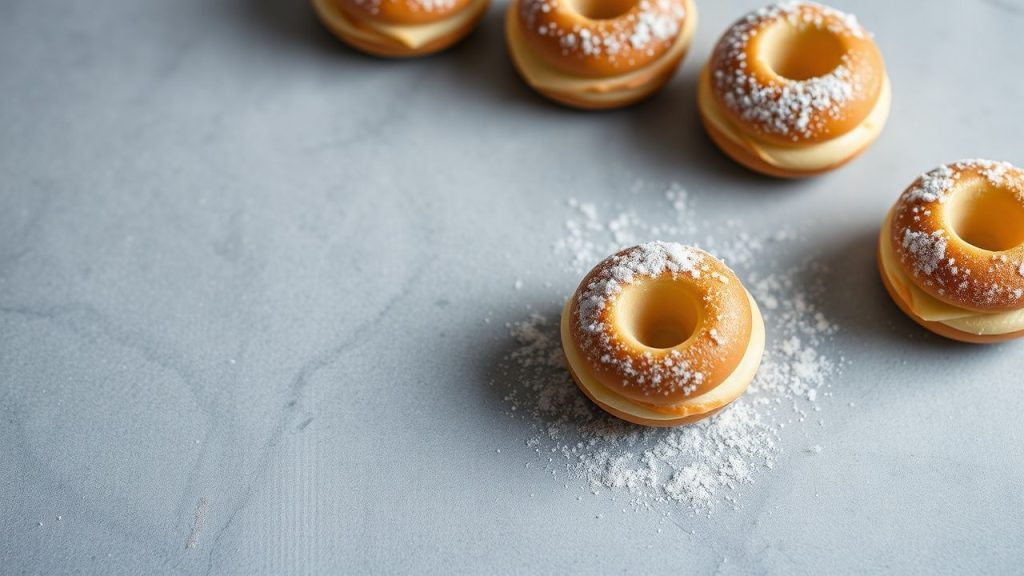
Photographs of the baked shells help diagnose issues like underbaked centers or collapsed crowns. Visual checks remain a quick tool alongside thermometers and texture tests.
A typical medium choux contains about 95 calories with modest protein and fat levels, making it a light vessel for richer fillings. Balance portion size and filling richness for menu planning.
FAQ
What is the difference between choux and puff pastry?
Choux forms from a cooked paste and rises through steam rather than layered lift. Puff pastry relies on alternating layers of dough and butter that separate into flakes when baked.
Both produce light textures but through distinct mechanical and structural pathways. Choose choux for hollow shells and puff pastry for flaky layers.
Why did my choux collapse after baking?
Collapse usually results from excessive internal moisture or premature cooling. Ensure you dry the dough on the stovetop, finish cooking in the oven until dry, and allow gradual cooling with the door ajar.
Also verify oven accuracy; low temperature can prevent the structure from setting before steam dissipates.
Can I make choux gluten-free?
Gluten-free choux requires flours that mimic wheat starch behavior, usually a blend with tapioca, rice flour, and a binding agent. Expect different textures and adjust hydration and drying times experimentally.
Work in small test batches and document changes to egg volume or oven time to dial in a reliable method for alternative flours.
How do I store filled choux to preserve texture?
Fill choux just before serving whenever possible. If you must prefill, use a sealed container, refrigerate, and consume within 24 hours to keep the shell from softening excessively.
Re-crisp by draining excess moisture from fillings and reheating briefly in an oven rather than a microwave.
Where can I read more on classic choux recipes and history?
Read the pastry entry on Éclair and the profiterole overview at Profiterole for historical context and variations across cultures.
Combine these readings with hands-on practice, and consult technical baking texts when converting recipes by weight for consistent, professional results.
See also: Choux pastry
]]>
- Easy release: The latch removes sides without flipping the cake.
- Versatile: Works for cheesecakes, tarts, quiches and layered mousses.
- Simple care: Hand wash and check the seal for leaks before use.
- Pro tip: A water bath reduces cracking for custard-style bakes.
Below you will find clear explanations, a tested cheesecake method, care instructions, and troubleshooting advice. Each section keeps steps short and practical so you can get better results faster.
What is a springform pan?
A springform pan is a round bakeware assembly with a flat base and a cylindrical side that fastens with a latch. When you unlock it, the side expands and lifts away from the base, leaving fragile bakes undisturbed.
The design suits recipes that cannot be inverted or handled roughly. It differs from a standard cake tin because you do not need to flip the cake to remove it; this reduces damage to crèmes, custards, and layered cakes.
Design and materials
Most springform pans feature an aluminized steel or carbon steel ring and base. Some include a silicone gasket to reduce leaks and simplify unmolding.
Higher-end models may use nonstick coatings or heavier-gauge metal for even heat transfer. Choose size and material based on recipe type and oven performance.
Why use a springform pan?
Use a springform pan when structural integrity matters. Cheesecakes, chilled mousses, and delicate tarts keep sharp edges and smooth surfaces because the side removes cleanly.
The pan also helps when you build layered desserts directly in the ring. Without aggressive flipping, you preserve layers and decorations that would otherwise break.
For savory cooking, you can make quiches and terrines that keep their shape at the table. These pans work well when presentation matters as much as flavor.
For background on baking techniques relevant to these recipes, see baking and for specific examples consult the cheesecake article.
Choosing the right pan
Select the proper diameter and depth before you start. A 9-inch pan is standard for many cheesecake recipes, while smaller sizes suit individual servings.
Check the latch and base fit. A snug, even seam prevents batter leaks and produces clean sides. If the pan advertises a silicone gasket, expect fewer leaks with loose batters.
Size and fit considerations
Match pan size to recipe volume to avoid overflow or underfilled layers. Pay attention to depth when you plan tall layered desserts.
When buying, test the ring on the base for wobble or misalignment. A stable connection makes a noticeable difference in final presentation.
Classic Cheesecake: Prep, Yield, and Difficulty
Preparation: 15 minutes prep, about 45 minutes bake, plus cooling and chill time. This timing fits a standard 9-inch springform pan.
Yield: Serves 8–10. Difficulty: Medium; this recipe requires some technique but rewards patience with smooth results.
Ingredients
Use room-temperature dairy for a smooth batter and even bake. Keep ingredients measured and ready to streamline the process.
- 1½ cups graham cracker crumbs (finely crushed)
- ½ cup unsalted butter, melted
- 2 tablespoons granulated sugar
- 24 oz cream cheese, softened to room temperature
- 1 cup granulated sugar
- 1 teaspoon vanilla extract
- 3 large eggs, at room temperature
- 2/3 cup sour cream
- 2/3 cup heavy cream
- Fresh berries and mint leaves for garnish
Instructions
Follow steps in order and keep the oven temperature steady. A water bath (bain-marie) reduces surface cracking on custard-style cheesecakes; learn more about bain-marie techniques here.
- Prepare the crust: Combine graham crumbs, melted butter, and 2 tablespoons sugar. Press evenly into the bottom of a well-greased 9-inch springform pan and chill briefly in the refrigerator.
- Make the filling: Beat cream cheese until smooth. Add 1 cup sugar and vanilla, mixing until uniform.
- Add eggs one at a time: Blend each egg in on low speed to preserve a silky texture.
- Fold in dairy: Gently mix in sour cream and heavy cream until smooth and homogeneous.
- Pour and bake: Pour batter onto the chilled crust. Bake at 325°F (160°C) for about 45 minutes. For best results, place the pan in a water bath to stabilize oven temperature and reduce cracks.
- Cool and chill: Let the cheesecake cool in the oven with the door ajar for 1 hour, then refrigerate 4 hours or overnight after sealing the pan.
- Release the sides: Run a knife around the edge, unlock the latch, and lift the ring. Garnish and slice with a hot, dry knife for clean cuts.
Tips for success
Little adjustments produce much better results. Use room-temperature ingredients, avoid overbeating, and allow adequate chilling time for the cheesecake to set.
Seal potential leak points with a strip of parchment around the base if you expect a loose batter. Also, test for wobble in the assembled pan before adding batter.
Expert Insight
Space the pan correctly in the oven to ensure even air flow. Rotate neither too early nor too often; minor rotation after the first 30 minutes can correct hot spots in older ovens.
Care, maintenance, and troubleshooting
Hand wash the pan and dry it thoroughly. Moisture left at the latch will accelerate corrosion and can warp the ring over time.
If you notice leaks, inspect the seam and consider a silicone-sealed pan for future purchases. Replace bases that bend or rings that fail to lock squarely.
Pro-Caution
When storing, separate the ring from heavy items to avoid bending. A warped ring affects sealing and bake outcomes.
Serving suggestions
Finish cheesecakes with simple, fresh toppings like a berry compote or lightly whipped cream. Keep garnishes minimal to highlight the dessert’s texture and structure.
For savory bakes, unmold directly onto a serving plate and trim any uneven edges with a hot knife. Pair quiche slices with a crisp green salad for balanced plating.
For more gear recommendations, visit our internal tools guide at best baking tools and view practical cheesecake finishing techniques at cheesecake tips.
FAQ
What exactly is a springform pan?
A springform pan is a two-piece bakeware set consisting of a base and a removable side that fastens with a latch. The side releases to allow delicate or layered bakes to be removed without flipping.
Can I use a springform pan for regular layer cakes?
You can, but standard cake pans often yield easier removal for sturdy sponge cakes. Use a springform when the cake is fragile or when you want to assemble layers inside the ring.
How do I prevent leaks during baking?
Ensure the ring and base align perfectly and consider a silicone gasket or a parchment collar for added security. Wrapping the pan in foil helps when using a water bath.
Are springform pans oven-safe at high temperatures?
Most steel springform pans tolerate standard baking temperatures up to 450°F (232°C). Check manufacturer guidance for nonstick coatings and avoid broiling settings that exceed recommended limits.
How do I remove a stuck cheesecake cleanly?
Run a thin spatula or knife around the inside edge after chilling, then unlock the latch slowly. If the cake clings to the base, chill longer until it firms and releases more easily.
Final notes
The springform pan is a practical tool for anyone who values both structure and presentation. With proper selection, careful technique, and simple maintenance, it will expand your recipe possibilities.
Use short testing runs when trying a new pan or recipe. That habit saves time and helps you identify the right size, depth, and care approach for consistently excellent results.
See also: Springform pan
]]>