- Start cold, salt early: Place potatoes in cold, salted water for even cooking.
- Match variety to use: Waxy vs starchy potatoes behave differently when boiled.
- Test doneness: A fork should slide in with slight resistance, not crumble the flesh.
- Cool correctly: Ice baths stop carryover cooking for salads and prep-ahead dishes.
Prep and Cook Time
Preparation: 10 minutes. Prepare potatoes by cleaning and cutting to uniform size so heat distributes evenly during boiling.
Cooking: 15–25 minutes depending on size and variety. Smaller whole new potatoes need less time than large Russets or split chunks.
Yield and Difficulty
Serves 4 as a side when using about 1.5 pounds of potatoes. The method scales reliably if you keep pieces uniform and adjust pot size.
Difficulty: Easy. This technique suits beginners and professionals who need repeatable texture for downstream dishes like mashed potato or potato salad.
Ingredients
Use quality, evenly sized potatoes and plain kosher salt for the cooking water. Cold water and a neutral finishing fat, such as unsalted butter or olive oil, preserve texture and flavor.
Stock a few fresh herbs for finishing and keep an ice bath ready if you plan a potato salad or make-ahead prep. Below are recommended basics you can adapt:
- 1.5 lb Yukon Gold or similar, scrubbed and trimmed
- 1 tsp kosher salt for the boiling water
- Cold water, enough to cover potatoes by ~2 inches
- 2 tbsp unsalted butter or 1 tbsp olive oil (optional finish)
- Fresh herbs such as parsley or chives for garnish
Instructions
Follow a clear sequence: choose the right variety, prepare for even heat transfer, control the boil, and finish deliberately. Each step reduces common failures like split skins or a raw core.
Below, the instructions break into focused sub-steps to ensure consistent outcomes. Read each step, then perform it without rushing.
Choose and Prepare Potatoes
Select potatoes with minimal blemishes and similar size. Larger tubers should be halved or quartered so all pieces finish at the same moment.
If you want rustic texture, keep the skins on; for ultra-smooth mashed potatoes, peel before boiling. Uniform pieces reduce the risk of mixed textures on the plate.
Place in Cold Water and Salt
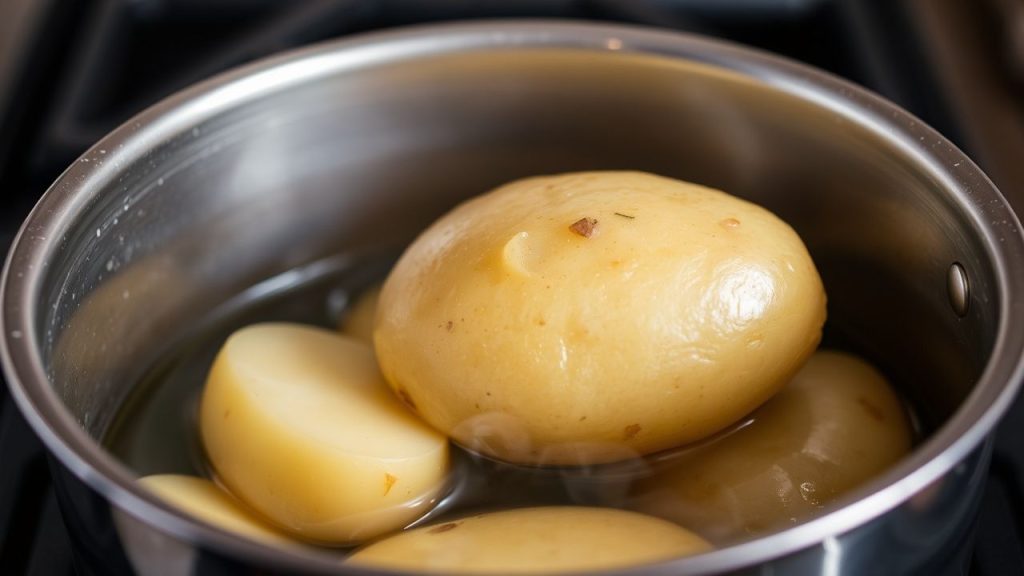
Arrange potatoes in a single layer in a saucepan and add cold water to cover by about 2 inches. Starting from cold water heats the center gradually and prevents undercooked cores.
Add kosher salt to the water before heating; the salt penetrates as the water heats and seasons the potatoes internally. This step makes a notable difference in flavor compared with salting only at the end.
Bring to Boil, Then Simmer
Bring the pot to a gentle boil over medium-high heat. Once boiling, reduce to a steady simmer to avoid agitation that breaks the potato flesh.
Cooking times vary: waxy reds and new potatoes usually take ~15 minutes; medium Yukon Golds about 18–22 minutes; large starchy Russets can need 20–25 minutes. Use a fork to test—pierce center and observe resistance.
Drain, Cool, and Finish
Drain potatoes immediately when tender. For salads or staging, plunge into an ice bath to halt residual cooking and lock in texture.
For serving warm, return drained potatoes briefly to the pot off heat to steam-dry, then toss with butter and herbs. For mashed textures, return hot to the mixing bowl and proceed while still warm.
Tips for Success
Understanding potato biology helps: starchy potatoes lose structure when agitated; waxy potatoes hold shape due to lower starch and higher moisture. Match the variety to the dish you plan to make.
Cut pieces the same size, monitor the simmer, and test early. Those three habits eliminate most textural problems and increase consistency across batches.
 Expert Insight
Adjust seasonings after boiling because the interior will already carry salt. For potato salad, chilling in an ice bath keeps pieces intact for tossing and dressing.
 Pro-Caution
Serving Suggestions
Serve boiled potatoes simply: toss warm chunks with butter and herbs, or chill and dress with a vinaigrette for a classic potato salad. Both approaches reward precise boiling with intact shapes and clean flavors.
Use boiled potatoes as a base: mash them for a silky side, halve them for a composed salad, or pan-sear briefed chunks for crisp edges. For detailed creamy-mash technique, see our Ultimate Creamy Mashed Potatoes Guide and for storage best practices visit Best Potato Storage Tips.
For background on the crop and its culinary roles, read about the potato. For cooking science related to heating liquids, consult the boiling entry.
Nutrition (approx. per serving)
| Nutrient | Per Serving |
|---|---|
| Calories | 130 |
| Protein | 3 g |
| Carbohydrates | 30 g |
| Fat | 0.2 g |
For recipe inspiration using boiled tubers, explore the related techniques for mashed potatoes and potato salad. Those pages summarize common culinary uses and variations that benefit from precise boiling.
FAQ
How long should I boil medium potatoes?
Medium whole potatoes usually take 18–22 minutes at a simmer. Check doneness by inserting a fork: it should slide through with slight resistance but without crumbling the potato.
Do I need to peel before boiling?
No; you can boil with skins on to preserve nutrients and texture, especially for salads. Peel first only when you need a smoother mash.
Why start in cold water?
Starting from cold water lets the center heat gradually, matching interior and exterior temperatures. This prevents an undercooked core and reduces burst skins.
Can I boil potatoes ahead of time?
Yes. Chill boiled potatoes quickly and store in an airtight container in the refrigerator for up to 3 days. Reheat gently to avoid drying or turning them mealy.
What if my potatoes turn mushy?
Mushy results usually come from overcooking or using a very starchy variety for a shape-dependent dish. Repurpose mushy potatoes into soups, gnocchi, or blended spreads to avoid waste.
Key Takeaways
Control three variables—variety, uniform size, and heat profile—to achieve consistent results. Use an ice bath for salads and finish warm dishes with butter or oil to enhance mouthfeel.
Practice a clear sequence and test early; those habits produce reliably tender, intact potatoes you can use across many preparations. Precise boiling elevates simple potatoes into a dependable culinary component.
See also: boiled potatoes
]]>