- Short cook time: Most fillets finish in 10–15 minutes at 400°F (200°C).
- Light marinade: Acid, oil and herbs boost flavor without masking the fish.
- Prevent dryness: Steam briefly under foil, then finish uncovered for color.
- Pairing: Whole grains or roasted vegetables create a balanced plate.
Choosing the Freshest Fish for Optimal Flavor and Nutrition
Start with firm, translucent fillets that smell like the sea, not fishy. Look for even color and tight flesh; avoid fillets with discolored edges or a soft, mushy texture.
For baking, mild white fish such as cod, haddock or tilapia work well, while salmon and trout add richness and omega-3s. When possible, buy from a reputable supplier and choose sustainably sourced options; this supports long-term supply and consistent quality.
Reference: learn more about common species and seafood handling on Fish resources and general seafood topics on Seafood.
Essential Seasonings and Marinades to Elevate Your Fillets
Keep the seasoning simple to let the fish shine. A basic marinade combines a citrus acid, high-quality olive oil, minced garlic and fresh herbs like parsley or dill for bright, layered flavor.
For a subtle smoky note, add smoked paprika or a small pinch of crushed red pepper. Marinades should be brief for lean fillets—10–20 minutes is enough to impart flavor without denaturing proteins.
Study marinades and how they interact with proteins on the Marinade page for technique context and safety guidance.
Mastering Temperature and Timing for Tender, Flaky Perfection
Set the oven to 400°F (200°C) to surround fillets with consistent dry heat. This temperature seals the exterior quickly while keeping interiors moist when you monitor time closely.
Bake on a parchment-lined sheet or in a shallow baking dish. Cover loosely with foil for the first half of the cook to trap steam, then remove the foil to allow gentle browning and concentrated aroma development.
 Expert Insight
Thickness determines time: plan about 10 minutes per inch of thickness. Test with a fork—done fillets flake easily and look uniformly opaque. Avoid the common error of leaving fish in the oven “just a bit longer”; small time additions dramatically change texture.
Serving Suggestions and Healthy Sides to Complement Your Baked Fish
Balance textures and nutrients with a simple quinoa salad, roasted seasonal vegetables or a crisp green salad. Acidic components like lemon zest or a light vinaigrette brighten every bite and cut through fish richness.
For creamy contrast, serve sliced avocado, a spoon of tzatziki or a light tahini drizzle. Whole grains such as brown rice or couscous add fiber and make the meal more filling without heavy calories.
When plating, add fresh herb sprigs and lemon slices. These small details boost aroma and perceived freshness, which improves diner satisfaction and dwell time on recipe pages.
Recipe Details
Prep: 15 minutes | Cook: 15 minutes | Total: 30 minutes. This timeline assumes average fillet thickness (about 1-inch); adjust for thicker or thinner cuts.
Yield: Serves 4. Choose fillets of similar thickness to ensure uniform cooking and predictable timing in a single batch.
Ingredients
Use fresh, high-quality ingredients to keep flavors clean and healthful. Organic or cold-pressed olive oil will carry herb aromas and extract fat-soluble flavors efficiently.
- 4 fish fillets (about 6 oz each), skin removed
- 2 tbsp extra virgin olive oil
- 2 tbsp fresh lemon juice
- 3 garlic cloves, minced
- 1 tsp sea salt
- ½ tsp freshly ground black pepper
- 1 tsp smoked paprika (optional)
- 2 tbsp fresh parsley, finely chopped
- 1 tbsp fresh dill, finely chopped
- Lemon slices, for garnish
Instructions
Preheat the oven to 400°F (200°C). Line a baking sheet with parchment and set a shallow dish for the marinade close to your workstation for efficient workflow.
- Prepare the marinade: Combine olive oil, lemon juice, garlic, salt, pepper, smoked paprika (if using), parsley and dill. Whisk until emulsified.
- Marinate: Place fillets in a shallow dish and spoon the marinade over them. Turn to coat evenly. Marinate 10–15 minutes at room temperature or up to 2 hours refrigerated if needed.
- Arrange and cover: Place fillets on the prepared sheet spaced apart. Cover loosely with aluminum foil to trap steam for the first stage.
- Bake: Bake covered for 8 minutes, then remove foil and bake another 5–7 minutes, or until the fillets are opaque and flake easily with a fork. Use an instant-read thermometer if available.
- Finish: Transfer to plates, garnish with lemon slices and a sprinkle of fresh herbs. Serve immediately for best texture.
Chef’s Notes
Use similar-thickness fillets so one pan cooks evenly. If fillets vary, start the thicker pieces first or separate into pans by thickness to prevent overcooking thinner pieces.
When brushing fillets during baking, discard any marinade that contacted raw fish. This maintains food safety while adding moisture mid-cook when using reserved, uncontaminated glaze.
 Pro-Caution
Swap citrus types—lime or orange—for a subtle flavor shift. Use dried herbs cautiously; they concentrate quickly, so reduce quantity by roughly one-third compared with fresh herbs.
Nutritional Information (per serving)
This recipe provides lean protein and heart-healthy fats, especially when you choose oily fish. Baking, rather than frying, preserves the nutrient profile and limits added calories.
| Calories | Protein (g) | Carbs (g) | Fat (g) |
|---|---|---|---|
| 220 | 28 | 1 | 10 |
For details on the health benefits of fish oils and omega-3 fatty acids, consult the Omega‑3 fatty acid resource.
Q&A
Q1: What makes baking healthier than frying?
A1: Baking requires minimal added fat and preserves the fish’s natural oils and nutrients. The result is a leaner dish with controlled calories and retained protein quality.
Q2: How do I prevent dryness?
A2: Monitor time closely, use foil during initial baking to trap steam, and remove it to finish. Also, brief marination and correct oven temperature lock moisture in the flesh.
Q3: Can I use different fish?
A3: Yes. Mild white fish are versatile; fattier fish add richness and more omega-3s. Choose fillets of similar thickness for even cooking.
Q4: Any quick seasoning ideas?
A4: Lemon, garlic, olive oil, fresh herbs and a pinch of smoked paprika form a reliable base. Keep seasoning light so the fish remains the focal point.
FAQ
How long should I marinate fish before baking?
Marinate lean fillets for 10–20 minutes to add flavor without breaking down proteins. For fattier fillets like salmon, you can extend to 30–45 minutes depending on the marinade strength.
What oven temperature gives the best results?
400°F (200°C) produces consistent results for most fillets. This temperature balances exterior sealing and internal moisture retention when paired with correct timing.
Can I bake fish from frozen?
Yes, but allow extra time and expect slightly different texture. Ideally thaw fillets under refrigeration to maintain even cooking and reduce surface moisture that can dilute seasoning.
How do I reheat baked fish without drying it out?
Reheat gently in a low oven (about 275–300°F / 135–150°C) covered with foil for 10–12 minutes, or until just warmed through. Alternatively, add chilled fillets to salads for a safe, enjoyable cold serving.
Where can I learn more about baking techniques?
Consult general baking principles on the Baking page for heat transfer fundamentals and how temperature and time interact with proteins.
Embrace these straightforward methods and precise checks to serve reliably moist, flaky baked fish fillets. The approach rewards attention to temperature, timing and ingredient quality—simple factors that deliver professional results at home.
See also: baked fish
]]>
- Check accuracy regularly with ice and boiling tests.
- Keep ±1°F accuracy as a practical target for food safety and quality.
- Calibrate, replace batteries, and inspect probes to avoid skewed readings.
- Store and clean properly to extend service life and performance.
Choosing the Right Meat Thermometer for Reliable Readings
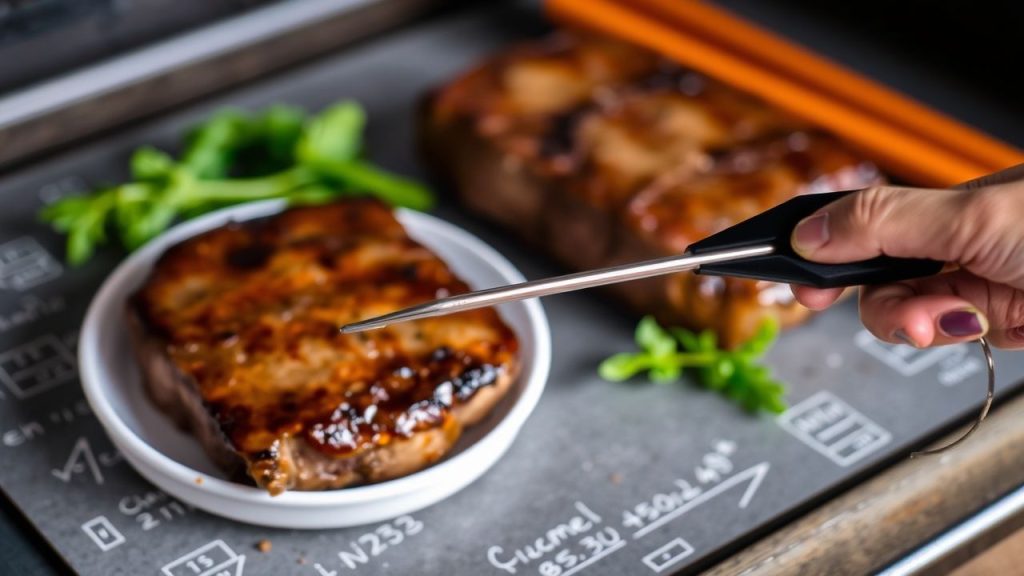
Selecting the correct thermometer sets the baseline for accurate cooking. Choose a device that matches the cooking technique you use most often: instant-read for quick checks, probe-style for unattended roasts, or oven probes for long cooks.
Look for a stated accuracy of ±1°F when possible and prefer probes made from food-grade stainless steel. Also consider response time, waterproof rating, and whether the unit supports field recalibration.
Types and features that matter
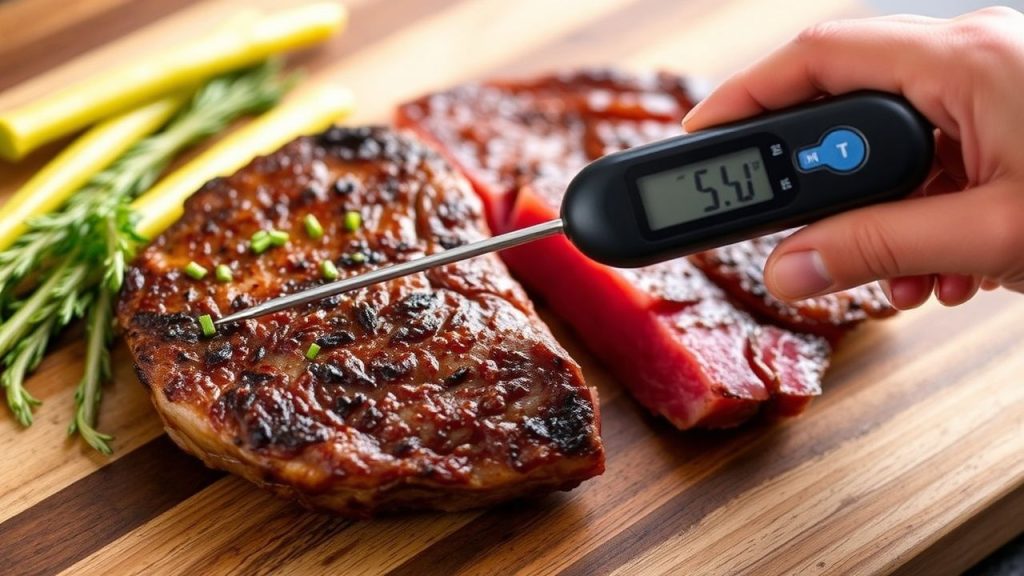
Instant-read digital thermometers give fast readings and are ideal for finishing steaks and chops. Probe thermometers with wired or wireless transmitters monitor internal temps during long roasts and smoking sessions.
Analog dial thermometers work, but they generally lack the precision and quick response of quality digital probes. For most cooks, a calibrated digital probe with a stainless-steel shaft provides the best balance of speed and durability.
Step-by-Step Methods to Calibrate Your Meat Thermometer at Home
Two simple lab-style checks give you verifiable reference points: an ice-water bath for the freezing point and a pot of boiling water for the boil point. Both are quick, repeatable, and require only common kitchen items.
Perform these checks on a stable surface and avoid contact with metal sides or pot bottoms. Record readings and use your device’s calibration option or note the offset if recalibration is not available.
Ice bath method (freezing point)
Fill a tall glass with crushed ice, add cold water, and stir to create an ice-water slurry. Insert the probe so it sits fully in the chilled water but does not touch the glass walls or bottom.
The accurate reference is the freezing point of water, 32°F (0°C). A properly calibrated probe should read within about ±1°F of that mark after 30 seconds.
Boiling water method (boil point)
Bring a pot of fresh water to a rolling boil and suspend the probe in the steam above the bubbles, avoiding contact with the pot sides or bottom. Wait for the reading to stabilize.
At sea level, the reference is the boiling point of water, 212°F (100°C). Adjust expectations if you cook at altitude; higher elevation lowers the boiling temperature.
Common Accuracy Issues and How to Troubleshoot Them
Temperature errors usually come from a few repeatable causes: dirty or bent probes, low batteries, or calibration drift. Diagnose quickly by running the ice and boiling tests and noting consistent offsets.
If readings shift between tests, replace batteries first, then inspect the probe for physical damage or debris. Clean the shaft with warm, soapy water and a soft cloth before retesting.
Pro-Caution
Digital units may offer a user-accessible calibration screw or menu reset. For units without calibration, track the offset and mentally correct readings, or replace the unit if the error exceeds about 2°F.
Slow response and inconsistent values
Slow response often comes from residue coating the probe. Even a thin grease film insulates the sensor and delays equilibrium. Clean and dry the probe thoroughly and repeat the check.
If results still vary, swap in fresh batteries, or try the thermometer in several different cups of ice water to confirm whether the issue is repeatable. Intermittent faults usually mean internal electronics are degrading.
Pro Tips for Maintaining and Storing Your Meat Thermometer for Longevity
Routine care keeps readings reliable. Clean the probe after every use, store the unit in its protective case, and remove batteries during long-term storage to avoid leakage and corrosion.
Handle probes gently; do not bend the shaft or drop the unit on hard surfaces. Even a small kink in a probe can change how the sensor reads temperatures.
Expert Insight
For cooks who travel or smoke outdoors, choose IP-rated or explicitly waterproof models. High humidity and temperature swings accelerate wear in non-sealed units.
Practical Uses: When Accuracy Matters Most
Poultry, large roasts, and ground meats demand precise internal temperatures to ensure safety. Conservative targets and trusted readings prevent undercooking without sacrificing juiciness.
For sous-vide and candy work, probe accuracy and calibration are essential because small temperature differences produce big changes in texture. Verify instruments before critical cooks.
For reference on safe final internal temperatures and food handling, consult reputable public guidance such as the food safety resources maintained by public health authorities.
At-Home Test Plan: A Quick Checklist
Run this checklist before any important cook: check batteries, clean probe, ice-test, boil-test, and note any consistent offsets. If offsets exceed about 2°F, recalibrate or replace.
Keep a small notebook or digital note with recorded offsets for each thermometer you own. That habit saves time and prevents guesswork during service.
For step-by-step usage of instant-read devices, see our internal guides: how to use an instant-read meat thermometer and best meat thermometers for purchasing advice.
FAQ
How often should I check my meat thermometer?
Test before any major cook and at least monthly with regular use. Physical shocks, heat exposure, and battery changes can shift accuracy, so quick checks are inexpensive insurance.
Can I trust a cheap thermometer if it passes the ice and boil tests?
Yes, a basic unit that reads accurately at both reference points can be trusted for many cooks. However, cheaper units may drift sooner and often lack rugged construction for heavy use.
Does altitude affect thermometer tests?
Yes. The boiling point of water drops as elevation increases. See the altitude relationship and adjust expectations when using the boiling test at higher elevations.
What accuracy tolerance should I accept?
A practical target is ±1°F for most cooking purposes. When safety margins are tight, such as poultry or cured meats, keep devices within that tolerance or replace them when they exceed it.
Can I use the same tests on smoker and oven probe thermometers?
Yes. The ice and boiling checks apply to oven probes, smoker controllers, and candy thermometers within their intended ranges. Confirm that the probe’s rated range includes your test points first.
Final Thoughts
Testing a meat thermometer is a low-effort, high-impact habit. Accurate readings protect health and improve flavor by preventing over- or undercooking.
Use the simple ice and boil checks regularly, maintain the probe and battery compartment, and replace compromised units. Small steps produce consistent, professional-level results in any kitchen.
See also: meat thermometer
]]>
- Key control points: water temperature, soak time, and seasoning order.
- Texture drivers: starch gelatinization and residual frying structure.
- Flavor strategy: preserve volatile aromatics by layering powders and liquids.
- Practical gains: small technique changes deliver large sensory improvements.
Prep and Cook Time
Preparation: 5 minutes. Cooking: 4 minutes. Keep tools ready: kettle, thermometer, and a heatproof cup or bowl.
Short prep keeps the process controlled. Having a timer and quick-access toppings improves consistency across cooks.
Yield and Difficulty
Serves 1 generous portion. Difficulty: easy, but precision matters for repeatable results.
This method suits busy cooks who want predictable texture and optimized flavor with minimal effort. Use it to test variables like water volume or add-ins.
Ingredients
Use measured ingredients to keep chemistry consistent. Small changes to water mass or oil content alter the final bite.
Below is a standard ingredient list you can vary for texture or nutrition:
- 1 cup boiling water (monitor temperature for starch gelatinization)
- 1 pack instant noodles
- 1 sachet dry seasoning powder
- 1 tsp soy sauce
- 1 tsp toasted sesame oil
- 1 green onion, thinly sliced
- Optional: boiled egg, steamed greens, or mushrooms
Instructions
Follow a controlled sequence: heat, hydrate, season, and finish. Each step influences molecular interactions in the noodles and broth.
Measure time and temperature on the first try, then adjust for package differences and personal texture preference.
- Heat water: Bring water to a rolling boil (about 100°C/212°F). Use a thermometer when precision matters.
- Set noodles: Place noodles in a heatproof cup or bowl. Pour water to just cover the block for concentrated flavor or more to create a soup.
- Cover and time: Close the lid or cover and soak for 3–4 minutes. Stir gently halfway to separate strands without overworking the gluten network.
- Layer seasonings: Add dry powder first, then oil-based sachets. Mix gently to release aroma without dissipating volatile compounds.
- Finish: Drain a portion of water for firmer noodles or keep broth for a softer bite. Garnish and serve immediately.
Timing and Temperature Details
Starch gelatinizes across a narrow temperature window. Keeping the water close to boiling ensures uniform swelling of starch granules.
Shorter soaking favors chew and spring; longer soaking yields softer structure. Record soak times to refine texture for each brand.
Seasoning Strategy
Powders contain many volatile flavor compounds that evaporate quickly. Add them while the container is covered to trap aroma.
Liquid flavor sachets often carry oils and concentrated umami agents. Add these last to preserve their aroma and mouthfeel.
Science of Texture
The primary texture change comes from starch gelatinization. Heat and water break down crystalline regions in starch granules and allow them to swell and bind water.
For a technical primer, see the starch gelatinization entry. Manufacturers pre-process noodles to a specific moisture and frying profile to control final bite.
Instant noodles often undergo frying or steaming followed by drying. This pre-treatment creates a porous structure that rehydrates rapidly and yields the characteristic springy chew.
Refer to the instant noodles overview for historical and manufacturing context. Different flours, protein levels, and drying methods change rehydration kinetics.
Flavor Chemistry
Umami compounds such as free glutamates and nucleotides drive savory depth. Salt and acids modulate perceived intensity and balance.
Learn more about the taste category at umami on Wikipedia. Powder blends use a mix of amino acids, salts, and hydrolyzed proteins to create a lasting savory profile.
The Maillard reaction products from frying add roasted, caramelized notes that dissolve into the broth. Those compounds enhance aroma and perceived richness.
For chemistry background, see Maillard reaction. Retaining oil-based aromatics during preparation keeps the soup fragrant and full-bodied.
Packaging and Heat Retention
Cup materials and lids alter heat loss and steam retention. Insulating cups trap heat and water vapor, creating a microclimate that favors uniform rehydration.
Careful lid placement reduces aroma loss and preserves volatile flavor compounds. Some designs intentionally channel steam to soften noodles evenly.
Tips for Success
Small procedural changes yield measurable differences. Consistency in water temperature, amount, and timing delivers predictable texture and flavor.
Store noodles and seasoning sachets in a cool, dry place to preserve volatile aromatics and prevent oil rancidity.
Expert Insight
When adding vegetables or proteins, pre-blanch or preheat them to avoid cooling the broth and altering starch set. Hot additions integrate faster and protect texture.
Pro-Caution
Serving Suggestions
Garnish with sliced green onion, a soft-boiled egg, or quick-blanched greens for visual contrast and balanced nutrition. Small additions elevate perceived quality.
A drizzle of sesame oil or chili oil at the end adds an aromatic top note without disturbing the starch matrix. Add them after mixing to preserve aroma and mouthfeel.
Nutrition and Practical Notes
A typical instant noodle cup contains moderate calories and a mix of macronutrients. Manufacturers vary widely in sodium and fat content.
If you track macros, add lean protein or extra vegetables to improve nutrient density while keeping the cooking sequence intact.
| Nutrient | Amount per Serving |
|---|---|
| Calories | 350 kcal |
| Protein | 10 g |
| Carbohydrates | 55 g |
| Fat | 8 g |
For test routines and advanced variations, consult our internal resources to refine technique. See our comprehensive noodle recipe guide for step-by-step experiments.
For texture calibration across brands, track soak times and water mass in a notebook or digital log. Our noodle texture guide provides templates for A/B testing.
FAQ
Why do instant noodles cook so quickly?
Manufacturers pre-cook noodles by frying or steaming, which reduces internal crystalline structure and moisture. That pre-processing accelerates water uptake and shortens rehydration time.
How does water temperature affect texture?
Higher water temperatures speed starch gelatinization and protein relaxation, producing a softer bite in the same time. Lower temperatures undercook the starch and yield a chalky or brittle texture.
Should I add all seasonings at once?
No. Add dry powders first to dissolve, then liquid oils or concentrated pastes. Layering preserves volatile aromatics and enhances perceived aroma after opening the lid.
Can I reduce sodium without losing flavor?
Yes. Substitute part of the seasoning with mushroom powder or low-sodium stock concentrates. Umami-rich ingredients restore savory depth while lowering explicit salt levels.
Is there a best container to cook in?
Use a heatproof ceramic or steel bowl for highest safety and even heat distribution. Many commercial cups work, but check for deformation or odor when hot water is poured.
Technical mastery rests on controlling variables. Measure ingredients, time precisely, and adjust one factor at a time to improve your instant noodle cup systematically.
See also: Instant Noodles
]]>