- At a glance: Dry the surface, reintroduce controlled heat, and allow airflow to prevent steam.
- Best tools: wire rack, oven or air fryer, light dusting of starch for delicate batters.
- Quick timeline: 10–15 minutes in a 375°F (190°C) oven, 3–6 minutes in an air fryer, or a final hot skillet sear for thick pieces.
- Storage tip: Cool fully, store single layer with paper towels to limit moisture reabsorption.
Why Fried Food Loses Its Crunch
Fried foods lose crispness when trapped steam softens the crust and oil migrates into the breading. Both moisture transfer and oil re-absorption reduce the surface contrast that creates a satisfying crunch.
Low frying temperature, overcrowding, or inadequate draining speed the decline. Understanding heat transfer and moisture migration helps you pick the correct crisp rescue approach for each failure mode.
Prep and Cook Time
Preparation: Spend 5–10 minutes blotting and airing pieces before applying heat. This step makes dry heat effective by reducing the water film that would otherwise create steam.
Reheating & Crisping: Use a 375°F (190°C) oven for 10–15 minutes with a wire rack, or 3–6 minutes in an air fryer for small batches. Thick items often require a short, high-heat skillet sear to re-establish edge crispness.
Yield and Difficulty
The method restores crispiness for approximately 2–4 servings of typical leftovers like fries, nuggets, and wings. Execution remains low difficulty but needs attention to spacing and timing.
Small adjustments change outcomes: a light starch helps delicate batters, while a hotter skillet finish rescues thicker pieces. Practice gives consistent results across different fried items.
Ingredients and Tools
Keep the kit minimal: paper towels, a baking or wire cooling rack, a baking sheet, and a light starch such as cornstarch. Use a neutral cooking oil spray to reintroduce minimal fat for browning when needed.
Use tools that promote airflow: a wire rack over a sheet pan, a preheated air fryer basket, or a hot skillet with a flat surface. These tools focus dry heat where it crisps fastest.
- Leftover fried foods: fries, wings, tempura, nuggets — about 2 cups.
- Paper towels or clean kitchen towels for blotting moisture.
- Baking rack and baking sheet for elevation and airflow.
- Cornstarch or arrowroot: 1 tablespoon for delicate coatings (optional). See cornstarch for the starch properties.
- Cooking oil spray (light vegetable or canola oil).
Instructions
Work in a strict, effective sequence: drain, dry, optionally dust with a light starch, space items on a rack, mist lightly, and apply dry heat. Each step addresses a specific cause of sogginess: oil, steam, or insufficient surface heat.
Always avoid crowding. Crowding reduces airflow, which leads to steaming rather than crisping and negates earlier prep steps.
Drain and Dry
Lay fried pieces in a single layer on paper towels and blot gently to remove surface oil. Surface oil traps moisture at the crust and slows re-browning; removing it lets dry heat reach the crust faster.
After blotting, let pieces sit uncovered for 5–10 minutes to shed excess surface moisture. That short rest allows a thin dry film to form and shortens the time needed under heat.
Light Coating for Delicate Batters
For soft batters, toss pieces in a tablespoon of cornstarch or arrowroot. A thin starch film absorbs residual oil and creates material that browns crisply under dry heat.
Shake off excess powder to avoid a pasty finish. Use just enough to form a light barrier—overcoating defeats the goal by forming a dense layer that resists browning.
Arrange and Reheat
Place a wire rack on a baking sheet and arrange pieces with space between them. Elevation exposes all surfaces to hot, circulating air and prevents steam pockets under the food.
Set the oven to 375°F (190°C) and bake for 10–15 minutes, flipping once for even color. For small batches, an air fryer often restores texture in a 3–6 minute burst; see air fryer for device specifics.
 Expert Insight
For thick pieces, finish with a 1–2 minute per-side skillet sear on high heat. Use a neutral oil with a high smoke point and watch carefully to avoid burning the crust while the interior reaches temperature.
Tips for Success: The Ultimate Crisp Rescue
Avoid microwaving when texture matters. Microwaving converts water to steam and re-wets the crust, which results in a soft finish rather than restored crunch.
Always use a wire rack and avoid stacking. Stacking traps steam and reverses drying efforts even in a short reheating cycle.
- Airflow: Elevate food to allow hot air to circulate 360 degrees.
- Heat control: Use consistent moderate heat; avoid searing so aggressively that the crust burns before the interior warms.
- Final sear: For thick items, finish in a hot skillet to restore edges.
- Storage tip: Cool fully and store single layer with paper towels to limit oil reabsorption.
Serving Suggestions
Serve revived items immediately for the best textural contrast between crust and interior. The revived crust loses crispness again if it sits under a cover or in a closed container.
Pair fried items with acidic or fresh condiments—lemon wedges, pickles, or a vinegar-based slaw—to cut richness. A light sprinkle of finishing salt and fresh herbs adds aroma and compensates for any marginal fat loss during blotting.
Food Science Notes
Surface browning and crunch depend on Maillard reaction pathways and moisture migration. Promoting a dry surface speeds browning and creates a crisper texture while preserving interior moisture.
When you reheat, you aim to re-establish a low surface water activity so Maillard reactions occur without excess steam. For background on surface browning, consult Maillard reaction.
Nutrition Snapshot
Revived fried foods retain most original calories and macronutrients, but removing excess surface oil lowers the immediate fat load. Blotting and light misting reduce unnecessary fat without sacrificing texture.
Balance portions with salads or pickled vegetables to increase meal nutrient density. For safe handling and storage recommendations, see food safety.
| Nutrition (per serving) | Calories | Protein | Carbs | Fat |
|---|---|---|---|---|
| Revived Fried Foods | 320 kcal | 15 g | 20 g | 22 g |
Practical Variations
Use panko or extra-dry breadcrumbs on storage to improve future reheating performance. A more textured crust sheds moisture and re-browns more predictably than fine batters.
For gluten-free options, use rice flour or cornstarch as the light dusting agent; both crisp quickly on reheating. See cornstarch for its utility in coatings.
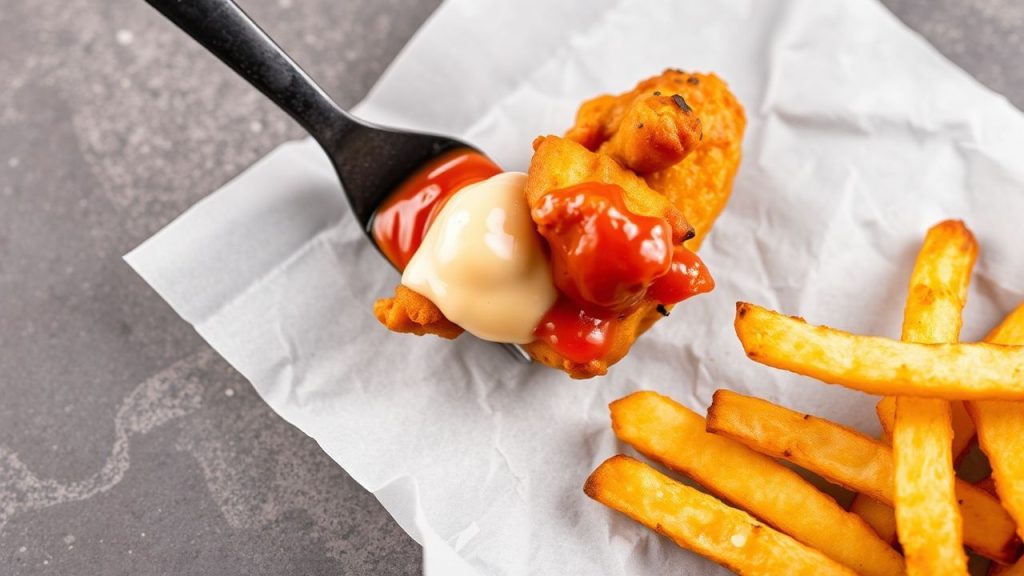
For fries, spread in a single layer on a preheated sheet pan under the broiler for a short hit of direct radiant heat. For nuggets or wings, an air-fryer or convection oven gives more uniform results for larger batches.
When you prep food specifically for later crisping, par-fry at a slightly lower temperature and cool on a rack so the crust sets without trapping steam. That practice reduces oil migration and improves later revivals.
Common Questions
Why do fried foods sometimes turn soggy and oily instead of crispy?
Soggy texture usually stems from trapped steam and excess surface oil, both of which soften the crust. These factors reduce the textural contrast between crust and interior and accelerate perceived staleness.
Proper draining and maintaining correct frying temperature during the initial cook reduce oil migration and cut the need for later rescue steps.
Can soggy fried foods be fixed after cooking?
Yes. Controlled dry heat, good airflow, and removing excess oil are the three pillars of a successful crisp rescue. Wire racks and oven or air-fryer circulation re-dehydrate the surface and allow browning reactions to proceed.
Delicate batters may not return to perfect fresh-fried texture, but a light starch dusting and gentle reheating will markedly improve crispness and mouthfeel.
Is an air fryer better than an oven for crisp rescue?
An air fryer often provides faster, more intense hot-air circulation for small batches and can revive items in a short 3–6 minute window. For large batches, a convection oven handles volume evenly.
Either tool works when you avoid overcrowding and ensure pieces remain dry and elevated for airflow. For context on frying techniques, review deep frying.
Can I microwave fried food if I’m in a hurry?
Microwaving is the least effective method for restoring crispness because it converts water to steam and re-wets the crust. Use it only when texture is not a priority.
If you must microwave, place items on paper towels, use very short bursts, and finish with a hot skillet sear to recover some surface crunch.
How do I store fried foods to make future reheating easier?
Cool to room temperature, store in a single layer with paper towels in an airtight container, and refrigerate promptly to limit bacterial growth. Paper towels absorb residual oil and keep the crust drier for reheating.
For freezing, flash-freeze on a rack then transfer to bags—this preserves surface texture and shortens reheat time from frozen.
Final Takeaway
Restoring crispness relies on three actions: remove excess oil, keep the surface dry, and reheat with airflow. Apply these principles across ovens, air fryers, and skillet finishes for reliable results.
Practice the sequence—drain, dry, dust if needed, space on a rack, mist, and reheat—and you will make crisp rescue a dependable kitchen skill for leftover fried foods.
See also: Crisp Rescue and How to Reheat Fries for related techniques and batch strategies.
 Pro-Caution