- Emulsification creates the silky texture by suspending oil droplets in a water phase.
- Ingredient ratios and temperature determine stability and mouthfeel.
- Technique—slow oil addition and vigorous mixing—prevents breaking.
- Rescue methods exist to revive a separated aioli quickly.
The Science: Emulsification and Structure
Aioli is an oil-in-water emulsion where microscopic oil droplets disperse through a water-based phase. This structure creates the sauce’s glossy, spreadable texture.
Egg yolk, mustard, and crushed garlic each supply surface-active molecules that coat oil droplets and prevent coalescence. For a technical overview of emulsions see Emulsion on Wikipedia.
Prep and Cook Time
Preparation: 10 minutes. Cook Time: 0 minutes; the process relies on mechanical action rather than heat. Keep tools and workspace ready before starting.
Allow at least 30 minutes for chilling before serving so flavors integrate and texture firms. Resting also helps small air bubbles dissipate for a smoother finish.
Yield and Difficulty
This recipe yields about 1 cup of aioli, sufficient for 4–6 as a condiment. The process rates as medium: technique matters more than advanced skills.
Practice builds muscle memory for the pace of oil addition and whisking rhythm. Use the internal guide for deeper technique drills at /guide-to-emulsification-techniques.
Ingredients
Use fresh, high-quality components for predictable chemistry and clean flavor. Keep eggs at room temperature and prefer fresh-squeezed lemon juice for consistent acidity.
- 2 large egg yolks, room temperature
- 1 tbsp fresh lemon juice
- 1 tsp Dijon mustard
- 1 cup extra virgin olive oil or a blend of olive and neutral oil
- 2 garlic cloves, finely minced or crushed
- Salt and freshly ground black pepper, to taste
If you prefer a less pronounced olive flavor, substitute half the olive oil with a neutral oil. For more variations and recipes see /recipes/aioli-variations.
Instructions
Start by combining egg yolks, lemon juice, and mustard in a clean bowl and whisk until smooth and slightly glossy. This base supplies emulsifiers and an acid that stabilizes the mixture.
- Whisk yolks, lemon, and mustard until combined.
- Add oil drop by drop while whisking vigorously to form a stable emulsion.
- When thickening starts, add oil in a slow, steady stream while maintaining speed.
- Fold in minced garlic, salt, and pepper; adjust seasoning to taste.
- If too thick, whisk in a teaspoon of warm water; if broken, rescue with a fresh yolk or warm water.
- Chill at least 30 minutes before serving to let flavors harmonize.
Work deliberately during the initial stage of oil addition; the first droplets set the droplet-size distribution. If you prefer a hands-off method, use a food processor on low speed and pulse while pouring the oil.
Tips for Success
Room-temperature egg yolks and oils that are not ice-cold reduce the risk of separation. Gentle warming of the bowl by rinsing with warm water and drying can help maintain a consistent starting temperature.
Always add the oil slowly at first to allow emulsifiers to coat nascent droplets. Once the emulsion forms, you can increase the oil flow without risking a crash.
 Expert Insight
For texture refinement, press the finished aioli through a fine-mesh sieve to remove any residual garlic fibers. That technique yields an extra-smooth body ideal for plating or sandwich spreads.
Serving Suggestions
Aioli complements grilled seafood, roasted vegetables, and fried potatoes. It also works as a sandwich spread and a delicate finishing sauce for composed plates.
Finish with a sprinkle of smoked paprika, chopped chives, or a drizzle of extra virgin olive oil for color and aromatic lift. Keep portions modest; aioli is concentrated in flavor and calories.
Nutritional Information
Per 2 tablespoons, expect roughly 180 kcal, 20 g fat, 2 g protein, and minimal carbohydrates. The exact profile depends on oil choice and portion size.
| Nutrient | Amount per 2 tbsp |
|---|---|
| Calories | 180 kcal |
| Protein | 2 g |
| Carbohydrates | 1 g |
| Fat | 20 g |
Troubleshooting and Deeper Notes
If your aioli breaks, do not discard it; rescue efforts work reliably. Whisk a fresh yolk in a separate bowl and add the broken mixture slowly into it to rebuild the suspension.
Oil selection affects flavor and stability: olive oil imparts robust taste while neutral oils yield milder results. For background on classic emulsified condiments see Mayonnaise on Wikipedia and on olive oil chemistry see Olive oil on Wikipedia.
Garlic contributes both flavor and minor emulsifying compounds when crushed. For culinary and biochemical context read more on garlic at Garlic on Wikipedia.
Store aioli tightly covered in the refrigerator and consume within 48 hours for best quality and safety. When preparing for larger gatherings, make small batches to preserve taste and texture.
 Pro-Caution
Safety, Storage, and Variations
Homemade aioli contains raw egg yolks, so plan consumption within two days and keep the sauce chilled. Hot-holding and leaving at ambient temperature increase microbial risk.
To make a vegan aioli, use aquafaba or soy lecithin as an emulsifier and follow the same slow-oil addition technique. For a theory primer on common emulsifiers see Lecithin on Wikipedia.
FAQ
What is the difference between aioli and mayonnaise?
Traditional aioli emphasizes garlic and olive oil and historically may not include eggs. Mayonnaise typically uses egg yolk as a primary emulsifier, yielding a more stable, neutral base.
Why does my aioli sometimes separate?
Separation occurs when oil droplets coalesce faster than emulsifiers can stabilize them. Rapid oil addition, extreme temperatures, or weak emulsifier concentration usually causes the problem.
How do I rescue a broken aioli?
Whisk a fresh yolk in a clean bowl and add the broken aioli slowly to it, or whisk a teaspoon of warm water into the broken sauce and continue whisking. Both methods rebuild the dispersed phase and restore emulsion.
Can I change the flavor without breaking the emulsion?
Yes. Add flavorings like herbs or spices after the emulsion forms and in small amounts to avoid altering droplet stability. If adding watery ingredients, incorporate them gradually to maintain balance.
Is homemade aioli healthier than store-bought?
Homemade aioli gives you control over oil type, salt, and freshness, often resulting in fewer additives and lower sodium. Nutritional differences depend primarily on the oils and portion sizes used.
Final Notes
Mastering aioli requires controlled speed, consistent temperatures, and quality ingredients. Repeat the basic steps until you develop a reliable rhythm for oil addition and whisking.
Use the internal guides and recipe variations provided to expand your repertoire and refine textures. Practical experience plus attention to the science will produce a reliably creamy, flavorful aioli every time.

See also: aioli
]]>
- Fat dissolves fat-soluble aroma compounds. These molecules do not travel well in water but move readily when bound to lipids.
- Different fats add distinct notes. Butter, ghee, olive oil, and animal fats each change a dish’s profile under heat.
- Finishing fats amplify mouthfeel and extend the time flavor lingers after swallowing.
Prep and Cook Time
Prep Time: 10 minutes | Cook Time: 20 minutes | Total Time: 30 minutes.
These estimates assume basic mise en place and a properly heated skillet. Adjust time upward for dense mushrooms or slow rendering at low temperature.
Yield
Serves 4 generous portions as a side or 2–3 as a main component. The recipe concentrates flavor, so smaller portions deliver strong impact.
Scale linearly by weight for larger batches, and maintain pan space to avoid steaming the mushrooms and losing Maillard-derived compounds.
Difficulty Level
Medium. The techniques require attention to heat management and timing rather than advanced knife skills.
Practice browning on moderate heat and finishing at low heat separately before combining them to build confidence.
Ingredients
These ingredients show how blending neutral and flavored fats yields depth and clarity. Use quality stock and fresh mushrooms for best results.
- 3 tbsp unsalted butter, softened
- 2 tbsp extra virgin olive oil
- 1 small onion, finely diced
- 2 garlic cloves, minced
- 1 cup sliced wild mushrooms (shiitake, cremini, or porcini)
- 2 tsp soy sauce (for umami boost)
- 1/2 cup chicken or vegetable stock
- Salt and freshly ground black pepper, to taste
- Fresh thyme leaves, for garnish
Instructions
Work in controlled temperature stages: sweat aromatics, brown solids, reduce liquids, then finish with a flavorful fat. Each stage extracts or concentrates distinct classes of compounds.
Use a hot skillet, a wooden spoon to avoid scraping, and taste as you go to adjust seasoning and richness.
Sauté and Brown: Building Base Flavor
Heat 1 tablespoon olive oil in a skillet over medium heat. Add diced onion and sauté until translucent and fragrant, about 3–4 minutes.
Add the minced garlic and cook 30–60 seconds, stirring constantly so the garlic releases aroma without burning. Increase heat slightly and add sliced mushrooms with a pinch of salt to promote water release and browning.
Reduce and Finish: Concentration and Fat Integration
Sauté mushrooms until they release moisture and begin to caramelize, about 7–8 minutes. Drizzle soy sauce, stir, and pour in stock; simmer until reduced by roughly half to concentrate flavor.
In a separate small pan, melt butter with the remaining tablespoon of olive oil over low heat until it becomes nutty and fragrant. Combine browned butter with the mushroom mixture and season to taste. Serve immediately to preserve the glossy finish.
Why Fat Flavor Works (Science Explained)
Many aroma molecules are lipophilic; they dissolve more readily into fat than into water. When fat melts or emulsifies, it carries these molecules into the oral and nasal cavities where perception occurs.
The molecular concept is standard in lipid chemistry. See lipid for the basic classes and solubility behavior of these compounds.
Mechanisms: Solvent, Carrier, Modifier
Fat acts first as a solvent: non-polar aroma compounds partition into the lipid phase. That partitioning increases their volatility at mouth temperature and concentrates scent at the retronasal pathway.
At the same time, fat coats the oral mucosa and slows release, lengthening the time the brain registers flavors. These effects together define practical fat flavor technique.
Browning, Maillard, and Umami Synergy
Browning generates new savory molecules via amino-sugar chemistry. Those Maillard reaction products pair exceptionally well with fat because both increase perceptible intensity.
For technical background on the Maillard reaction, consult Maillard reaction. For how fat amplifies savory notes, see the concept of umami.
Practical Tips to Maximize Fat Flavor
Control pan temperature. Too low and ingredients steam; too high and fats smoke and create bitter off-notes. Adjust heat in stages for browning without burning.
Balance neutral and flavored fats. A neutral oil tolerates higher heat; butter or ghee adds aroma. Use a blend to get high-heat browning with a rich finishing note.
Expert Insight
Bloom spices briefly in fat to extract essential oils; that step unlocks perfume and intensifies impact when combined with other savory components. Fat dissolves many of the same volatile compounds that water cannot.
Pro-Caution
Choose fats with appropriate stability. Clarified butter and high-oleic oils resist breakdown better at higher heat while unrefined oils best serve as finishes.
Serving Suggestions
Pair umami-rich mushrooms with creamy polenta, toasted country bread, or roasted vegetable medley. Finish with a soft fried egg for added richness and silky mouthfeel.
A final drizzle of a flavored oil or a pat of butter immediately before serving increases the perceived intensity and gives a satin sheen.
Nutrition and Portion Notes
Fats supply most of the calories but also provide fat-soluble vitamins and satiety. Moderate portions deliver more flavor per calorie because fat amplifies perception.
Per serving (approximate): 230 kcal, 20 g fat. Reduce butter and oil to lower calories while retaining finishing technique for mouthfeel by using emulsions.
| Nutrient | Per Serving |
|---|---|
| Calories | 230 kcal |
| Protein | 5 g |
| Carbohydrates | 7 g |
| Fat | 20 g |
Visuals
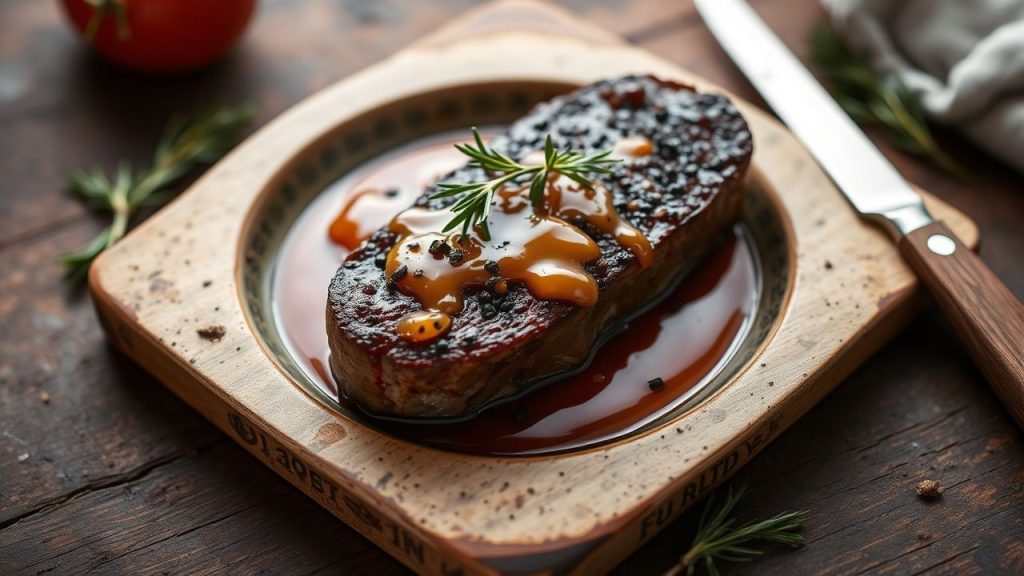
High-resolution photos should show browning levels and the finished shine from finishing fats. Use them to judge color targets and avoid blackening.
Properly integrated fat produces a satin sheen and visible pooling without greasiness. Aim for deep golden-brown color and avoid char.
Mechanistic Notes and Practical Applications
Fat-soluble aroma release explains why finishing a dish with a flavored oil or butter can dramatically change perception. Fat coats the oral cavity and slows release, lengthening flavor duration.
For deeper reference on fatty structures and how chain length affects aroma, consult fatty acid chemistry.
At a Glance
- Fat flavor depends on partitioning of lipophilic aromas into a lipid phase.
- Blend neutral and flavored fats for heat tolerance and finishing aroma.
- Finish with a small amount of high-impact fat to extend flavor linger.
FAQ
Q: Why is fat so effective at carrying flavor?
Fat dissolves lipophilic aroma molecules that water cannot carry. When fat integrates into a sauce or coats ingredients, those dissolved compounds become volatile and perceptible as aroma.
This solubility difference explains why oil-based dressings smell and taste different than water-based broths using the same herbs.
Q: Can I get the same flavor without animal fats?
Yes. Plant fats like olive oil and coconut oil carry aroma and provide mouthfeel. Each fat still introduces its own profile, so choose one that complements the dish.
Use emulsions or nut-based finishes if you need texture without animal-derived components.
Q: How should I choose a fat for high-heat cooking?
Pick fats with higher smoke points for direct high-heat work and reserve butter or ghee for finishing. Blend a neutral high-smoke oil with a small amount of butter to combine heat tolerance and aroma.
Properly rendered animal fat also performs well for searing and sautéing because of lower moisture and improved heat stability.
Q: Will reducing fat ruin a recipe’s taste?
Reducing fat can make a dish taste flatter because you remove the carrier for many aroma compounds. Compensate by concentrating stock, using umami-rich ingredients, or finishing with a small amount of high-impact fat.
Emulsions spread small droplets across the palate and can maintain perceived richness with less total fat.
Q: Are some fats unhealthy to use for flavor?
Use fats judiciously. Avoid repeatedly overheating oils with low smoke points and prefer minimally processed oils when possible. Balance saturated and unsaturated fats within overall diet context.
For culinary choices, prioritize flavor and proper technique rather than avoiding fat entirely; small amounts of the right fat improve satisfaction and reduce overeating tendencies.
Closing Remarks
Fat acts as a chemical solvent, a texture modifier, and a delivery system for aroma and flavor. When used deliberately, it converts ordinary ingredients into more complex, satisfying dishes.
Apply the techniques above—control heat, choose appropriate fats, bloom spices in fat, and finish with a flavorful drizzle—and you will notice immediate improvements in intensity and mouthfeel.
See also: lipid, Maillard reaction, umami
See also: fat flavor
]]>
- Function and flavor: mustard supplies interface-active molecules while contributing bright, savory notes.
- Repeatable method: room-temperature ingredients and a slow oil stream create small droplets that resist coalescence.
- Vegan binder: mustard can replace egg yolk in many vinaigrettes, offering plant-based stability.
- Troubleshooting: broken dressings often recover with a small fresh aqueous base and steady whisking.
Why mustard stabilizes emulsions
Mustard emulsions stabilize because seed proteins adsorb to the oil-water interface while mucilage increases continuous-phase viscosity. These two actions reduce surface tension and slow droplet motion, which limits coalescence and creaming.
The mechanism parallels other culinary stabilizers but uses seed-derived amphiphiles rather than pure lecithin. For background on interfacial science see emulsion (chemistry) for core terminology and processes.
Molecular actors and how they work
When you grind or whisk mustard, proteins with hydrophobic and hydrophilic domains migrate to oil droplets and form a protective shell. That adsorbed protein layer reduces direct droplet contact and raises the energy barrier for coalescence.
Simultaneously, mustard mucilage — a mix of soluble polysaccharides — thickens the aqueous phase and slows droplet diffusion. For technical context on polysaccharide function consult polysaccharide concepts.
Core recipe and measured approach
The following recipe yields about 1 cup of stable mustard vinaigrette and highlights the functional balance between emulsifier, acid, and oil. Maintain proportions and technique as you scale to preserve droplet size and texture.
Core formula: 2 tbsp Dijon or stone-ground mustard, 1/4 cup white wine vinegar or lemon juice, 1/2 cup neutral oil or extra-virgin olive oil at room temperature, 1 tsp honey (optional), salt and pepper to taste.
Ingredients (yields ~1 cup)
Use either Dijon for a smooth silk or stone-ground for rustic texture; both support stable mustard emulsions. Optional additions such as 1–2 tbsp full-fat yogurt or a small mashed avocado increase viscosity and mouthfeel without changing process control.
Choose a neutral oil for larger batches if you want mustard to remain the dominant flavor. Avoid very cold oils; they raise viscosity and make droplet breakup harder, which increases separation risk.
Method: controlled emulsification
Combine mustard, acid, honey, and salt in a bowl and whisk until the aqueous phase loosens and becomes slightly viscous. This pre-emulsified base readies the interface for efficient protein adsorption and more uniform droplet formation.
Whisk the base vigorously while streaming oil in a thin, steady thread; maintain motion for 2–3 minutes until the dressing thickens and shines. For scaled batches, use a low-speed blender and pour oil through the feed tube in a narrow stream to preserve droplet-size control.
Practical tips for consistent results
Keep all ingredients close to room temperature so proteins remain mobile and mucilage can hydrate properly. Small, uniform droplets and an adequately viscous continuous phase give you the longest-lasting mustard emulsions.
Acidity helps by partially unfolding proteins and increasing interfacial activity, but excessive acid or salt can collapse mucilage structure. Balance acid level and salt to preserve both flavor and stability.
Expert Insight
If a dressing breaks, start a fresh small base — about one teaspoon mustard or a tablespoon of warm water — then whisk the separated dressing slowly into that base. Alternatively, whisk in a teaspoon of warm water or a bit more mustard to re-establish interfacial coverage and shear the mixture back into uniformity.
Pro-Caution
Science-backed variables that affect stability
Temperature, shear energy, droplet-size distribution, and continuous-phase viscosity strongly control emulsion behavior. Smaller, more uniform droplets and a thicker aqueous phase slow creaming and separation.
Soluble solids like sugar, salt, and acid shift protein charge and hydration. Controlled amounts of acid improve protein adsorption, while too much salt or extreme pH reduces mucilage swelling and undermines stability.
Fixes and troubleshooting
If a vinaigrette appears greasy or phase-separated, increase the aqueous ratio and re-emulsify. Add a fresh small portion of mustard or a tablespoon of warm water and whisk the broken dressing into that base in a slow, steady action.
Mechanical tools can help. A small immersion blender on low speed breaks oil into finer droplets with controlled shear, but avoid high-speed blending that heats and may denature proteins used in mustard emulsions.
Chef’s notes — texture, flavor, and scale
Match mustard style to your target mouthfeel: smooth Dijon yields a refined silk, while stone-ground yields a coarse texture with visual interest. Adjust oil quality and intensity to balance flavor without destabilizing the emulsion.
When scaling, maintain the same oil-to-aqueous ratio and preserve slow addition. Use a food processor at low speed and pour oil through a narrow feed to keep droplet-size control when making larger batches.
Explore related internal resources for further technique: vinaigrette recipes and Mustard emulsions tag provide practical variations and tested proportions.
Serving suggestions and variations
Mustard emulsions adhere well to salads, roasted vegetables, grilled fish, and poultry, delivering acid and fat in balanced bites. They also make efficient marinades when thinned slightly with water or additional acid.
Try swapping vinegars, adding roasted shallot purée, herbs, or a spoonful of miso for umami depth. For creamier styles, fold in yogurt or crème fraîche while keeping oil addition slow to maintain droplet control.
Nutrition and shelf life
A typical two-tablespoon serving contains roughly 120 calories, mostly from the oil. Mustard contributes negligible calories but adds trace micronutrients and plant-derived bioactive compounds that may offer mild antimicrobial benefit.
Store mustard emulsions in a sealed container in the refrigerator for up to seven days. Always shake or whisk briefly before serving to re-disperse any micro-separation and check aroma and appearance for freshness.
Practical examples and related concepts
Use mustard as a plant-based alternative to egg yolk in light sauces; its mechanism resembles other culinary emulsifiers but relies on seed proteins and mucilage rather than lecithin alone. For a comparison on lecithin and its emulsifying role see lecithin.
For general reference on the condiment and varieties, consult the mustard article and classic dressing composition sources such as mustard (condiment) and vinaigrette. These entries clarify historical use and composition while supporting practical technique.
FAQ
What specifically in mustard stabilizes emulsions?
Mustard supplies proteins that adsorb at the oil-water interface and soluble polysaccharide mucilage that increases continuous-phase viscosity. The dual action reduces droplet collision and coalescence in mustard emulsions.
Can mustard replace egg yolk in all recipes?
Mustard replaces egg yolk in many vinaigrettes and light sauces, especially for plant-based needs. However, egg yolk lecithin still offers unmatched stability for heavy emulsions like traditional mayonnaise.
Why did my mustard dressing split, and how do I fix it?
Common causes include cold oil, too-rapid oil addition, or excessive salt or acid. To fix a split dressing, whisk a small fresh base of mustard or warm water and slowly incorporate the separated mixture back into that base.
Which mustard types work best for emulsifying?
Dijon and stone-ground mustards perform consistently due to balanced protein and mucilage content. Highly flavored or oil-added commercial mustards can vary, so test a small sample before scaling a recipe.
How long will a mustard vinaigrette keep in the refrigerator?
Properly stored in a sealed container, a mustard vinaigrette remains usable for up to seven days. Always re-whisk or shake before use to re-suspend any light separation common in stored emulsions.
See also: mustard emulsions
]]>
- Acid denatures proteins: low pH unfolds muscle proteins and re-bonds them into firmer networks.
- Not a sterilizer: acid cure reduces some microbes but does not reliably eliminate parasites or all bacteria.
- Timing and pH matter: juice strength, contact time, and slice thickness determine the endpoint.
- Other acids work: lime, vinegar and fermented citrus create similar chemistry with distinct flavor.
What happens during an acid cure when lemon meets raw fish
When you apply lemon to raw fish as an acid cure, hydrogen ions from citric acid attack the protein’s charge landscape. That chemical action unfolds three-dimensional protein structures and changes mouthfeel in minutes.
The visible shift from translucent to opaque comes from new protein arrangements that scatter light differently. The result mimics heat-cooked flake and firmness while the tissue remains physically cold.
How acid alters proteins during an acid cure
At low pH, charged side chains on amino acids pick up or release protons and disrupt stabilizing salt bridges and hydrogen bonds. This process — protein denaturation — changes tertiary structure and exposes hidden regions.
Exposed hydrophobic patches then aggregate and form an intermolecular matrix. That new network traps water and changes the mechanical properties that we perceive as firmness and flaking.
Step-by-step molecular changes (acid cure mechanics)
First, hydrogen ions neutralize salt bridges and weaken hydrogen bonds inside muscle proteins. The native fold destabilizes and the polypeptide relaxes into an extended configuration.
Second, exposed hydrophobic areas cluster and form fresh contacts between chains. Finally, the reorganized protein matrix scatters light differently and produces the opaque, cooked look.
For background on protein structure and denaturation see protein and protein denaturation on Wikipedia.
Why color and texture change under an acid cure
The milky-white surface after an acid cure does not come from pigment loss; it results from increased light scattering by the altered protein matrix. Rearranged fibers refract light more strongly than the native proteins.
Texturally, acid-induced networks reduce the jelly-like quality of raw muscle and give a firmer, flakier bite. That mechanical change explains why we describe acid-cured fish as “cooked.”
Key variables for successful acid cure: time, acidity, temperature and cut
Four practical variables determine how far an acid cure proceeds: the curing medium pH, contact time, curing temperature, and fish thickness. Change any one and you change the outcome.
Thin sashimi-style slices in fresh citrus firm within minutes; a one-inch steak often needs an hour or more. Cold slows microbial growth and slightly slows the chemistry, so most chefs cure in the refrigerator.
Example timings and targets for acid cure
As a rule of thumb, thin slices commonly firm within 10–30 minutes in straight lemon or lime juice. Thicker pieces—one inch or more—may require 45–90 minutes to reach an opaque, flaky texture.
Species differences matter. Lean white fish such as sea bass or snapper react predictably, while oily fish change flavor and feel richer under acid because of fat content.
Which acids produce the acid cure effect and how they differ
Citric acid from lemon and lime works quickly because it lowers pH effectively and donates protons to the protein environment. Acetic acid in vinegar acts similarly but adds a distinct tang and alters mouthfeel.
Fermented citrus and other sour liquids achieve the same fundamental chemistry while adding aromatics, sugars, or fermentation byproducts that change the final dish’s flavor profile. For reference on common culinary acids see vinegar.
Food-safety realities and limitations of an acid cure
An acid cure changes proteins but does not reliably destroy all bacteria, viruses, or parasites. Heat inactivates many pathogens by both denaturing proteins and disrupting membranes; acid alone gives only partial microbial control.
Many chefs treat acid-cured seafood with the same precautions used for raw preparations: select high-quality suppliers, maintain cold storage, and follow supplier guidance on parasite control. For regulatory context see food safety.
Pro-Caution
Some parasites—most notably anisakid nematodes—require freezing to inactivate rather than acid exposure. For details on parasite risks see anisakiasis.
Best practices for safer acid curing
Keep fish chilled below 4°C (40°F) while you work and during marination. Cold slows pathogen growth and helps you control the timing of the acid cure reaction.
If you plan prolonged acid contact or prepare for vulnerable diners, consider freezing to supplier-recommended temperatures beforehand. Freezing kills many parasites that acid will not neutralize.
Work on clean surfaces, use separate utensils for raw fish, and squeeze fresh citrus to maintain predictable acidity. Ask your fishmonger about handling and whether the fish was previously frozen according to safety guidance.
Expert Insight
Culinary applications and technique tips for acid cure
Acid curing underpins dishes such as ceviche and tiradito, and it shares chemistry with salt cures like gravlax where ionic strength and time change protein structure. Each technique balances acidity, salt, and time to reach the desired bite and taste.
Chefs often pair acid-cured fish with contrasting textures—crisp vegetables, crunchy grains, or toasted seeds—to offset the softening effect of the protein network. Aromatics (chilies, herbs, citrus zest) add flavor without altering the core chemistry.
For recipe ideas and variations, consult internal resources such as our ceviche recipes and the acid cure tag to compare times and acid sources.
Practical recipe guidelines for an acid cure
Select firm, low-fat white fish like sea bass, snapper, or halibut for steady, predictable results. Oily fish work but their fats alter both flavor and texture under acid.
Slice fish uniformly so acid penetrates consistently. Cover pieces evenly with citrus and note the clock; record times and juice volumes to repeat successful batches reliably.
Common technique mistakes and fixes when acid curing
Overlong marination can make fish overly firm and chalky; under-marination leaves an undesirable translucent center. Start conservatively with time and extend in small increments when testing.
Using bottled acidulants of unknown strength produces inconsistent results. Prefer freshly squeezed citrus or measure acidity by recipe standards for predictable outcomes.
Summary: science, flavor, and safety of acid cure
Lemon “cooks” fish by chemically changing protein structure: acid-induced denaturation unfolds proteins and allows new bonds that firm flesh and scatter light. The result resembles heat-cooked fish in texture and appearance without thermal denaturation.
This method preserves delicate flavors and highlights bright citrus notes, but it does not replace the microbial control offered by heat. Successful acid curing blends precise timing, careful sourcing, and attentive hygiene.
FAQ
How long does lemon take to “cook” fish?
Thin slices often reach the desired opaque texture in 10–30 minutes depending on juice strength. Thicker pieces may require 45–90 minutes; judge by texture rather than clock alone.
Does lemon make fish safe to eat?
No. Lemon reduces some microbial activity but does not reliably kill parasites or many bacteria. Use high-quality, properly handled fish and maintain refrigeration to reduce risk.
Can other acids replace lemon in an acid cure?
Yes. Lime, vinegar (acetic acid), and other acidic liquids denature proteins similarly while adding distinct aromatics. Choose the acid based on the flavor you want to highlight.
What fish species work best for an acid cure?
Lean, firm white-fleshed species give the most predictable texture changes. Oily fish will deliver richer flavor and a softer mouthfeel under acid.
How can I test doneness without over-curing?
Cut or test a small sample after the minimum recommended time. The ideal piece will be opaque and firm, yet still tender; remove the fish from acid immediately when you hit that point.
See also: internal resources: acid cure tag and ceviche recipes.
See also: acid cure
]]>
- Balance beats complexity: pairings work when ingredients share or contrast complementary properties.
- Shared molecules aid harmony: common volatile compounds often create unexpected compatibility.
- Texture and temperature matter: they change how aromas release and how taste receptors respond.
- Testing refines intuition: small sensory trials expose weak links before service.
Principles of flavor matching
Flavor matching rests on two practical mechanisms: similarity and contrast. Similarity finds common aromatic or taste compounds and layers them. Contrast pairs opposing elements—sweet with salty, fatty with acidic—to highlight differences and create a clearer overall profile.
For chefs, the goal equals clarity. When you pair deliberately, you reduce competing signals and let a few strong notes drive the dish. These ideas reflect the core of modern food pairing research, which maps molecular overlaps between ingredients.
Chemistry behind perfect matches
The chemistry that governs pairing breaks into two visible categories: stable taste compounds (salt, sugar, acids, amino acids) and volatile aroma compounds that reach the nose. Together they create the sensation we call flavor.
Chefs exploit predictable chemical changes during cooking to generate appealing aromas and flavors. For instance, browning reactions and lipid breakdown create new molecules that can pair with plant-based aromatics or cheeses.
Maillard reaction and aroma development
The Maillard reaction produces dozens of aroma molecules as proteins and sugars react under heat. These products include pyrazines and aldehydes, which convey roasted, nutty, and savory notes.
When you understand the Maillard pathway, you can match roasted meat to ingredients that share or highlight those notes. For example, roasted nuts, browned butter, and toasted spices can reinforce Maillard-derived aromas.
Volatile compounds and their role
Volatile organic compounds (VOCs) determine the perception of aroma. VOCs release differently with heat, fat, and saliva. Managing their release changes how dominant a note feels on the plate.
For a technical view, review the role of volatile organic compounds in food aroma. That background helps you decide whether to serve an ingredient warm, cool, emulsified, or crisp to emphasize or mute specific VOCs.
Practical techniques to build reliable matches
Start small and test in isolation. Combine two elements first, then add a third. That stepwise approach reveals which component pulls the balance and which one requires adjustment.
Use acid to cut fat, salt to amplify sweetness, and aromatics to bridge textures. Simple swaps—baking instead of frying, finishing with a citrus oil—can alter volatile release and change the perceived relationship between ingredients.
Apply mise en place to flavor testing. Label small tasting spoons, record impressions, and repeat across heat levels. This methodical approach saves time and produces consistent results in the kitchen.
Also, consult curated content when you need inspiration. Our recipes and technique library contain tested pairings that illustrate these principles in practice. Use them as templates, not rules.
Expert Insight
Next, experiment with serving temperature. Warm sauces release more aromatics; chilled accompaniments mute volatile notes and sharpen contrasts. Control temperature deliberately to present the combination at its strongest point.
Sensory evaluation and human factors
Humans process taste and smell through both peripheral receptors and central interpretation. Memory, cultural exposure, and expectations modulate whether a pairing feels “right.” Therefore, include representative tasters when testing new matches.
Formal sensory panels use controlled conditions to isolate aroma from taste, or to measure hedonic response. For methods, read about sensory evaluation. Those protocols help you gather consistent feedback and avoid bias.
Also, texture transforms perception. A creamy element will make bitterness feel softer. A crunchy element will increase perceived freshness. Use contrast in mouthfeel as a practical control when a flavor pairing feels flat.
Pro-Caution
Common pairings and why they work
Certain combinations recur because of predictable chemistry. For example, chocolate with blue cheese shares specific pyrazines and fatty aroma molecules that create a perceived link between the two textures and tastes.
Similarly, citrus and roasted garlic pair because citrus acids balance savory sulfur compounds and lift the overall profile. Recognizing these repeatable links allows you to adapt pairings across cuisines.
Using contrast to highlight an ingredient
Contrast works when you need to spotlight a single component. Add acid to fatty proteins or a crystalline salt to highlight sweet-sour construction. These quick interventions increase perceived intensity without adding new flavors.
For example, a pinch of flaky salt on top of caramelized onions pulls forward sweetness and reduces cloying sensations. Apply contrast with restraint for the best effect.
Implementation checklist for cooks
Follow a compact workflow: identify the dominant note, choose a supporter that shares a molecular family or provides contrast, test at service temperature, and record the outcome. Repeat until the balance feels intentional.
Keep a small sensor kit: neutral crackers, plain water, and labeled spoons. These tools reset the palate between trials. They also let you test temperature and textural effects quickly during service.
FAQ
What does “perfect flavor matches” mean?
Perfect matches occur when ingredients enhance each other without clashing. The result feels cohesive: aromas align and no note overwhelms the rest. Chefs measure success through repeatable sensory response.
How do scientists study flavor matching?
Researchers combine chemical analysis of aroma compounds with controlled taste tests. They map shared molecules and then run human trials to confirm which overlaps translate into pleasing pairings. Labs often validate hypotheses using sensory panels.
Is there a formula for perfect pairings?
No single formula guarantees success, but two practical rules guide chefs: match shared aroma chemistry or apply deliberate contrast. These approaches reduce trial and error and increase the odds of a successful pairing.
How does culture influence pairing preferences?
Culture shapes the memory and expectation components of flavor. What tastes normal in one region might feel novel or uncomfortable in another. Yet the underlying molecular interactions remain consistent across populations.
Can understanding flavor science improve home cooking?
Yes. When home cooks learn which compounds or techniques link ingredients, they can create reliable combinations. Simple practices—temperature control, acid balancing, and stepwise testing—deliver measurable improvements.
To deepen your practice, pair kitchen experiments with reference reading and controlled tasting. Use recipe templates in our recipe collection, and consult technique notes in the technique library to convert successful trials into reliable dishes.
See also: Flavor pairing
]]>
- Eggs supply complete, bioavailable protein with diverse functional properties.
- Albumen and yolk proteins differ in role: structure versus nutrient delivery.
- Heat denaturation changes digestibility and functional behavior.
- Understanding these proteins improves cooking and industrial applications.
Protein architecture inside the egg
The egg splits into two distinct protein compartments: the white (albumen) and the yolk. Each compartment contains proteins with specialized structures and chemical properties that suit their biological roles.
The white mainly provides protection and antimicrobial defense for the embryo, while the yolk stores lipids, vitamins, and concentrated proteins to feed a developing chick. For general context on eggs as food see Egg (food).
Albumen proteins: the functional workhorses
Albumen contains multiple proteins that perform distinct tasks. The dominant protein is ovalbumin, which accounts for roughly half the soluble protein in egg white and influences gelation and viscosity.
Other albumen proteins include ovotransferrin, which binds iron and provides antibacterial action, and avidin, which binds biotin in raw egg white. These proteins explain common cooking behaviors like foaming and firming.
How cooking transforms egg proteins
Heat changes protein shape through a process called denaturation. Denatured proteins unfold, then form new bonds that create firmer textures and different functional properties.
Protein denaturation increases digestibility and reduces some anti-nutritional actions. For a technical description of the mechanism see Protein denaturation.
Practical cooking outcomes
When egg whites heat, the albumen network tightens and traps air, which produces stable foams for meringues. Controlled heating produces the tender curds of a soft-cooked egg.
Yolk proteins emulsify fats because yolk contains phosphoproteins and lipoproteins; chefs exploit that for sauces like mayonnaise or custards where stable emulsions matter.
Nutrition, allergies, and bioavailability
Eggs are a complete protein source; they deliver all essential amino acids in proportions that match human needs. That makes eggs highly efficient for muscle synthesis and tissue repair.
However, some individuals develop immune responses to specific egg proteins. The most common allergens target proteins such as ovalbumin and ovomucoid. If you manage food allergies, follow clinical guidance and testing.
Internal resources: For practical advice on daily use and recipes see our Egg protein guide and consult technique tips at egg cooking techniques.
Expert Insight
Denaturation reduces avidin activity, so cooked eggs allow better absorption of biotin. For the nutrient biotin background refer to Biotin.
Pro-Caution
Functional properties that chefs and industry exploit
Egg proteins provide foaming, gelling, emulsifying, and binding functions. These properties stem from specific molecular behaviors of albumen and yolk proteins under mechanical or thermal stress.
Food manufacturers use these properties widely: from bakery aeration to protein concentrates in nutritional products. The same attributes also support research into biomaterials and delivery systems for micronutrients.
Examples of functional use
Meringues rely on albumen’s ability to form a stable protein network that traps air. Custards depend on yolk protein-lipid interactions to set smoothly without curdling.
Understanding precise temperatures and mixing regimes helps professionals design recipes with predictable texture and stability.
Laboratory and research perspectives
Researchers quantify egg protein behavior using techniques like SDS-PAGE for protein profiling and differential scanning calorimetry to monitor thermal transitions. These methods link microscopic structure to macroscopic function.
Applied research focuses on modifying functional behavior with pH adjustments, ionic strength, or controlled enzymatic treatment. Such manipulations target improved emulsification or foam stability for industrial formulation.
Insights and practical takeaway
Egg proteins pair biological precision with culinary versatility. Albumen delivers structure and defense; yolk delivers nutrient-dense storage and emulsification power.
Chefs and food scientists alike gain predictable outcomes by controlling temperature, shear, and formulation. For culinary troubleshooting, refer to our internal technique pages linked above.
FAQ
Are egg proteins complete and easily used by the body?
Yes. Eggs provide complete proteins with high digestibility. Cooking usually increases digestibility by unfolding protein structures and exposing peptide bonds to digestive enzymes.
Which egg proteins cause allergic responses?
Common allergens include ovalbumin and ovomucoid in the white. Reactions vary in severity; diagnosis and management should follow an allergy specialist’s recommendations.
Does cooking destroy all harmful components in egg white?
Cooking inactivates many anti-nutritional factors like avidin and reduces microbial risks. However, thorough cooking is necessary to address pathogens such as Salmonella.
How do chefs control egg texture in recipes?
Control time and temperature carefully. Gentle, lower heat yields tender curds or custards. High heat produces firmer, drier textures. Mechanical action (whipping) and added ingredients (sugar, acid) also modify behavior.
Can egg proteins be replaced in industrial formulations?
Alternatives exist (plant proteins, hydrocolloids), but they often need engineering to match the specific foaming or emulsifying strengths of egg proteins. Formulation work usually combines multiple ingredients to achieve parity.
See also: Egg proteins
]]>
- Browning depends on the Maillard reaction and sugar caramelization.
- Milk solids — not the triglyceride fat — generate the toasted aroma and color.
- Temperature control and frequent agitation yield consistent, non-bitter results.
- Use brown butter in pastas, sauces, baked goods, and as a finishing fat.
The chemical forces that color and flavor butter
When you heat butter the water evaporates and the dispersed milk solids concentrate. Those solids then undergo molecular changes that make the characteristic nutty aroma and amber color.
Two chemical pathways dominate: the Maillard reaction and caramelization. The Maillard route creates heterocyclic, roasted notes, while caramelization of residual sugars adds sweet, toffee-like tones.
Milk solids versus fat: where the flavor comes from
Butter is an emulsion of fat, water, and dispersed milk solids. The proteins and lactose in that dispersed phase are the reactive elements that brown and develop aroma.
The fat portion acts mainly as a solvent and carrier for volatile aroma compounds formed during browning. When you make brown butter the solids provide the toasted backbone while the fat carries and disperses the aromas through a sauce or batter.
How to brown butter reliably: a practical method
Use a wide pan and moderate heat to encourage even evaporation. Start with evenly cut, room-temperature pieces so the butter melts uniformly and the solids remain suspended.
Expect the melt-foam-brown sequence: melt fully, foam as water leaves, then small amber specks form and the aroma turns warm and nutty. When that aroma appears, remove the pan to prevent bitterness.
Step-by-step
Place butter in a cool, dry skillet and set the burner to medium. Stir or swirl frequently to keep milk solids suspended and prevent hot-spot scorching.
After the foaming phase watch for amber flecks on the pan bottom and a pronounced toasted scent. Transfer the fat and solids into a cool bowl to stop carryover cooking.
Expert Insight
Timing and temperature specifics
Surface temps for milk solids typically enter the browning window around 120–150 °C depending on water content and pan conductance. Different pans change the timing, so adjust heat rather than chasing an absolute number.
Plan on roughly 3–8 minutes on medium heat for small to moderate batches. Larger volumes need wider pans and slightly more time because moisture takes longer to evaporate evenly.
Temperature management and pan choice
Choose pan material deliberately. Light-colored stainless steel gives precise visual feedback; copper responds quickly and benefits from lower heat; nonstick hides color changes and makes visual judgment harder.
Wide pans spread the butter thinly and accelerate evaporation. For large batches, spread butter across the widest vessel available so the milk solids heat and brown evenly.
Stopping the reaction
Carryover heat can keep browning solids even after you remove the pan. To stop the reaction immediately, transfer the butter to a cool bowl or add a cold ingredient such as cream, stock, or acid.
A small splash of lemon juice or vinegar brightens a brown butter pan sauce and helps bind aroma compounds into an emulsion. Use acid sparingly to avoid flattening the butter’s toasted notes.
Pro-Caution
Culinary applications and flavor impact
Brown butter adds complex aroma and savory depth to many dishes. Use it to finish roasted vegetables, toss with pasta, or fold into batters to intensify aroma and mouthfeel.
Because many Maillard-derived volatiles dissolve in fat, brown butter carries flavor through emulsified sauces and doughs effectively. Add a spoonful to finish fish, grains, or mashed vegetables for rapid uplift.
Using the browned solids
The tiny browned solids deliver concentrated, toasty flavor and a slight crunchy texture. Fold them into doughs, sprinkle over steamed vegetables, or stir into grains to add depth and aroma.
If you plan to keep the solids, decant them onto a cool plate and store lightly wrapped in the fridge. Avoid eating solids that have gone black; they taste bitter and offer no culinary benefit.
For recipes that need a higher smoke point use clarified butter or ghee, which remove most milk solids and tolerate higher temperatures without burning. See the clarified butter entry for production notes and heat behavior.
Try a brown butter finish on tagliatelle with sage and lemon: brown butter, a squeeze of lemon, and toasted sage leaves create a classic sauce. For baked goods, swap plain melted butter for brown butter to amplify cookie and cake aroma.
Explore internal resources for recipe ideas: brown butter pasta recipe and brown butter cookie guide show practical uses and proportions.
Health and safety considerations
Browning changes volatile flavor molecules but does not meaningfully alter the core fat composition. Properly cooked brown butter is comparable to other cooking fats in dietary lipid profile.
Avoid consuming charred solids because they contain degraded compounds and bitter flavors. Rely on sight and smell — clear amber flecks and a warm nutty aroma — rather than time alone.
FAQ
How do I stop browned butter from continuing to cook?
Transfer the brown butter from the hot pan into a cool bowl immediately and stir to disperse heat. Alternatively, add a cold ingredient such as cream, stock, or an acid to arrest further browning.
Does every butter brown the same way?
No. Higher-fat, European-style butters brown faster and more intensely because they contain less water and a higher proportion of milk solids. Standard commercial butters with higher water content foam longer and need more time to develop amber color.
Can I brown large quantities at once?
Yes, but scale matters. Use the widest pan available so water can evaporate quickly and the solids heat evenly. Increase heat conservatively and rely on visual and olfactory cues rather than a fixed timer.
Are the browned solids useful?
Absolutely. The toasted solids store concentrated flavor and can be folded into batters, sprinkled over dishes, or incorporated into sauces. Preserve them by decanting to a cool surface to prevent overcooking.
Which pans provide the best control?
Light-colored stainless steel pans give the best visual feedback and help you stop at the precise amber stage. Copper heats responsively and requires lower heat settings, while nonstick pans can obscure color changes and make accurate judging harder.
For further reading on the reactions described here consult the Wikipedia entries for the Maillard reaction, caramelization, and butter for reliable scientific context.
Also consider a short technique primer at clarified butter and ghee technique when a higher smoke point is needed.
See also: brown butter
]]>Fish cooking moves from raw to ready in a fraction of the time required for beef or pork because the tissue architecture, protein chemistry, and water content demand less energy to change state. Chefs and food scientists measure these differences objectively: lower collagen, shorter muscle fibers, and lower denaturation temperatures all speed the process.
- Fish cooking is faster because muscle sheets and less collagen reduce the heat needed to reach tenderness.
- High water content in fish accelerates internal heat transfer and evens temperatures quickly.
- Denaturation thresholds for key proteins are lower, so texture and opacity change at modest internal temps.
Anatomy and composition: the core reasons for fish cooking
Fish muscle consists of short, layered fibers (myomeres) separated by thin connective tissue (myosepta), a layout that fragments into flakes when the proteins denature. This sheet-like architecture shortens the distance heat must travel, so the center of a fillet reaches target temperature quickly.
Fish evolved for buoyancy, not weight-bearing, so their tissues contain much less structural collagen than mammals. Less collagen means less time spent converting tough connective tissue to gelatin, which removes the need for long, slow cooking typical of cuts from land animals.
Muscle structure and collagen
Short fibers and thin myosepta give fish a flaky texture; heat separates those sheets rather than tearing through dense bundles. That mechanical difference is why a fillet flakes at lower temperatures than a steak.
Collagen content in fish is low compared with beef. Consult the authoritative overview on collagen for comparative values and the biochemical role of connective tissue in meat texture.
Protein denaturation temperature
Key muscle proteins in fish begin to denature around 50–60°C (120–140°F), so a fillet turns opaque and firms at modest internal temperatures. This lower thermal threshold explains why brief high-heat searing or short roasting suffices to cook fish through.
Denaturation changes how fibers scatter light and hold water; for technical background see protein denaturation. That explanation links molecular change to the visible cues cooks use every day.
Thermal dynamics and water content for rapid fish cooking
Fish flesh typically contains about 70–80% water, which acts as an efficient heat conductor compared with fat and dense protein. Water conducts heat rapidly by conduction and also buffers the rate of temperature rise through latent heat effects.
As water heats inside the tissue it redistributes energy, helping the interior climb to target temperature with less surface-to-center gradient. For more on the thermal properties of water, see water (molecule).
Fat content and species variation in fish cooking
Not all species cook at identical speeds. Lean white fish such as cod and haddock heat through faster than thick, oil-rich species like salmon or tuna because the former have lower fat volume per unit of tissue.
Fat slows the speed at which internal temperature rises, but it also protects against moisture loss. As a result, fatty fish tolerate slightly longer cooks before becoming dry, even though overall times remain short compared with red meat.
Practical cooking techniques that respect the science of fish cooking
Match method to thickness and fat content. Use high initial heat to form a crust on thin fillets, then reduce or use carryover heat to finish at the target internal temperature without overshooting.
Direct-contact methods such as pan-searing or grilling suit thin pieces and emphasize rapid surface browning. Thicker steaks and whole fish respond well to short roasting, steaming, or a combination of sear-and-oven to ensure even doneness.
Timing and temperature: a practical table for fish cooking
Use a probe thermometer for consistent results; most chefs target 55–60°C (130–140°F) as the sweet spot for texture and juiciness. Adjust times for thickness, starting temperature, and method.
Below is a concise guideline. These are starting points — test with a thermometer and your preferred texture.
| Cut | Method | Time (per side) | Target |
|---|---|---|---|
| Thin fillet (0.5 cm) | Pan-sear | 30–60 sec | 55–60°C |
| Medium fillet (1–2 cm) | Grill / Broil | 2–4 min | 55–60°C |
| Thick steak (2–3 cm) | Roast / Pan & Oven | 4–8 min | 55–60°C |
Texture, flavor, and sensory outcomes in fish cooking
Quick cooking preserves delicate volatile compounds and prevents oil oxidation, which keeps flavor clean and bright. Rapid heating also maintains a tender interior and reduces the risk of the chalky texture that follows overcooking.
Overcooking drives moisture out and collapses protein matrices, producing a dry, firm result. Precision and monitoring are therefore essential when you apply rapid, high-heat methods.
Expert Insight
Resting fish briefly evens the internal temperature and improves juiciness. For thin fillets a short rest of 30–60 seconds is adequate; thicker pieces can rest 2–3 minutes.
How knowing the science improves home fish cooking
Understanding the mechanics behind heat transfer and protein behavior lets you plan cook times and methods that preserve texture and flavor. Choose the technique that matches thickness and fat level to avoid guesswork.
Small, practical steps—patting fillets dry, preheating pans, and using temperature probes—deliver consistent results. These are low-effort changes that yield reliably better fish.
At a molecular glance: why fish cooking completes quickly
At the molecular level, lower denaturation temperatures for sarcoplasmic proteins and less collagen account for a faster structural transition. Heat unfolds proteins more rapidly in fish tissue, changing opacity and firmness earlier in the cook.
These molecular facts explain common observations: thin fillets turning opaque quickly, easy flaking along myomeres, and a delicate mouthfeel when properly timed.
Resources and references
For an anatomy overview that clarifies the sheet-like muscle arrangement in fish, consult fish anatomy. That page helps link structural features to culinary outcomes.
For further reading on the physical chemistry behind cooking and water’s role in heat transfer, the references on water (molecule) and protein behavior provide accessible, authoritative context.
Pro-Caution
FAQ
Does thickness always determine cooking time?
Yes. Thickness is the primary determinant because heat must travel to the center. Thinner pieces cook quickly; thicker cuts need more time or gentler methods to reach even doneness.
Always use a thermometer on thick pieces and adjust methods—sear-and-oven or steam—so the exterior does not overcook before the center reaches target temperature.
Is there a universal internal temperature for fish cooking?
Most chefs and food scientists recommend 55–60°C (130–140°F) as an optimal range for texture and moisture retention. This range works for most fillets and steaks, but some species and safety guidelines differ.
When safety is a concern (for certain species or susceptible populations), follow authoritative food-safety recommendations for higher target temperatures or validated treatments.
Why does fish become opaque when cooked?
Opacity results from protein denaturation and the rearrangement of muscle fibers that changes how light scatters. This visual cue reliably indicates structural change when combined with temperature verification.
Use both visual and temperature checks so you avoid undercooking or overcooking based solely on appearance.
Can I use slow cooking methods for fish cooking?
Yes—gentle poaching and low-temperature sous-vide produce silky textures for delicate species. However, fish does not benefit from long braises meant for high-collagen cuts; those methods are unnecessary and may degrade delicate flavors.
Choose slow methods only when the goal is a particular texture produced at low temperatures, and monitor internal temperature closely.
How do I prevent fish from sticking to the pan?
Pat the surface dry, preheat the pan until it is hot, and use a small amount of oil. Let a crust form before flipping; that crust detaches the flesh and reduces tearing.
Also choose the right tool: a thin, wide spatula helps lift delicate fillets without breaking them.
See also: fish cooking
]]>