- Control fat size to choose flakiness or tenderness.
- Measure hydration precisely for consistent crumb and lift.
- Use cold ingredients and high initial oven heat for layered rise.
- Limit mixing to avoid excess gluten and toughness.
Prep and Cook Time
Prep: 15 minutes. Keep tools ready and fats chilled to save time and preserve structure.
Cook: 12–15 minutes at 425°F (220°C). A hot oven creates quick steam and sets crust for a golden finish.
Yield and Difficulty
Makes 10–12 standard biscuits. This yield is reliable for a single-sheet bake and scales predictably.
Difficulty: Medium. The techniques require attention but reward careful practice with repeatable results.
Ingredients
Use standard pantry ingredients, but choose types with intent. For example, butter gives flavor and steam; shortening gives tenderness by limiting gluten formation.
Below are the tested quantities for a balanced tender-flaky biscuit base.
- 2 cups all-purpose flour, sifted
- 1 tablespoon baking powder, fresh and active (baking powder chemistry matters)
- 1 teaspoon fine sea salt
- 6 tablespoons cold unsalted butter, cubed (for flakiness)
- 3 tablespoons cold vegetable shortening, cubed (optional for tenderness)
- 1 cup whole milk or buttermilk, chilled (buttermilk adds acidity and tenderness)
- 1 teaspoon sugar, optional
Instructions
Follow the sequence of steps precisely. Each step controls a single variable—fat distribution, gluten alignment, moisture balance, or heat exposure.
Work quickly while keeping the dough cold; short handling preserves both tenderness and lift.
1. Combine dry ingredients
Whisk flour, baking powder, and salt in a large bowl. This distributes leavening so biscuits rise evenly.
Use a fine-mesh sieve if you want a lighter texture; sifting reduces lumps and aerates the flour.
2. Cut in the fats
Drop cold butter and shortening into the flour and work until the mixture resembles coarse peas. Leave some larger pieces for flaky pockets.
If you want more tenderness, cut the fats smaller; for more visible layers, keep larger pea-sized pieces intact.
3. Add liquids carefully
Pour chilled milk or buttermilk gradually and stir with a fork just until the dough holds. The dough should be shaggy and slightly sticky.
Too much mixing or liquid activates gluten and risks toughness. Stop when the dough first comes together.
4. Turn out and fold for layers
Lightly flour a work surface and pat the dough into a 1-inch rectangle. Fold it in half like a letter and repeat 2–3 times for layered lift.
Each fold aligns fat pockets and gluten without excessive development. For tender biscuits, limit folds to one or skip folding.
5. Cut and arrange
Use a sharp, floured cutter and press straight down without twisting. Twisting can seal the edge and impede vertical rise.
Place biscuits close together for taller sides, or spaced apart for crisper edges. Bake immediately after cutting for best results.
6. Bake
Preheat oven to 425°F (220°C). A high initial temperature generates rapid steam and sets the crust, preserving interior moisture.
Bake 12–15 minutes until golden. Check several minutes early if your oven runs hot; overbaking dries the crumb.
The Role of Fat Types and Cutting Techniques in Biscuit Texture
Fat controls both flavor and physical structure. Butter melts and releases steam to separate layers, while shortening coats proteins and limits gluten network strength.
Cutting technique sets fat particle size. Aim for a mix of small crumbs and pea-sized bits to create both tenderness and flaky separation.
How Hydration Levels Influence Tenderness and Flakiness
Hydration governs dough extensibility and crumb openness. Slightly higher liquid produces softer crumb; too much collapses layers during bake.
Measure liquids by weight where possible. Add them incrementally and judge the dough’s feel—shaggy but not wet.
Balancing Gluten Development for Optimal Fluffy Layers
Gluten forms the structure that traps gases from leaveners. Minimal mixing prevents over-development and keeps biscuits tender.
Folding aligns strands without continuous kneading. For flaky results, allow more folding. For tender results, keep folds minimal.
Baking Temperatures and Timing for Perfect Crusts
A high initial oven temperature gives the best lift by converting water into steam quickly. This creates the internal push that expands layers.
Finish time should be controlled. Pull biscuits when the tops are golden and the bottoms sound slightly hollow when tapped.
Chef’s Notes: Practical Tips
Butter vs. shortening: Use all butter for maximum flavor. Combine butter and shortening for a tender-flaky hybrid.
Keep everything cold: Chill fats, liquids, and metal bowls. Cold fats delay melting and preserve layer structure.
 Expert Insight
Use a digital scale to reproduce results. Volume measurements vary; weights keep ratios consistent.
 Pro-Caution
If you plan ahead, make-and-cut the dough, then chill the tray for up to 12 hours. Bake directly from chilled for a slightly flakier outcome.
Serving Suggestions
Serve warm for best texture contrast. Buttered tops and a light spread of preserves showcase both tender crumbs and crisp edges.
For savory service, split warm biscuits and ladle hot sausage gravy; for a lighter twist, layer with ripe tomatoes and herbs.
Nutritional Snapshot
Approximate per biscuit: 190 kcal, 4 g protein, 24 g carbs, 8 g fat. Values vary with ingredient substitutions and portion size.
To reduce fat, use part-skim milk and reduce added fat, but be aware this changes texture and shelf life.
Further Reading and Internal Resources
Explore step-by-step tips in our Biscuit Baking Tips guide for technique photos and troubleshooting.
Compare fat choices in our detailed Butter vs Shortening Guide to decide on flavor and texture trade-offs.
Key Scientific Concepts
Understand the ingredients at a molecular level. Gluten protein formation and steam expansion are the physical drivers of rise and texture.
Read more about these fundamentals via authoritative summaries, such as gluten structure and the action of chemical leaveners for context.

Q&A
What is the main difference between tender and flaky biscuits?
Texture stems from fat distribution and handling. Tender biscuits have fat more fully integrated to limit gluten; flaky biscuits keep fat in pockets to create steam-driven layers.
How cold should ingredients be?
Fats should be as cold as possible without freezing—firm but workable. Liquids cold from the fridge help keep the dough temperature down during mixing.
Can I make both styles from the same recipe?
Yes. Adjust fat particle size and folding. Reduce folds and cut fats smaller for tender biscuits; increase pea-sized pieces and folds for flaky layers.
Why does folding help flakiness?
Folding creates thin fat layers separated by dough. During baking, steam expands these fat-rich interfaces, producing visible separation and crisp layers.
How do I store leftovers?
Cool completely, then store in an airtight container at room temperature for 1–2 days. For longer storage, freeze wrapped biscuits and reheat in a hot oven to refresh texture.
Mastering biscuits means making measured choices about ingredients and technique, then repeating those choices reliably. Use the sensing touch—cold, tack, and lift—to judge each stage, and your results will improve predictably.
See also: biscuits
]]>Bake Fresh Delight opens the door to an ancient, practical loaf: homemade pita bread that puffs into a soft pocket and carries bold fillings. I write as a professional baker with years of artisan bread training to guide you through reliable techniques that yield consistent, soft pitas with crisp, golden blistering.
- Simple ingredients, precise technique: water, flour, yeast, salt, and olive oil.
- High heat and rested dough: create the steam that forms the pocket.
- Versatile serving: use pitas for wraps, dips, mini pizzas, and more.
Origins and Bread Science
Pita has deep roots across the Eastern Mediterranean and Near East, where flatbreads evolved to suit hearth and clay-oven baking. For background on the bread style and history, see pita and flatbread on Wikipedia.
At the oven level, pita puffs when internal moisture turns to steam faster than the crust sets, trapping air and creating a pocket. That rapid steam formation relates directly to oven temperature and dough hydration; modern home ovens mimic traditional ovens when you preheat a baking stone or steel.
Prep and Cook Time
Preparation: 20 minutes active work, mostly mixing and kneading. Keep tasks short and focused for consistent dough texture.
Rising and baking: 1–1.5 hours for the first rise and about 10–12 minutes total bake time for multiple batches at high heat. Preheating the baking surface takes at least 30 minutes to reach even thermal mass.
Yield
This recipe yields eight medium pitas, approximately 4–6 inches each depending on how thin you roll them. Alter size to suit your use: larger rounds serve as wraps, smaller rounds make snack-size pizzas.
If you double the batch, divide dough into equal portions and manage proofing space; crowding reduces oven hot spots and lowers puff reliability. Refrigerating dough after the first rise gives you scheduling flexibility and deepens flavor.
Difficulty Level
Label this recipe “Easy to Medium” for home bakers. The methods require simple techniques: activation, kneading, proofing, and high-heat baking—skills you can master in a few tries.
Expect a learning curve with oven placement and rolling thickness. Track results each bake and adjust time or oven rack position to suit your equipment for reliable pockets.
Ingredients
Use fresh, single-ingredient staples for predictable fermentation and gluten development. I list my go-to proportions for an 8-piece batch below.
Quality matters: choose unbleached all-purpose or a mix with bread flour for higher protein and better chew. For how yeast works in dough, consult Baker’s yeast.
- 2 ¼ teaspoons (1 packet) active dry yeast
- 1 ¼ cups warm water (110°F/43°C)
- 3 cups all-purpose flour, sifted
- 1 tablespoon olive oil
- 1 teaspoon granulated sugar
- 1 teaspoon salt
Instructions
Follow these steps in order for consistent dough structure and reliable pocket formation. I present each step with practical cues and alternative suggestions for small ovens.
- Activate the yeast: Combine warm water, sugar, and yeast in a bowl. Let sit 5–7 minutes until frothy; a healthy foam signals active yeast.
- Mix the dough: Whisk flour and salt, then add the yeast mixture and olive oil. Mix until a shaggy mass forms; avoid over-flouring to keep hydration balanced.
- Knead thoroughly: Turn dough onto a floured surface and knead for 8–10 minutes until smooth and elastic. Use a bench scraper to manage tacky dough rather than adding too much flour.
- First rise: Oil a bowl, place the dough inside, cover, and let it double in a warm place for 1–1.5 hours. Bulk fermentation develops flavor and strength in the gluten network.
- Divide and shape: Punch down, divide into 8 equal pieces, form tight balls, and let them rest briefly. Tight ball shaping yields even crumb and consistent pocket formation.
- Roll and rest: Roll each ball into a disk about 1/4-inch thick; cover stacked disks and rest 10 minutes. This short bench rest relaxes gluten and improves oven spring.
- Preheat baking surface: Place a baking stone or inverted baking sheet on the middle rack and preheat to 475°F (245°C) for at least 30 minutes. Heat retention in the stone produces the rapid steam needed for puffing; read more about baking thermal mass on baking.
- Bake quickly: Slide 2–3 rounds onto the hot surface and bake 3–4 minutes until they puff and show light brown spots. Remove and cover with a towel to keep them soft while you finish the batch.
Tips for Success: Mastering the Dough and Perfecting Puff
Small technique tweaks yield large results. I emphasize temperature control, dough feel, and timing as the three pillars of reliable pita.
Use an oven thermometer to confirm high heat. A stone or steel with good thermal mass gives immediate surface heat; this heat turns internal moisture to steam and lifts the dough into a pocket.
- Temperature matters: Warm water activates yeast; a hot oven creates steam. Keep yeast activation between 100–115°F for best results.
- Rest and relaxation: Rest disks covered to avoid a dry skin that prevents puffing. Ten minutes is usually enough to relax gluten without overproofing.
- Ball shaping: Smooth, tight balls roll into even disks and produce consistent pockets.
- Flour variations: Blend bread flour and all-purpose for more chew; add whole wheat for flavor but expect denser pitas.
- Make-ahead: Refrigerate dough overnight after the first rise. Bring to room temperature before shaping for predictable handling.
Expert Insight
Practice small batches to calibrate your oven. Each home oven behaves differently, so log times, rack position, and batch size to repeat successes.
Pro-Caution
Creative Serving Suggestions to Elevate Your Homemade Pitas
Homemade pita becomes a platform for many cuisines and textures. Use it as a vehicle for vegetables, proteins, and bold sauces.
Try filling pitas with falafel, grilled vegetables, or scrambled eggs for breakfast. Pairing ideas and a complementary dip recipe are available via internal resources like Pair with Classic Hummus and our bread baking basics guide.
- Falafel and tahini: Crisp falafel, cucumbers, tomatoes, and tahini create a balanced, textural sandwich.
- Grilled veggies: Roast zucchini, peppers, and eggplant with olive oil and herbs for a hearty vegetarian option.
- Breakfast pita: Fill with scrambled eggs, spinach, and crumbled cheese for an on-the-go morning meal.
- Mini pizzas: Use pitas as quick pizza bases; broil with sauce and cheese for 2–3 minutes.
Nutrition and Portion Notes
A medium pita (about 60 g) typically contains roughly 165 kcal with 5 g protein, 33 g carbs, and 1.5 g fat. These values vary by flour type and added fats.
To boost protein and fiber, substitute part of the white flour with higher-protein or whole grain flours. Monitor hydration carefully when using whole grains; they absorb more water and may need extra rest.
Q&A
I answer common technical and practical questions I encounter from home bakers. Keep reading for troubleshooting and advanced notes.
These responses focus on reproducible technique rather than one-off hacks, so you build reliable instincts that transfer to other breads, too.
What makes homemade pita bread better than store-bought?
Homemade pita delivers fresh aroma, control over ingredients, and immediate texture—warm and soft with an authentic pocket. You avoid preservatives and can tailor crumb, hydration, and salt levels to taste.
Homemade also offers creative flexibility: flavoring the dough, seeding the tops, or altering size are simple at home and give superior results to mass-produced loaves.
How does the pocket form inside pita?
The pocket forms when internal moisture vaporizes into steam faster than the outer dough sets, inflating the layers like a balloon. Quick surface setting traps steam and creates a hollow center.
High oven temperature and correct disk thickness promote this reaction. Too-thick dough may not heat through; too-thin may not retain enough moisture to inflate.
Can I add flavors or toppings to the dough?
Yes. Herbs, garlic, or spice blends like za’atar mix well into the dough or brush on top before baking. Sesame and nigella seeds add crunch and aroma when sprinkled on the surface.
Adjust salt and hydration when adding dry ingredients to keep dough consistency stable. Record ratios to reproduce successful variations.
What common mistakes prevent pita from puffing?
Common issues include insufficient oven heat, disks that dried out before baking, and uneven rolling thickness. Each of these interferes with steam formation or trapping.
Fix these by preheating a stone or steel, covering rolled disks until baking, and rolling consistently. Use bench rests to relax gluten for better oven spring.
How does mastering pita improve other baking skills?
Baking pita hones your sense of dough feel, fermentation timing, and temperature management—skills applicable to loaves, flatbreads, and enriched doughs. The process trains you to read dough, not a recipe alone.
Regular practice improves kneading efficiency and proofing judgment, which accelerates progress on more advanced artisan breads.
Key Takeaways
Bake Fresh Delight is about dependable technique: control hydration, use high heat, and protect rolled disks before baking. Those three actions yield the reliable pockets that make pita so useful.
Practice with small batches, record what your oven does, and refine rolling thickness to suit your tastes. With careful technique, you’ll turn this simple dough into a versatile staple for everyday meals.
FAQ
How should I store leftover pita?
Cool to room temperature, then store in an airtight container or zip bag for up to 2 days at room temperature. For longer storage, freeze flat with parchment between rounds and reheat from frozen.
Can I use instant yeast instead of active dry yeast?
Yes. Reduce proofing time slightly and mix instant yeast directly with dry ingredients. Watch dough temperature and fermentation speed to avoid overproofing.
Will a cast-iron pan work instead of a baking stone?
A preheated cast-iron griddle or skillet works well for individual rounds and conducts heat rapidly. Heat the pan thoroughly and work quickly to maintain its surface temperature.
Is it possible to make pita without a pocket?
Yes. If you prefer flat, non-puffed rounds, roll thinner and bake slightly longer at a lower temperature; the dough will bake through without trapping a large pocket.
Are there gluten-free pita options?
Gluten-free pitas require specialist blends and binding agents like xanthan gum; they will differ in texture and may not form traditional pockets. Use recipes developed specifically for gluten-free flours.
See also: Pita Bread
]]>
- Cold fat + minimal handling create steam pockets for lift and layers.
- High heat (425°F / 220°C) gives rapid oven spring and brown tops.
- Buttermilk + correct leavening balance flavor and tender crumb.
- Weight measurements improve repeatability for large biscuits.
Prep and Cook Time
Preparation: 15 minutes. Cooking: 12–15 minutes. These biscuits bake quickly, so have tools and ingredients staged before you start.
Preheat the oven to 425°F (220°C) and place the rack in the center. A fully preheated oven gives consistent rise; use an oven thermometer if your range varies.
Yield & Difficulty Level
This recipe makes about 8 large cathead biscuits, each roughly 2¾–3 inches across when scooped generously. Scale the batch as needed for crowds, keeping proportion rules intact.
Difficulty: Medium. Techniques are straightforward—cold butter, gentle folding, and high-heat baking—but execution affects texture. One practice batch teaches the dough feel and timing quickly.
Ingredients
Choose simple, high-quality ingredients. Each plays a functional role: flour supplies structure, fat produces layers, and acid plus leaveners create tenderness and lift.
For background on the product category and ingredient science, review general entries such as biscuit (bread), buttermilk, and baking powder.
- 3 cups all-purpose flour, sifted for lighter texture (about 360–390 g).
- 1 tablespoon baking powder for primary lift.
- ½ teaspoon baking soda to react with buttermilk acid.
- 1 teaspoon fine sea salt for balanced flavor.
- 12 tablespoons (1½ sticks) cold unsalted butter, cubed.
- 1 cup buttermilk, chilled; acid improves tenderness.
- 1 tablespoon honey, optional for color and subtle sweetness.
Instructions
Work fast and keep ingredients cold to protect butter pockets that steam in the oven. Gentle folding preserves those pockets for flaky lift.
Use a pastry cutter, two knives, or fingertips to cut butter into flour. Aim for a coarse crumb with pea-size butter pieces rather than a uniform paste.
- Preheat: Heat oven to 425°F (220°C). Line a baking sheet with parchment.
- Mix dry: Whisk flour, baking powder, baking soda, and salt until uniform.
- Cut in butter: Add cold butter cubes and cut until mixture shows coarse crumbs with pea-sized bits.
- Wet mix: Whisk buttermilk and honey in a small bowl until blended.
- Combine: Make a well in the dry mix and pour in the buttermilk. Fold just until dough begins to hold together; do not overmix.
- Fold for layers: Turn dough onto a lightly floured surface, fold 3–4 times to form layers, then pat to 1½” thick.
- Portion: Scoop generous mounds (~¾ cup) or cut rounds from the pat. Place on sheet with about 1″ spacing.
- Finish and bake: Brush tops with melted butter or buttermilk; bake 12–15 minutes until puffed and golden.
- Rest: Remove and brush again with butter so it melts into the hot layers before serving.
For a crisper bottom, bake on a preheated baking steel or inside a hot cast-iron skillet. Direct radiant heat promotes a desirable base crust without changing the interior crumb.
Tips for Success
Temperature control matters more than fancy technique. Keep butter and buttermilk cold; warm fat reduces steam and flakiness.
Measure flour by weight for repeatable results; three-cup volume measures vary by how you spoon and level. Aim for roughly 360–390 g for the listed cup measure.
- Cold fat: Keep butter cubed and chilled; if it softens, return it to the freezer for 5–10 minutes.
- Scooping: Use an ice-cream scoop or large spoon for consistent cathead mounds.
- Fold, don’t knead: Overworking the dough develops gluten and yields a tough biscuit.
- Make-ahead: Shape and freeze on a tray, then transfer to a bag; bake from frozen, adding 3–5 minutes to time.
Expert Insight
Rotate the pan halfway through baking only if your oven has hot spots. Consistent heat yields even rise and color without breaking the delicate rise.
Pro-Caution
Serving Suggestions
Serve cathead biscuits hot and buttered for classic appeal. They pair well with savory sauces, sausage gravy, or sharp cheese on a split biscuit.
Try split biscuits with herb butter, preserves, or chilled pimento cheese for texture contrast. For seasonal variations, add grated sharp cheese and chopped chives into the folded dough sparingly.
Nutritional Snapshot
Nutrition varies by portion and ingredient brands. These figures estimate a large biscuit made to the recipe above.
Per biscuit (approximate): 230 kcal, 4 g protein, 25 g carbohydrates, 12 g fat. Adjust ingredient choices to match dietary goals or substitute lower-fat options if desired.

Technique Notes & Ingredient Science
Cold fat creates pockets that steam and separate layers during baking. The same principle underpins laminated pastries, but catheads rely on minimal steps and mechanical folding instead of multiple turns.
Acid in buttermilk reacts with baking soda to produce additional lift and flavor. For technical reference on butter properties, consult the butter entry.
FAQ
What are cathead biscuits and why the name?
Cathead biscuits are large, rustic Southern biscuits roughly the size of a cat’s head. The name describes their generous, freeform shape produced by scooping or hand-shaping rather than precise cutter use.
How do cathead biscuits differ from standard biscuits?
They differ mainly by scale and interior texture. Cathead biscuits use larger portions, cold fat, and high heat to yield a taller rise and a pillowy interior compared with smaller drop or cut biscuits.
Can I substitute milk or a non-dairy option for buttermilk?
Yes. Make a quick buttermilk substitute by adding 1 tablespoon vinegar or lemon juice to 1 cup milk and letting it sit for 5–10 minutes. For a vegan version, use unsweetened plant milk plus an acid and a vegan butter alternative.
How should I store and reheat leftovers?
Store baked biscuits in an airtight container at room temperature for 1–2 days. Reheat in a 300°F oven for 6–8 minutes to refresh texture; you can also freeze baked or unbaked biscuits for longer storage.
Why do some biscuits turn out dense instead of flaky?
Density usually comes from overworking the dough, warm fat, or stale leavening. Keep butter cold, fold gently, and verify baking powder freshness for the best rise and flaky crumb.
For additional reading on leavening and dairy, see the referenced encyclopedia entries linked above for objective background. Apply the methods here and adjust small variables—thickness, scoop size, oven behavior—until the biscuits match your preferred profile.
Practice one batch to learn the dough’s look and feel; after that, you can adapt sizes and mix-ins while keeping the classic Southern texture and flavor. Happy baking.
See also: Cathead biscuits
]]>
- Quick steam expansion inflates the pocket within seconds.
- Gluten structure provides the elastic skin that traps steam.
- Heat-holding surfaces like stones or cast iron replicate traditional ovens.
- Short bake time prevents overbrowning while ensuring a full puff.
Why high heat works
High temperatures cause rapid phase change: water in the dough becomes vapor almost instantly. That sudden steam expansion lifts the dough into a two-layered pocket and sets the crust quickly, preventing collapse.
Thermodynamics drives the transformation, and you can observe the effect whether you bake on a hearth or fry on a skillet. For more on the food-science side, consult the primer on steam.
Rapid steam expansion
When dough surface temperature climbs past 100°C (212°F), contained water flashes to vapor and generates internal pressure. That pressure separates the dough into an inner and outer layer; the outer layer sets as the crust while the inside stays tender and hollow.
Because the event lasts only seconds, you need both a high starting temperature and a surface that keeps heat delivery constant. Therefore, preheating matters more than any single ingredient change.
Gluten network and elasticity
The dough must form a resilient gluten scaffold that stretches rather than tears as steam expands. Kneading and resting develop that network, which controls the speed and uniformity of the puff.
Use flour with sufficient protein to build elasticity and avoid overhydrating to the point the dough cannot hold its shape. For background on the protein structure, see gluten.
Equipment and temperature
Choose a surface that stores heat: a pizza stone, heavy cast-iron skillet, or steel will deliver the sudden thermal shock pita needs. Those materials act like a small hearth and minimize temperature drop when dough contacts the surface.
Set ovens or griddles to the highest safe setting you have—typically 450–500°F (232–260°C). Use an infrared thermometer or oven thermometer to verify actual surface temperature rather than relying on the dial.
Pan, stone, or steel?
Each surface performs differently. A preheated pizza stone radiates heat evenly, while cast iron transfers heat rapidly through conduction, which encourages a swift lift and blistering crust.
If you bake inside a home oven, use a preheated stone or steel on the middle or upper rack to approximate a hearth. For context on traditional tools and methods, review the technology behind the oven.
Prep and cook time
Preparation: 15 minutes. Proofing: 1–1.5 hours. Proper timing ensures the dough is relaxed and ready to expand without tearing.
Cooking: 8–12 minutes total for batches, with individual pitas taking 1–2 minutes per side. You need a steady workflow so shaped rounds go straight to the hot surface.
Yield
Recipe yields 8 medium pitas (about 6–7 inches in diameter). For larger or smaller pockets, scale dough ball size accordingly and adjust roll thickness.
Consistent portioning helps the oven or pan deliver identical heat to each round, which improves uniform puffing across a batch.
Difficulty level
Medium. You need to manage heat and handle the dough quickly, but the techniques are repeatable and scalable for home cooks. Mastery comes from attention rather than special ingredients.
With practice, you will time preheating, rolling, and cooking so moisture and structure align for reliable pockets every bake.
Ingredients
These simple ingredients combine into an elastic, steam-ready dough. Use quality flour and fresh yeast for a predictable rise and texture.
- 2 ¼ teaspoons (1 packet) active dry yeast
- 1 ¼ cups warm water (about 110°F/43°C)
- 3 cups all-purpose or bread flour (higher protein preferred)
- 1 teaspoon salt
- 1 tablespoon olive oil, plus extra for coating
- 1 teaspoon sugar or honey (optional)
Instructions
Follow the steps in order to develop structure and trap moisture. Work briskly once you shape the rounds so the dough retains its internal water until it meets heat.
- Activate the yeast: Dissolve sugar or honey in warm water, sprinkle yeast on top, and wait 5 minutes until foamy.
- Mix and knead: Combine flour and salt, add the yeast mix and oil, then knead 8–10 minutes until smooth and elastic.
- First rise: Oil a bowl, place dough inside, cover, and let double for 1–1.5 hours in a warm spot.
- Preheat surface: Heat your stone, steel, or cast iron to the highest safe temperature for at least 30 minutes.
- Shape: Divide dough into 8 balls, rest briefly, then roll to ~1/8 inch thickness and 6–7 inch diameter.
- Cook: Transfer one round to the hot surface. Cook 1–2 minutes until bubbles form, flip, and cook another 1–2 minutes. If puffing lags, press small bubbles gently to help the pocket form.
- Keep warm: Stack finished pitas in a clean towel to retain heat and moisture while you finish the batch.
After the batch, let the surface re-stabilize before adding more rounds to preserve consistent heat transfer. Consistency produces consistently puffed pitas.
Tips for success
Hydration balance matters: a slightly wetter dough creates more internal steam but demands faster handling. Find the sweet spot where the dough is tacky yet manageable.
Thickness control: Roll to about 1/8 inch. Thinner discs cook too fast and tear; thicker discs trap less steam and resist separation.
Expert Insight
Rotate cooking positions on the pan if you notice hot spots. Variations in burner output or oven zones change how pitas brown and puff.
Pro-Caution
Serving suggestions
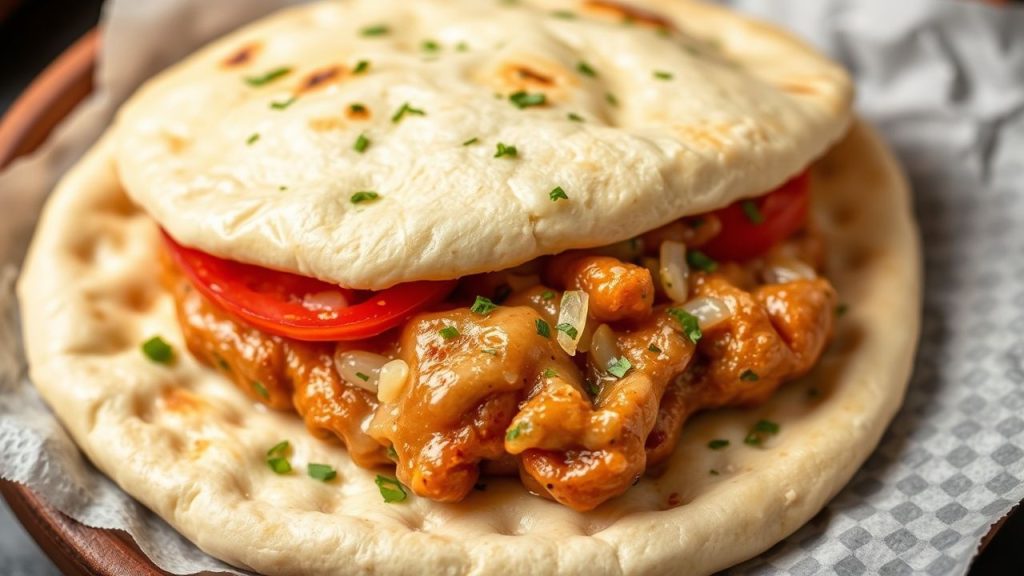
Split pitas to reveal the pocket and fill with grilled meats, vegetables, or falafel. They also pair perfectly with dips and spreads served at room temperature.
Try warm pitas with creamy hummus or use them as the base for sandwiches alongside roasted chicken and crisp salad. For oven-based baking guidance, see the internal guide on using a baking stone.
Nutritional information (per pita)
Estimate calories and macronutrients to plan meals. A standard medium pita is moderate in calories and provides usable carbohydrates for sandwiches and meals.
| Nutritional Information (per pita) | Amount |
|---|---|
| Calories | 170 kcal |
| Protein | 5 g |
| Carbohydrates | 34 g |
| Fat | 2 g |
Q&A
Why does pita bread puff up perfectly in high heat?
High heat causes the water inside dough to vaporize rapidly, and that steam inflates a pocket. The outer layer firms quickly and traps the air, creating the hollow center.
Can you get a pocket without very high temperatures?
Lower temperatures rarely produce a full pocket because steam forms too slowly and escapes rather than inflating the dough. You might get some lift, but not the consistent hollow center you want.
What temperature range is ideal for baking pita?
Aim for 450–500°F (232–260°C) surface temperature to produce rapid steam formation and a quick bake. Verify actual surface heat with a thermometer for best results.
Does the type of oven affect puffing?
Yes. Heat-retaining surfaces like stone or steel and cookware that transfers heat quickly improve puffing consistency. A home oven can mimic commercial ovens when you preheat a proper thermal mass.
How does dough hydration affect puffing?
More hydration increases available steam and supports fuller pockets but makes the dough stickier and harder to handle. Adjust flour and practice handling wet dough to balance steam potential with usability.
Insights and conclusions
High heat is the defining factor in creating a true pita pocket; it converts internal moisture to steam and separates dough layers in seconds. Build dough strength, control hydration, and present the rounds to a reliably hot surface to reproduce bakery-style results at home.
Practice the timing: preheat thoroughly, shape quickly, and cook with steady heat. With these controls in place, you will produce puffy, tender pitas that perform predictably across batches.
See also: Pita Bread
]]>
- Rapid steam inflates pita from the inside, creating the pocket.
- Gluten elasticity lets the dough stretch without tearing.
- Very high surface temperature seals the crust before steam escapes.
- Practical technique on a hot stone or cast iron gives consistent puffs.
How High Heat Produces the Puff
When dough meets intense oven heat, the water inside vaporizes almost instantly. This rapid vapor becomes steam and forces the dough layers apart, inflating the interior like a small balloon.
The dough’s protein matrix, primarily the gluten network, must be elastic enough to stretch as it fills with steam. For a technical overview of the bread type and cultural context see pita.
Temperature also drives chemical changes. Surface temperatures above 230–260°C (450–500°F) trigger quick setting of the outer layer and accelerate browning reactions. You can read more about the browning chemistry at Maillard reaction.
Finally, yeast-fermented dough contributes trapped gas and optimal hydration. Proper fermentation balances flavor and structure; for background on yeast action see yeast.
Prep and Cook Time
Accurate timing matters because dough temperature affects how quickly steam builds in the oven. Work in predictable stages: mix, knead, rise, shape, and bake.
Plan for active hands-on time and passive proofing. A preheated baking surface and oven are essential; the heat must be ready when the dough goes in.
- Preparation: 20 minutes
- Proofing: 1 to 1.5 hours
- Baking: 4-6 minutes per batch
- Total: Approximately 1 hour 30 minutes
Yield and Difficulty
This recipe yields about eight 6–7 inch pitas when divided and rolled consistently. Expect slight variations by oven and hydration levels.
Difficulty: Medium. The method suits bakers comfortable with yeast doughs. The technical hurdle is consistent oven temperature and rolling thickness rather than complex shaping.
Ingredients
Use simple ingredients and focus on measurement and temperature control. Hydration and salt both influence gluten development and feel of the dough.
- 2 cups all-purpose flour, sifted
- 1 cup whole wheat flour (optional)
- 1 packet (2 ¼ tsp) active dry yeast
- 1 ¼ cups warm water (about 110°F/43°C)
- 1 tbsp olive oil
- 1 tsp granulated sugar
- 1 tsp salt
Instructions
Follow the sequence to create dough with the right strength and hydration. Short, purposeful steps keep fermentation predictable and the final dough elastic.
Make sure the oven and baking surface reach full temperature. The stone or heavy sheet must be scorching-hot to transfer heat quickly to the dough.
- Activate the yeast: Combine warm water, sugar, and yeast. Let sit 5–10 minutes until foamy.
- Mix the dough: Whisk flours and salt. Add the yeast mix and oil to form a shaggy dough, then bring together.
- Knead: Knead by hand or machine 8–10 minutes until smooth and slightly tacky.
- First rise: Place in a greased bowl and cover. Let rise in a warm spot until doubled, about 1–1.5 hours.
- Preheat the oven: Put a pizza stone or heavy baking sheet on the middle rack. Preheat to 500°F (260°C) for at least 30 minutes.
- Shape: Divide dough into 8 pieces. Roll balls, then flatten to roughly 1/4 inch thickness.
- Bake: Slide 2–3 rounds onto the hot surface. Bake 4–6 minutes until they puff and show golden spots.
- Finish: Quickly remove and stack under a towel to keep them soft. Repeat with remaining rounds.
Baking Technique Details
Heat transfer is the variable that most home bakers control to get reliable results. A hot stone or cast-iron surface delivers intense, even heat to the dough base and encourages full puff.
If you lack a stone, a preheated cast-iron skillet on the oven rack or stovetop produces a similar direct heat effect. Flip carefully if using direct skillet heat to avoid scorching.
Chef’s Notes and Troubleshooting
Small variations in thickness, hydration, and oven temperature change outcomes dramatically. Aim for consistent rounding and equal thickness across rounds to improve puff reliability.
When pitas fail to puff, check three things first: oven temperature, dough thickness, and fermentation timing. One wrong element will keep steam from building fast enough to inflate the pocket.
- Heat: Fully preheat and verify with an oven thermometer when possible.
- Thickness: Keep discs near 1/4 inch; too thin tears, too thick won’t heat through fast enough.
- Hydration: Slightly tacky dough holds steam and stretches rather than cracking.
- Shake method: Briefly nudging the baking surface when sliding dough on can help the steam start to expand evenly.
Expert Insight
Store dough in the refrigerator overnight for convenience. Bring it up to room temperature before baking to restore elasticity and oven responsiveness.
Pro-Caution
Serving Suggestions
Pita is a natural, edible vessel. Fill warm pockets with grilled meats, roasted vegetables, or classic spreads to highlight texture contrast between the soft interior and blistered exterior.
For layered meal planning, warm pitas briefly and brush with olive oil and seeds. For broader bread techniques and recipes, see the internal guide on artisan bread baking and explore flatbread variations at pita variations.
Nutrition Snapshot
A typical 6-inch pita runs low on fat and moderate in carbs, making it a flexible component in meals. Nutrient content varies with flour choice and added oils.
| Nutrient | Per Serving (1 pita) |
|---|---|
| Calories | 140 kcal |
| Protein | 5 g |
| Carbohydrates | 28 g |
| Fat | 2.5 g |
Q&A
Below are focused answers to common practical questions about achieving a reliable pita puff. These address technique, equipment, and dough behavior.
Each answer emphasizes controllable variables: oven surface temperature, rolling thickness, hydration, and yeast activity. Adjusting these gives the most predictable improvements.
Q: What exactly happens inside the oven that makes pita bread puff up?
A: Moisture inside the dough vaporizes rapidly and becomes steam. The steam expands and inflates the flexible gluten and starch network while the surface sets quickly, trapping the steam as a pocket.
Q: Why does the heat need to be so high to get a perfect puff?
A: High heat produces the fast steam burst before the crust sets slowly. A slow set allows steam to escape and prevents the pocket from forming; intense heat locks the outer layer while the interior expands.
Q: Can home bakers replicate this without a professional oven?
A: Yes. A well-preheated pizza stone or cast iron works. The key is providing a very hot surface and not crowding the baking area so each round receives direct, even heat.
Q: How does dough thickness affect puffing?
A: Thickness controls heat penetration and steam pressure. Thin discs heat through quickly and develop a strong, sudden steam burst; thick discs fail to generate enough internal pressure fast enough.
Concluding Remarks
High heat does the heavy lifting in pita puff formation: it converts moisture to steam fast enough to inflate the dough and sets the crust before that steam escapes. Consistent technique and equipment let home bakers reproduce this effect reliably.
Remember: monitor oven temperature, standardize disc thickness, and relax the dough before baking. With those controls in place, the oven’s burst of heat becomes a predictable tool to create perfect pockets.
FAQ
Why does my pita sometimes burst instead of forming a pocket?
Overproofed dough or excessive gas expansion can rupture weak spots in the gluten. Under-kneading and uneven thickness also create thin points that tear rather than inflate.
Is a pizza stone absolutely necessary?
No. A preheated cast-iron skillet or heavy baking sheet will work. The critical factor is rapid heat transfer from a hot surface to the dough base.
How can I tell if the oven is hot enough?
Use an oven thermometer to validate temperature. If the baking surface cools quickly when dough is added, the oven or stone needs more preheat time.
Can I freeze pita dough or baked pitas?
Yes. Freeze dough balls for later use or freeze baked pitas in airtight bags. Thaw and bring dough to room temperature before baking for best puffing.
Does whole wheat change puffing behavior?
Whole wheat absorbs more water and weakens gluten strength slightly. Use a blend with all-purpose flour for best puff while adding the flavor and nutrition of whole wheat.
See also: pita puff
]]>