- Short process control: proof and boil timing determine structure and chew.
- Flour and hydration: high-protein flour and ~62% hydration deliver chew and handling strength.
- Boil then bake: boiling gelatinizes starches and locks moisture for a firm crust.
- Cold retard for flavor: overnight refrigeration tightens crumb and improves taste.
Why a Chewy Bagel Crust Matters
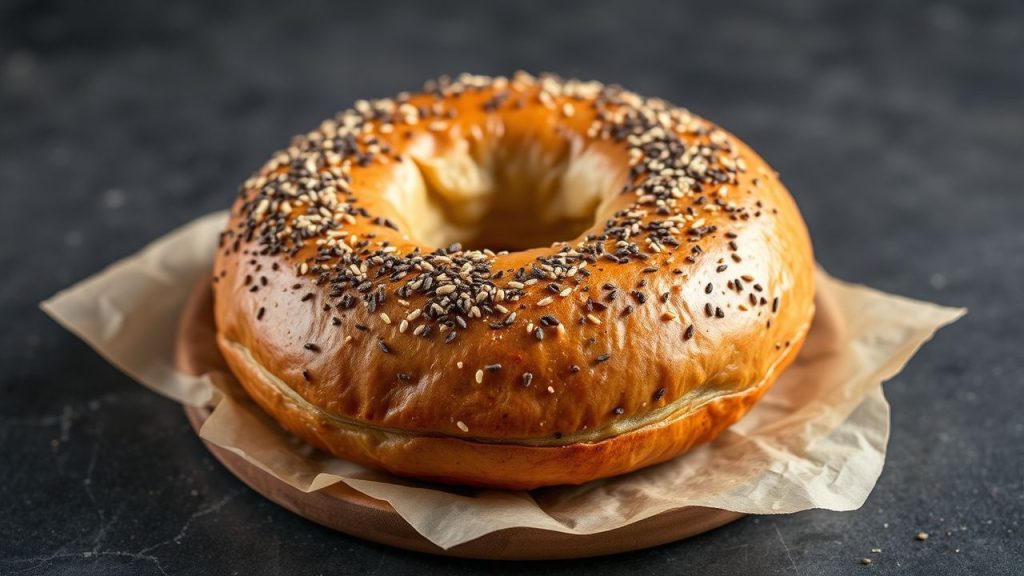
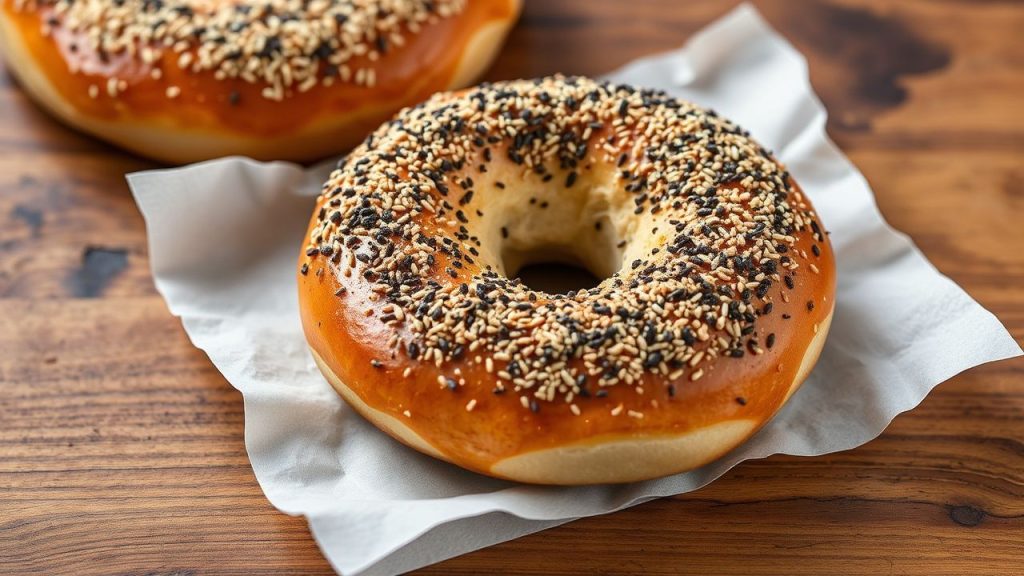
A true chewy bagel stands apart by bite, sheen, and density. The exterior forms when surface starches gelatinize in the boil and then brown in the oven, producing a glossy, resilient crust.
That structure relies on a strong gluten network and controlled Maillard browning. Read about bagel history and how technique shapes texture, or consult Maillard reaction basics to understand crust color.
Prep and Cook Time for Chewy Bagels
Plan for about two hours of active work for a same-day batch: mixing, kneading, first proof, shaping, short bench rest, boiling, and baking. Ambient temperature and ingredient coldness will change timelines, so measure and note times.
If you prefer deeper flavor, retarding the shaped dough overnight adds 8–18 hours but only a few minutes of active work. Cold retard tightens crumb and concentrates fermentation flavors in the chewy bagel.
Yield and Size Guidance for Chewy Bagels
This formula yields eight medium bagels at roughly 4 inches each. Scaling is linear; double ingredients to produce 16 bagels while keeping fermentation and boil times consistent for chew uniformity.
For larger or smaller bagels, adjust shaping and bake time by 2–5 minutes. Larger bagels need slightly longer in the oven to build a deep, even color without burning the crust.
Difficulty Level and Tools for Chewy Bagel Success
Rated medium: the method requires basic dough handling and timing discipline rather than advanced equipment. A digital scale and a timer produce consistent outcomes more quickly than guesswork.
Key tools: mixing bowl, bench scraper, slotted spoon, baking stone or steel, and a thermometer if you track fermentation precisely. Use a scale to hit hydration and flour weight targets every batch.
Ingredients for Chewy Bagel Dough
Core ingredients create structure, flavor, and crust. Use a reliable bread or high-gluten flour to develop the required gluten network for chew.
Typical roles: flour builds gluten; yeast ferments sugars into gas and flavor; salt controls fermentation; and barley malt or sugar aids browning. For background on protein and elasticity, consult gluten fundamentals and yeast basics.
- 4 cups bread flour (high-protein; weigh for accuracy)
- 1 ½ teaspoons instant yeast
- 1 ¼ cups warm water (about 110°F/43°C)
- 2 tablespoons granulated sugar
- 1 tablespoon salt
- 1 tablespoon barley malt syrup (or substitute honey for similar browning)
- Optional toppings: sesame, poppy, minced onion, everything seasoning
- For boiling: 2 quarts water, 2 tablespoons baking soda, 1 tablespoon barley malt syrup
Flour, Yeast, and Hydration Details
Select bread flour or high-gluten flour to reach the elasticity needed for a chewy bagel. Replace up to 10–15% with whole wheat for flavor but reduce hydration slightly to compensate for bran absorption.
Instant yeast delivers a predictable rise; active dry yeast will work if rehydrated. Maintain roughly 62% hydration for this formula and weigh ingredients to hit that target repeatedly.
Instructions to Make a Chewy Bagel
Follow the sequence: mix, develop gluten, ferment, shape, rest, boil, and bake. Each step affects gluten alignment and gas retention; omitting any stage changes final texture and chew.
Read the full set of numbered steps before you begin so the shaping and boiling proceed smoothly and you manage timing for each batch of bagels.
- Mix dry ingredients. Combine flour, yeast, sugar, and salt in a large bowl. Whisk to distribute and break up clumps.
- Add liquid and malt. Add warm water and barley malt syrup; mix until a rough dough forms. Scrape the bowl to ensure even hydration.
- Knead the dough. Knead 8–10 minutes by hand until smooth, elastic, and slightly tacky. Proper gluten development delivers the desired chew.
- First proof. Place dough in a lightly oiled bowl, cover, and let rise in a warm spot until doubled — roughly 1 hour depending on room temperature.
- Shape bagels. Divide into 8 equal pieces, pre-shape into tight balls, then form a hole with your thumb and stretch to about 3 inches diameter.
- Second proof. Rest shaped bagels on a parchment-lined tray, covered lightly, for 20 minutes to puff slightly before boiling.
- Prepare the boil. Bring 2 quarts water to a rolling boil. Add baking soda and barley malt syrup to raise pH and encourage color and sheen.
- Boil bagels. Lower bagels into boiling water two or three at a time. Boil 60 seconds per side to gelatinize surface starches and seal moisture.
- Drain and top. Remove with a slotted spoon, drain briefly on a rack, then add toppings while the surface is still tacky so they adhere and toast.
- Bake until golden. Preheat the oven to 425°F (220°C). Bake 20–25 minutes on a preheated stone or steel until evenly golden, rotating if needed for color consistency.
- Cool and serve. Cool briefly to finish interior set, then slice and serve warm to display the chewy bagel crust and tender crumb.
Using a preheated stone or steel improves bottom heat transfer and helps develop a crisp exterior without overbrowning the top. Consult baking resources for heat transfer basics if you want to optimize equipment choices.
 Pro-Caution
Drain bagels well and apply toppings quickly; damp but not dripping surfaces produce the best adhesion and even toasting in the oven.
If bagels collapse in the oven, reduce proof time or knead a bit longer to strengthen gluten. Small adjustments often solve common issues.
Tips for Chewy Bagel Success
Small adjustments yield large improvements. Weigh flour and water for consistent hydration and test one bagel as a control to refine boil time and oven spring for your setup.
Cold retardation after shaping improves flavor and tightens crumb. Remove shaped bagels from the fridge and let them come closer to room temperature before boiling to reduce shock.
 Expert Insight
Try mixing a small portion of high-gluten flour into bread flour for extra elasticity. If your bagels taste flat, check yeast freshness and fermentation temperature first.
Serving Suggestions for Chewy Bagels
Serve warm with traditional spreads: plain or herbed cream cheese, butter, or smoked fish. The chewy bagel crust stands up to heavy toppings without becoming soggy when prepared correctly.
Toast leftovers briefly to refresh the crust and warm the interior. Light toasting revives chew and releases aromas from toasted toppings like sesame or onion flakes.
Nutritional Snapshot for Chewy Bagels
Per bagel, expect roughly 280 kcal, 11 g protein, 57 g carbohydrates, and 1.5 g fat. Exact values vary with flour brand, toppings, and bagel size.
To reduce calories, make smaller bagels or increase whole-grain content for added fiber. Changes to flour type and size will alter hydration and bake time, so adjust method accordingly.
Q&A
What creates the bagel’s chewy crust?
A strong gluten network and a short boil produce the chew. Gluten gives elasticity; boiling gelatinizes surface starches and seals moisture before the crust browns.
How long should I boil each bagel?
Boil 60 seconds per side for this formula. Longer boils increase density; shorter boils yield a softer crust. Time consistently and work in small batches for uniform results.
Can I make bagels without barley malt?
Yes. Sugar or honey will help browning, but barley malt provides a characteristic flavor and sheen. Expect a slightly different color and flavor without malt.
Why do my bagels become too airy?
Overproofing or weak gluten structure causes excess airiness. Control proof time and temperature; the dough should double but not become excessively puffy or bubbled.
How should I store bagels to preserve chew?
Cool fully, then freeze if not consumed soon. For short-term storage, use a paper bag to prevent moisture build-up and toast before serving to re-crisp the crust.
Wrapping Up
Consistent chewy bagels come from measured flour choice, accurate hydration, managed proofing, and a disciplined boil before a hot bake. Each variable affects chew and crust in predictable ways.
Practice one batch, record adjustments, and refine timing. With careful control of ingredients and process you will replicate bakery-style chewy bagels reliably in your kitchen.
See also: bagel topping ideas and artisan techniques referenced throughout this guide for method crossover and variations.
See also: Chewy Bagel
]]>