- Key takeaway: Searing creates flavor and texture; it does not form a watertight barrier.
- Practical focus: Final internal temperature and resting time determine moisture retention.
- Chef action: Rely on a calibrated probe thermometer and carryover cooking, not an initial flash sear.
- Modern methods: Techniques that control temperature evenly, such as low-and-slow or precision baths, deliver consistent juiciness.
Historical Origins
The idea that a quick, high-heat sear locks in juices likely began as a teaching shorthand in early culinary instruction. Traditional culinary texts and classroom demos favored vivid metaphors to help students remember sequential steps in cookery.
Those memorable phrases spread through cookbooks and domestic advice columns. For background on formal culinary teaching and practices, review the history of cooking and vocational instruction.
The Science Explained
Searing initiates surface browning through the Maillard reaction, which generates complex aromas, deeper color, and textured crusts. That chemical process concentrates flavor at the surface but does not create a physical wall that traps internal water.
Heat causes muscle proteins to denature and fibers to contract, forcing water along thermal gradients toward cooler zones. For a primer on the molecules involved, consult material on protein chemistry and its response to heat.
The Myth Versus Measurable Reality
Controlled kitchen tests show that moisture loss correlates with final internal temperature, not the speed of the initial sear. Searing can slightly reduce surface evaporation, but the effect is marginal compared with overcooking.
Research and practical trials in food labs and test kitchens confirm this pattern. The anatomy and thermal behavior of meat explain why juices migrate rather than remain trapped under a crust.
Practical Cooking Strategy
Stop chasing the idea of an instant seal. Focus instead on three controllable factors: target internal temperature, removal timing, and a proper rest period. These steps govern how much moisture remains when you slice.
Use a sear to add texture and flavor contrast. Use measured cooking to control doneness. Together, those approaches produce both aroma and juiciness.
Actionable Rules
Rule 1: Preheat the pan until the fat shimmers and the surface is stable. A predictable surface temperature promotes efficient browning without burning.
Rule 2: Pat proteins dry and season before searing to maximize crust formation. Surface moisture inhibits browning and encourages steaming rather than a proper sear.
Ingredients and Simple Recipe Baseline
This example uses four boneless, skinless chicken breasts to illustrate timing and temperature. Keep ingredients minimal so the technique and temperature control remain the focus.
- 4 boneless chicken breasts, patted dry
- Salt and freshly ground black pepper, to taste
- 2 tablespoons neutral oil (or clarified butter for higher heat)
- 3 cloves garlic, minced; 1 tsp fresh rosemary, chopped
- 1 tablespoon unsalted butter and juice of 1 lemon for finishing
These single-protein recipes scale by weight. Increase pan space or cook in batches to avoid crowding, which drops pan temperature and impairs browning.
Prep, Timing, and Temperature
Prep: Allow 10–15 minutes for seasoning and brief tempering toward room temperature when safe. Dry the surface thoroughly with paper towels; this step improves crust formation.
Cooking: Sear 3–5 minutes per side over medium-high heat to build a golden crust, then reduce heat to finish. For poultry, aim for an internal reading of 165°F (74°C) before resting.
Step-by-Step Instructions
These steps emphasize measured doneness and a deliberate rest to preserve moisture. Follow the thermometer rather than visual cues alone to ensure safe and juicy results.
Cooking Sequence
- Season both sides generously and let the meat sit briefly if appropriate.
- Heat oil in a heavy skillet until it shimmers but does not smoke; place the protein carefully and leave undisturbed to form a crust.
- Sear 3–5 minutes per side depending on thickness; flip and brown the opposite face.
- Lower the heat, add butter and aromatics, and baste briefly to infuse flavor without burning the aromatics.
- Probe the thickest point with a calibrated thermometer and remove 5–10°F (2–6°C) below your target to allow for carryover.
- Rest the protein on a warm plate for 4–6 minutes so internal juices redistribute before slicing against the grain.
Yield and Timing Summary
Preparation: 15 minutes. Cooking: 25 minutes. Total: 40 minutes. This timing fits a family meal for four; adjust as you scale up pieces or shift to thicker cuts.
When working with thicker steaks or roasts, sear on the stovetop then finish in a moderate oven to reach even doneness without burning the crust.
Difficulty and Tools
Skill level: intermediate. The method requires attention to temperature and timing rather than technical dexterity. A digital probe thermometer makes the process reliable and repeatable.
Use a heavy-bottom skillet to hold heat, and choose cooking fats that match your searing temperature—neutral oil for moderate heat, clarified butter for higher heat tolerance.
Chef’s Notes
Why fat matters: The right fat improves heat transfer and flavor. Clarified butter or high-smoke-point oils tolerate searing temperatures better than regular butter.
Resting matters more: Resting allows internal temperature to stabilize and juices to migrate inward. That redistribution, not an instant seal, preserves tenderness and moisture.
 Expert Insight
Modern Techniques and Testing
Controlled comparisons—seared-then-rested versus non-seared—cooked to identical internal temperatures reveal consistent results: the seared sample offers superior aroma and texture but similar moisture when temperature matches. Those repeatable tests underpin professional practice.
Precision methods, such as sous-vide cooking, decouple doneness from surface browning by holding proteins at exact temperatures before finishing with a sear. This approach demonstrates that temperature control dictates juiciness.
When testing at home, take notes on weight, start temperature, pan heat, and probe readings. Those data points reveal patterns and improve predictability on subsequent cooks.
 Pro-Caution
Serving Suggestions
Highlight the crust by pairing seared proteins with softer components—creamy mashed potatoes, polenta, or steamed greens. The contrast enhances mouthfeel and perception of juiciness.
Build a simple pan sauce from the fond, a splash of stock or wine, and a squeeze of acid to balance fat and uplift flavors. Acid brightens the plate and complements browned aromatics.
Nutritional Snapshot
A typical serving from the recipe above yields moderate protein and controlled fat when using measured oil and butter. Nutrient values shift with portion size and substitutions, so treat estimates as directional.
For meal planning, calculate calories and macros by weight and adjust fats or sides to match dietary targets.
FAQ
What does the ‘sealing juices’ phrase actually mean?
The phrase implies a sear creates a barrier that traps internal moisture. In practical terms, searing forms a flavorful crust but does not prevent internal fluid movement during cooking.
Does searing ever help moisture retention?
Searing slightly reduces surface evaporation and adds texture, but the dominant factor for moisture retention is the final internal temperature and how you rest the meat. Avoid overcooking to preserve succulence.
How do I make meat juicy every time?
Control internal temperature with a probe, remove meat a few degrees shy of target, and rest before slicing. Combine searing for texture with measured finishing for consistent juiciness.
Can I rely on low-and-slow methods instead?
Yes. Slow, steady heat reduces the gradient-driven expulsion of moisture and yields even doneness. Many chefs use low-temperature finishes followed by a hot sear to combine tenderness with a crisp crust.
Where can I read more about the chemistry behind browning?
For technical background, read about the Maillard reaction and protein behavior under heat. Those topics explain why flavor and moisture do not always align.
See also: Searing
]]>
- Easy timing: plan ~10 minutes per inch of thickness at 375°F–400°F.
- Simple marinade: oil, acid, and seasonings lock moisture and add flavor.
- Finish fresh: herbs and lemon brighten the dish just before serving.
- Food safety: aim for 145°F (63°C) internal temperature for doneness.
Prep and Cook Time
Preparation: 15 minutes. Cooking: 20–25 minutes at 400°F (205°C) is a good starting point for medium-thick fillets.
Adjust time by thickness: as a rule, bake for about 10 minutes per inch of thickness; this gives a predictable texture. Use a probe thermometer for repeatable results and to avoid overcooking.
Yield and Difficulty
This recipe yields 4 servings using four 6-ounce fillets and fits an easy skill level. The method emphasizes control: few steps, repeatable technique, and guaranteed flaky results when you follow time and temperature guidance.
For cooks who want reliability, weigh fillets and check thickness to calculate bake time precisely. Small adjustments—tenting with foil or finishing under the broiler—solve browning or doneness issues without changing the core method.
Ingredients
Gather simple, high-impact ingredients: fresh fish fillets, olive oil, lemon, garlic, Dijon mustard, honey, smoked paprika, sea salt, black pepper, and fresh parsley. Fresh components create bright flavor quickly and require minimal alteration.
Choose firm, mild fish like cod, halibut, or tilapia for a neutral canvas that takes seasonings well. For background on the biological variety of edible species, see fish, which explains why different species behave differently when cooked.
- 4 fresh fish fillets (about 6 oz each)
- 2 tbsp olive oil (olive oil adds fat and heat conduction)
- Juice of 1 lemon (lemon brightens flavor)
- 2 cloves garlic, minced; 1 tsp smoked paprika
- 1 tsp sea salt, ½ tsp black pepper
- 2 tsp Dijon mustard, 1 tbsp honey
- 2 tbsp fresh parsley, chopped (parsley as garnish)
- Optional: thin lemon slices for garnish
Instructions
Preheat the oven to 400°F (205°C). Lightly grease a baking dish or line with parchment to make cleanup straightforward.
Pat fillets dry with paper towels; this step helps the marinade adhere and prevents steaming. Dry fillets brown and develop texture more predictably than damp ones.
- Make the marinade: Whisk olive oil, lemon juice, garlic, Dijon, honey, salt, pepper, and smoked paprika until emulsified.
- Coat the fillets: Place fillets in a single layer and brush the marinade over each piece, making sure they are evenly covered.
- Short rest: Let fillets sit for 10 minutes at room temperature to let surface flavors meld without chemically ‘cooking’ the flesh.
- Bake uncovered: Bake 20–25 minutes for medium-thick fillets; test for flake using a fork. Aim for 145°F (63°C) internal temperature for safe doneness.
- Finish and serve: Remove from oven, sprinkle with parsley, and add lemon slices if desired. Serve immediately for peak texture.
Marinade and Seasoning Details
Balance matters: oil for heat transfer, acid to brighten, and a small amount of sweetener to round edges. Dijon emulsifies and ensures even adhesion of flavors.
Adjust salt and acid to the fillet’s size and your palate; stronger acids or long marination times can firm or denature proteins. For reference on heat techniques, see baking.
Baking Time and Doneness
Thickness determines bake time; measure the thickest part and use the 10-minutes-per-inch rule as a baseline. Thinner fillets may need just 8–12 minutes; thicker ones can take 20–25 minutes.
Use a probe thermometer in the thickest section to confirm 145°F (63°C). Look for opaque flesh that flakes easily without separating into dry shreds.
Tips for Success: Elevate Your Baked Fish Fillets
Choose fresh and firm fillets for the best texture. Firm fillets keep their shape during baking and present better on the plate.
Pat dry and season well: Surface dryness helps the marinade adhere and avoids steaming. Season both sides, and brush oil or butter on top to help browning and moisture retention.
- Tent with foil for thick fillets that brown early, then remove foil to finish.
- Finish with acid (lemon or vinegar) just before serving to freshen flavors.
- Layer textures by serving fillets over grains or with roasted vegetables for contrast.
Expert Insight
For crisp edges, finish under a high broiler for 1–2 minutes while watching closely. This creates an appealing color without drying the center when you use a short broil burst.
Safety, Storage, and Reheating
Store cooked fish in shallow, airtight containers and refrigerate within two hours of cooking. Consume leftovers within two days to maintain quality and safety.
Reheat gently: use a low oven (275°F/135°C) for 10–12 minutes or a skillet over low heat with a splash of oil to avoid drying. Avoid microwave reheating for delicate fillets as it can toughen protein rapidly.
Pro-Caution
Serving Suggestions That Impress Every Time
Plate baked fillets over a bed of cooked grains or herb-infused rice to catch any pan juices and present a satisfying bowl. Add roasted seasonal vegetables, such as asparagus or bell peppers, for color and texture contrast.
Bright sauces pair well: a lemon-caper vinaigrette or a light yogurt-based sauce adds acidity and creaminess without overwhelming the fish. A few sprigs of fresh parsley finish the plate visually and aromatically.
Nutrition and Portioning
Baked white-fleshed fish typically provides a lean protein source with modest calories and healthy fats when prepared with olive oil. A 6-ounce serving commonly contains around 200–250 kcal and 25–30 g of protein depending on the species.
Adjust portion sizes to dietary needs and pair with fiber-rich sides to create a balanced meal. For detailed nutritional breakdowns, use labels from your fish supplier or a trusted nutrition database.
| Nutrient | Per Serving (approx.) |
|---|---|
| Calories | 210 kcal |
| Protein | 28 g |
| Carbohydrates | 4 g |
| Fat | 8 g |
Q&A
Below are concise answers to common, practical questions about baking fish fillets. Each answer focuses on reproducible technique and food-safety guidance.
What makes baked fish fillets a reliable weeknight option?
They require minimal hands-on time and scale easily from single portions to family meals. With predictable temperature and timing, you get consistent, moist results with little active cooking.
Which fish types work best when baking?
Firm, mild fish such as cod, halibut, and tilapia hold together and accept seasonings well. Oily fish like salmon bake faster and deliver a richer flavor profile, so shorten baking time accordingly.
How do I avoid dry, overcooked fish?
Use the 10-minutes-per-inch guideline, measure at the thickest point, and check for 145°F (63°C) internal temperature. Include a fat source or brief marinade to help lock in moisture.
Can I bake fish with vegetables for a one-pan meal?
Yes. Arrange vegetables with similar cook times around the fish and drizzle everything with olive oil and seasonings. Start vegetables that require longer roasting earlier, or cut them smaller to match the fish’s cook time.
How should I plate baked fish to look restaurant-ready?
Serve fillets atop a grain or vegetable base, add a small sauce swipe, and finish with fresh herbs and a lemon wedge. Keep the presentation clean and colorful for the best visual impact.
Mastering baked fish fillets comes down to technique: measure thickness, control temperature, and finish with fresh acid and herbs. Follow these steps, and you will produce dependable, flavorful fillets with modest effort.
See also: baked fish
]]>
- Even doneness: Short, frequent flips reduce the exterior-to-center temperature gradient.
- Consistent crust: Repeated returns to searing temperature sustain the Maillard reaction while avoiding burned edges.
- Faster, controlled cooking: Cadenced flipping shortens total cook time for many 1–1.5 inch steaks.
- Practical for home cooks: The method requires attention, not special equipment, and suits common kitchen pans.
Prep and Cook Time
Preparation: Allow steaks to sit at room temperature for 30–45 minutes to stabilize core temperature. That improves predictability when you perform the steak flip cadence.
Cooking: Expect about 8–12 minutes on the stovetop for a 1–1.5 inch ribeye using frequent flips, depending on target doneness and pan conductance. Use a probe thermometer to remove guesswork and track carryover heat.
Yield and Difficulty
Yield: The recipe yields two hearty servings from two ribeyes of the specified thickness. Portion size and trimming affect plate yield and nutrition estimates.
Difficulty: Medium. The technique depends on timing, heat management, and observing visual cues; it rewards an attentive cook more than a passive one.
Ingredients
Keep seasoning simple to highlight beef flavor. Salt, oil, aromatic butter, and fresh herbs support crust formation during repeated steak flip intervals without masking the meat.
Ingredients (serves 2):
- 2 ribeye steaks, 1–1.5 inches thick, trimmed to preference
- 2 tbsp neutral oil with a high smoke point (canola or grapeseed)
- 2 tsp coarse salt, adjusted to taste
- 1 tsp black pepper, freshly ground
- 2 cloves garlic, lightly crushed
- 2 sprigs thyme or rosemary
- 2 tbsp unsalted butter
Equipment and Rationale
Choose a heavy, heat-retaining pan for predictable surface temperature during repeated steak flip cycles. A cast iron skillet performs well because it resists rapid temperature drop when the meat is introduced.
For more on the pan type and why it matters, consult cast-iron skillet. Pair the pan with a reliable instant-read thermometer for consistent pulls and to measure carryover heat.
Instructions
Follow precise steps but stay observant: the steak flip cadence interacts with pan temperature and steak thickness. Adjust intervals slightly based on visible browning and the thermometer readout.
Preheat the skillet over medium-high until it radiates heat across the surface. Add oil and lay steaks away from you to avoid splatter. Begin with a short initial sear to establish a base crust before the cadence.
- Preheat the pan: Heat the skillet over medium-high until it is very hot and stable.
- Season the steaks: Pat dry, salt both sides generously, and apply pepper just before searing to limit moisture draw.
- Initial sear: Add oil; sear each side approximately 90–120 seconds to begin crust formation without overcooking the center.
- Apply the cadence: After the initial sear, flip every 30–60 seconds depending on pan temperature and thickness. This is the core of the steak flip method to even internal heat distribution.
- Baste with aromatics: On a later flip, add butter, garlic, and thyme. Tilt the pan and spoon butter continuously to layer flavor without dropping surface temperature too far.
- Probe for doneness: Insert the thermometer laterally into the center for accurate readings: medium-rare ~130°F, medium ~140°F, then account for 5–8°F carryover.
- Rest: Tent loosely with foil and rest 5–7 minutes to allow juices to re-distribute and the center to equilibrate.
Timing checklist
Start with a 90–120 second initial sear. Then switch to the cadence that matches your observation of browning and thermometer movement. Keep notes and calibrate times to your stovetop.
If the pan smokes excessively, lower the heat briefly and allow the oil to recover. Overheating negates the benefit of frequent steak flip cycles by forcing long recovery times between flips.
Expert Insight
Why multiple flips work (the science)
Frequent steak flip intervals reduce the temperature gradient between exterior and center by delivering heat in stepped increments. That moderates edge overcooking while the core approaches the target temperature.
The Maillard reaction still proceeds because the surface periodically returns to searing temperatures with each flip. For more on the chemical process that creates browning and flavor, see Maillard reaction. Repeated short exposures drive these reactions in bursts while avoiding excessive charring.
Chef’s Notes: Practical Tips for Success
Cut selection matters: Well-marbled steaks such as ribeye and strip respond predictably to the steak flip method. Their intramuscular fat supports even cooking and flavor development.
Avoid crowding: Give each steak space so steam escapes and surface temperature stays high. Crowding forces steaming and prevents a reliable crust.
- Thermometer placement: Insert the probe from the side, parallel to any bone, into the thickest part for accurate internal readings.
- Carryover heat: Expect a 5–8°F rise while resting. Plan to remove the steak a few degrees below target to account for this.
- Oven finish: For steaks thicker than 1.5 inches, sear on the stove then finish to temperature in a 400°F oven for 3–8 minutes as needed.
Pro-Caution
If heavy smoking or burnt bits appear, reduce heat and scrape the pan to remove carbonized residue between batches. Maintain consistent oil choice to keep smoke behavior predictable.
Serving Suggestions
Always slice against the grain to shorten muscle fibers and maximize tenderness. Serve immediately after the rest period so juices remain inside the meat rather than on the plate.
Pair the steak with bright sides that cut through fat, such as herb chimichurri or a lemony salsa verde. Classic roasted potatoes or grilled seasonal vegetables match the intensity of a well-seared ribeye.
Nutrition
Nutrition estimates depend on trim and portioning. Use the following rough numbers for a ribeye-based serving as a reference for meal planning.
Per serving (approximate):
| Nutrient | Per Serving |
|---|---|
| Calories | 650 kcal |
| Protein | 48 g |
| Carbohydrates | 2 g |
| Fat | 48 g |
Key Practical Comparisons
Single-flip advocates point to uninterrupted contact for an unbroken crust. That argument can hold for very thick cuts where a single extended sear is part of a reverse-sear sequence.
However, for a wide range of medium-thickness steaks, the steak flip approach balances crust and interior control. Match technique to thickness, bone presence, and fat distribution rather than applying a one-size-fits-all rule.
For background on beef as an ingredient and consumer considerations, see meat and for context on steaks specifically, consult steak.
FAQ
What exactly is the “steak flip” myth?
The myth says flipping once guarantees the best crust and juiciness. In practice, flip frequency is a tool: you can achieve both a strong crust and even doneness by controlling heat and timing with the steak flip cadence.
How often should I flip a 1-inch ribeye?
Aim to flip every 30–60 seconds after the initial sear for a 1–1.5 inch ribeye. Adjust based on visual browning and the thermometer reading; the cadence is a guideline, not a rigid rule.
Will flipping more often stop the crust from forming?
No. If the pan remains in the searing temperature window, repeated short exposures still promote the Maillard reaction and crust formation. Avoid long cooldowns between flips.
Are there cuts that still prefer a single flip?
Very thin steaks or very thick bone-in cuts can benefit from fewer flips or hybrid methods like reverse sear. Match your approach to the cut and your target doneness for predictable results.
What tools make the steak flip method more reliable?
A heavy skillet with good heat retention, an instant-read thermometer, and tongs for confident handling improve consistency. Internal monitoring and note-taking help you replicate success across cooks.
See also: steak flip and ribeye steaks
See also: steak flip
]]>
- Accurate doneness: Remove guesswork for consistent results.
- Food safety: Reach temperatures that kill harmful bacteria.
- Texture control: Prevent dry meat and undercooked centers.
- Versatility: Use on grilling, roasting, baking, and candy work.
What a food thermometer is and how it works
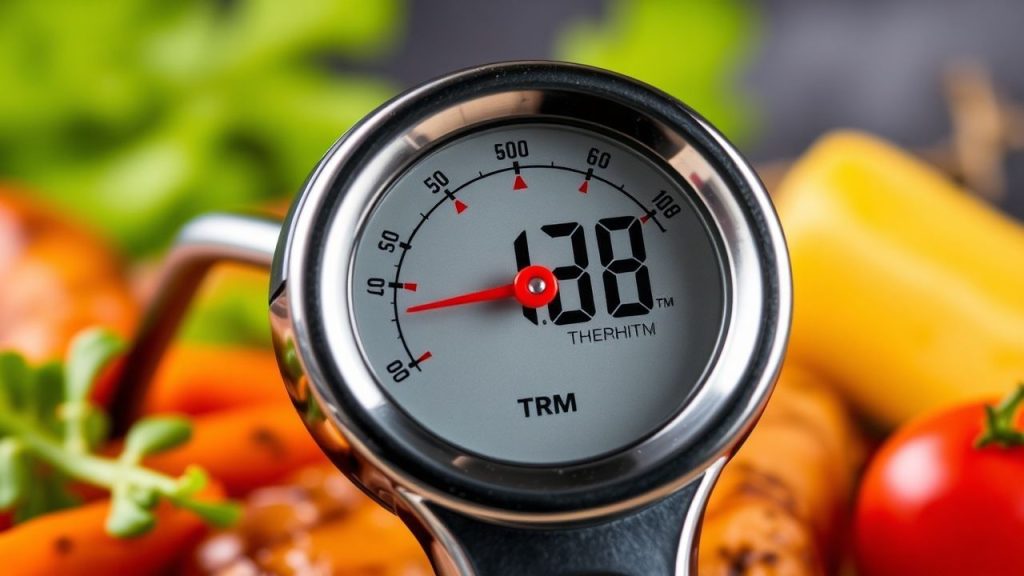
A food thermometer is an instrument that measures the internal temperature of food. Most modern devices use a metal probe with a sensor that converts heat to an electrical signal and displays a temperature value.
Thermometers calibrated for cooking read quickly and give a reliable value within a few seconds for instant-read types, or monitor continuously for probe-style units. Learn more about the underlying device technology on thermometer.
Why you should use one every time
Using a thermometer removes guesswork and reduces waste. You stop overcooking proteins and preserve juiciness by targeting precise internal temperatures for each food type.
Food safety improves because you can confirm lethal temperatures for pathogens rather than relying on color or time alone. For background on illness prevention and temperature control, see food safety.
Key temperature targets to memorize
Memorize a short list of internal temperatures to speed decisions in the kitchen. Common safe targets include: poultry 165°F (74°C), pork 145°F (63°C), fish 140°F (60°C), and beef ranges where medium-rare is 130–135°F (54–57°C).
Rest time matters: carryover cooking raises internal temperature after removal. For large roasts allow 10–20 minutes rest depending on size; smaller cuts need less time. That final rise yields juicier results and predictable doneness.
Types of food thermometers
Thermometers fall into clinical groups by use case: instant-read, leave-in probe, and smart wireless devices. Choose based on cooking method, response time, and whether you need continuous monitoring.
Each type has trade-offs: instant-read gives speed, probe units give long-term monitoring, and wireless options free you to multitask while the probe watches the roast.
Instant-read thermometers
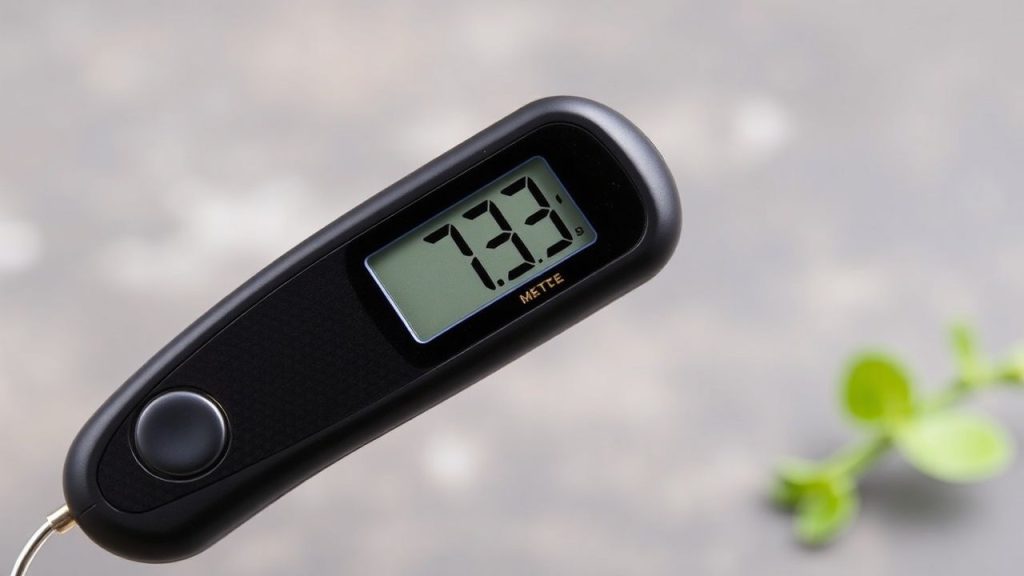
Instant-read models deliver temperatures in seconds and suit quick checks while searing or finishing a steak. Use them for thin cuts and when you need fast, actionable feedback.
They are not designed to stay in the oven for long. For slow roasts or smoking, pair instant-read checks with a leave-in probe to monitor progress between checks.
Probe and leave-in thermometers
Probe thermometers are ideal for roasts, whole birds, and smokers where continuous monitoring matters. Insert the probe into the thickest part and route the cable through the oven door or use a wireless base for remote reads.
These units help you track temperature curves and predict when to remove food and begin resting. They improve precision for large cuts and low-and-slow techniques.
How to use a food thermometer correctly
Always insert the probe into the thickest part of the food, avoiding bone, gristle, or excess fat. For steaks and fillets insert sideways to reach the center; for whole poultry target the breast and thigh junction.
Allow the display to stabilize before recording the reading. For instant reads wait the manufacturer-specified time, usually 2–10 seconds. For leave-in probes confirm the steady reading over several minutes to detect temperature stalls.
Follow recommended targets for each protein and consider carryover rise when timing removal from heat. Use a consistent probe insertion point for repeated checks so your notes remain comparable.
Pro-Caution
Calibration, maintenance, and best practice
Calibrate thermometers periodically. The ice-point method (probe in crushed ice water at 32°F/0°C) and the boiling-point method (probe in rolling water, adjusted for altitude) require simple checks to ensure accuracy.
Clean and sanitize the probe between uses with hot, soapy water or alcohol wipes. Store in a protective sheath to avoid bending or damaging the sensor, which spoils accuracy.
Chef’s notes and practical tips
Choose the right tool for the task: a fast-response instant-read for thin cuts and a wired probe for roasts. Battery life, response speed, and probe length matter in daily use.
Keep a small kitchen log. Note temperatures, oven setup, and resting time for recurring recipes so you replicate success and learn from variation. Cross-referencing results shortens the learning curve.
Expert Insight
Serving suggestions and finishing touches
Rested proteins yield juicier slices and better mouthfeel. Slice against the grain for tender cuts and present on warmed plates so food keeps heat at the table.
Use finishing elements—compound butter, pan jus, or a light sauce—to add gloss and depth. These touches highlight the precise doneness your thermometer helped secure.
| Nutrient | Per Serving (Avg.) |
|---|---|
| Calories | 250 kcal |
| Protein | 28 g |
| Carbohydrates | 5 g |
| Fat | 12 g |
For trusted safety guidance and temperature charts consult authoritative resources. Pair your reading practice with technique guides to build confidence and reduce waste.
Explore related content like Mastering Grilling Temperatures and Kitchen Tools Guide for deeper practical steps and product recommendations.
FAQ
What is the best temperature for chicken?
Cook chicken to an internal temperature of 165°F (74°C) in the thickest part. This target ensures harmful bacteria are reduced to safe levels while keeping meat moist when combined with proper resting time.
Can I leave a thermometer in the oven?
Only use leave-in thermometers designed for continuous high-heat exposure. Instant-read devices usually cannot withstand long oven exposure. Check the manufacturer’s specifications before leaving any probe inside.
How often should I calibrate my thermometer?
Check accuracy every few months or after a drop. Use the ice-point or boiling-point methods to confirm. Frequent professional use or rough handling calls for more frequent checks.
Do thermometers work for baking and candy?
Yes. Use probe thermometers for bread and custards to verify doneness and candy thermometers for sugar stages where precise temperature defines texture. Each task requires the correct thermometer type.
Where can I learn more about cooking science?
Read focused references on technique and science. The cooking and meat pages explain fundamentals that link temperature to texture. Combine that knowledge with hands-on practice and a log of results.
Final thoughts
A food thermometer is a compact investment that upgrades results across grilling, roasting, and baking. It saves time, reduces waste, and protects health by giving you concrete temperature data instead of guesswork.
Adopt consistent probe technique, maintain your device, and keep a short set of target temperatures by memory. Your food will reward that small habit with better texture, flavor, and reliability every time.
See also: food thermometer
]]>
- Resting steak keeps juices in the meat, not on your cutting board.
- Carryover cooking finishes doneness while protecting the crust.
- Tent loosely to preserve crust and retain warmth without steaming.
- Match rest time to thickness — thicker cuts need longer rests.
Why Resting Steak Matters: The Science in Plain Terms
When a steak meets high heat, muscle fibers contract and push moisture toward the center. Resting steak lets those fibers relax and reabsorb some of the expelled juices, preserving tenderness.
Thermal movement then evens internal temperature as heat migrates inward. This carryover effect raises internal temperature a few degrees and stops overcooking the crust while the interior finishes. For context on heat transfer in cooking, see cooking.
What Happens When You Cut a Steak Too Soon
Cut too early and juices run out, leaving a wet plate and a drier interior. Those visible juices contain flavor compounds and dissolved proteins; losing them reduces taste and mouthfeel.
Cutting prematurely also flattens the contrast between the browned crust and the interior. The desirable crust forms through the Maillard reaction. If you slice too soon or wrap tightly, that crust cools and softens, diminishing texture.
How Long to Rest Steak: Timing Rules That Work
Use a simple rule: rest for roughly half the active cooking time for most steaks. If you seared a steak for 8–10 minutes total, plan 4–5 minutes of rest to balance juice redistribution with temperature retention.
For precision, rely on internal temperatures and carryover expectations. Most steaks rise 3–8°F (1.5–4°C) off the heat. Pull steaks a few degrees below your target doneness and let resting steak finish the job.
Resting Times by Cut and Thickness
For a 1-inch steak, allow about 4–6 minutes. For 1.5–2 inch cuts, allow 8–12 minutes. Larger roasts require 15–30 minutes depending on mass.
Thin steaks (under ¾ inch) cool quickly and benefit from a short pause of 2–3 minutes. Reserve longer rests for steaks where carryover meaningfully affects final temperature.
Step-by-Step: Cook, Resting Steak, Finish — A Practical Workflow
Follow a clear sequence for consistent results: season, sear, rest, slice. This order protects juices and showcases your crust. Each step supports the next, so do not skip the pause.
Bring the steak to near room temperature for 20–30 minutes and salt just before cooking. Sear on high heat in a heavy skillet or cast-iron. For searing technique, see our internal guide on how to sear steak.
Detailed Instructions
1. Pat the steak dry and season both sides with coarse salt and cracked pepper. A dry surface produces a better sear. 2. Heat the pan until it just smokes; add a high-smoke-point oil and sear undisturbed to form a crust.
3. Flip once to cook the second side and add aromatics like garlic, thyme, and butter to baste for flavor. 4. Transfer to a warm plate and tent loosely with foil; rest for the recommended time before slicing against the grain.
Slicing and Serving
Always slice against the grain to shorten muscle fibers and improve tenderness. Cut uniform slices to preserve temperature and mouthfeel when served.
Pair steak with contrasting textures and acidic elements — crisp vegetables or a bright vinaigrette balance the richness. For doneness targets and temperature charts, consult our steak doneness guide.
Expert Insight
If you tent after searing, keep the foil loose to avoid trapping steam. A loose tent holds warmth while allowing airflow that protects the crust.
Pro-Caution
Sous-vide cooks need a shorter rest since the piece sits at a uniform temperature. Still, a quick sear followed by a brief rest improves texture and appearance by setting a crust without forcing juices out.
Practical Alternatives When You’re Short on Time
If time is tight, use strategies that mimic resting steak benefits without a long pause. A low oven at about 140°F (60°C) preserves heat while allowing redistribution for 3–5 minutes.
Another tactic is to remove the steak just shy of final temperature. Because of carryover cooking, residual heat finishes the doneness while a short rest prevents juice loss. Larger slices at service also help maintain internal moisture on the plate.
Common Mistakes and How to Avoid Them
Wrapping steaks tightly in foil to preserve heat is a common mistake. That traps steam and softens your sear; avoid it. Use a loose tent or rest on a warm plate instead.
Over-resting thin cuts is another error: extended waits cool them down and require reheating, which risks overcooking. Match rest length to cut size and thickness to keep temperature and texture optimal.
Chef Notes: Small Techniques, Big Differences
Finish steaks with a small pat of compound butter in the final seconds before slicing to add gloss and a flavor boost. The butter melts into the surface without driving juices out.
Use coarse or kosher salt for even seasoning and apply early for thicker cuts. Consider resting on a warm plate rather than a chilled surface; contact with cold plates can draw heat out prematurely.
Relevant Reading
For background on muscle structure and meat science, consult Meat. To understand browning chemistry, read about the Maillard reaction. For specifics on different cuts, review the Steak page.
FAQ
How long should I rest a 1-inch steak?
Rest a 1-inch steak about 4–6 minutes. This lets juices redistribute while keeping the steak warm and close to your target doneness.
Does the steak keep cooking while resting?
Yes. Residual heat causes carryover cooking and typically raises internal temperature 3–8°F. Pull steaks a few degrees below your target to account for that finish.
Can resting ruin the sear?
Only if you rest incorrectly. Tight foil will steam the crust and make it limp. A loose tent preserves the sear while the interior relaxes.
Is resting necessary for all meats?
Most large cuts benefit from resting, including pork, lamb, and poultry. Thin cuts and fast-cooked items may need little or no rest, but a brief pause often improves texture and juiciness.
What tool gives the best consistency?
An instant-read thermometer provides the most consistent results. Combine it with proper timing for predictable doneness and optimal juices.
See also: resting steak
See also: resting steak
]]>