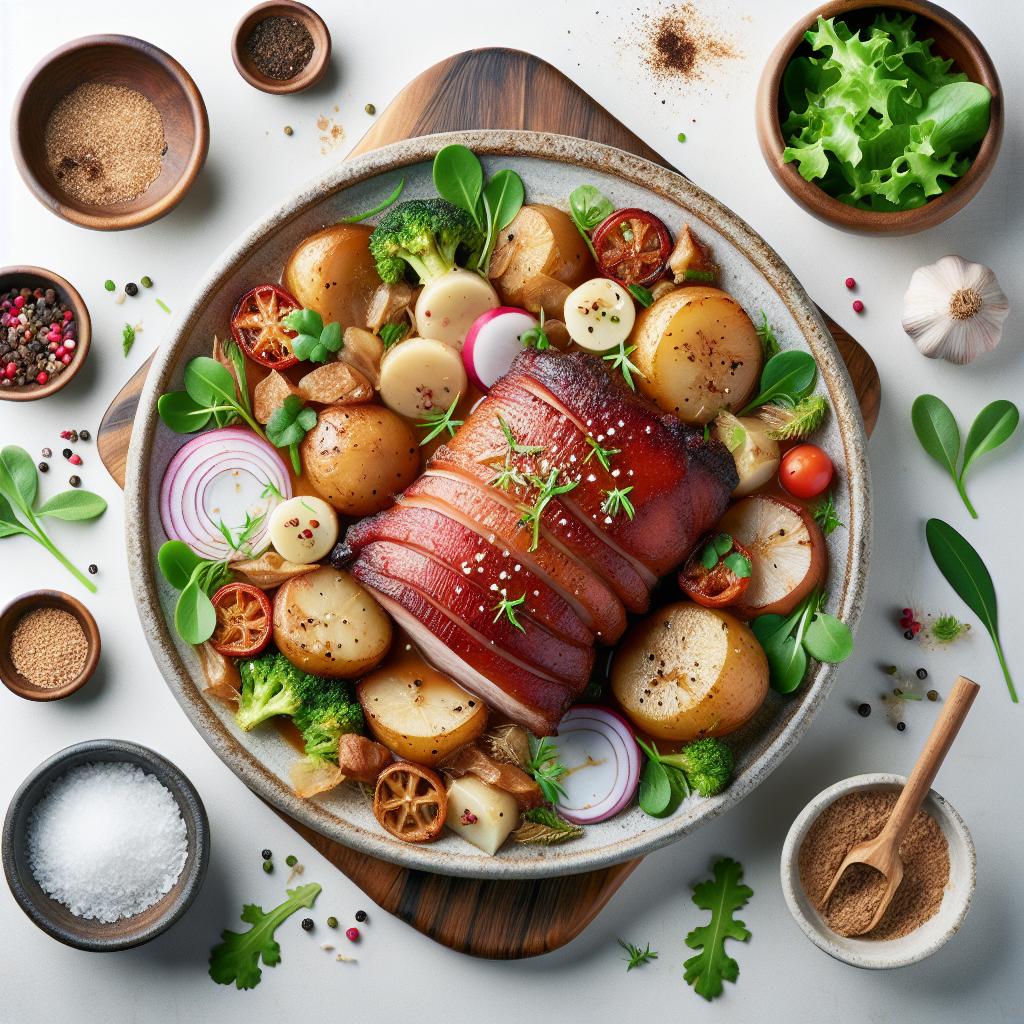
The Savory Science Behind Perfect Kalua Pig Chemistry
The savory science behind perfect Kalua pig chemistry is a journey into flavor that transforms humble ingredients into a melt-in-your-mouth Hawaiian classic. This recipe celebrates the magic of the Maillard reaction combined with the tenderizing power of slow roasting-capturing authentic Kalua pig flavor with a balance of salt and smoke that disarms the palate and delights the senses. Whether you’re recreating traditional imu-style pork or modernizing with kitchen chemistry, this guide ensures your Kalua pig bursts with juicy, smoky richness worthy of any luau.
Prep and Cook Time
- Preparation: 20 minutes
- Marinating: Overnight (12 hours recommended)
- Cooking: 8-10 hours (slow roast)
- Total Time: Approximately 10.5 hours
Yield
Serves 8 to 10 hungry guests
Difficulty Level
Medium – Requires planning but straightforward technique
Ingredients
- 5 lbs pork shoulder (Picnic roast), bone-in
- 2 tbsp Hawaiian sea salt (or kosher salt) – key for authentic flavor and preserving moisture
- 1 tbsp liquid smoke (preferably hickory or mesquite-infused)
- 3 cloves garlic, minced
- 1 tbsp brown sugar (balances salt and aids caramelization)
- Banana or ti leaves for wrapping (optional but highly recommended for traditional aroma)
- Aluminum foil or parchment paper for sealing if leaves unavailable
- Optional: Wood chips or smoking chips if slow roasting with smoke infusion
Instructions
- Prepare the marinade: In a small bowl, combine the Hawaiian sea salt, liquid smoke, minced garlic, and brown sugar. Stir until the sugar is dissolved and the mixture is uniform.
- Score the pork shoulder: Using a sharp knife, make shallow incisions 1-inch apart over the surface of the pork to allow deeper penetration of flavors. This encourages the Maillard reaction during roasting.
- Massage the marinade into the pork: Rub the mixture all over the pork shoulder, inside the score marks and on the surface. Cover and refrigerate overnight to maximize flavor absorption and tenderization.
- Preheat your oven or smoker: Set to a low temperature of 225°F (107°C). This slow roasting temperature enables gradual protein breakdown and tenderness.
- Wrap the pork: If you have banana or ti leaves, wrap the pork securely to replicate the traditional imu cooking environment. Otherwise, wrap tightly in aluminum foil or parchment paper to keep moisture and flavors locked in during roasting.
- Slow roast the pork: Place the wrapped pork in a roasting pan. Insert into the oven or smoker for 8-10 hours. Check internal temperature starting at 8 hours-you’re aiming for 195-205°F (90-96°C) for fork-tender results.
- Rest and shred: Remove the pork from heat, unwrap carefully. Allow resting for 20 minutes to let juices redistribute. Using forks, shred the meat-the collagen and connective tissues will have broken down beautifully courtesy of slow heat and salt balance.
- Finish with a quick sear (optional): For extra depth and texture, spread shredded pork on a hot skillet or under a broiler until edges crisp, intensifying the Maillard browning and smoky notes.
Tips for Success
- Use Hawaiian sea salt whenever possible to honor the traditional taste and mineral essence.
- Liquid smoke enhances flavor but monitor quantity closely; a little goes a long way.
- To replicate authentic smoky depth, consider adding soaked wood chips into a smoker box or roasting pan.
- Wrapping in leaves not only infuses aroma but also maintains essential moisture, mimicking the Hawaiian imu technique.
- Make-ahead tip: Kalua pig reheats beautifully and tastes even better the day after as flavors deepen.
Serving Suggestions
Serve your Kalua pig with classic Hawaiian sides like sticky rice, poi, and fresh steamed vegetables. Garnish with finely sliced green onions and a sprinkle of toasted sesame seeds for contrast. For a modern twist, layer shredded pork in tacos with a mango salsa and drizzle with a tangy aioli to complement its smoky, salty essence.

| Nutrient | Amount per Serving |
|---|---|
| Calories | 350 kcal |
| Protein | 35 g |
| Carbohydrates | 2 g |
| Fat | 23 g |
For more Hawaiian-inspired recipes that celebrate rich culinary traditions and modern techniques, be sure to visit our Hawaiian recipes collection. To dive deep into the science of the Maillard reaction sustaining the savory charm of Kalua pig, explore this scientific resource on Maillard chemistry.
Q&A
Q: What makes Kalua pig so uniquely delicious from a scientific perspective?
A: Kalua pig’s deep, smoky flavor and tender texture result from a perfect chemistry of Maillard reactions, slow collagen breakdown, and subtle smoke infusion. The pig’s fat and protein molecules transform under low, prolonged heat, creating complex aroma compounds that delight the palate.
Q: How does the traditional underground roasting method affect the chemistry of Kalua pig?
A: The imu (underground oven) creates an anaerobic, moist environment where heat penetrates evenly. This slow cooking triggers enzymatic breakdown of connective tissues and gradual moisture retention, allowing proteins and fats to interact optimally, enhancing tenderness and flavor complexity.
Q: What role does salt-specifically Hawaiian sea salt-play in Kalua pig’s taste and chemistry?
A: Hawaiian sea salt acts as a natural flavor enhancer by altering the meat’s protein structure, improving water retention and juiciness. It also influences the ionic balance, which subtly modifies enzymatic activity during cooking, amplifying that signature savory depth.
Q: Why is banana leaf wrapping important beyond tradition?
A: Banana leaves infuse the meat with unique phytonutrients and mild aromatic oils. Chemically, they create a semi-permeable barrier that traps steam and smoke while preventing desiccation, maintaining cellular integrity and promoting a perfect tender bite.
Q: Can we replicate Kalua pig’s chemistry without the imu?
A: Yes! Modern ovens or smokers can mimic the temperature, humidity, and smoke conditions that drive the key chemical reactions. Controlling these variables allows home cooks to coax out the same Maillard complexity, collagen breakdown, and smoky nuances without digging a pit.
Q: How does the slow cooking time influence the molecular structure of the meat?
A: Extended cooking gradually converts tough collagen into gelatin, which melts into the muscle fibers, resulting in a silky texture. Meanwhile, proteins denature and reorganize, enabling a juicy, tender profile rather than a rubbery chew.
Q: What chemical compounds give Kalua pig its characteristic smoky aroma?
A: Phenols, guaiacol, and syringol compounds formed from wood combustion permeate the meat during smoking. These compounds are responsible for the rich, warm, slightly sweet-smoky bouquet distinct to Kalua pig.
Q: Is the fat content important for the “mouthfeel” of Kalua pig?
A: Absolutely. The rendered fat lubricates the meat fibers, enhancing juiciness and richness. It also acts as a solvent for flavor molecules, helping to deliver and dissolve aromatic compounds across taste buds, heightening the sensory experience.
Q: How does the chemistry of Kalua pig explain its popularity in Hawaiian culture?
A: Beyond the cultural ritual, the perfect alignment of chemical transformations in Kalua pig delivers an irresistible taste and texture that resonate deeply with human sensory pleasure centers – a savory masterpiece born from both nature and refined traditional science.
The Conclusion
As the fragrant steam rises from a tender, smoky heap of kalua pig, we’re reminded that this beloved Hawaiian dish is much more than a simple meal-it’s a symphony of chemistry and tradition perfectly intertwined. The alchemy of salt, smoke, and slow cooking transforms humble pork into a culinary masterpiece, where each molecule plays its part in creating those unforgettable flavors. Understanding the savory science behind kalua pig not only deepens our appreciation for this island classic but also invites us to explore the fascinating ways in which culture and chemistry collide on our plates. So next time you savor a bite, remember: you’re experiencing the delicious result of nature, nurture, and a little bit of scientific magic working together in perfect harmony.