- Two-zone cooking for fast crust and gentle finish to protect internal juices.
- Marinades and resting help fibers retain and redistribute moisture.
- Choose the right cut—marbling and fat prevent the perception of dryness.
- Use thermometers to stop cooking before excessive moisture loss.
Mastering Temperature Control to Preserve Grilling Moisture
Heat management determines how rapidly proteins denature and expel liquid. When you plan for searing and finishing zones, you control where moisture moves and how much evaporates from the surface.
Set up at least two zones on the grill: a hot, direct side for crust formation and a cooler, indirect side for finishing. This two-zone approach reduces total time at extreme temperatures and protects grilling moisture in thicker cuts.
Why Heat Forces Moisture Out
Muscle tissue stores water inside cells and between protein strands; as temperature rises, the protein matrix contracts and squeezes liquid outward. That mechanical change explains why rapid, prolonged exposure to high heat increases drip loss and surface evaporation.
Thermal denaturation changes protein shape and binding capacity, which frees water previously held in the matrix. For the underlying biochemistry consult protein denaturation, which clarifies how heat releases bound water.
Heat, Evaporation, and Drippings
Evaporation accelerates with hotter air and longer exposure, so a hot sear can force moisture toward the exterior and increase drip loss. That steam and liquid loss is a physical process you must manage when you concentrate heat at the surface.
Conversely, slower cooking at moderate temperatures gives proteins time to set more gently and reduces aggressive expulsion of water. For basic physics about phase change and heat transfer, see evaporation.
Practical Grilling Workflow
Organize your workflow before you light the grill to reduce time on extreme heat and lower overall moisture loss. Sequence matters: prep, sear, finish indirectly, then rest—the order protects grilling moisture at each stage.
Prepare tools and staging: a calibrated instant-read thermometer, clean tongs, and a two-zone setup reduce guesswork and prevent accidental overexposure to direct flame. Consistent technique produces repeatable, juicy results.
Prep and Cook Time
Allow time for active prep and any marinade so the surface chemistry supports browning without excessive steaming. Typical windows are 15 minutes active prep and 2–4 hours of marinade when applicable to tenderize and add protective oil.
Cooking time varies by thickness and cut; a 1–2 inch steak often needs 20–30 minutes total with sear plus indirect finish, while larger roasts require longer indirect cooking but at lower temperatures to preserve grilling moisture.
Yield and Difficulty
Yield depends on portion size and cut. A 2 lb portion generally serves four; adjust target internal temperatures rather than strict times to preserve juiciness across different weights and shapes.
Difficulty is medium: you need a two-zone setup and an accurate thermometer. Focused attention and a consistent workflow yield better results than complicated spice blends or extended marinades.
Ingredients & Prep
A well-marbled ribeye or chuck roast holds and conveys moisture better during cooking because rendered intramuscular fat improves mouthfeel. For reference on muscle and fat composition consult meat composition.
Marinades that combine oil and modest acid—such as buttermilk or lemon—tenderize connective tissue and create a thin lipid barrier that limits surface evaporation. Pat the surface dry before searing to encourage rapid crust formation without steaming.
Step-by-Step Instructions
- Marinate: Combine buttermilk, lemon juice, minced garlic, rosemary and a pinch of salt. Submerge for 2–4 hours so the acid loosens connective tissue while dairy buffers surface proteins.
- Preheat grill: Create two heat zones: one side hot (450–500°F) for searing, the other medium-low (300–350°F) for finishing. This limits the time meat spends at moisture-extracting temperatures.
- Pat dry: Remove from marinade and blot the surface. A dry surface browns quickly and avoids steam that can pull water toward the exterior and increase drip loss.
- Sear: Sear 2–3 minutes per side over direct heat until a deep crust forms. Flip once to promote even browning and reduce total surface exposure to flames.
- Finish indirectly: Move to the cooler zone, close the lid, and monitor internal temperature with an instant-read thermometer. Pull at 5°F below target to account for carryover and protect final grilling moisture.
- Rest: Tent loosely with foil for 10 minutes so juices redistribute. Cutting too soon forces fluid out and reduces perceived juiciness.
 Pro-Caution
Measure temperature rather than guessing by touch. Calibration and correct probe placement reduce variance between cooks and avoid wasted product.
Tips for Success
Choose cuts with balanced marbling because intramuscular fat melts and lubricates the mouthfeel, which improves perceived juiciness even if some water is lost. Lean cuts require gentler heat and faster cooking to maintain moisture.
Manage flare-ups by moving meat to indirect heat when fat ignites; open flames char the surface quickly and can drive moisture from deeper tissues. Control fat rendering with moderate searing and timely movement to the cool zone.
[TI P]Expert Insight: Rest your meat under a loose foil tent for at least half the thickness time. This short cooldown re-equilibrates internal juices and often improves perceived juiciness more than adding more fat or extra marinade.[/TIP]
Use a thermometer that reads quickly and accurately to reduce time with the lid open and the grill cool zone compromised. Accuracy improves repeatability and reduces moisture loss from overshooting target temperatures.
Serving Suggestions
Slice across the grain to shorten muscle fibers and make each bite feel more tender; cutting technique directly affects perceived moisture and chew. Serve slices alongside quick-grilled vegetables for contrast in texture and temperature.
Finish with a light drizzle of herb oil or a small pat of compound butter to add surface fat and enhance mouthfeel without changing internal moisture. These surface additions mask small losses in internal water and improve palatability.
Nutritional Snapshot
This section provides a practical estimate for standard servings and highlights the role of fat in perceived juiciness. The numbers vary by cut, trimming, and cooking losses, so treat values as guides rather than absolutes.
For a typical 2 lb portion divided into four servings you can expect roughly the following macronutrient profile; adjust for leaner cuts or added butter.
| Nutrient | Amount per Serving |
|---|---|
| Calories | 380 kcal |
| Protein | 45 g |
| Carbohydrates | 3 g |
| Fat | 22 g |
FAQ
The FAQ answers focus on why meat loses water on the grill and how to protect what matters. These concise answers give direct, evidence-based steps to reduce grilling moisture loss and improve outcomes.
Below are the most common questions home cooks ask, with clear, actionable answers you can apply on the next cook.
Why does meat lose moisture when grilled?
Heat causes muscle proteins to contract, which squeezes water out of cells and between fibers. Simultaneously, surface evaporation removes water, so both internal pressure and air exposure determine total moisture loss.
Is all moisture lost during grilling?
No. Some water remains bound within tissue, especially in well-marbled cuts where rendered fat improves juiciness perception. Nevertheless, higher temperatures and longer times generally increase both evaporation and drip loss.
Can marinating reduce moisture loss?
Yes. Oil in marinades provides a partial barrier to evaporation, while acids and enzymes help break down connective tissue and improve water-holding capacity. Proper marinade timing yields tender, moister results.
What role does resting play?
Resting lets contracted proteins relax and allows juices to redistribute internally, so less fluid escapes when you slice. A proper rest improves the final plate’s juiciness more reliably than extra fat or extended searing.
Which cuts retain moisture best?
Fattier cuts such as ribeye and short rib retain more perceived moisture because melting intramuscular fat enhances mouthfeel. For lean cuts, shorten cook times and pull at lower target temperatures to preserve grilling moisture.
Final Thoughts
Heat is a tool; use it deliberately to coax flavor without surrendering moisture. Two-zone cooking, controlled searing, correct marinades, and accurate thermometry keep grilling moisture within the muscle for consistently juicy results.
Practice the workflow, check internal temperatures, and make small adjustments to timing and heat for each cut. With attention to these principles you will routinely produce steaks and roasts that balance a flavorful crust with a tender interior.
See also: grilling techniques and grilled steak guide
See also: grilling moisture
]]>
- Key takeaway: Control surface heat to trigger browning while protecting interior moisture.
- Key takeaway: Simple marinades with salt, acid, and sugar manage tenderness and crust formation.
- Key takeaway: Use a meat thermometer and a two-zone fire for consistent doneness.
- Key takeaway: Resting yields juicier slices and prevents immediate juice loss when serving.
Why the science matters for grilled chicken
Successful grilled chicken depends on reproducible physical and chemical changes. The Maillard reaction creates the deep, savory crust you expect; manage temperature to favor Maillard browning rather than surface burning. Maillard reaction
Control of heat transfer and moisture differentiates dry, tough results from succulent meat. A controlled sear followed by a lower-heat finish manages conduction and convection so the center reaches safe temperature without overcooking the exterior. Grilling
Ingredient choices and marinade chemistry for grilled chicken
Marinades and brines change surface chemistry and water-holding capacity for grilled chicken. Use oil to carry flavor, salt to improve water retention, and modest acid to adjust texture; excessive acid will denature proteins and make meat mushy. Marinade
Brining provides uniform seasoning and better yield for lean cuts used in grilled chicken dishes. Salt interacts with muscle proteins to retain moisture during cooking; plan brine strength and time by cut size and thickness. Brining
Marinade components, dosages, and timing
For thighs, start with 1/4 cup neutral oil, 2–3 tablespoons of salt-based seasoning, 1–2 tablespoons acid, and 1 tablespoon sugar or honey only when you want added crust. Marinate 2–6 hours for thighs; thin breasts need 30–60 minutes to avoid over-tenderizing.
Keep the marinade chilled and never reuse raw marinade as a sauce unless you boil it. Pat chicken dry before placing on the grill to maximize direct surface contact and encourage Maillard browning.
Salt, enzymes, and dry-brine technique for grilled chicken
Dry-brining uses coarse salt rubbed into skin and flesh, followed by refrigeration for several hours to a day to season through. This method dries the skin slightly and improves crisping when you sear for grilled chicken.
Enzymatic tenderizers (papain, bromelain) act quickly; apply sparingly and for limited time to avoid a mushy texture. Use enzymes only when you intentionally target extreme tenderness for dense pieces.
Grill setup and heat management for grilled chicken
Always configure a two-zone fire: a direct high-heat side for searing and an indirect cooler side for finishing. This setup lets you build crust on skin and then move pieces away from direct flame to reach internal temperature without burning the exterior. Grilling
Clean, well-oiled grates reduce sticking and produce reliable sear marks that accelerate crust formation. Preheat the grill until the surface reaches a stable range specific to your cut—375–450°F for many setups—before you put chicken down.
Two-zone fire and flare-up control
Create a hot direct zone for initial sear and a medium indirect zone for finishing; move pieces between zones as they progress. When fat causes flare-ups, transfer meat to the indirect side until flames drop and then return briefly to the sear zone for color touch-up.
Keep a metal lid, grill brush, or spray bottle handy to control flames safely without cooling the grill excessively. Use mild fruitwoods sparingly if you want a delicate smoke note on your grilled chicken.
Step-by-step cooking method for grilled chicken
Remove chicken from refrigeration 20–30 minutes before grilling to reduce cold spots and promote even searing. Season just before cooking so the dry surface remains primed for browning and does not sit wet on the grate.
Place skin side down over direct heat and hold for 5–8 minutes without moving to develop color and crispiness. Flip once and move to indirect heat to finish until a safe internal target is reached.
Searing, finishing, and internal temperature for grilled chicken
Sear to build a crust, then finish at moderate heat until the thickest portion registers 165°F (74°C). Insert a probe thermometer into the deepest portion, avoiding bone contact for accuracy; this eliminates guesswork and prevents overcooking.
After pulling the chicken, tent loosely with foil and rest 5–10 minutes; this step equalizes temperature and redistributes juices. Resting improves perceived juiciness and yields cleaner slices for plating.
Tips for success with grilled chicken
Pick cuts that match your service goals: thighs tolerate more heat and forgiving carry, while breasts need careful timing to stay moist. Group similar sizes on the grate so pieces finish at the same moment and reduce rescue attempts.
Monitor the grill with an infrared surface thermometer or built-in gauge to maintain consistent results across batches. Use internal links to your recipe bank and setup guides for repeated success: grilled chicken recipes and grill setup guide.
 Expert Insight
Trim large fat pockets that cause flare-ups but leave enough fat where you want self-basting. Apply finishing glazes during the last minute to avoid burning sugars; timing keeps both flavor and appearance clean.
Pro-Caution
Serving, pairing, and presentation for grilled chicken
Use resting time to prepare sides, toss a herb salad, or grill vegetables so plating happens while the meat relaxes. Slice against the grain for consistent tenderness and arrange to display crisp skin and moist interior.
Pair grilled chicken with acidic elements or lightly tannic beverages to cut fat and highlight layers of seasoning. A citrus dressing or herb-forward relish refreshes the palate and balances each bite.
Nutrition and portioning for grilled chicken
Trim excess fat or remove skin to reduce calories when needed; skin-on servings add flavor but increase energy density. A standard portion of 4–6 ounces delivers roughly 25–30 grams of protein depending on the cut.
When you use marinades with oil or sugar, account for those calories in menu planning; light application of glaze adds minimal energy if timed at the end. Archive nutrition facts for repeat recipes to help guests track intake accurately.
FAQ
How do I get both crispy skin and a fully cooked interior on grilled chicken?
Sear skin over direct heat to render fat and create crispness, then move the piece to indirect heat to finish to 165°F (74°C). Use a probe thermometer for repeatable accuracy and avoid guessing by color alone.
Can I use the same marinade for different cuts of grilled chicken?
Yes, but adjust marination time by thickness: thin breasts need 30–60 minutes, thighs 2–6 hours, and bone-in pieces may go longer with careful acid control. Tweak time rather than ingredients for clean outcomes.
What is the best wood for smoky flavor without overpowering grilled chicken?
Choose mild fruitwoods like apple or cherry for a subtle sweet-smoke that complements poultry. Heavy woods (hickory, mesquite) risk dominating delicate seasonings, so use them sparingly if at all.
How do I prevent flare-ups from dripping fat on the grill?
Trim large fat deposits and use a two-zone setup so you can move meat off direct heat when flare-ups start. Keep a metal lid or spray bottle at hand to control flames quickly without losing grill temperature.
Is brining better than a wet marinade for grilled chicken?
Brining improves moisture retention and even seasoning; wet marinades add surface flavor, acid, or sugar for caramelization. Choose brine for consistent juiciness and short marinades for surface flavor or crust development.
Final note: Treat grilling as a sequence of controlled steps: prepare, sear, finish, and rest. Apply these techniques to your grill, monitor core temperature, and you will reproduce high-quality grilled chicken reliably.
See also: grilled chicken

See also: grilled chicken
]]>
- Temperatures matter: target ranges control protein denaturation and collagen melting.
- Marbling feeds flavor: intramuscular fat melts and bastes the meat internally.
- Sear plus rest: a rapid crust and a proper rest preserve juices and texture.
Prep and Cook Time for a Juicy Steak
Preparation time: 15 minutes. Give the steak time to approach room temperature for even cooking and predictable internal rise.
Cooking time: 10–15 minutes, depending on thickness and doneness target. Use a thermometer rather than the clock to aim for a consistent, juicy steak every time.
- Preparation time: 15 minutes
- Cooking time: 10–15 minutes (depending on desired doneness)
- Resting time: 10 minutes
Fat content and cut thickness influence the exact cook time. Track internal temperature to avoid overcooking and to preserve the best juicy steak texture.
Yield and Portions for a Juicy Steak
Serves: 2 hearty portions. Two 1½-inch ribeye steaks or an equivalent cut will feed two adults with generous portions.
Scale ingredients without changing the technique. The method works for single steaks or a batch; thickness and carryover heat remain the critical variables for a juicy steak outcome.
Skill Level for a Juicy Steak
Skill: Medium. The method focuses on temperature control and timing rather than exotic steps, so consistent results come from repetition and good tools.
With an instant-read thermometer and a heavy skillet, most home cooks can achieve a repeatable juicy steak by following the steps and verifying temperature rather than relying on feel alone.
Ingredients for a Juicy Steak
Keep ingredients simple to highlight meat quality. Use coarse salt, freshly ground pepper, a high-smoke-point oil, butter, and aromatics to support the natural flavor.
Choose steaks about 1½ inches thick for best sear-to-center balance. Pat dry before seasoning to encourage a strong crust and a reliably juicy steak interior.
- 2 ribeye steaks, about 1½ inches thick, room temperature
- 1 tablespoon kosher salt
- 1 teaspoon freshly ground black pepper
- 1 tablespoon high-smoke-point oil (avocado or grapeseed)
- 2 tablespoons unsalted butter
- 3 garlic cloves, lightly crushed
- 2 sprigs fresh rosemary
- Optional: finishing sea salt for serving
Instructions for a Juicy Steak
Follow a clear workflow: season, sear, baste, monitor temperature, then rest. Each step influences internal texture and the overall juiciness of the steak.
Work with a heavy skillet on high heat to develop the crust quickly, then lower heat for basting and finish. Use a calibrated instant-read thermometer for precision and consistent results.
- Prep the steaks: Pat the steaks dry with paper towels. Season both sides generously with kosher salt and black pepper to penetrate and flavor the meat.
- Preheat the pan: Heat a heavy cast-iron skillet over high heat until very hot. A properly hot pan creates the Maillard crust that locks flavor without overcooking the center.
- Sear the steaks: Add the oil and sear without moving for about 3–4 minutes per side to form a deep brown crust. Flip once for an even sear and avoid repeated turning.
- Add aromatics and butter: Reduce heat to medium-low. Add butter, garlic, and rosemary, then tilt the pan and spoon melted butter over the steaks to baste and finish the exterior.
- Monitor internal temperature: Use a thermometer to check doneness: 125°F for rare, 135°F for medium-rare, 145°F for medium. Rely on temperature rather than time alone to protect the juicy steak interior.
- Rest the steaks: Transfer to a warm plate and tent loosely with foil. Rest for 8–12 minutes to allow juices to redistribute via carryover heat.
- Slice and serve: Slice against the grain just before serving to preserve tenderness and reveal the juicy interior.
Keep the pan hot enough to sear but not so hot that butter smokes or burns. Adjust the heat while basting to maintain a controlled finish and a consistent juicy steak center.
Pro-Caution
Science of Juiciness
This section links culinary practice to muscle biology and heat-driven changes that determine a juicy steak. The explanations use industry terminology and measurable thresholds.
Understanding those mechanisms helps you choose temperature targets and timing to protect moisture and tenderness. The science explains why the method works.
Maillard Reaction and Crust Formation
The brown crust forms through the Maillard reaction, a set of chemical reactions between amino acids and reducing sugars. These reactions produce browned color and complex flavor compounds quickly at high heat.
A strong sear improves flavor and texture without requiring prolonged high internal temperatures. Searing creates surface flavor while the interior stays at the target doneness for a juicy steak.
Connective Tissue, Collagen, and Gelatin
Collagen toughens raw muscle but softens to gelatin with heat and time. The conversion follows predictable thermal thresholds, so moderate heat plus brief resting preserves tenderness and moisture.
For quick-cook cuts like ribeye, you rely on partial collagen softening plus fat to deliver tenderness. For tougher cuts, longer low-temperature cooking converts more collagen to gelatin for a different kind of juicy steak experience. See collagen for structural detail.
Muscle Fibers and Temperature Control
Skeletal muscle structure determines how proteins denature as temperature climbs. The arrangement and type of fibers set how the steak reacts to heat and how much moisture it releases.
Controlling internal temperature prevents excessive contraction of proteins and limits moisture loss. For background on muscle anatomy consult skeletal muscle.
Marbling and Melted Fat
Intramuscular fat melts during cooking and redistributes flavor and lubrication inside the meat. That internal basting is central to what consumers perceive as a rich, juicy steak.
Fat chemistry influences mouthfeel and perceived tenderness. For a technical overview of lipids in food see fat. Properly rendered fat helps protect the juicy steak interior while adding flavor.
Tips for Success with a Juicy Steak
Choose marbled cuts: Ribeye and strip deliver predictable juiciness due to intramuscular fat. Tenderloin remains tender but contains less fat and will taste leaner.
Use precise tools: A calibrated instant-read thermometer and a heavy skillet reduce variability and build repeatable habits that produce a consistently juicy steak.
- Consistent thickness: Trim or butterfly irregular steaks to get even cooking and an even juicy interior.
- Dry surface: Pat steaks dry to promote better crust formation and faster searing.
- Reverse sear option: For very even doneness, cook low then finish with a hot sear to protect the center while building a deep crust.
Practice the technique with the same cut and thickness to refine timing for your equipment. Track internal temperatures and record results to build a repeatable track record for a juicy steak.
Expert Insight
For more practical guides on searing and finishing, see the hands-on how-to on our site about searing techniques. Use the reverse sear guide to compare outcomes and choose your personal preference for a juicy steak finish.
Related internal resources: Steak science and a practical how-to sear steak guide provide recipe variations and troubleshooting tips tailored to home kitchens.
Serving Suggestions
Serve steaks on a warm plate and finish with a sprinkle of finishing salt to highlight texture. Allow slices to rest slightly before arranging on the plate so the juices settle evenly.
Classic sides include garlic mashed potatoes, grilled vegetables, or a bright salad to cut richness. Pair with a robust red wine or a dark ale if desired to match the meat’s intensity and support the juicy steak flavor.
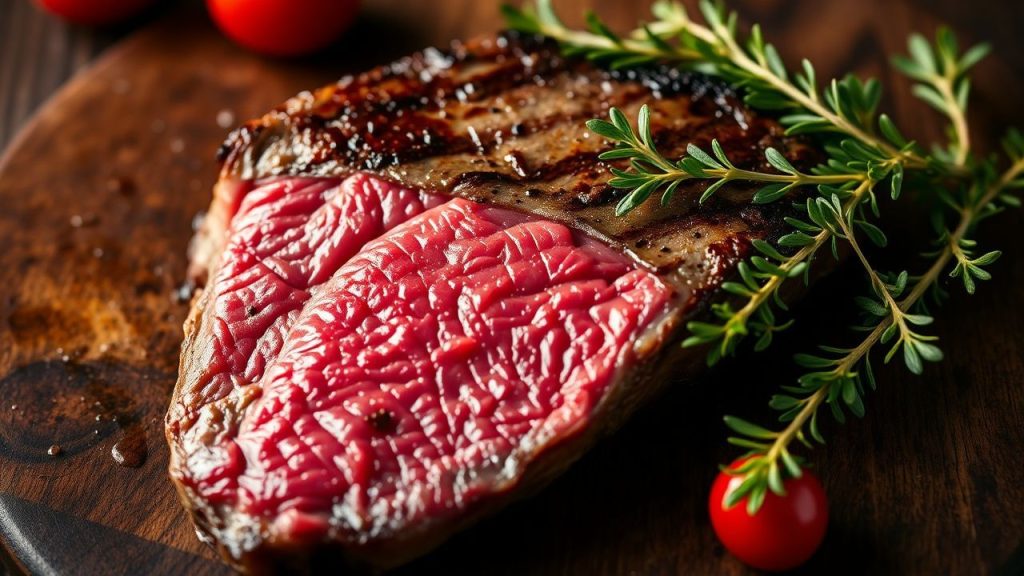
| Nutrient | Per Serving |
|---|---|
| Calories | 620 kcal |
| Protein | 58 g |
| Carbohydrates | 1 g |
| Fat | 45 g |
For a technical reference on meat structure and cooking techniques consult trusted culinary science texts and professional resources. Use measured temperature targets and verified methods to reproduce a reliably juicy steak.
FAQ
What happens inside a steak as it cooks to make it tender and juicy?
Heat denatures muscle proteins and changes texture while collagen softens toward gelatin and intramuscular fat melts. Those concurrent processes add moisture and tenderness.
Controlling the rates and endpoints of those processes yields a tender, juicy steak interior rather than a dry, overcooked center.
How does temperature affect steak tenderness?
Temperature determines protein contraction and collagen transformation. Lower internal targets reduce moisture loss and preserve the soft texture associated with a juicy steak.
Use thermometer readings—125°F rare, 135°F medium-rare, 145°F medium—and allow for a few degrees of carryover during resting for accurate results.
Why is resting essential after cooking?
Resting lets internal temperature equalize and juices redistribute. If you cut too early, juices run onto the plate instead of staying in the meat.
A rest of 8–12 minutes on a warm plate is typically sufficient for common steak sizes and preserves both moisture and texture for a juicy steak serving.
Does marbling change the cooking method?
Marbled cuts need the same fundamental methods but offer more margin for error. Rendered intramuscular fat bastes the meat internally and protects against dryness.
Lean cuts require closer temperature control and sometimes a finishing compound butter or sauce to enhance perceived juiciness.
Which tools and techniques give the most reliable results?
A heavy skillet, an instant-read thermometer, and a timer deliver the best consistency. Aim to sear quickly and finish at a controlled lower heat when needed.
Practice with the same cut and thickness to refine your timing and develop a repeatable approach for a reliably juicy steak outcome.
See also: Steak science
Recommended Reading:
]]>
- Gentle heat preserves juices: start cold, aim for a steady simmer.
- Measure doneness: use a thermometer for consistent safety and texture.
- Adjust for fat: fattier sausages tolerate slightly higher heat without drying.
Understanding the science of sausages
Sausages are complex mixtures of muscle proteins, fat, water, and seasonings that respond predictably to heat. Knowing how each component behaves lets you design a cook method that preserves juiciness and texture.
Proteins coagulate and set as temperature rises, while fat liquefies and redistributes inside the meat matrix. For background on muscle proteins and how they react to heat, consult protein chemistry.
Protein coagulation and fat behavior
Muscle fibers contract as they denature; rapid, high heat forces excessive contraction and squeezes out juices. By contrast, gradual heating allows collagen to soften and fat to melt gently, which increases perceived juiciness.
For a concise overview of boiling as a cooking process, the boiling entry highlights how agitation and temperature affect food structure and moisture retention.
Prep and cook time — practical timing guidelines
Plan for a total cook time between 15 and 25 minutes for typical fresh sausages; thicker links need more time. Start with cold water and bring the liquid up slowly so the casing and interior heat evenly.
Use a probe thermometer to confirm internal temperature rather than relying on time alone. The method reduces guesswork and avoids the common mistakes of undercooking or overcooking.
- Preparation Time: 10 minutes
- Cooking Time: 15–25 minutes (varies by size and type)
- Total Time: 25–35 minutes
Ingredients and their functional roles
Choose fresh sausages that match the final texture you want: higher fat content yields juicier results while lean varieties need careful temperature control. Salt, a touch of sugar, and aromatics in the poaching liquid enhance flavor without overpowering the sausage.
Typical aromatics include smashed garlic, bay leaf, and whole peppercorns; they infuse gently during a controlled simmer. For context on sausage types and preparation traditions, see the sausage overview.
- 6 fresh sausages (pork, beef, or mixed)
- 6 cups cold water
- 1 tsp salt
- 1 tsp sugar (optional)
- 2 cloves garlic, smashed (optional)
- 2 bay leaves
- 6–8 whole black peppercorns
Step-by-step instructions
Follow a controlled poach to cook the interior without stressing the casing. The goal is a steady water temperature just below a rolling boil so the sausage cooks evenly.
Below are focused steps you can repeat for consistent results. Each action minimizes stress on the casing and maximizes internal juiciness.
- Make the poaching liquid: Place cold water, salt, sugar, garlic, bay leaves, and peppercorns in a large saucepan. Heat slowly to a gentle simmer—avoid aggressive boiling to prevent casing failure.
- Submerge the sausages: When liquid reaches about 80–85°C (176–185°F), add sausages with tongs and ensure they are covered. Gentle temperature prevents sudden expansion that splits casings.
- Maintain a gentle simmer: Keep the liquid below a rolling boil and simmer for 12–20 minutes based on size. Verify doneness with an internal thermometer rather than appearance alone.
- Avoid crowding: Give each link room to move to ensure even heat distribution and uniform texture development. Crowding traps cold pockets and lengthens cook time unpredictably.
- Rest briefly: Remove sausages and rest 3 minutes to allow juices to redistribute. If finishing with a sear, rest briefly and then sear to add color and texture.
Expert Insight
Chef’s notes and technique refinements
Temperature control is the primary variable for repeatable results; start cold and heat slowly. High agitation or a rolling boil increases casing stress and tends to force juices out of the meat matrix.
Fat percentage changes the texture outcome: higher-fat sausages feel juicier and tolerate slightly higher heat, while lean sausages require closer temperature monitoring. If you want more complex aroma, simmer in beer or stock instead of plain water.
- Water temperature matters: Gradual heating reduces bursting and retains moisture.
- Timing is critical: Undercooking risks safety issues; overcooking dries the product.
- Sausage composition: Fat content directly affects juiciness and mouthfeel.
- Make-ahead: Cool sausages in the poaching liquid, refrigerate up to 48 hours, and reheat gently before serving.
- Flavor tweaks: Add thyme, rosemary, or shallots to the liquid for subtle variations.
Pro-Caution
After resting, consider a brief sear on a hot pan or grill to develop color and the Maillard surface reaction. The Maillard reaction is responsible for the browned flavor and can dramatically improve perceived quality when applied briefly after boiling; read more on the Maillard reaction.
Serving suggestions and pairings
Serve boiled sausages in a soft bun with mustard and sauerkraut for a classic profile, or slice them over mashed potatoes with caramelized onions for a heartier plate. A quick pan-sear after boiling gives a crisp exterior that contrasts with the tender interior.
For complementary techniques, consult our internal guides like the grilling guide or the primer on Sausage 101 to explore finishing methods and regional styles. These internal resources expand on finishing, sauces, and side pairings.
| Nutrient | Per Serving (1 sausage) |
|---|---|
| Calories | 250 |
| Protein | 14g |
| Carbohydrates | 1g |
| Fat | 21g |
Safety fundamentals and sources
Food safety depends on reaching sufficient internal temperatures to destroy pathogens common in ground meats. Aim for verified internal temperatures and practice cross-contamination prevention during preparation.
For a concise overview of standards and safe handling principles, reference material on food safety gives context to temperature targets and hygiene protocols.
FAQ
The following questions answer recurring practical issues cooks face when boiling sausages. Each response gives direct, actionable guidance to reduce common failures.
Use these answers as quick checks during prep and cooking to maintain consistency and safety in your process.
Why does boiling sausage seem simple but often fail?
Boiling looks simple but small changes in temperature or timing cause big sensory differences. Rapid heating or violent boiling stresses the casing and squeezes out juices, leaving the interior dry.
Controlling the water temperature and using a thermometer mitigate most failures and produce repeatable results.
What exactly happens to the sausage during the boil?
Heat denatures proteins, firms muscle fibers, and melts fat. Properly staged heating lets fats melt and redistribute while proteins set gently to retain moisture.
This balance between protein coagulation and fat liquefaction defines the final texture and mouthfeel of the sausage.
Is water temperature more important than boiling time?
Temperature and time interact, but maintaining a steady, moderate temperature is the controlling factor. A gentle simmer around 80–90°C avoids bursting while allowing the interior to reach safe working temperatures.
Use a thermometer to confirm internal temperature rather than relying solely on minutes of cooking.
Why do some sausages burst while boiling?
Bursting usually results from too-rapid heating or overcooking, which creates internal steam and pressure the casing cannot contain. Natural casings tolerate gradual expansion better than synthetic casings, but all casings suffer under aggressive boiling.
Starting in cold water and maintaining a gentle simmer reduces the risk of splits and preserves presentation.
Can I improve flavor while boiling?
Yes. Aromatics such as bay leaf, peppercorns, garlic, or a mild stock add subtle depth to the sausage while it poaches. For a bolder profile, simmer in beer or a seasoned broth for complementary flavors.
Finish with a quick sear to develop surface flavor via the Maillard reaction and to add texture contrast.
Applying these principles—controlled heat, accurate timing, and appropriate finishing—will make boiled sausage a reliably excellent component of your cooking repertoire. Treat temperature as the primary variable, measure doneness, and finish for texture to achieve the best results every time.
See also: boiled sausage
]]>There is a kitchen technique that turns a good roast into a great one: carryover cooking. Remove the meat at the right moment and residual heat finishes the job, locking in juices and sharpening the crust.
- Carryover cooking raises internal temperature after the roast leaves the oven.
- Rest meat 15–30 minutes to redistribute juices and complete cooking evenly.
- A reliable meat thermometer and correct pull temperature prevent overcooking.
- Large, dense roasts gain more degrees from residual heat than small cuts.
What Is Carryover Cooking?
Carryover cooking describes how stored thermal energy moves from the outside of a roast to its center after you remove it from heat. The outer layers stay hotter, so heat flows inward and raises the core temperature by several degrees.
This effect depends on heat capacity and mass. Larger roasts retain more thermal energy and thus experience a larger temperature rise while resting.
Why Carryover Cooking Matters
Carryover cooking prevents the roast from drying out by allowing a gentle finish without continued oven exposure. When you pull a roast early by a few degrees, residual heat finishes the cook with less moisture loss.
It also evens the internal temperature. The slow inward heat movement reduces hot spots and yields consistent doneness from edge to center, improving both texture and flavor.
How Size, Shape, and Bone Affect Carryover
Mass and shape determine how much residual heat the roast stores. A dense 4–6 lb prime rib retains more energy than a thinner cut, so expect a larger post-oven rise.
Bones act as heat sinks and change heat flow. Bone-in roasts heat differently, so adjust your pull temperature and resting time to compensate for this thermal behavior.
Thermal principles in practice
Heat transfer follows predictable patterns: conduction moves energy from hot outer layers inward. That same physics explains why larger items show greater carryover rise.
Understanding these basics helps you choose target pull temperatures and resting times with confidence. The result: fewer surprises at the carving board.
Essential Tools and Terms
Use a quality digital probe meat thermometer for real-time accuracy and to track the roast as it cools. A thermometer eliminates guesswork and prevents over- or undercooking.
Terminology you should know: pull temperature (the internal temp when you remove the roast), final temp (target after resting), and tenting (loosely covering meat to retain heat).
For reading on the broader cooking process, see roasting techniques and the Maillard reaction for crust formation.
Prep and Cook Time
Preparation Time: 15 minutes of active work plus any overnight dry-salt brining if used. Dry brining changes surface moisture and improves crust formation.
Cook Time: 1 hour to 1 hour 30 minutes at moderate oven temperatures for a 3–4 lb roast; larger roasts need longer. Rest Time: 20 to 30 minutes to allow carryover cooking and juice redistribution.
Yield and Difficulty
Serves 6 to 8 for a 3–4 lb roast. The technique fits home cooks who can monitor temperature and resist carving too soon.
Difficulty: Medium. The main skills are temperature control, correct pull temperature, and proper resting technique.
Ingredients
Use quality ingredients to complement the carryover process: a trimmed 3–4 lb prime rib, kosher salt, pepper, olive oil, garlic, and fresh herbs. These basics enhance both crust and internal flavor.
Optional: beef broth or pan juices for a simple sauce after resting. Reserve juices and deglaze the roasting pan for a concentrated finishing sauce.
Step-by-Step Instructions
Start by preheating the oven to 450°F (230°C) to build an initial sear and encourage crust development. Place the roast fat side up on a rack in a shallow pan for even airflow.
Rub the roast with oil, kosher salt, and freshly ground black pepper. Press minced garlic and herbs onto the surface to add aromatics that persist through resting.
Insert a probe thermometer into the thickest muscle, avoiding fat pockets and bone. Roast at high heat for 15 minutes to brown the exterior, then lower oven to 325°F (160°C) for steady cooking.
Remove the roast when the probe reads about 5–10°F below your desired final temperature. Tent loosely with foil and rest 20–30 minutes; the internal temp will climb to the final target during this time.
Recommended pull temperatures
For medium-rare, pull at roughly 120–125°F and rest to 125–130°F. For medium, pull near 135°F and rest to 140°F. Adjust pull points based on roast size and whether the cut is bone-in.
Always verify final temp with a second quick-read probe before carving to ensure both safety and desired doneness. For food-safety context, consult the food safety guidance.
Chef’s Notes
Dry brining: Salt the roast a day ahead and refrigerate uncovered to dry the surface. This concentrates flavor and helps the crust brown evenly.
Do not slice too soon. Cutting releases juices and reduces succulence. Let resting and carryover cooking complete before carving.
Boneless roasts simplify temperature control. Bone-in cuts add flavor but require practice because bones alter heat distribution.
Expert Insight
After you rest the roast, reserve pan drippings. Deglaze the pan with a splash of broth and reduce to concentrate flavor for an easy pan sauce.
Pro-Caution
Serving Suggestions
Slice against the grain into uniform pieces to maximize tenderness. Serve on a warm platter and spoon pan sauce sparingly to avoid sogginess.
Pair the roast with mashed potatoes, roasted root vegetables, and a robust red wine if desired. Keep side portions moderate so the roast remains the star.
Practical Troubleshooting
If the roast finishes under target after resting, return it to a moderate oven for short bursts, monitoring temperature closely. Avoid high heat; that causes uneven cooking.
If the crust softens after resting, finish slices briefly under a hot broiler just to re-crisp the edges. Do this sparingly so internal temperatures do not climb further.
Related Reading and Internal Resources
For timing charts and alternatives, see our internal guide on perfect roast timings. That page breaks down pull points by weight and desired doneness.
To refine resting technique and tenting methods, check our practical notes at resting guide for roasts. It covers step-by-step tenting and temperature checks.
Science Links
For technical background, review the general practice of cooking methods. For meat-specific context, consult the meat overview and the meat thermometer entry for thermometer types and accuracy considerations.
At a Glance
Carryover cooking gives you consistent, juicy roasts when you plan pull temperatures and resting time. Use the right thermometer and tent loosely to keep a crisp crust.
Large roasts gain more temperature after the oven. Practice and tracking will help you predict exact rises for your equipment and cuts.
FAQ
What exactly is carryover cooking, and why does it matter?
Carryover cooking is the internal temperature increase that occurs after a roast leaves the oven. It matters because it allows you to stop cooking early and avoid drying the meat while ensuring the roast finishes to the desired doneness.
How long should I rest my roast?
Rest most roasts 15–30 minutes, depending on size. Large, dense roasts need the full 30 minutes to let heat distribute and juices stabilize for even slicing.
Can I speed up resting to serve faster?
Avoid rushing. Shortening rest time sacrifices juiciness and evenness. If time is tight, keep the roast tented and warm, but aim for at least 10–15 minutes for smaller cuts.
Do bones change carryover cooking?
Yes. Bones alter heat flow and act as thermal conductors or sinks, changing how quickly the center gains heat. Adjust pull temperatures and allow extra rest for bone-in roasts.
What temperature should I pull a roast for medium-rare?
Pull most roasts at about 120–125°F, then rest to 125–130°F final. Track your specific oven and roast size to refine those numbers over time.
See also: carryover cooking
]]>
- Check accuracy regularly with ice and boiling tests.
- Keep ±1°F accuracy as a practical target for food safety and quality.
- Calibrate, replace batteries, and inspect probes to avoid skewed readings.
- Store and clean properly to extend service life and performance.
Choosing the Right Meat Thermometer for Reliable Readings
Selecting the correct thermometer sets the baseline for accurate cooking. Choose a device that matches the cooking technique you use most often: instant-read for quick checks, probe-style for unattended roasts, or oven probes for long cooks.
Look for a stated accuracy of ±1°F when possible and prefer probes made from food-grade stainless steel. Also consider response time, waterproof rating, and whether the unit supports field recalibration.
Types and features that matter
Instant-read digital thermometers give fast readings and are ideal for finishing steaks and chops. Probe thermometers with wired or wireless transmitters monitor internal temps during long roasts and smoking sessions.
Analog dial thermometers work, but they generally lack the precision and quick response of quality digital probes. For most cooks, a calibrated digital probe with a stainless-steel shaft provides the best balance of speed and durability.
Step-by-Step Methods to Calibrate Your Meat Thermometer at Home
Two simple lab-style checks give you verifiable reference points: an ice-water bath for the freezing point and a pot of boiling water for the boil point. Both are quick, repeatable, and require only common kitchen items.
Perform these checks on a stable surface and avoid contact with metal sides or pot bottoms. Record readings and use your device’s calibration option or note the offset if recalibration is not available.
Ice bath method (freezing point)
Fill a tall glass with crushed ice, add cold water, and stir to create an ice-water slurry. Insert the probe so it sits fully in the chilled water but does not touch the glass walls or bottom.
The accurate reference is the freezing point of water, 32°F (0°C). A properly calibrated probe should read within about ±1°F of that mark after 30 seconds.
Boiling water method (boil point)
Bring a pot of fresh water to a rolling boil and suspend the probe in the steam above the bubbles, avoiding contact with the pot sides or bottom. Wait for the reading to stabilize.
At sea level, the reference is the boiling point of water, 212°F (100°C). Adjust expectations if you cook at altitude; higher elevation lowers the boiling temperature.
Common Accuracy Issues and How to Troubleshoot Them
Temperature errors usually come from a few repeatable causes: dirty or bent probes, low batteries, or calibration drift. Diagnose quickly by running the ice and boiling tests and noting consistent offsets.
If readings shift between tests, replace batteries first, then inspect the probe for physical damage or debris. Clean the shaft with warm, soapy water and a soft cloth before retesting.
Pro-Caution
Digital units may offer a user-accessible calibration screw or menu reset. For units without calibration, track the offset and mentally correct readings, or replace the unit if the error exceeds about 2°F.
Slow response and inconsistent values
Slow response often comes from residue coating the probe. Even a thin grease film insulates the sensor and delays equilibrium. Clean and dry the probe thoroughly and repeat the check.
If results still vary, swap in fresh batteries, or try the thermometer in several different cups of ice water to confirm whether the issue is repeatable. Intermittent faults usually mean internal electronics are degrading.
Pro Tips for Maintaining and Storing Your Meat Thermometer for Longevity
Routine care keeps readings reliable. Clean the probe after every use, store the unit in its protective case, and remove batteries during long-term storage to avoid leakage and corrosion.
Handle probes gently; do not bend the shaft or drop the unit on hard surfaces. Even a small kink in a probe can change how the sensor reads temperatures.
Expert Insight
For cooks who travel or smoke outdoors, choose IP-rated or explicitly waterproof models. High humidity and temperature swings accelerate wear in non-sealed units.
Practical Uses: When Accuracy Matters Most
Poultry, large roasts, and ground meats demand precise internal temperatures to ensure safety. Conservative targets and trusted readings prevent undercooking without sacrificing juiciness.
For sous-vide and candy work, probe accuracy and calibration are essential because small temperature differences produce big changes in texture. Verify instruments before critical cooks.
For reference on safe final internal temperatures and food handling, consult reputable public guidance such as the food safety resources maintained by public health authorities.
At-Home Test Plan: A Quick Checklist
Run this checklist before any important cook: check batteries, clean probe, ice-test, boil-test, and note any consistent offsets. If offsets exceed about 2°F, recalibrate or replace.
Keep a small notebook or digital note with recorded offsets for each thermometer you own. That habit saves time and prevents guesswork during service.
For step-by-step usage of instant-read devices, see our internal guides: how to use an instant-read meat thermometer and best meat thermometers for purchasing advice.
FAQ
How often should I check my meat thermometer?
Test before any major cook and at least monthly with regular use. Physical shocks, heat exposure, and battery changes can shift accuracy, so quick checks are inexpensive insurance.
Can I trust a cheap thermometer if it passes the ice and boil tests?
Yes, a basic unit that reads accurately at both reference points can be trusted for many cooks. However, cheaper units may drift sooner and often lack rugged construction for heavy use.
Does altitude affect thermometer tests?
Yes. The boiling point of water drops as elevation increases. See the altitude relationship and adjust expectations when using the boiling test at higher elevations.
What accuracy tolerance should I accept?
A practical target is ±1°F for most cooking purposes. When safety margins are tight, such as poultry or cured meats, keep devices within that tolerance or replace them when they exceed it.
Can I use the same tests on smoker and oven probe thermometers?
Yes. The ice and boiling checks apply to oven probes, smoker controllers, and candy thermometers within their intended ranges. Confirm that the probe’s rated range includes your test points first.
Final Thoughts
Testing a meat thermometer is a low-effort, high-impact habit. Accurate readings protect health and improve flavor by preventing over- or undercooking.
Use the simple ice and boil checks regularly, maintain the probe and battery compartment, and replace compromised units. Small steps produce consistent, professional-level results in any kitchen.
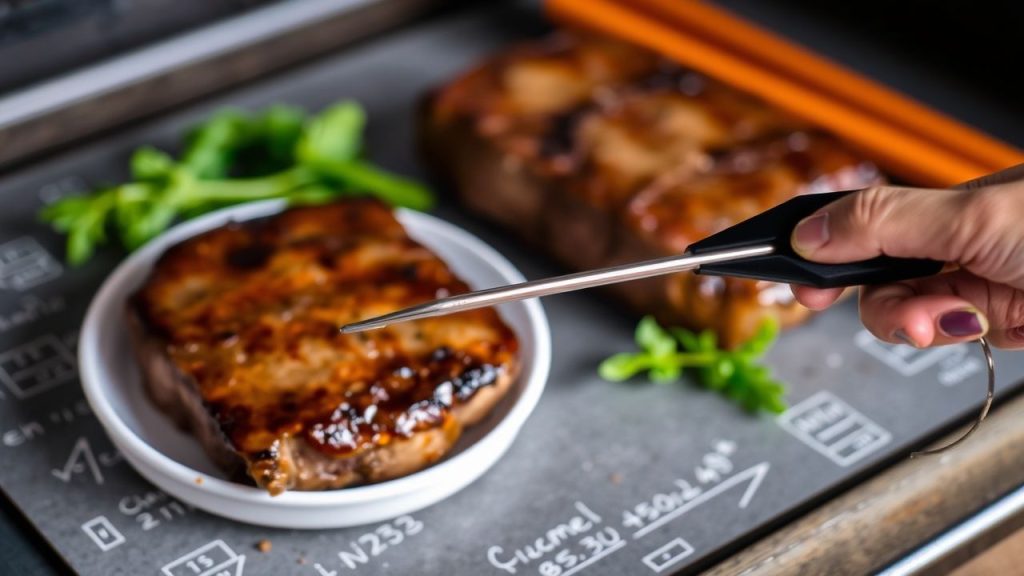
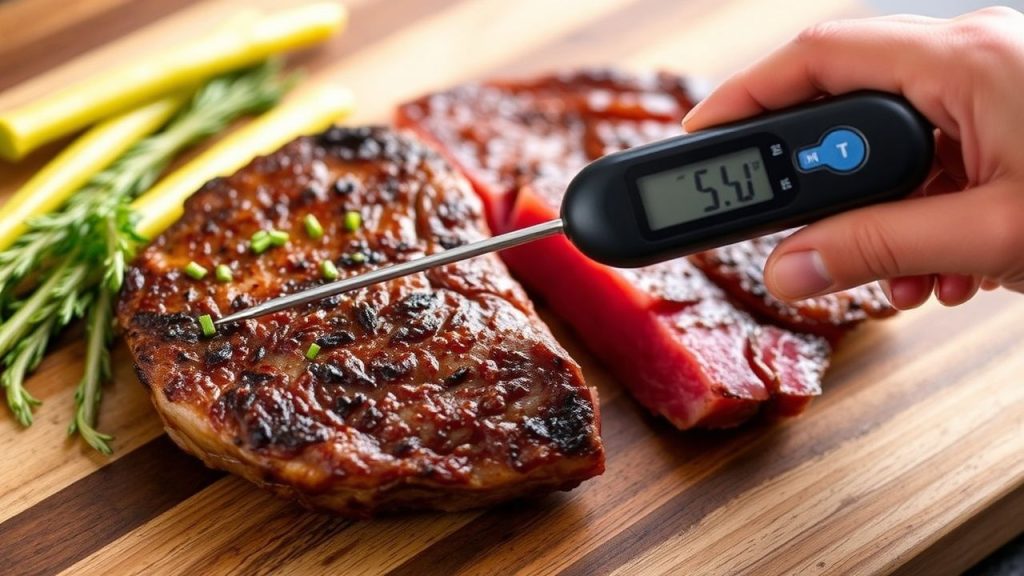
See also: meat thermometer
]]>Steak flipping is a deliberate technique that controls crust development, heat transfer, and final juiciness. Use measured turns to shape the Maillard crust while moving the internal temperature toward your target doneness.
- Controlled flips promote even cooking and reduce carryover surprises.
- Initial sear secures the Maillard layer; subsequent flips build thin crusts.
- Tools and timing determine how many flips a steak tolerates without losing moisture.
- Resting finalizes texture and redistributes juices for clean slices.
Why steak flipping frequency matters
Flip frequency changes how heat moves through the meat and how the surface browns. Each flip equalizes surface temperature and limits prolonged exposure on one side.
When you plan flips, you influence the Maillard reaction and the temperature gradient from crust to center. For further reading on browning chemistry, see Maillard reaction.
Prep and cook time for steak flipping
Bring steaks to room temperature and pat dry; that reduces thermal lag and yields more predictable carry to doneness. A 30-minute rest on the counter works for most cuts up to 2 inches thick.
Typical pan times vary by thickness and heat. For a 1½-inch ribeye expect 8–12 minutes total on the stove, plus a 5-minute rest to hit medium-rare reliably.
Yield, difficulty, and expected results with steak flipping
This method yields two hearty portions from two 1½-inch steaks and suits cooks who want repeatable results. It requires attention and a thermometer rather than specialized gear.
Difficulty sits at intermediate: you must read sear color and monitor internal temp. Aim for about 125–128°F before resting to carry to 130°F for medium-rare.
Ingredients and equipment for effective steak flipping
Use quality cuts and minimal seasoning: salt, black pepper, high-smoke oil, and finishing butter with aromatics work best. Fat content affects tolerance for frequent turns.
Choose a heavy skillet or a hot grill for rapid crust formation. For guidance on cookware choices, reference cast-iron skillets and how they retain heat.
Instructions: Practical steak flipping patterns
Start with a high-heat sear to establish an initial crust, then switch to brief, timed flips to even out cooking. Sear for 90–120 seconds without disturbance, then begin controlled turns.
After the final turn, remove the steak, tent it loosely with foil, and rest five minutes. Resting lets internal juices redistribute and stabilizes the final temperature.
- Bring steaks to room temperature for 30 minutes; pat dry and season immediately before cooking.
- Heat pan or grill to medium-high until shimmering; add oil to coat the surface and prevent sticking.
- Sear first side undisturbed for 90–120 seconds to lock a Maillard crust in place.
- Begin controlled flips every 20–45 seconds after the initial sear to equalize surface temperature and speed up interior cooking. Use tongs; avoid piercing the meat.
- Add butter and aromatics after the second side sears; baste while flipping to layer flavor without overcooking.
- Target internal temp: remove at 125–128°F if you want medium-rare after resting. Use a calibrated thermometer for accuracy; read more about food thermometers at food thermometers.
Chef’s notes: technique details for steak flipping
Flip with intent: lift, rotate, and set. Avoid frantic agitation that cools the surface and prolongs cook time.
Adjust frequency by thickness and heat. Thicker cuts benefit from more frequent turns to avoid overcooked edges and underdone centers.
Choosing the right cut for steak flipping
Marbled cuts such as ribeye and strip tolerate repeated turns because intramuscular fat keeps the meat moist. The fat also supports crust development under frequent flips.
Lean, thin cuts cook quickly and usually require fewer flips. Match your flip pattern to the cut for the best texture and doneness.
Mastering temperature control when steak flipping
Keep heat steady. Too hot and butter will brown too fast; too cool and you won’t build a reliable crust. Medium-high often balances searing with internal warming.
Consider finishing in a moderate oven if the crust forms faster than the interior cooks. The oven changes how flips affect final doneness.
Tools and technique for clean steak flipping
Use sturdy tongs and a thin spatula to flip without piercing. A fork will drain juices and reduce final succulence.
Read edge color and bead juices as cues. When the edge shows consistent golden color, flip confidently for the next interval.
Expert Insight
Practice builds visual and tactile memory. Use a thermometer alongside sight and touch until timing becomes reliable.
Pro-Caution
Serving suggestions after steak flipping
Rested steaks slice cleanly and present glossy, not wet. Finish with flaky sea salt and a turn of cracked pepper for texture and lift.
Pair with roasted vegetables, mashed potatoes, or a bright chimichurri. For classic service, use warm plates to keep temperature stable while plating.
Practical context: grill vs. pan vs. oven for steak flipping
Different environments change flip strategy. Open-flame grilling often needs fewer turns because of radiant heat, while pan-searing allows finer control and more frequent flipping.
For more on outdoor methods, consult material about grilling and how it alters surface and interior heat transfer.
Further reading and reference links
For authoritative background on steak as a culinary item, see the general entry on steak. These resources clarify terms and underpin technique choices.
Use these references to deepen your technical approach and adapt flips by cut, thickness, and heat source. The linked pages explain the science and cookware considerations that inform best practices.
FAQ
How many times should I flip a steak for best results?
There is no fixed number; count flips by window rather than a set total. After a solid initial sear, flip every 20–60 seconds depending on thickness and heat until you reach your target internal temperature.
Does flipping more often make the steak juicier?
Moderate frequent flipping helps even heat penetration and can reduce overcooked edges by avoiding long exposure on a single surface. Excessive flips cool the pan and can extend cook time, so balance frequency with pan temperature.
Will flipping stop the Maillard crust from forming?
No, provided you allow an initial uninterrupted sear. The first 90–120 seconds create a Maillard layer; controlled subsequent flips build additional thin crust layers rather than removing them.
What internal temperature should I aim for?
Pull steaks around 125–128°F if you want medium-rare after resting; they will rise to about 130°F during carryover. Always use an instant-read or probe thermometer for repeatable results.
Can I use this flip method on a grill?
Yes. High-heat grills often require fewer flips, but the same principles apply: an initial sear followed by controlled turns based on color and temperature. Adapt the interval to grill intensity and flare-up behavior.
Final takeaway
Steak flipping is a practical technique that balances crust formation with interior evenness. Use a clear sear, timed flips, and a thermometer to get consistent, restaurant-quality results.
Practice with different cuts and heat sources, apply expert flip windows, and you will improve consistency, texture, and juiciness every time.
See also: steak flipping
]]>
- Pull slightly low: aim 5–10°F (3–5°C) below final target for most cuts.
- Rest smart: allow 10–30 minutes depending on size to let juices redistribute.
- Probe placement matters: center thickest section without touching bone or fat.
- Use the right tool: instant-read for checks, leave-in probes for continuous monitoring.
What is carryover cooking?
Carryover cooking occurs when internal temperature rises after removal from a heat source. Residual heat stored in outer layers migrates inward and raises the center temperature by several degrees.
This concept applies across roast, steak, poultry, and even thick fish. Understanding carryover links directly to how heat transfers through muscle and fat, so knowing the physics helps you time the pull point precisely. For background on how heat affects food structure, consult this meat overview.
Why a thermometer matters
A thermometer removes guesswork. Visual cues like color or juices lie; temperature gives objective data so you can pull meat at the exact moment to account for carryover.
Temperature control improves juiciness, texture, and food safety. For core safety thresholds—especially for poultry—use validated temperature targets when planning your pull temperature; see food safety guidance.
Thermometer types and when to use them
Pick a thermometer that fits the task. Two common categories dominate pro and home kitchens: instant-read units and leave-in probe thermometers.
Instant-read thermometers
Instant-read devices give a quick temperature snapshot. Use them to check the thickest part of a cut right before you expect to pull; they are fast and less invasive.
Instant reads are ideal for steaks and thin roasts where you need frequent checks. However, avoid leaving them in during rest or oven cook time; they are for spot checks only. For basic technical context, read about the standard thermometer principles.
Leave-in probe thermometers
Leave-in probes monitor temperature continuously and record trends during the last phase of cooking. They allow you to pull based on the rising curve rather than a single reading.
Probes shine with large roasts and whole birds where carryover will be significant. Choose a probe with a thin stem and an accurate display; wireless probes add convenience when resting on the counter.
Practical pull temperatures and resting guidelines
Plan your pull point by subtracting the expected carryover amount from your target final temperature. Typical rise ranges from 5°F to 15°F (3–8°C) depending on mass, initial temperature, and cooking method.
Below is a quick reference table with common target final temperatures and recommended pull points plus resting times. Use these as starting points and refine by experience.
| Protein | Final Temp (F) | Pull Temp (F) | Rest Time |
|---|---|---|---|
| Beef steak (medium-rare) | 130–135°F | 125–130°F | 5–10 min |
| Beef roast | 135–145°F | 125–140°F | 10–30 min (size-dependent) |
| Pork (safe and juicy) | 145°F | 135–140°F | 10–20 min |
| Poultry (safe) | 165°F | 155–160°F | 10–20 min |
| Thick fish / salmon | 120–130°F | 115–125°F | 5–10 min |
Adjust the pull temperature if the piece has high thermal mass (dense bone, large diameter) or if you prefer carryover to finish the cooking. Always allow for a safety margin on poultry and ground meats per food-safety standards.
Expert Insight
After a few tests you will learn how many degrees your typical roast climbs while resting. Keep a simple log of weight, oven temp, pull temp, and final result to speed mastery.
Probe placement and technique
Insert the probe into the thickest part of the cut, perpendicular to the muscle fibers. For bone-in pieces, avoid touching bone because bone reads hotter and will give a false high result.
Place probes so the tip sits at the geometric center of the thickest section. For long roasts, target the broadest cross-section rather than the narrow end.
Thickness, thermal mass, and crust management
Thick pieces store more residual heat and therefore have greater carryover. Thin fillets often show negligible rise; treat them as near-instant items.
Crisp crusts can soften during resting if wrapped tightly. Tent with foil loosely to retain heat while allowing steam to escape and preserve textural contrast.
Pro-Caution
After resting, slice against the grain for even texture and to display the correct doneness. Slicing too soon releases juices; wait until the internal pressure relaxes after rest.
Troubleshooting common issues
If a roast finishes too dry, identify whether the oven temperature was too high, the probe was misplaced, or the pull point was set too high. Record the failure mode and change only one variable at a time.
If the exterior lacks color, you probably pulled too early or the Maillard reaction did not develop. Higher initial sear heat or longer exposure at medium-high heat helps; learn more about browning chemistry at Maillard reaction.
FAQ
How many degrees does carryover cooking usually add?
Expect about 5–15°F (3–8°C). Small steaks will be at the low end; large roasts will be at the high end. Use the probe trend to refine this estimate for your specific roasts.
Should I tent with foil or leave uncovered when resting?
Tent loosely to hold heat without trapping steam if you want to preserve crust crispness. Tight wrapping creates condensation and softens crusts.
Can carryover cooking make undercooked meat safe?
Carryover adds limited heat and cannot reliably replace reaching safe internal temperatures while cooking. Always aim for the correct minimum safe temperature during the cook, especially for poultry and ground products.
What probe accuracy should I expect?
Aim for a probe accuracy of ±1–2°F. Calibrate periodically by testing in an ice water slurry (should read ~32°F/0°C) and near-boiling water, adjusted for altitude.
Does resting time differ for bone-in versus boneless cuts?
Yes. Bone-in cuts usually need longer rest because bone affects heat distribution and thermal mass. Increase rest time for large bone-in roasts by 5–10 minutes compared to a similar-sized boneless cut.
Mastery of carryover cooking comes from combining methodical temperature control with consistent technique. Use the guidance above, keep notes, and tune pull points to your kitchen and equipment. Over time, the thermometer will become your most reliable tool for consistent, juicy results.
See also: carryover cooking
]]>