- Tomatoes are rich in free glutamate, a primary umami contributor.
- Mushrooms supply nucleotides that synergize with glutamates.
- Cooking methods like roasting and browning release more umami molecules.
- Smart pairings boost savory depth without excessive salt.
Understanding the chemistry makes you deliberate about technique rather than guessing. Practical steps—choice of variety, heat control and finishing—deliver predictable umami impact.
Prep and Cook Time
This recipe balances short active time with a little roasting to concentrate flavor. Plan for a quick sauté plus a brief oven step to extract and marry umami compounds effectively.
Prep is minimal but purposeful: dice, slice and get aromatics ready so heat treatment proceeds without interruption. That keeps Maillard reactions and caramelization controlled for maximum savory payoff.
- Preparation: 15 minutes
- Cooking: 30 minutes
- Total: 45 minutes
Yield & Difficulty
Serves 4 generous portions when used as a sauce or topping. The technique suits home cooks who want to improve flavor control without advanced skills.
Difficulty: Medium. The recipe emphasizes heat management and timing rather than complex techniques. Follow the sequence for predictable results.
Ingredients
Ingredient choice drives how much umami you extract; ripe fruit and firm mushrooms perform best. Use quality olive oil and a modest amount of savory seasonings to support—not mask—the natural chemistry.
- 3 large ripe tomatoes, diced (Roma or vine-ripened)
- 250g cremini mushrooms, cleaned and sliced
- 1 medium yellow onion, finely chopped
- 3 cloves garlic, minced
- 2 tbsp extra virgin olive oil
- 1 tbsp soy sauce (adds controlled umami)
- 1 tbsp tomato paste (concentrated flavor)
- ½ cup vegetable broth
- 1 tsp dried oregano
- Salt and freshly ground black pepper, to taste
- Fresh basil leaves, for garnish
- Grated Parmesan cheese (optional for extra umami)
Instructions
Start with temperature control: roast to concentrate sugars and glutamates, then use medium heat to build a savory base. Sequence matters; roast first, then build the sauce so each ingredient contributes fully.
Follow the steps deliberately and taste as you go. Small adjustments to salt, acidity or finish can change perceived umami without masking the dish’s core flavors.
- Roast the tomatoes: Preheat oven to 425°F (220°C). Toss diced tomatoes with 1 tablespoon olive oil on a sheet and roast 12–15 minutes until edges caramelize.
- Sauté aromatics: Heat remaining olive oil in a large skillet over medium. Cook onion and garlic until soft and translucent, about 4–6 minutes, forming a savory backbone.
- Cook mushrooms: Add sliced mushrooms and raise heat to medium-high briefly to brown them evenly, about 6–8 minutes. Browning releases nucleotides and concentrates their savory profile.
- Enhance umami: Stir in tomato paste and soy sauce, coating the vegetables. The paste-add and soy provide concentrated glutamates and seasoning that deepen the sauce.
- Add liquids and simmer: Add roasted tomatoes and vegetable broth, sprinkle oregano, then simmer uncovered 8–10 minutes to meld flavors and reduce slightly.
- Season and rest: Adjust salt and pepper. Remove from heat and rest 5 minutes; resting lets flavor molecules redistribute for a balanced finish.
- Serve: Spoon the sauce over pasta, grains, or grilled vegetables. Finish with basil and optional Parmesan for expanded savory notes.
Science of Umami
Umami arises when specific molecules bind to specialized taste receptors on the tongue, amplifying savory perception. The key players include free glutamate and certain nucleotides that interact synergistically to heighten flavor.
Tomatoes contain abundant free glutamate, while many edible fungi supply nucleotides such as inosinate. Combining sources yields a greater response than either alone, a practical principle chefs exploit for depth and balance.
Key Compounds and Mechanisms
Glutamate refers to the amino acid often freed during ripening and heat; it stimulates umami receptors directly. See the biochemical background on glutamic acid for molecular context.
Nucleotides such as inosinate amplify receptor response when paired with glutamate. For a general overview of the umami concept and its role in taste perception, review the umami entry.
Tomato biochemistry changes with ripeness and heat; see how cellular breakdown releases more free amino acids by reference to the tomato article. Likewise, the structural features of edible fungi influence nucleotide content; explore the mushroom page for species context.
Tips for Success
Choose fully ripe tomatoes to maximize innate glutamate. Roasting concentrates sugars and opens cells so more free glutamates become available.
Prefer cremini or dried shiitake rather than watery button types to avoid a thin sauce. Proper browning yields both texture and volatile compounds that enhance savory perception.
 Expert Insight
If you want additional layers without excess salt, use a small splash of soy sauce or a teaspoon of miso dissolved into the broth. These fermented additions add complex molecules that complement natural glutamates.
Serving Suggestions
This sauce works as a pasta topping, a grain bowl binder, or a warm condiment for roasted vegetables. Toss with al dente spaghetti or spoon over creamy polenta to highlight texture contrast and depth.
Try it as a base for protein: grilled chicken or seared tofu both benefit from the sauce’s savory lift. For vegetarian richness, finish with grated Parmesan or a sprinkle of nutritional yeast for a vegan option.
For more plant-forward ideas, see related recipes like our Vegan Umami Boosters and the pasta variants under Pasta Sauces. These internal resources offer techniques to layer umami across menus.
 Pro-Caution
Nutrition Snapshot
This sauce provides modest calories with vegetables as the primary nutrient source. When paired with whole-grain pasta or polenta, it becomes a balanced, satisfying meal with fiber and micronutrients.
| Nutrient | Per Serving |
|---|---|
| Calories | 180 kcal |
| Protein | 5g |
| Carbohydrates | 18g |
| Fat | 9g |
FAQ
What is umami and how does it differ from other tastes?
Umami describes a savory sensation driven by specific molecules like glutamate and nucleotides. Unlike sweet or salty, umami enhances the perceived fullness and roundness of flavors rather than supplying a single dominant note.
Why do cooked tomatoes and mushrooms taste more savory?
Cooking breaks cell walls and frees amino acids plus ribonucleotides, increasing the abundance of umami-active molecules. Maillard browning and caramelization also produce volatile compounds that intensify flavor complexity.
Can I get similar umami from vegetarian ingredients?
Yes. Plant sources such as tomatoes, mushrooms, fermented soy products, and aged plant-based cheeses provide glutamates and nucleotides. Combine different sources for synergy rather than relying on high salt alone.
How should I store and reheat the sauce to preserve umami?
Store cooled sauce in an airtight container in the refrigerator for 3–4 days; flavors often meld and deepen overnight. Reheat gently over low heat to avoid over-reducing and concentrating saltiness.
Are there health concerns tied to umami compounds?
Natural glutamates in whole foods differ from isolated additives in how they occur within the food matrix. Most people tolerate natural sources well; individuals with specific sensitivities should consult a healthcare provider for personalized guidance.
Unlock umami deliberately: choose ripe produce, control heat to extract flavor, and combine complementary ingredients to create dishes that feel complete and satisfying. Apply these scientific principles, and everyday tomatoes and mushrooms will deliver restaurant-caliber savory depth.

See also: umami
]]>There is an unmistakable pleasure in a properly executed beef risotto: creamy, glossy grains that cradle savory morsels of beef and the deep, earthy tones of mushrooms. This beef risotto recipe refines technique and ingredient choices to deliver consistent results every time.
- Slow stirring and warm broth are non-negotiable for a glossy finish in beef risotto.
- Use tender beef cuts sliced thin for quick searing and a juicy bite.
- Finish with butter and Parmigiano for silkiness and balanced umami.
At a Glance
- Skill level: Medium — requires attention but no special gear.
- Time: 20 minutes prep, ~50 minutes cooking for best beef risotto texture.
- Yield: Serves 4 with generous portions.
- Key technique: Warm stock, steady ladles, and gentle stirring control risotto creaminess.
Prep and Cook Time for Beef Risotto
Plan active mise en place and attentive cooking windows when you prepare beef risotto. Proper prep shortens hands-on time and prevents last-minute compromises.
Allow roughly 20 minutes for trimming, slicing, and warming stock, then expect 40–50 minutes to build the risotto and finish proteins. Keeping the broth hot improves control over doneness and shortens the actual cooking window for beef risotto.
Yield and Difficulty for Beef Risotto
This beef risotto scales reliably; it yields four generous main-course portions when you follow the technique. Use a wider pot if you double the recipe to preserve evaporation rates and even cooking.
Difficulty rates as medium: the task requires steady attention during broth addition and confident finishing. The payoff for executing beef risotto well is a dish that reads as both rustic and refined.
Ingredients for Beef Risotto
Ingredient quality directly affects texture and depth in this beef risotto. Choose a short-grain, high-starch rice, quality beef, and a flavorful stock to build a solid base.
Key items below include selection notes and substitutions. Where appropriate, use stronger umami ingredients to compensate for lighter stock choices.
- 300g beef sirloin, cut into thin bite-sized strips (beef)
- 1 ½ cups Arborio rice (Arborio rice)
- 250g mixed mushrooms (cremini, shiitake, oyster), sliced (mushrooms)
- 1 small onion, finely chopped
- 3 cloves garlic, minced
- 5 cups beef broth, kept warm
- 2 tbsp olive oil
- 3 tbsp unsalted butter
- ½ cup Parmesan cheese, freshly grated (Parmigiano-Reggiano)
- 1 tsp fresh thyme leaves
- 1 tsp fresh rosemary, finely chopped
- Salt and freshly ground black pepper, to taste
- Fresh parsley, chopped, for garnish
Instructions for Beef Risotto
Follow the sequence closely; the order of searing, sautéing, toasting, and controlled liquid addition yields a tender center and creamy exterior. Use a heavy-bottomed pot for even heat distribution when you make beef risotto.
Work in two pans if possible: one for searing the beef and mushrooms, another for building the risotto. This two-pan workflow prevents the beef from overcooking and concentrates flavors in the risotto.
Searing the Beef
Pat the beef dry to encourage a clean maillard crust. Heat 1 tablespoon olive oil over medium-high heat until it shimmers, then sear strips in a single layer.
Sear until brown on both sides but still medium-rare to medium, about 1.5–3 minutes per side depending on thickness. Rest the beef briefly off heat so carryover warmth finishes it without overcooking.
Sautéing Aromatics and Mushrooms
Melt 1 tablespoon butter with 1 tablespoon olive oil in a deep saucepan over medium heat and sweat the onion and garlic until translucent. Add sliced mushrooms and cook until their liquid evaporates and they brown lightly.
Concentrating mushroom flavor early builds the umami backbone of the beef risotto. Browning the mushrooms adds roasted notes that lift the final dish.
Toasting Rice and Adding Broth
Stir in the Arborio rice and toast for 90–120 seconds; each grain should look translucent at the edge. Toasting gives a subtle nutty layer that complements beef in the risotto.
Begin adding warm beef broth one ladle at a time, stirring gently and waiting until most liquid is absorbed before the next ladle. This steady liquid control releases starch and produces the signature creamy texture of beef risotto.
Finishing and Assembly for Beef Risotto
When the rice reaches al dente—tender with a slight central chew—fold the seared beef back into the pot with thyme and rosemary. Remove the risotto from heat and stir in remaining butter and grated Parmesan for a silky finish.
Adjust seasoning with salt and pepper, then rest the risotto 1–2 minutes so ingredients harmonize. Plate with chopped parsley and extra Parmesan, serving the beef risotto immediately for best texture.
Tips for Success with Beef Risotto
Small technique choices yield large improvements in the final beef risotto. Keep the broth warm and measure ladles so you maintain consistent liquid volume per addition.
Stir frequently but gently; agitating the rice releases starch without breaking grains. Use a wide, heavy saucepan to maximize surface area and control evaporation during the broth phase.
Expert Insight
Reserve a small splash of wine to deglaze after toasting the rice if you want extra acidity and aromatic lift. Finish with unsalted butter and Parmigiano-Reggiano for shine and umami balance in the beef risotto.
Pro-Cautions for Beef Risotto
Do not add cold broth to the rice; cold liquid shocks the grains and prolongs cooking, which can yield uneven doneness and a gluey texture. Maintain a steady simmer in the stock pot and work with one ladle volume at a time.
Avoid over-stirring aggressively; too much agitation can break grains and produce a gluey mouthfeel. Also avoid crowding the searing pan when you brown beef; do it in batches if necessary to preserve color.
Pro-Caution
Serving Suggestions for Beef Risotto
Serve beef risotto immediately for optimal creaminess; it loses gloss as it cools. Warm plates help the dish hold temperature at the table and retain mouthfeel.
Pair with a crisp green salad dressed in lemon vinaigrette to cut richness, or serve roasted asparagus or sautéed greens as a simple side. For wine, choose a medium-bodied red such as Pinot Noir or Merlot, or an oaked Chardonnay if you prefer white.
Nutritional Profile for Beef Risotto
Per-serving estimates vary by exact ingredient choices and portion sizes. Use these values as a guideline to balance portions against sides and beverages.
Typical beef risotto portions register around 500–550 kcal with substantial protein from the beef and moderate fat from butter and cheese. Adjust servings or sides to meet dietary goals.
FAQ: Beef Risotto
Below are concise, practical answers to common questions cooks ask while preparing beef risotto. Each entry supplies an actionable tip you can apply during prep or service.
What cut of beef works best for beef risotto?
Choose tender, fast-cooking cuts like sirloin or tenderloin. Slice thin across the grain for short cook times and maximum tenderness in the final beef risotto.
Avoid tough cuts unless you pre-braise them separately and add late, as slow-cook muscles will not soften properly during risotto assembly.
Can I swap out beef broth when making beef risotto?
Yes. Chicken or vegetable stock are valid substitutions and will produce a lighter profile. If you use a lighter stock, increase umami via mushrooms or a small splash of reduced soy to keep the beef risotto savory.
Ensure any alternative stock is well seasoned; weak stock will yield flat-tasting risotto regardless of the beef used.
How do I know when beef risotto is done?
Finish when the rice is al dente—tender with a slight chew at the center—and the consistency is creamy but slightly loose. The risotto should spread slowly on a plate rather than hold a firm mound.
Test frequently in the last 5–10 minutes to avoid overcooking; the rice will continue to soften during a short rest after plating.
Can I make beef risotto ahead of time?
Risotto is best fresh, but for prep cook rice to just under al dente and store components separately. Reheat gently with hot broth and finish with butter and cheese to revive creaminess in the beef risotto.
Reheat pre-cooked beef and mushrooms briefly and fold in at service to preserve texture. Avoid reheating the assembled risotto aggressively, which will break down grains and ruin mouthfeel.
What additions elevate the flavor of beef risotto?
Finish with a knob of unsalted butter and freshly grated Parmigiano-Reggiano for shine and umami. Fresh herbs such as thyme or rosemary add aromatic lift to the beef risotto.
A small drizzle of high-quality olive oil or a few drops of truffle oil at the end can provide a luxurious accent; use sparingly to avoid overpowering the dish.
For an authoritative overview of the dish and regional technique variants, consult the risotto reference on risotto for historical context and cooking fundamentals.
See also: beef risotto
]]>Turkey Skillet fans will appreciate a focused method that yields a savory, one-pan dinner in under 40 minutes. This Turkey Skillet pairs lean ground turkey with caramelized mushrooms and fresh herbs to produce concentrated savory flavor and reliable weeknight results.
- One-pan efficiency: finishes in under 40 minutes for easy weeknights.
- High-protein, low-fuss: lean turkey gives a hearty protein boost without heavy fat.
- Technique-forward: browning and deglazing build depth fast.
- Flexible: adapts to sides, garnishes, and dietary swaps.
Ingredients for Turkey Skillet
Gather quality ingredients to maximize results in the Turkey Skillet. Use fresh mushrooms, a good stock, and properly seasoned turkey to create a balanced, savory base.
Core ingredients: 1 lb lean ground turkey, 12 oz cremini mushrooms (sliced), 1 medium onion (diced), 3 garlic cloves (minced), 2 tbsp olive oil, 1 tsp fresh thyme, 1/2 tsp smoked paprika, 1/3 cup low-sodium chicken broth, salt and pepper to taste, chopped parsley, and optional Parmesan.
Notes on produce and herbs
Choose firm mushrooms for the best browning and texture in the Turkey Skillet. Cremini or baby bella perform consistently well because they hold shape and develop caramelization.
Use fresh thyme for bright herb notes; dried thyme works but add later to prevent bitterness. For reference on thyme, consult thyme.
Prep, Time, and Yield for Turkey Skillet
Prep time: about 15 minutes with mise en place to move quickly through hot-pan stages. Chop, measure, and have broth ready before heating the skillet.
Cook time: roughly 25 minutes. Expect a total time near 40 minutes from start to finish for this Turkey Skillet.
Yield: Serves 4 generous portions. Scale ingredients proportionally for larger batches or meal prep containers.
Portion control matters for nutrition tracking; adjust serving sizes to meet caloric or macro targets for your plan.
Mastering the Art of Sautéing for Turkey Skillet
Precise heat management and sequence produce layered flavor in the Turkey Skillet. Start with aromatics, then brown mushrooms, and finish by searing the turkey to create fond for deglazing.
Use a heavy-bottomed skillet or cast-iron pan to maintain steady heat and even browning. Proper pan choice helps form the browned bits that drive flavor when you deglaze; see frying pan guidance.
Step-by-step 7 actions
1. Heat 2 tbsp olive oil over medium heat until shimmering. 2. Sauté diced onion 3–4 minutes until softened. 3. Add garlic and cook 30 seconds until fragrant.
4. Increase to medium-high and add sliced mushrooms; let moisture release and brown, about 7 minutes. 5. Push mushrooms aside and add ground turkey, breaking it up as it browns. 6. Season with thyme, smoked paprika, salt, and pepper. 7. Deglaze with 1/3 cup broth, scrape the fond, then simmer 3–4 minutes to concentrate flavor.
For deeper complexity, add a splash of dry white wine at deglaze or a teaspoon of soy sauce for umami enhancement. Use these sparingly to maintain balance.
Expert Insight
After the tips, let the skillet rest off heat for a minute before plating to let flavors settle. A brief rest improves texture and helps sauce cling to turkey and mushrooms.
Perfect Pairings and Garnishes for Turkey Skillet
Serve this Turkey Skillet over creamy mashed cauliflower, garlic herb quinoa, or whole-grain rice for a balanced plate. Texture contrast—creamy base with tender crumbled turkey and sautéed mushrooms—keeps each bite interesting.
Top with chopped parsley or grated Parmesan depending on dietary needs. Add toasted pine nuts or a handful of peppery arugula to introduce crunch and freshness.
For vegetarian sides that still pair well, consider roasted root vegetables or a lemony green salad. These sides brighten the dish and complement the savory notes.
Tips for Serving and Storing Turkey Skillet
Serve immediately for best texture; mushrooms and turkey are most tender straight from the skillet. If holding briefly, keep covered and warm but avoid prolonged holding to preserve texture.
Cool leftovers to room temperature before sealing in an airtight container. Refrigerate for up to three days and reheat gently on the stovetop with a splash of broth to restore moisture.
For meal prep, portion into individual containers and include a fresh vegetable or whole grain. Freeze fully cooled portions in airtight containers for up to three months; thaw overnight in the refrigerator.
Pro-Caution
When reheating from frozen, thaw in the refrigerator before reheating, or reheat gently from frozen on low heat with extra broth to avoid drying out the Turkey Skillet.
Nutrition Snapshot for Turkey Skillet
Estimated per-serving values provide a practical baseline for meal planning and macro tracking. Exact values vary by brands and portion size used in your Turkey Skillet.
Example per-serving estimates: Calories 320 kcal, Protein 35 g, Carbs 8 g, Fat 15 g. Lean ground turkey supports a high protein-to-fat ratio helping satiety and recovery after activity.
| Nutrient | Per Serving |
|---|---|
| Calories | 320 kcal |
| Protein | 35 g |
| Carbohydrates | 8 g |
| Fat | 15 g |
To reduce sodium, use low-sodium broth and skip added salt, or replace Parmesan with nutritional yeast for a dairy-free umami lift. Learn more about umami at umami.
Common Questions and Practical Answers
Can I substitute ground turkey with another protein?
Yes. Ground chicken cooks similarly and matches timing closely, making it a straightforward swap for this Turkey Skillet. For vegetarian options, crumbled firm tofu or tempeh provide a similar texture and accept seasonings well.
Adjust liquids and cooking time to account for water content in substitutes to avoid a soggy skillet result.
How do mushrooms improve the dish?
Mushrooms contribute umami, moisture, and texture that complement the mild turkey flavor in the Turkey Skillet. Browning mushrooms releases savory compounds and enhances mouthfeel.
For background on mushroom science and culinary uses, consult the mushrooms resource at mushrooms.
What equipment works best for consistent results?
A heavy skillet or cast-iron pan provides even heat and helps form the fond that you deglaze to build flavor in the Turkey Skillet. Good heat retention prevents temperature dips when you add cold ingredients.
For pan material comparisons and care, review frying pan properties at frying pan.
Is this recipe suitable for meal prep?
Absolutely. Portion into containers and refrigerate for up to three days. Reheat on the stovetop with a splash of broth for best texture.
Freeze cooled portions for longer storage and thaw overnight in the refrigerator before reheating to preserve texture and flavor in the Turkey Skillet.
How can I vary seasoning for different diets?
Use low-sodium broth and skip added salt to manage sodium intake. Replace Parmesan with nutritional yeast for vegan-friendly umami, and swap oils to adjust fat profiles.
These small swaps maintain the Turkey Skillet structure while aligning with dietary needs and flavor preferences.
To Wrap It Up
The Turkey Skillet technique—browning, deglazing, and a short simmer—delivers concentrated flavor with minimal fuss. This one-pan method gives consistent, high-protein dinners that adapt to sides and meal-prep plans.
Refine timing and seasoning over a few runs to fit your stove and pan. Explore related recipes via internal resources for more one-pan ideas: turkey skillet tag and one-pan skillet recipes.

FAQ
How long does the Turkey Skillet last in the fridge?
Store in an airtight container for up to three days. Reheat gently on the stovetop with a splash of broth to restore moisture.
Can I freeze the Turkey Skillet?
Yes. Cool fully and freeze in airtight containers for up to three months. Thaw overnight in the refrigerator before reheating on low heat.
Which mushrooms work best in this recipe?
Cremini, baby bella, or button mushrooms brown well and hold texture. Wild mushrooms add stronger flavor but may be pricier and vary in moisture content.
Is ground turkey healthier than ground beef?
Lean ground turkey typically has less saturated fat and fewer calories than comparable ground beef. Choose lean blends and adjust seasoning to maintain juiciness in the Turkey Skillet.
Can I make this gluten-free?
Yes. Use gluten-free broth and avoid soy sauce unless it is labeled gluten-free. This keeps the Turkey Skillet suitable for gluten-sensitive diners.
See also: internal resources: Turkey skillet and One-pan skillet recipes.
See also: Turkey Skillet
]]>
- Key takeaway 1: Umami anchors flavor and increases perceived satisfaction.
- Key takeaway 2: Simple techniques—caramelizing, roasting, deglazing—amplify taste rapidly.
- Key takeaway 3: Fermented and aged plant ingredients can replace animal-based savoriness.
- Key takeaway 4: Balance acidity, salt, fat, and texture to finish a dish with impact.
Understanding Umami and Savory Chemistry
Umami gives dishes a rounded, lingering savory sensation. Scientifically, umami receptors respond to free glutamate and certain nucleotides; these compounds communicate richness to the palate. See umami for background on the taste and its perception.
Vegetarian kitchens often underdeliver on umami because whole vegetables contain bound forms of flavor precursors. Techniques that concentrate or convert those precursors release more sensory impact. For a primer on the underlying molecules, consult glutamate.
Savory Mushroom & Lentil Recipe (Practical Example)
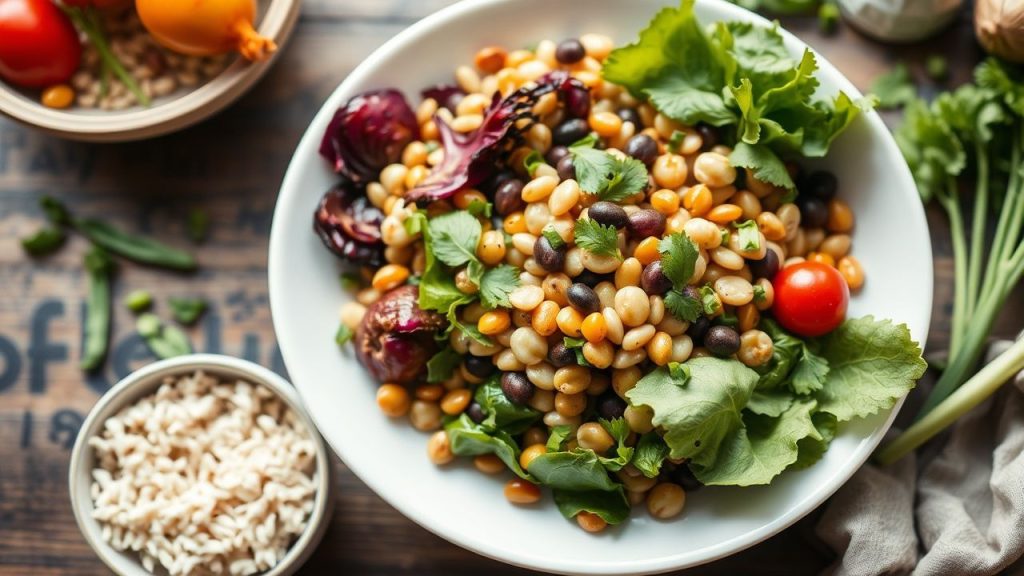
This mushroom-and-lentil mixture demonstrates how layered umami, texture, and acid deliver completeness. It works as a main, a grain topper, or a filling, and it scales easily for meal prep.
The recipe relies on rehydrated dried shiitake, fermented miso, nutritional yeast, and a low-sodium condiment to build depth without excess salt. For context on the mushroom variety, see shiitake mushroom.
Prep and Time
Preparation: 15 minutes. Keep ingredients organized to allow uninterrupted caramelization and deglazing.
Cooking: 25 minutes. Monitor heat so vegetables brown but do not burn.
Yield and Difficulty
Yield: Serves 4. The mixture stores well and improves overnight.
Difficulty: Easy to medium. Techniques are basic but require attention to timing.
Ingredients
1 cup dried shiitake mushrooms, soaked and sliced; 2 tablespoons miso paste; 1 tablespoon tamari; 1 tablespoon nutritional yeast; 1 cup cooked lentils; 1 medium onion, finely chopped; 3 cloves garlic, minced; 1 tablespoon olive oil; 1 teaspoon smoked paprika; 1/2 cup vegetable broth; salt and freshly ground black pepper; chopped parsley to garnish.
Choose low-sodium broth and tamari to control total sodium while preserving depth. For more plant-based ingredient ideas, visit Vegetarian Umami Boosters.
Instructions
1. Prepare mushrooms: Soak dried shiitake in warm water for 20 minutes. Reserve the soaking liquid; it concentrates savory solubles and can replace part of the broth.
2. Sauté aromatics: Warm olive oil in a large skillet over medium heat. Add onion and garlic; sauté until golden and fragrant, about 5 minutes. Browning these builds Maillard compounds that add complexity.
3. Add mushrooms and spices: Add sliced shiitake and smoked paprika. Cook until mushrooms soften and edges brown, 7–8 minutes. Browning intensifies savory perception.
4. Combine lentils and umami elements: Stir in cooked lentils, miso paste, nutritional yeast, and tamari. Heat gently for 2–3 minutes so the miso dissolves and flavors meld.
5. Deglaze and simmer: Pour in vegetable broth and reserved mushroom soaking liquid if desired. Scrape browned bits from the pan and simmer until slightly reduced, about 5 minutes. This concentrates flavor without added salt.
6. Final seasoning: Taste and adjust with small amounts of salt and pepper. Finish with a squeeze of acid—lemon or vinegar—to lift the palate and reveal hidden layers.
Techniques That Add ‘Completeness’
Caramelization and roasting break down sugars and form savory Maillard products. These reactions add both aroma and perceived richness. Use medium-high heat and avoid overcrowding the pan so browning occurs efficiently.
Deglazing with a flavorful liquid recovers browned fond and reincorporates it into the dish. Similarly, fermenting or aging ingredients concentrates free amino acids and nucleotides that stimulate umami receptors.
Why Texture Matters
Texture signals satisfaction as much as flavor does. Contrast creamy lentils with chewy mushrooms and crisp toasted seeds to create interest in every bite. A varied mouthfeel increases satiety and perceived value of the meal.
For meal-builders, include at least two contrasting textures per plate: soft (grains or legumes) and crisp (roasted vegetables, seeds, or toasted bread). Texture amplifies the impression that a dish is complete.
[h2]Health-Conscious Seasoning and Ingredients[/h2]
Use low-sodium condiments and homemade broth to control salt while keeping flavor. Fermented ingredients—like miso—deliver concentrated umami in small amounts, making them efficient and health-friendly.
Nutritional yeast provides savory, cheese-like notes with added B vitamins. Add it late in cooking to maintain flavor. If shiitake are unavailable, dried porcini or cremini are solid substitutes.
Expert Insight
Fat carries aroma molecules and rounds mouthfeel. A tablespoon of olive oil, a drizzle of tahini, or a sprinkle of toasted nuts can resolve any flatness. Do not remove fat entirely; instead, prefer healthy unsaturated sources for balance.
Pro-Caution
Tips for Success
Elevate umami naturally: Use fermented or aged plant ingredients—miso, tamari, sundried tomatoes, and aged soy products add depth without artificial enhancers.
Optimize texture: Caramelize mushrooms and onions to unlock savory compounds. Add toasted seeds or nuts just before serving for crunch.
Control sodium smartly: Prefer low-sodium tamari and homemade broth. Add salt at the end to avoid over-seasoning during reduction steps.
Make-ahead benefits: Many umami-rich dishes improve after a day as flavors blend. Store in airtight containers and reheat gently to preserve texture.
Serving Suggestions
Serve the mushroom-lentil mix over warm quinoa or brown rice to create a complete protein profile and a satisfying bowl. Add roasted root vegetables for seasonal depth.
Use the mixture as a filling for whole-grain tacos, stuffed peppers, or savory pies. Finish with fresh acid (lemon or vinegar) and a crunchy topping like toasted pine nuts or pumpkin seeds.
Nutrition Facts
| Nutrient | Per Serving |
|---|---|
| Calories | 280 kcal |
| Protein | 18 g |
| Carbohydrates | 32 g |
| Fat | 6 g |
Related Resources
For further reading on the science and practical techniques that enhance plant-based savoriness, see the following internal and reference pages. These links point to tested approaches and additional recipes on our site.
Vegetarian Umami Boosters and Lentil Recipes offer practical variations, meal plans, and make-ahead strategies to increase kitchen efficiency.
FAQ
Why do some vegetarian meals feel like they’re missing something?
Often they lack concentrated savory compounds and contrasting textures. Without umami and textural interest, dishes can taste one-dimensional and unsatisfying.
To fix this, layer flavors: caramelize aromatics, add fermented elements, and finish with acid or fat to balance the profile.
What exactly is umami, and why does it matter in vegetarian cooking?
Umami is a basic taste that signals protein-rich or aged foods. It makes dishes feel richer and more sustaining by activating specific taste receptors.
Plant-based kitchens can use glutamate-rich vegetables and fermented ingredients to mimic that savory depth without animal products. Learn more at umami.
How can I make my vegetarian meals more satisfying right now?
Add a small amount of a fermented or aged ingredient (miso, tamari, nutritional yeast), balance with acid, and include at least one crunchy element. These moves transform a flat plate into a layered one.
Also, cook components separately to allow proper browning, then combine at the end for maximum contrast.
Are there simple ingredient swaps that boost flavor quickly?
Yes. Swap regular soy sauce for low-sodium tamari, use miso in place of plain salt in many sauces, and substitute dried mushrooms for fresh to intensify aroma. Toast seeds or nuts before use to add warm, toasty notes.
For seasoning theory and taste receptor basics, consult taste.
Can plant-based proteins make a meal feel complete?
Absolutely. Tempeh, seitan, tofu, and legumes provide texture and substance. Marinate, season, and apply high-heat techniques to maximize their flavor-carrying potential.
Combine these proteins with grains and seeds to build balanced meals that satisfy both hunger and palate.
Final Notes
Completeness in vegetarian cooking is intentional. Focus on concentrated savory ingredients, purposeful heat application, and textural contrasts to convert wholesome components into crave-worthy dishes.
Practice these methods regularly; the more you apply them, the quicker you will recognize and fix flatness in any plant-based meal.
See also: umami
]]>