- Texture difference: cake donuts are dense; yeast donuts are airy.
- Time & technique: cake donuts are quick; yeast donuts require proofing.
- Taste opportunities: cake donuts hold spices well; yeast donuts favor glazes and fillings.
- Frying control: temperature management prevents greasiness and ensures color.
Overview: What Sets Them Apart
Cake donuts start from a batter that uses a chemical leavener such as baking powder to rise. That batter bakes or fries into a tender, crumbly cake texture with good flavor carry.
Yeast donuts use live yeast and time to develop gas and structure. The result is a light crumb with subtle fermentation notes and a chew that glazes and fillings complement.
Prep and Cook Time
Preparation Time: 20 minutes for cake donuts; 30–45 minutes active for yeast donuts plus proofing. Yeast dough needs 1–1.5 hours to double depending on temperature.
Cooking Time: About 15 minutes total frying for each batch, plus cooling and glazing time. Allow an extra 20–30 minutes if you plan to glaze and set the finish.
Yield
This guide yields 12 donuts total: six cake-style and six yeast-raised. Quantities scale: double ingredients for a larger party without changing technique.
Plan oil capacity by batch size; overcrowding the fryer lowers oil temperature and makes donuts greasy. Fry in small batches for consistent color and texture.
Difficulty Level
Overall difficulty rates as medium. Cake donuts require accurate mixing and frying skills; yeast donuts demand dough-handling and proofing control.
Both reward attention to temperature. Mastery of kettle or deep-fryer heat and dough feel will produce professional results at home.
Ingredients
The ingredient lists differ by leavening method and hydration. Cake donuts use a thick batter with baking powder and baking soda; yeast donuts use flour, sugar, eggs, fat, and yeast with more development time.
Keep these principles in mind: stronger flour and higher hydration favor yeast donut structure, while cake donuts tolerate lower hydration and more sugar or spice additions.
- For Cake Donuts:
- 1 cup all-purpose flour, sifted
- 1/4 cup granulated sugar
- 1 tsp baking powder
- 1/4 tsp baking soda
- 1/4 tsp salt
- 1/2 tsp ground nutmeg
- 1/3 cup buttermilk, room temp
- 1 large egg
- 2 tbsp unsalted butter, melted
- 1 tsp vanilla extract
- Vegetable oil for frying
- For Yeast Donuts:
- 2 1/4 tsp active dry yeast (1 packet)
- 1/3 cup warm whole milk (110°F/43°C)
- 3 tbsp granulated sugar
- 2 large eggs
- 1/2 cup unsalted butter, softened
- 4 cups all-purpose flour, plus extra for dusting
- 1 tsp salt
- Vegetable oil for frying
- 1 tsp vanilla extract
- Glaze (optional for both):
- 2 cups powdered sugar
- 1/4 cup whole milk
- 1 tsp vanilla extract
Instructions
Prepare Yeast Donut Dough: Dissolve yeast in warm milk with 1 tsp sugar and wait until frothy, about 5–10 minutes. Combine 3 cups flour, remaining sugar, and salt in a large bowl before adding the yeast mix, eggs, butter, and vanilla.
Knead the dough until smooth and elastic, about 5 minutes on a floured surface. Place in a greased bowl, cover, and let rise 1–1.5 hours until doubled in volume.
Make Cake Donut Batter: Sift flour, baking powder, baking soda, salt, and nutmeg together. Whisk egg, sugar, buttermilk, melted butter, and vanilla in a separate bowl, then fold into dry ingredients until just combined.
Keep mixing minimal: a few lumps are fine and prevent a tough finished crumb. The batter should be thick, scoopable, and hold its shape briefly on a spoon.
Shape Yeast Donuts: Punch down the risen dough and roll it to 1/2-inch thickness. Cut with a 3-inch outer cutter and a 1-inch center cutter for classic rings; arrange on parchment and allow a 20–30 minute final proof until puffy.
For cake donuts, either pipe batter into a donut mold or drop spoonfuls carefully into oil. Maintain consistent sizes to ensure even frying times and uniform texture.
Fry Donuts: Heat oil to 350°F (175°C). Fry yeast donuts 1–2 minutes per side until golden, then drain on paper towels for a minute before glazing.
Fry cake donuts similarly, watching closely since they cook a touch faster. Use a thermometer and short batches to keep oil temperature steady for crisp, non-greasy results.
Glaze: Whisk powdered sugar, milk, and vanilla until smooth. Dip warm donuts halfway and place on a rack to set; allow glazing to cool before stacking.
 Pro-Caution
Tips for Success
Temperature Check: Keep oil at 350°F for consistent color and minimal oil absorption. A candy or fryer thermometer helps maintain that sweet spot.
Gentle Kneading: Handle yeast dough just until smooth; over-kneading develops excess gluten and yields a tough bite. Aim for elasticity and a soft surface.
Mixing Batter: For cake donuts, mix only until ingredients come together. Overworking introduces too much gluten and ruins the tender crumb.
Make-Ahead: Yeast dough can chill overnight for improved flavor via slow fermentation; bring it to room temperature before shaping. This approach increases complexity without extra hands-on time.
 Expert Insight
Serving Suggestions
Serve cake donuts dusted with powdered sugar or cinnamon for a cozy, rustic profile. Their dense crumb pairs well with rich hot chocolate and spiced drinks.
Yeast donuts excel with shiny glazes and soft fillings: jam, custard, or light chocolate. Their soft texture complements bold coffee or bright, fruity teas.
For seasonal variations, fold spices into cake batter or add citrus zest to glazes for a fresh lift. Presentation matters: a light dusting or gloss makes donuts more inviting and increases perceived value.
Read more about the broader history and definitions at the doughnut entry and consult the leavening agent article for technical context on how chemical and biological leaveners work.
Nutrition Comparison
Below is a general guideline for calorie and macronutrient differences between a typical cake donut and a yeast donut. Values vary with size, frying time, and glaze.
| Donut Type | Calories | Protein | Carbs | Fat |
|---|---|---|---|---|
| Cake Donut | 210 kcal | 3 g | 28 g | 10 g |
| Yeast Donut | 250 kcal | 4 g | 30 g | 12 g |
FAQ
What is the main technical difference between cake and yeast donuts?
Cake donuts use chemical leaveners like baking powder to generate gas quickly during frying. That produces a tender, crumbly structure.
Yeast donuts rely on biological fermentation from yeast to produce carbon dioxide gradually. The dough develops a network of gas cells that yield a soft, elastic crumb.
Which donut takes longer to make?
Yeast donuts take longer because they need time to proof and often require two rises. Expect 2–3 hours including active and resting times for most yeast recipes.
Cake donuts are faster; mix the batter and fry within minutes. They suit same-day baking when time is limited.
Can you tell them apart by look and feel?
Yes. Yeast donuts usually appear smooth and puffy with a springy feel, while cake donuts look slightly textured and feel denser. The mouthfeel is the clearest indicator: cake donuts crumble slightly; yeast donuts bounce back.
Glaze and toppings can blur visual differences, so bite and texture are the reliable tests.
Are either of them healthier?
Both are fried and therefore treats rather than health foods. Yeast donuts often have less sugar per bite but can absorb more oil if frying temperature drops. Enjoy both in moderation.
To reduce calories, consider baking cake-style lumps or using an air-fryer technique for a lower-oil alternative, while noting texture and flavor will change.
Can recipes be swapped between styles?
No. Cake and yeast donuts use different base formulas and techniques. Swapping leaveners or directly converting a yeast recipe to a cake method usually fails because dough structure and hydration differ significantly.
Instead, choose the style that suits your time and flavor goals and follow a dedicated recipe for the best result.
Insights and Conclusions
The two classic donut styles deliver unique eating experiences: cake donuts offer a concentrated flavor and firmer bite, while yeast donuts provide airy texture and a light chew. Each style has clear advantages depending on the desired final product.
For home bakers, the choice often comes down to time and intended flavor profile. Use cake donuts when you need speed and spice integration; choose yeast donuts when you want a delicate, glazed canvas.

See also: Donuts
]]>Beneath the bubbling surface of hot oil lies a precise culinary craft that produces crisp textures and bold flavor. Deep frying requires consistent temperature, correct oil, and controlled timing to deliver golden, non-greasy results.
- Control temperature: Maintain 350–375°F for most items.
- Pick the right oil: Use a high smoke point oil for safety and neutral flavor.
- Dry and coat: Remove surface moisture and use appropriate batter or breading.
- Drain properly: Rest on racks to keep crispness and prevent sogginess.
Overview and Key Concepts
Deep frying transforms starches and proteins by enveloping food in hot oil that rapidly dehydrates the surface and browns the crust. That crust locks in moisture, creating a contrast between a crunchy exterior and a tender interior.
Understanding the chemistry behind browning and the role of oil temperature reduces common errors. For a concise primer on the method and history, see deep frying.
Prep and Cook Time
Prep Time: 15 minutes. Prepare ingredients, set up a clean workstation, and preheat your oil with a reliable thermometer. Proper setup minimizes safety risks and ensures consistent results.
Cook Time: 10–20 minutes depending on batch size and item size. Small pieces fry quickly; dense items require longer cook time and careful monitoring of interior temperature.
Yield
This recipe structure serves 4–6 people when you fry in 2–3 small batches. Batch size matters: smaller batches keep oil temperature steady and maintain crispness in each piece.
Adjust batch count and oil volume based on pan size. Use a heavy-bottomed pot or a dedicated fryer and avoid filling more than half the vessel with oil to prevent overflow and splatter.
Difficulty Level
Deep frying rates as medium skill because it demands precise temperature control, timing, and safe handling. With practice, the technique becomes routine and predictable.
Start with simple items such as fries or battered vegetables before attempting large cuts of meat. Mastering temperature and batter consistency yields the fastest improvements.
Ingredients
Essential: 4 cups of a neutral, high smoke point oil (refined peanut, canola, or sunflower). Use enough oil to fully submerge items but leave headspace to prevent spills.
Batter & coating: 2 cups sifted all-purpose flour, 1 tsp baking powder, 1 tsp kosher salt, 1/2 tsp black pepper, 2 large eggs, and 1 cup cold sparkling water for a light batter. For alternatives, consult the batter overview.
Instructions
Follow step-by-step actions and keep tools at hand: thermometer, slotted spoon, wire rack, and paper towels. Work in small batches and monitor oil temperature between batches.
Keep a timer and digital thermometer nearby; these tools remove guesswork and reduce the risk of overcooking or absorbing excess oil.
Heat and oil management
Pour oil into a heavy pan or fryer and heat to 350°F (175°C). Maintain a range of 350–375°F for most foods to ensure a crisp exterior and fully cooked interior.
Watch the smoke point of your oil and never exceed it. If oil smokes, lower the heat and replace the oil if it shows off-odors.
Batter, coating and handling
Whisk flour, baking powder, salt and pepper. Add cold sparkling water and eggs gently—avoid overmixing to keep the batter airy and light.
Pat proteins or vegetables completely dry before battering to reduce splatter and improve adhesion. Lightly dust items with dry flour when coating to help the batter cling evenly.
Frying technique
Lower items carefully with a slotted spoon and fry without overcrowding. Cook in small batches so the oil temperature recovers quickly between additions.
Fry 3–5 minutes for small pieces, or until golden brown and crisp; thicker items will require longer. Transfer to a wire rack rather than paper towels to maintain airflow beneath the food.
Tips for Success
Choose the right oil: Use refined oils with neutral flavor and high smoke points to avoid burned or off tastes. Vegetable oils designed for frying work best for repeated high-heat use.
Monitor temperature: A digital deep-fry thermometer keeps you in the sweet spot. Avoid large temperature swings by adding items slowly and in small counts.
Expert Insight
Use a thermometer probe to check interior doneness for proteins: 165°F for poultry and 145°F for fish, depending on cut. Accurate internal checks reduce guesswork and ensure food safety.
Safety and Cleanup
Keep a fire extinguisher rated for grease fires in the kitchen and never use water on an oil fire. Place pans on stable burners and keep handles turned inward to prevent accidents.
Let oil cool fully before handling. Strain used oil through cheesecloth into a sealed container if you plan to reuse it; otherwise, dispose according to local regulations.
Pro-Caution
Wear long sleeves and use oven mitts when managing large pots of oil. Position a metal splatter screen near the pan for brief moments when you add or remove items.
Serving Suggestions
Serve fried items immediately for best texture. Place cooked pieces on a wire rack over a sheet pan so air circulates and crispness holds longer than on paper towels.
Balance fried dishes with bright, acidic condiments or salads. Finish fries with a coarse salt and herbs, and offer a variety of dips to extend the flavor profile.
Nutrition Snapshot
Typical serving values depend on batter thickness and oil absorption. A standard portion often measures around 350 kcal with protein, carbohydrate and fat ratios varying by ingredient.
To moderate intake, use lean proteins, control portion sizes, and pair fried items with vegetables or salads to add fiber and micronutrients to the plate.
Additional Resources
For more detailed frying methods and technique breakdowns, consult our internal guides: Ultimate Guide to Frying Techniques and Safety Guidelines for Frying. These pages provide step-by-step workflows and troubleshooting advice.
Read technical background on oils and cooking methods via the vegetable oil entry for production and refinement context. For starch and crust science, the deep frying page links to academic references and historic techniques.
Q&A
Q&A: The Sizzle Unveiled – Mastering the Art of Deep Frying
Q1: What makes deep frying effective at sealing in moisture?
A1: High oil temperature rapidly dehydrates the surface and creates a crust, which traps internal moisture. This immediate barrier prevents the interior from drying out and preserves juiciness.
Q2: How do I choose the right oil for flavor neutrality?
A2: Use oils with neutral taste and high smoke points such as refined canola, peanut, or sunflower oils. These oils tolerate high heat and let the food’s flavor shine without imparting strong oil notes.
Q3: Why does overcrowding make food greasy?
A3: Overcrowding drops oil temperature and increases contact time between food and oil, allowing more oil to be absorbed. Fry in small batches to keep temperature stable and minimize oil uptake.
Q4: Is double frying always necessary?
A4: Double frying benefits items like fries or very dense proteins. The first fry cooks through at a moderate temperature; the second, hotter fry crisps and browns the surface for superior texture.
Q5: How should leftover oil be stored?
A5: Cool oil, strain out crumbs, and store in a sealed, opaque container in a cool place. Label with date and reuse only a few times for similar-flavored foods; dispose when it develops off-odors or excessive foaming.
Final Thoughts
Mastery of deep frying rests on repeatable technique: stable temperature, correct oil, and careful handling. When you apply these rules, the results become reliably crisp and flavorful.
Practice with small batches, keep safety front-of-mind, and consult internal guides for recipe variations. Use the tips above to raise your frying from ordinary to professional quality.

See also: Deep frying
]]>
- Moisture control seals juiciness while enabling a dry, shattering crust.
- Flour + starch balance produces structure plus crispness without toughness.
- Oil temperature and batch size determine oil uptake and browning.
- Finishing steps (rest, oven blast) preserve and restore crunch.
The Role of Moisture Control in Achieving Ultimate Crunch
Moisture determines whether a crust crisps or goes limp. If the surface stays wet while frying, steam softens the crust and oil soaks in.
Manage moisture with an acid soak such as buttermilk to tenderize meat while controlling surface wetness before dredging. For background on the chemistry of tenderizing, see buttermilk.
Pat pieces so they retain enough film for adhesion but not pools of liquid. That thin film creates even contact for the flour-starch blend to cling and transform under heat.
Rest coated pieces briefly on a tray to set the crust before frying; this forms a tacky skin that fries into a stable, crisp shell.
Key Ingredients and Why They Work
All-purpose flour gives structure; starches such as cornstarch or potato starch add brittle, dry texture. Combining them limits gluten formation while promoting that desirable shatter.
Baking powder adds microscopic air pockets and raises pH slightly to speed browning and crisping. For a primer on related leavening chemistry, consult baking powder.
Salt and spices season while modifying surface behavior; salt draws minimal moisture to the surface but also seasons the crust. Tiny changes in formulation shift the final texture and color.
Rice flour or tapioca starch can replace some wheat flour to reduce chew and enhance flake. Starch behavior under heat relates to native polymer properties; see starch for technical context.
Prep, Timing, and Yield
Preparation: 25 minutes active time. Marinate 2–4 hours for best results. Cooking per batch runs about 15–18 minutes.
Yield: Serves 4 adults. Keep timings consistent so batches finish at similar doneness and all pieces share the same crisp profile.
Ingredients (Why each matters)
Use bone-in, skin-on pieces for moisture retention and flavor. Buttermilk tenderizes proteins and improves coating adhesion.
Combine 2 cups all-purpose flour, 1 cup cornstarch, 1 tablespoon baking powder, and seasonings. This mix balances structure, browning, and brittle texture.
Step-by-Step Frying Technique: Temperature and Oil Management
Heat oil to 350°F (175°C) and maintain between 350–375°F for ideal crust formation and safe internal cooking. Holding temperature prevents excessive oil uptake and uneven browning.
Fry in small batches to avoid sudden temperature drops. Use a reliable thermometer and adjust heat quickly to recover the set point.
When coating hits oil at target temperature, surface water vaporizes immediately, forming tiny bubbles and drying the crust. That rapid surface change creates a barrier that keeps oil out.
Deep frying parameters tie directly to the physics of heat transfer. For a focused technical overview, review deep frying.
Coating Methods and Layering
Single dredge gives a thin crust; double-dredge builds layers that fry into a thicker, more textured shell. Press the dry mix gently so it adheres without compacting.
Use a wet-dry-wet-dry sequence when you want maximum crunch: wet dip, dry coat, brief return to wet, then finish in dry mix. Layering traps steam inside and produces flakes on the exterior.
For lighter crunch, incorporate rice flour or thinly sift cornstarch into the final dusting. For heavier, craggy crusts, coarser flour and a looser batter increase surface ruggedness.
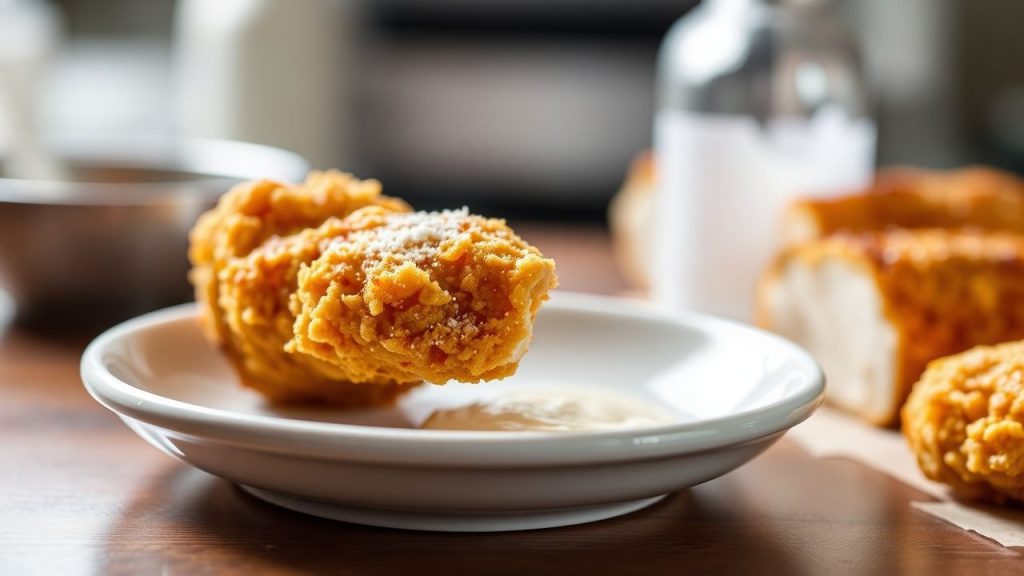
After frying, drain on a wire rack to let oil drip and air circulate. Avoid stacking pieces or using paper towels that trap steam and soften the crust.
[h2]Tips for Success[/h2]
Maintain oil temperature precisely; a 25–40°F drop will change moisture dynamics and increase oil uptake. Adjust stove settings between batches to recover quickly.
Control batch size. Overcrowding reduces oil temperature and produces greasy, limp crusts. Fry in consistent groups so each piece gets the same thermal exposure.
Expert Insight
Finish with a light seasoning right after frying to let salt cling to hot oil and intensify flavor. A brief 3–5 minute oven blast at 400°F can revive crispness for resting or late service.
Pro-Caution
Instructions
1. Soak chicken in buttermilk for 2–4 hours to tenderize and help coating adhesion. Drain and let pieces rest until tacky, not dripping.
2. Mix flour, cornstarch, baking powder, and spices in a bowl. For extra crisp, double-dredge by dipping back into buttermilk and re-coating.
3. Heat oil to 350°F (175°C); fry in small batches until golden and internal temperature reaches safe levels. Turn pieces for even browning.
4. Drain on a wire rack and rest for several minutes before serving to lock the crust. Optionally, give leftovers a short oven refresh to restore snap.
Serving Suggestions
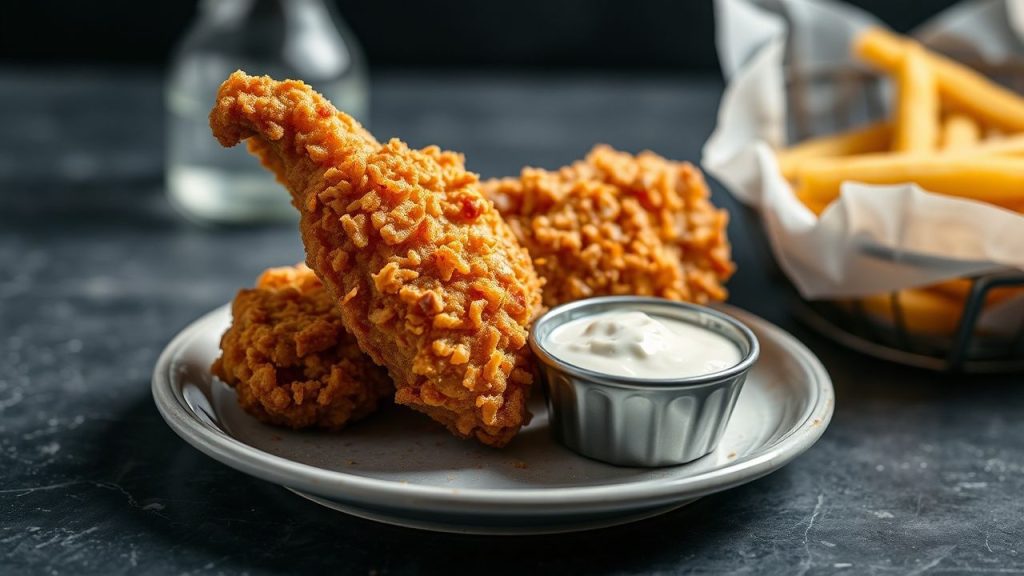
Serve hot with contrasting textures: creamy mashed potatoes or a tart, crunchy slaw balances richness. Herbs add a fresh note that lifts the overall bite.
Offer dipping sauces at room temperature; extreme cold can reduce perceived crispness and overwhelm the palate.
Common Science Questions Answered
Why does the crust shatter? Rapid evaporation of surface moisture forms pockets and dries the coating, while starches and proteins set into a brittle matrix.
How do starches behave? Under high heat, starches undergo physical changes that reduce elasticity and increase brittleness, delivering higher snap.
Internal Resources
For technique refinement, check our recipe guide: Perfect Fried Chicken Techniques. It covers knife work, brining, and pacing for batch frying.
Explore a focused guide on oil recovery and fryer management at Frying Temperature & Oil Care for long-term consistency and cost control.
| Nutrient | Per Serving (1 piece) |
|---|---|
| Calories | 420 |
| Protein | 35g |
| Carbohydrates | 18g |
| Fat | 23g |
FAQ
How does buttermilk improve crispiness?
Buttermilk tenderizes proteins and leaves a thin, acidic film that promotes coating adhesion. The film helps the coating set quickly when it hits hot oil, contributing to a lighter crust.
What temperature is best for frying to get the crispiest crust?
Maintain oil between 350°F and 375°F (175–190°C). That range crisps the exterior while allowing the interior to reach safe temperatures before the crust over-browns.
Does double-dredging always mean better texture?
Double-dredging increases crust thickness and texture but can trap more moisture if overdone. Use it when you want a hearty, craggy crust; skip it for a thin, delicate snap.
Can I make this gluten-free without losing crunch?
Yes. Replace all-purpose flour with a gluten-free blend and favor potato or rice starch for crunch. Adjust seasoning since blends vary in salt and binders.
How do I restore crispness in leftovers?
Use a hot oven or air fryer for 3–6 minutes to drive off surface moisture and recrisp the coating. Avoid microwaves, which steam the crust and make it soggy.
Understanding the interactions of moisture, starch, and heat will let you control every element of the final crust. Use the internal technique pages above to refine timing and scale for service.
See also: fried chicken
]]>
- Cold batter and hot oil speed crust formation while limiting oil uptake.
- Balance starch and flour to control texture: crisp shell versus tender interior.
- Temperature control (350–375°F / 175–190°C) matters more than frying duration.
- Small test fry predicts the batter’s behavior and avoids soggy failures.
Prep and Cook Time
Preparation: about 15 minutes. Assemble dry mix, chill liquid, and preheat oil to stabilize temperature before frying.
Cooking: 8–12 minutes total across batches. Individual pieces typically take 2–4 minutes depending on size and moisture content.
Yield
This recipe and method yield roughly 4 servings of battered items, depending on portion size and what you fry. Expect variations when you batter vegetables versus fish or tofu.
Scaling is linear: double dry mix and cold liquid for larger batches, but maintain chilling and frequent temperature checks to keep quality consistent. Use a reliable thermometer for repeatable results.
Difficulty Level
Medium: The technique requires attention to temperature and timing, but it uses basic ingredients and straightforward steps. Home cooks achieve professional textures with a few practice batches.
Key skills: steady oil temperature, correct batter consistency, and avoiding overcrowding. Master these and frying becomes dependable rather than unpredictable.
Ingredients
Use quality pantry staples and keep liquids very cold. Below is a flexible baseline that adapts to fish, veg, or tofu.
- 1 cup all-purpose flour, sifted
- 1/2 cup cornstarch
- 1 teaspoon baking powder
- 1 teaspoon kosher salt
- 1 cup ice-cold sparkling water or very cold water
- 1 large egg, lightly beaten
- Vegetable oil for deep frying (2–3 inches depth)
- Optional: paprika, garlic powder, or white pepper for seasoning
Substitutions: swap part of the all-purpose flour for rice flour to increase crispness. For gluten-free options, use a certified blend plus potato starch for structure.
Use chilled liquids to slow gluten formation and to create a temperature gap between batter and oil. That gap drives the rapid steam formation that creates lift and crunch.
Instructions
Follow a consistent sequence: dry mix, cold liquid, quick combine, and immediate frying. Each stage affects crispness and oil uptake.
Work in small batches and test early. A single spoonful test prevents wasting oil on a poorly balanced batter.
Step-by-step Frying Method
1. Mix dry ingredients. Whisk flour, cornstarch, baking powder, and salt in a bowl until homogeneous. Homogeneity ensures even browning and predictable expansion.
2. Add cold liquid and egg. Pour ice-cold sparkling water and add the beaten egg; stir lightly until just combined. Leave some lumps—overmixing promotes gluten development and a tougher crust.
3. Heat oil to 360°F (182°C). Use a probe thermometer and adjust heat to hold 350–375°F (175–190°C) during frying. Consistent temperature maintains rapid surface sealing without burning.
4. Test a small spoonful. Drop a tablespoon of batter into oil: it should float quickly and sizzle. If it browns too fast, lower heat; if it sinks or becomes oily, raise the temperature slightly.
5. Coat and fry in batches. Dip prepared pieces, allow excess batter to drip, and place in hot oil with space between items. Fry 2–4 minutes until golden, turning once if needed.
6. Drain and rest. Remove to a wire rack to cool briefly; do not stack on paper towels where steam accumulates. Resting preserves crispness while the interior finishes cooking by residual heat.
Chef’s Notes
Cold batter is essential. Cold liquids slow gluten formation and promote rapid steam expansion on contact with hot oil. The result: a thinner, crisper shell with a tender interior.
Balance viscosity carefully. Aim for a pourable batter that clings. Too thick traps excessive steam and cooks slowly; too thin soaks oil. Consistency like heavy cream is a reliable target.
Temperature control tips. Monitor oil between batches and recover heat before adding the next items. Frequent, small additions help maintain a stable oil temperature.
Flavor integration. Add dry spices to the flour mix so the seasoning disperses evenly without altering batter hydration. Acidic additions (small amounts of beer or lemon) can affect browning speed.
Pro-Caution
Allow the oil to cool fully before disposal or filtration. Strain and store oil for reuse only if it shows no signs of breakdown—dark color or strong off-odors indicates replacement is necessary.
Expert Insight
The Science Behind Batter Cooking: Speedy Sizzle Secrets in Action
Rapid surface sealing depends on a sharp temperature differential between cold batter and hot oil. When batter contacts oil, the water fraction flashes into steam and creates microscopic bubbles that lift and separate the batter, forming an airy crust.
This process ties directly to the Maillard reaction, which develops flavor during browning. Achieve even, flavorful browning by controlling sugar and protein exposure at the surface.
Heat transfer governs how quickly that outer layer sets, while the interior cooks by conduction. Understanding basic heat transfer principles helps predict how thick or thin your batter should be for a given item.
For frying mechanics, consult the science summarized under deep frying. That source outlines how oil circulation, temperature, and food moisture interact to determine texture and oil uptake.
Serving Suggestions
Serve battered items hot to maximize perceived crispness. Present on a wire rack to avoid steam re-softening the crust, and season immediately with flaky salt for an enhanced bite.
Pair with acidic or creamy dips to contrast fat. A squeeze of citrus or a bright vinaigrette cuts through richness and highlights the Maillard flavors generated during frying.
For presentation, garnish with fresh herbs and a light dusting of spice. Offer accompaniments that vary texture and temperature to create balance on the plate.
For technique expansion, consult internal resources such as frying techniques guide and our tempura preparation guide for specific batter styles and item-specific timing.
Nutrition
Estimated nutritional data depends on oil absorption and chosen ingredients. The table below gives a practical per-serving baseline for a typical fish-and-chip style portion.
| Nutrient | Per Serving |
|---|---|
| Calories | 320 kcal |
| Protein | 8 g |
| Carbohydrates | 35 g |
| Fat | 15 g |
Q&A
What causes the immediate sizzle when batter hits hot oil?
The sizzle comes from rapid vaporization of water in the batter as it contacts oil above the water’s boiling point. The steam escapes in bubbles and drives surface expansion and crisping.
This flash evaporation also briefly insulates the interior, allowing the exterior to set while the center cooks more gently by conduction.
How precise must I be with oil temperature?
Precision matters: a 10–20°F shift changes browning speed and oil uptake noticeably. Aim for 350–375°F (175–190°C) and adjust in small increments.
Use a probe thermometer and watch how test fritters behave; they reveal whether to raise or lower heat for consistent results.
Does flour type change cooking time?
Yes. Higher-protein flours strengthen gluten and can slow moisture escape, producing a slightly denser crust. Lighter flours and starches brown and crisp faster.
Mixing flours or adding cornstarch or rice flour can tune the texture toward flakier, crispier outcomes without extending cook time.
Can I speed up cooking without losing texture?
Speed relies on maintaining a hotter surface while avoiding surface burning. Use chilled batter, consistent oil heat, and small pieces to increase cook rate safely.
Avoid overcrowding; spacing items maintains oil temperature and ensures each piece crisps quickly and evenly.
How do I reduce oil absorption in batter-fried foods?
Prevent oil uptake by ensuring quick surface sealing: cold batter, hot oil, and correct batter viscosity are essential. Drain on a rack rather than paper to avoid re-wetting the crust.
Frequent oil maintenance—filtering and replacing degraded oil—also minimizes absorption and off-flavors.
Understanding these principles lets you adapt batter recipes and achieve predictable, fast, and flavorful results. Apply test batches, measure temperatures, and record small adjustments to create your ideal crisp every time.
See also: batter cooking
]]>Imagine biting into a piece of tempura: a delicate, crackling shell gives way to a tender interior. The texture comes from controlled chemistry—cold batter, starch behavior, and precise frying create that airy crisp.
- Key textures come from limiting gluten and promoting starch gelatinization.
- Temperature control prevents oil uptake and burns.
- Cold, bubbly batter yields the lightest, most brittle crust.
- Drain and rest on a rack to preserve crunch.
Origins and the scientific frame
Tempura traces to 16th-century Japanese cookery and Iberian frying influence; the technique evolved into its current delicate form. For historical context, see tempura history.
Scientifically, tempura relies on rapid water evaporation, starch gelatinization, and minimal gluten formation. These mechanisms act together during rapid deep-frying to produce a fragile, brittle crust.
Prep and Cook Time
Preparation and timing matter because the batter’s temperature and the oil’s heat determine texture. Work in small, controlled batches so oil temperature recovers quickly between fries.
The following times reflect a standard home setup and moderate pieces. Commercial kitchens can often halve the cook time with larger oil baths and consistent throughput.
- Preparation: 15 minutes
- Cooking: 10 minutes
- Total Time: 25 minutes
Yield and Difficulty
This recipe yields a reliable small-plate portion for four diners as an appetizer or side. The technique rates medium: the ingredients stay simple, but the process requires temperature discipline.
Practice improves timing and batter feel. Use a thermometer and a wire rack to reproduce results consistently.
Ingredients
Choose ingredients that favor low gluten and quick gelatinization. Typical swaps—cake flour, rice flour, or cornstarch—change protein and starch behavior.
For starch behavior reference, consult cornstarch properties and compare with wheat-based flours to understand gelatinization speed.
- 3/4 cup cake flour, sifted (low-protein option)
- 1/4 cup cornstarch (adds crispness)
- 1 large egg, lightly beaten
- 1 cup ice-cold sparkling water (keeps batter cold and bubbly)
- Vegetables and seafood of choice: sweet potato, shrimp, mushrooms
- Vegetable oil with a high smoke point (canola, sunflower, or rice bran)
- Salt for finishing
Why flour choice matters
Flour protein governs gluten formation. Lower protein flours reduce network formation and keep coatings tender rather than elastic. For background, read about gluten.
Starch additions—cornstarch or rice flour—gelatinize quickly, forming a brittle matrix that resists oil absorption. Combine flour and starch for an optimal balance of structure and lightness.
Instructions
Follow a disciplined sequence: dry ingredients, cold liquid, limited mixing, and fast frying. Each step preserves the microstructure that yields crispness.
Work methodically and keep batter chilled until the moment you dunk the items into oil. Use a thermometer to maintain a steady frying temperature.
- Prepare the pieces: Pat produce and seafood dry. Excess surface moisture converts to steam and can break the crust.
- Combine dry ingredients: Sift cake flour and cornstarch into a chilled bowl.
- Add egg and cold water: Add beaten egg, then pour in ice-cold sparkling water. Stir briefly; a few lumps are fine. Avoid overmixing to prevent gluten development.
- Heat oil: Bring oil to a steady 350°F (175°C). Use a wide pot for stable temperatures; hot oil must recover between batches to prevent greasiness.
- Coat and fry: Dredge items lightly into batter, let excess drip, then lower carefully into oil in small batches. Fry 2–3 minutes until pale gold.
- Drain and rest: Transfer to a wire rack to drain; resting briefly allows steam to exit, locking in crispness.
For related techniques and troubleshooting, see our internal guides on Ultimate Guide to Frying and specific deep-fry techniques.
Tips for Success
Small adjustments produce large improvements. Keep the batter cold, limit mixing, and maintain oil temperature between 170–180°C for optimal puffing and minimal oil uptake.
Use a wire rack instead of paper towels to avoid trapped steam and softened crust. Always fry in small batches to keep the oil temperature consistent.
- Use sparkling water: Bubbles create micro-voids that make the crust lighter.
- Mix briefly: Lumps in batter reduce surface area for gluten to form.
- Control oil temperature: Rapid evaporation creates a crisp shell without overcooking inside.
[LET’S LEAVE A SEPARATION PARAGRAPH HERE BEFORE THE EXPERT TIP]
Season immediately after frying with flaky salt to accent the fragile crust. Serve the pieces while they still crackle; crispness drops as they cool fully.
[NOTE: The next block is the mandatory expert tip; it is not adjacent to the WARNING block.]
Expert Insight
Apply the tip across two or three practice runs to feel how batter viscosity and temperature change outcomes. Small shifts in water temperature or oil heat show up immediately in the crust.
Heat and Safety
Frying involves hazards: hot oil can cause severe burns and fires. Use a reliable thermometer and never leave hot oil unattended.
Keep a lid nearby to smother a grease fire, and use a deep, heavy pot to reduce splashing. If oil smokes, discard and start fresh to avoid off-flavors and health risks.
Pro-Caution
After frying, cool oil completely before straining and storing. Discard oil that smells off or shows excessive foaming during reuse.
Serving Suggestions
Serve tempura with a classic tentsuyu dip made from dashi, soy sauce, and mirin for balanced umami and acidity. For background on dashi, refer to dashi.
Garnish with grated daikon and a lemon wedge for freshness. Pair tempura with steamed rice or a light salad to balance the fried textures.
Nutritional Snapshot
Portion control matters. A standard serving of tempura ranges 200–300 kcal depending on oil retention and fillings.
Use lean fillings and drain well to reduce per-serving fat. Frequent practice yields crisper results with less oil uptake.
| Nutrient | Per Serving |
|---|---|
| Calories | 220 kcal |
| Protein | 8 g |
| Carbohydrates | 18 g |
| Fat | 12 g |
Further Reading
For scientific background on frying and heat transfer, consult technical overviews of deep frying. These sources explain oil behavior and heat flow in batter-covered foods.
Practice, measurement, and curiosity produce consistent results. Combine methodical technique with the pointers above to convert theory into repeatable, restaurant-quality tempura.
FAQ
How does batter temperature affect crispness?
Cold batter delays gluten formation and increases steam generation on contact with hot oil. The rapid phase change creates pockets that keep the crust airy and brittle.
Can I replace wheat flour entirely?
Yes. Rice flour or a rice flour blend produces a very light crust. However, blends with some wheat or cornstarch balance texture and adhesion for larger items.
What is the ideal oil temperature range?
Maintain 170–180°C (340–355°F) for most tempura tasks. This range vaporizes water quickly without overbrowning the thin coating.
Why does my tempura become soggy after a few minutes?
Soggy tempura usually stems from trapped steam when pieces rest on paper towels or from oil temperature collapse. Use a wire rack and fry in small batches.
How can I reduce oil absorption?
Keep batter thin, keep oil hot, and avoid overcrowding. Starch-rich batters also resist oil uptake once properly gelatinized.
Mastering tempura requires precision, disciplined mixing, and consistent heat. Apply these steps and measurements to produce crisp, airy tempura with predictable results.
See also: Tempura
]]>