This beef stew combines slow-braised chuck with bright broccoli for a balanced, one-pot meal that tastes of rich umami and fresh green snap. The recipe uses searing, deglazing, and a controlled simmer to convert connective tissue into silky mouthfeel while keeping vegetables vibrant.
- Sear first: develop fond and concentrated flavor.
- Add broccoli late: preserve color and crisp-tender texture.
- Use flour dredge: it thickens naturally and avoids a gummy finish.
Overview of this beef stew
This beef stew pairs traditional braising technique with savory Asian seasoning to create depth without complexity. The method uses a long, low simmer to break down collagen and maximize tenderness.
The dish benefits from predictable technique: brown the meat, deglaze to lift fond, then finish with brief vegetable cooking. For background on the cooking method, see braising and how it extracts flavor efficiently.
Prep and Cook Time for beef stew
Preparation: 20 minutes. Plan to cut the chuck, dredge lightly, and measure aromatics before heat. Good mise en place reduces hands-on stress during the simmer.
Cook time: 2 hours 30 minutes of gentle braising. Maintain low heat to allow connective tissue to convert into gelatin. Total time: approximately 2 hours 50 minutes.
Yield and portions for beef stew
Serves 6 hearty portions, assuming 6–8 ounces of cooked beef per person plus vegetables and broth. Leftovers improve after sitting refrigerated overnight as gelatin firms and flavors meld.
For freezing, portion into airtight containers and label with date. Thaw overnight in the refrigerator for best texture when reheating.
Difficulty Level and technique notes
Medium. The recipe requires solid pan-searing and consistent simmer control, but it does not demand advanced skills. Focus on temperature control and timing for repeatable results.
If you know how to develop a fond and keep a low simmer, you will succeed. Newer cooks should follow the searing section step by step to avoid crowding the pan.
Ingredients for beef stew
Measure ingredients and set them out before you heat the pot. Mise en place prevents overcooking sensitive items like broccoli and gives a clean workflow.
Use a quality beef broth or a gelatinous bone broth to enhance mouthfeel and body. For context on beef varieties and cuts, consult beef.
- 2 lbs beef chuck, cut into 1-inch cubes
- 1/4 cup all-purpose flour, for dredging
- 3 tbsp vegetable oil or avocado oil
- 1 large onion, finely chopped
- 4 cloves garlic, minced
- 1 tbsp fresh ginger, minced
- 4 cups low-sodium beef broth
- 1/4 cup soy sauce (or tamari for gluten-free)
- 2 tbsp oyster sauce (optional)
- 1 tbsp brown sugar
- 1 tsp Chinese five-spice powder
- 1/2 tsp crushed red pepper flakes (adjust to taste)
- 1 lb broccoli florets, washed and trimmed
- 2 medium carrots, sliced on the diagonal
- 3 stalks green onions, sliced for garnish
- Salt and black pepper to taste
Equipment and key techniques for beef stew
Use a heavy-bottomed pot or Dutch oven to ensure even heat and reliable fond development during searing. A tight-fitting lid prevents excessive evaporation during the braise.
Control heat when searing to develop a deep brown crust without burning. Deglaze with a small amount of liquid to lift browned bits and concentrate flavor.
Instructions
Follow the sequence: prepare and dredge the beef, sear in batches, sauté aromatics, deglaze and build the braise, then simmer until tender. Timing ensures texture and flavor balance.
Finish by adding vegetables near the end so they remain bright and slightly crisp. Adjust seasoning only after vegetables join the pot to avoid oversalting early.
1. Prepare and Sear
Lightly dredge the beef cubes in flour and shake off excess. The flour helps form a crust and later contributes to gentle thickening in the braise.
Heat oil in a Dutch oven over medium-high heat and sear beef in batches for 3–4 minutes per batch. Avoid overcrowding; too many pieces drop the pan temperature and prevent browning.
2. Sauté aromatics and deglaze
After removing the beef, reduce heat and sweat the onion, garlic, and ginger until translucent and fragrant, roughly 4–5 minutes. Keep the aromatics moving to prevent burning.
Pour a splash of soy sauce and scrape the fond to deglaze. Then add beef broth, oyster sauce, brown sugar, five-spice, and crushed red pepper, stirring to combine and create a cohesive braising liquid.
3. Simmer and finish the beef stew
Return the seared beef to the pot and bring the liquid to a gentle boil. Lower to a slow simmer, cover, and cook for about 2 hours until the meat becomes very tender and the broth concentrates.
Add broccoli florets and sliced carrots in the final 10–15 minutes. Cook until broccoli is bright green and crisp-tender; avoid overcooking to preserve texture and color.
Final seasoning and serving for beef stew
Taste and adjust with salt and pepper at the end. If the stew is too thin, uncover and reduce a few minutes to thicken; if too salty, add unsalted broth or a splash of water.
Ladle into bowls and garnish with sliced green onions. Serve the stew over steamed rice or creamy mashed potatoes to soak up the broth and complete the meal.
 Pro-Caution
For meal prep, cool the stew quickly, refrigerate within two hours, and consume within three days. Proper storage preserves texture and safety.
 Expert Insight
Tips for success with this beef stew
Choose a well-marbled cut like chuck; connective tissue melts into gelatin during long, slow cooking and gives a silky mouthfeel. Trim excessive silver skin but leave some fat for flavor.
Control simmer temperature to maintain gentle bubbling. A rapid boil squeezes moisture and can make the meat fibrous. For set-and-forget convenience, brown the meat first and transfer to a slow cooker.
Serving suggestions for beef stew
Serve the stew over steamed jasmine rice or mashed potatoes to absorb the rich broth. Both pairings turn the bowl into a satisfying comfort meal for cool evenings.
For lighter service, offer a crisp cucumber salad or roasted root vegetables on the side. Sprinkle toasted sesame seeds or drizzle chili oil for contrast and an extra flavor layer.
Nutritional snapshot
Estimated per-serving values vary with exact ingredients and portion sizes. The table below gives a practical baseline for planning meals and adjusting dietary needs.
Use leaner cuts or reduced-sodium broth to lower calories and sodium respectively. Bone broth increases perceived richness with relatively little added fat.
| Nutrient | Per Serving |
|---|---|
| Calories | 410 |
| Protein | 38g |
| Carbohydrates | 18g |
| Fat | 22g |
Q&A — common technique questions
This section clarifies storage, texture, and seasoning choices to help you troubleshoot mid-cook. Refer back to the searing and simmering steps for control points.
Keep a tasting spoon on hand. Adjust toward the end of cooking when flavors concentrate and textures stabilize.
Q1: What makes this beef stew particularly comforting?
A1: Slow cooking converts collagen into gelatin, creating a rich mouthfeel. The contrast of tender beef and crisp broccoli provides balanced texture and layered savory notes.
Q2: How does broccoli enhance the stew?
A2: Broccoli adds color, nutrients, and a slight bitterness that cuts through the rich broth. Add it late so it remains vibrant and slightly crisp.
Q3: Can I prepare this stew ahead?
A3: Yes. Refrigerate in an airtight container for up to three days. Reheat gently to preserve the tender texture achieved during braising.
Q4: Does this stew freeze well?
A4: Yes. Freeze in portioned containers for up to three months. Thaw overnight in the refrigerator before reheating to maintain texture.
The conclusion on beef stew technique
Hearty beef and broccoli stew rewards straightforward technique with deeply satisfying results. Proper searing, controlled simmer, and late vegetable addition deliver consistent texture and flavor.
Choose the right cut, watch your simmer temperature, and add broccoli near the end to keep color and crunch. Follow these steps, and you will have a reliable, scalable family meal.
FAQ
How do I choose the best cut of beef for this stew?
Pick a well-marbled cut such as chuck roast or blade roast. These cuts contain connective tissue that breaks down into rich gelatin during slow cooking, improving mouthfeel.
Avoid very lean cuts like top round for this preparation; they can become dry and stringy when braised for long periods.
Can I use frozen broccoli?
Frozen broccoli works in a pinch but will release water and soften more than fresh. Add frozen florets toward the end and drain excess liquid if needed.
For best texture, use fresh broccoli trimmed into medium florets. Quick blanching before adding is optional to control final firmness.
What thickening methods work best?
A light flour dredge on the beef gives natural body to the braise and avoids a glossy, slimy finish. Alternatively, make a beurre manié or reduce the liquid to concentrate it.
Avoid overusing cornstarch as it can create a thin, glassy texture. Use starches sparingly for a cleaner mouthfeel.
How do I adjust saltiness if the stew is too salty?
Add unsalted broth or a small amount of water and simmer to rebalance. A peeled potato cooked briefly in the stew can absorb some salt but may change texture.
Taste toward the end of cooking; soy sauce and oyster sauce contribute sodium early, so add them with restraint while building layers.
Where can I read more about related techniques and ingredients?
Consult encyclopedic resources for background on cooking methods and ingredients. For example, read about slow cookers, broccoli, and soy sauce to expand technical context and ingredient function.
Those references clarify how equipment and condiments influence texture and flavor, helping you refine the recipe for personal preference.

See also: beef stew
]]>
- Key control: distance and motion determine sear quality.
- Safety first: proper storage and extinguisher readiness prevent accidents.
- Technique: combine pan searing with torch finishing for optimal crusts.
- Tool choice: pick a refillable, adjustable torch for repeatable results.
The torch extends classic techniques like pan searing and oven roasting by delivering spot heat where you need it. Culinary professionals use this tool to trigger the Maillard reaction and to add nuanced char to vegetables, seafood, and proteins.
Prep and Cook Time
Preparation: 10 minutes. Preparing steaks and mise en place keeps the torch stage efficient and safe.
Cooking: 15 minutes. Quick searing and a brief torch finish speed service without sacrificing crust quality.
Yield
Serves 4 people. This method suits family service or a small dinner party where each portion gets individualized finishing.
Scale up by torch-finishing in batches, keeping finished steaks on a warm tray to rest before serving.
Difficulty Level
Medium. This technique requires control of flame distance and an understanding of searing basics, but cooks with pan-searing experience pick it up quickly.
Complete beginners can learn safely with supervision and by practicing on non-food items to sense flame behavior before applying it to food.
Ingredients
- 4 thick-cut ribeye steaks (1.5-inch thick, room temperature)
- 2 tablespoons olive oil
- 2 teaspoons kosher salt
- 1 teaspoon freshly cracked black pepper
- 4 sprigs fresh rosemary
- 4 cloves garlic, smashed
- 2 tablespoons unsalted butter
Use high-quality ingredients and allow protein to come to room temperature for consistent results. A dry surface on the meat yields a better initial sear and improves how the torch browns the surface.
If you prefer leaner cuts, reduce torch time and rely more on pan searing to protect the center from overcooking.
Instructions
- Season steaks generously with kosher salt and black pepper on both sides. Pat dry with paper towels to ensure your sear will be crisp and flavorful.
- Heat a heavy skillet (cast iron recommended) over high heat until smoking hot. Add olive oil and quickly place steaks in the pan to sear for 2 minutes per side and build an initial crust.
- Remove steaks from the pan and rest briefly on a cutting board. That pause helps juices redistribute before the finishing torch pass.
- Use your culinary torch about 3 inches from the surface, moving steadily to produce even browning. Keep the torch moving to avoid one-zone burning and to build a deep mahogany crust.
- Flip steaks and repeat torch finishing on the opposite side until the desired crust forms, roughly 2 to 3 minutes total of torching depending on flame setting.
- Return steaks to the skillet with butter, rosemary, and garlic. Baste briefly to infuse aromatics, then rest for 5 minutes before slicing against the grain to serve.
For precise doneness, monitor internal temperature with a probe. Torch finishing adds surface color while preserving the mid-rare interior when used sparingly.
Practice torch movement and distance on a scrap piece of meat to calibrate flame intensity and avoid scorch marks during service.
Tips for Success
Keep the torch moving at a steady rate and maintain a consistent distance. A 45-degree angle often yields even caramelization across a curved surface.
Dry the food surface thoroughly before torching; moisture inhibits browning and creates steam that dulls crust formation.
Expert Insight
Use a torch with adjustable flame control; high flame works for fast sears, while a low flame gives gentle toasting for delicate items like meringue or fruit slices.
Practice on vegetables or small proteins before torching premium cuts to build confidence without waste.
Recommended Tools and Fuel
Select a refillable torch with a safety lock and an ergonomic grip. Quality materials and reliable ignition reduce downtime and increase service speed.
Understand fuel properties: many torches use butane, so follow manufacturer refill instructions and handle canisters carefully. Read more on the fuel chemistry at the butane page.
Why tool choice matters
A torch with adjustable flame and a steady nozzle produces a cleaner, more controlled sear. Cheap models can sputter or clog, causing uneven heat application.
For heavy-duty use, prefer models designed for culinary tasks rather than generic hardware blowtorches. See the tool family described at the blowtorch article for context on variations and safety standards.
Essential Safety and Maintenance
Always review the manufacturer’s safety recommendations before first use. Keep a class B/C fire extinguisher or a box of baking soda nearby when torching indoors.
Store fuel canisters in a cool, ventilated area away from direct sunlight and heat sources. Follow refill protocols to prevent leaks and nozzle blockages.
Pro-Caution
Clean the torch nozzle periodically to prevent residue buildup. A clogged nozzle reduces flame quality and can lead to uneven finishes.
Service your torch according to the manufacturer’s schedule and replace seals or filters if you detect inconsistent ignition or sputtering.
Serving Suggestions
Plate steaks with a simple herb-butter finish and restrained garnishes to let the torch-derived crust shine. A citrusy salad can cut through the richness for balance.
Try crispy roasted potatoes or quick-charred asparagus finished with the torch for matching textures. For a classic pairing, select a bold red wine that complements char and richness.
Presentation and Finishing Uses
Use the torch to finish cheese toppings, char peppers for easy peeling, or add a controlled blaze to desserts like custard toppings. The tool expands finishing options beyond protein alone.
For delicate tasks like toasting meringue, set the flame lower and keep rapid motion to avoid overheating the interior. Professionals often practice on small reserves to tune intensity.
Further Reading and Internal Resources
Expand technique knowledge with our internal guides: see the Guide to Kitchen Flame Techniques for additional recipes and torch applications.
Review safety drills and storage best practices in our internal safety primer at Safety: Torch Basics to ensure compliant workplace habits and home kitchen readiness.
| Nutrient | Per Serving |
|---|---|
| Calories | 520 kcal |
| Protein | 45 g |
| Carbohydrates | 1 g |
| Fat | 38 g |
FAQ
What is a culinary torch and how does it differ from a blowtorch?
A culinary torch is a handheld butane tool designed for culinary finishes and small-scale heating tasks. Unlike industrial blowtorches, culinary torches feature ergonomic grips, finer nozzles, and safety locks tailored for food use.
Consult the blowtorch entry for historical context and distinctions between tool classes.
Can I use a torch on all cuts of meat?
You can torch most cuts, but adjust technique by thickness and fat content. Thick, marbled cuts benefit from combined pan sear and torch to build a robust crust without overcooking the center.
Lean cuts require gentler flame application to avoid drying the protein. Always monitor internal temperature for food safety.
Is using a culinary torch safe at home?
Yes, when you follow safety steps: adequate ventilation, a clear workspace, a fire extinguisher nearby, and manufacturer operating guidance. Training and attention reduce risks significantly.
Store fuel properly and inspect the torch before each use. Replace or service faulty components immediately.
How do I maintain a consistent torch finish?
Control comes from consistent distance, steady sweeping motion, and the correct flame setting. Practice creates muscle memory for uniform results across multiple portions.
Use a thermometer to confirm internal doneness; the torch should modify surface color, not substitute for proper cooking when precise temperatures matter.
Where can I learn advanced torch techniques?
Progress from simple caramelization and cheese melting to controlled charring and aburi-style applications. Our internal guide outlines progression drills and sample recipes for staged learning.
Study the chemistry behind browning via the Maillard reaction to understand how heat and time influence flavor development.
Mastery of the culinary torch hinges on disciplined practice, respect for heat, and consistent safety habits. Use the tool to refine texture and boost aroma, then let balanced plating and sensible seasoning finish the dish.

See also: culinary torch
]]>There is a precise transformation when vegetables hit a very hot pan and develop a golden, savory crust. Searing concentrates sugars and amino acids, producing deeper aromas and a satisfying texture that elevates simple vegetables into standout components of a meal.
- Key control points: heat, moisture, and surface contact.
- Best vegetables: dense, low-moisture types that brown, not steam.
- Tools matter: heavy pans retain heat and deliver even searing.
This guide focuses on reliable techniques, backed by culinary chemistry, to help cooks achieve consistent caramelization and balanced browning. The aim is practical mastery: predictable results, repeatable textures, and bold flavor with everyday ingredients.
Prep and Cook Time
Preparation: 15 minutes. Cooking: 10–12 minutes. These windows reflect typical batch sizes and moderate pan load for even color development.
Plan for about 25–30 minutes total when you include staging and resting. Allowing a little extra time for pan heating and batch cooking prevents crowding and ensures reliable searing.
Yield and Difficulty
Yield: Serves 4 as a side dish. Portioning depends on vegetable density; high-water veggies yield less final weight after searing.
Difficulty: Medium. The technique requires confident heat control and timing, but the learning curve is short with consistent practice.
Ingredients
Gather uniform pieces for even cooking. Use dense vegetables such as carrots, Brussels sprouts, eggplant, bell peppers, and zucchini, cut into consistent sizes to ensure a single sear cycle often suffices.
Use a high smoke-point oil such as refined olive oil or avocado oil, sea salt, freshly ground black pepper, and optional sweeteners like a light drizzle of honey or maple syrup for enhanced surface gloss. Fresh garlic and thyme are common finishers.
Why Searing Works: Science in Practice
Searing relies primarily on two chemical paths: caramelization of sugars and the Maillard reaction between amino acids and reducing sugars. Both produce aromatic compounds and brown pigments that create flavor depth.
Understanding these reactions helps you control variables: higher surface temperature speeds browning, while moisture inhibits it. Read more about the science of caramelization and the Maillard reaction for detailed mechanisms and temperature ranges.
Tools and Equipment
Choose a heavy-bottomed pan to stabilize surface temperature; a well-seasoned cast-iron skillet or heavy stainless pan works best. Thin pans lose heat when you add cold vegetables and promote steaming instead of searing.
Use tongs or a flexible spatula to turn pieces with minimal disturbance. A thermometer is useful for training your eye: aim for a pan surface temperature in the medium-high range so the oil shimmers without smoking.
Ingredients — Detailed Notes
Vegetable selection: Favor low-moisture, firm vegetables that hold shape under high heat. Mushrooms, asparagus, and root vegetables bloom under searing when cut to uniform thickness.
Oils and fats: Use oils with stable smoke points; refined olive oil and avocado oil tolerate the heat needed for a clean sear. Butter adds flavor but use it near the end to avoid burning.
Instructions
1. Prepare the vegetables by washing, drying thoroughly, and cutting into uniform pieces. Drying removes surface moisture that would otherwise steam the surface and prevent browning.
2. Preheat your skillet on medium-high for 2–4 minutes. The pan should be hot enough that oil shimmers immediately on contact but not so hot that it smokes persistently; maintain steady medium-high heat.
3. Add oil and swirl to coat the surface, then introduce vegetables in a single layer without overcrowding. Crowding traps steam; cook in batches if needed to preserve surface contact and heat.
4. Let vegetables sit undisturbed for 3–5 minutes to form a deep, fragrant crust, then flip or toss to brown remaining sides. Add aromatics such as garlic and thyme during the final 1–2 minutes so they perfume the dish without burning.
Stepwise Tips for Each Phase
Drying and cutting: Uniform pieces equalize cooking time. Slice denser items thinner when needed to match softer items.
Finishing: If you want a glossy glaze, add a light drizzle of maple syrup or honey at the last minute and toss gently; heat will encourage surface caramelization without becoming cloying.
Technique Enhancements
Control three variables: surface temperature, pan load, and moisture. Keep the pan hot, give pieces breathing room, and pre-dry vegetables to prevent steaming. These controls yield consistent caramelization across batches.
When reheating seared vegetables, use a hot oven or a hot pan to revive the crust quickly. Avoid microwaving, which will soften surfaces and degrade the caramelized layer.
Expert Insight
After the tip, give yourself a moment to let flavors settle before finishing. A brief rest off heat helps volatile aromatics mellow and harmonize with the caramelized notes on the surface.
Pro-Caution
Tips for Success
Pat vegetables dry: Moisture is the main inhibitor of browning; use a clean towel or paper towels to remove surface water before oiling. Less water equals more direct heat contact and faster browning.
Patience pays: Resist frequent stirring. Let pieces remain in contact with the hot surface until a golden crust forms. Turn only when a clear, brown edge has developed.
Heat Control and Oil Choice
Adjust heat as needed: ramp up to start, then stabilize to sustain even browning without burning. Use oils with neutral flavor and high smoke points for the initial sear; add butter later if you want richness.
For delicate vegetables, sear on slightly lower heat and finish in a warm oven to gently equalize internal temperature without compromising the exterior.
Serving Suggestions
Serve seared vegetables immediately for best texture and visual impact. Finish with a bright squeeze of lemon juice or a scatter of fresh herbs to contrast the deep, caramelized notes.
Pair seared vegetables with roasted proteins, grain bowls, or salads. A sprinkle of toasted nuts or a crumble of tangy cheese can add contrast and elevate the dish into a composed course.
Nutritional Snapshot
The following table provides a quick per-serving estimate for a mixed vegetable side. Values vary by vegetable mix and added oil; this table assumes moderate oil use and common vegetables.
Use portion control and fresh ingredients to keep calories and fat aligned with your meal plan while maximizing fiber and micronutrients from the vegetables.
| Nutrient | Per Serving |
|---|---|
| Calories | 110 kcal |
| Protein | 2 g |
| Carbohydrates | 15 g |
| Fat | 6 g |
FAQ
What is the difference between caramelization and the Maillard reaction?
Caramelization breaks down sugars under heat and yields sweet, nutty flavors and brown pigments. The Maillard reaction involves amino acids and reducing sugars and produces more savory, complex aromas.
Both occur during high-heat searing but at different temperatures and contribute distinct flavor layers that together create the browned character of seared vegetables.
Which vegetables will not sear well?
High-water-content vegetables like cucumbers and lettuce will not sear effectively; they release water and steam instead of forming a crust. Use dense or moderately firm vegetables when you want reliable browning.
When you have softer vegetables, consider roasting or grilling where dry heat over time removes moisture and concentrates sugars more gradually.
Can I use butter for searing?
Use butter for flavor but add it late in the cook to avoid burning. Start with a high smoke-point oil for the initial sear, then finish with a pat of butter for aroma and richness in the final minute.
This hybrid approach balances heat stability and the desirable flavor compounds found in browned butter without introducing bitter burnt notes.
How do I prevent blackened bits that taste bitter?
Black burned bits result from excessive heat or extended contact after sugars and proteins have charred. Lower the heat slightly, reduce contact time, or remove burnt pieces promptly to avoid bitterness.
Scrape the pan between batches and maintain a hot but not smoking surface to get deep color without burning.
Is searing vegetables healthy?
Searing concentrates flavor and reduces the need for heavy sauces or excessive salt, which can support healthier meals. Use measured oil and pair seared vegetables with lean proteins and whole grains for balanced nutrition.
Choose high-quality oils and keep portions mindful to combine deliciousness with sensible macro balance.
Insights and Closing Thoughts
Searing vegetables creates concentrated flavor with a satisfying texture when you control heat, moisture, and surface contact. The technique rewards precision: consistent cuts, a hot pan, and restrained handling deliver repeatable results.
Practice batch control and experiment with finishing elements—acid, herbs, or a modest sweetener—to build complexity. With a few focused trials you will gain reliable timing and flavor intuition to make seared vegetables a reliable staple in your cooking repertoire.
See also: vegetable searing
]]>
- Even doneness: Short, frequent flips reduce the exterior-to-center temperature gradient.
- Consistent crust: Repeated returns to searing temperature sustain the Maillard reaction while avoiding burned edges.
- Faster, controlled cooking: Cadenced flipping shortens total cook time for many 1–1.5 inch steaks.
- Practical for home cooks: The method requires attention, not special equipment, and suits common kitchen pans.
Prep and Cook Time
Preparation: Allow steaks to sit at room temperature for 30–45 minutes to stabilize core temperature. That improves predictability when you perform the steak flip cadence.
Cooking: Expect about 8–12 minutes on the stovetop for a 1–1.5 inch ribeye using frequent flips, depending on target doneness and pan conductance. Use a probe thermometer to remove guesswork and track carryover heat.
Yield and Difficulty
Yield: The recipe yields two hearty servings from two ribeyes of the specified thickness. Portion size and trimming affect plate yield and nutrition estimates.
Difficulty: Medium. The technique depends on timing, heat management, and observing visual cues; it rewards an attentive cook more than a passive one.
Ingredients
Keep seasoning simple to highlight beef flavor. Salt, oil, aromatic butter, and fresh herbs support crust formation during repeated steak flip intervals without masking the meat.
Ingredients (serves 2):
- 2 ribeye steaks, 1–1.5 inches thick, trimmed to preference
- 2 tbsp neutral oil with a high smoke point (canola or grapeseed)
- 2 tsp coarse salt, adjusted to taste
- 1 tsp black pepper, freshly ground
- 2 cloves garlic, lightly crushed
- 2 sprigs thyme or rosemary
- 2 tbsp unsalted butter
Equipment and Rationale
Choose a heavy, heat-retaining pan for predictable surface temperature during repeated steak flip cycles. A cast iron skillet performs well because it resists rapid temperature drop when the meat is introduced.
For more on the pan type and why it matters, consult cast-iron skillet. Pair the pan with a reliable instant-read thermometer for consistent pulls and to measure carryover heat.
Instructions
Follow precise steps but stay observant: the steak flip cadence interacts with pan temperature and steak thickness. Adjust intervals slightly based on visible browning and the thermometer readout.
Preheat the skillet over medium-high until it radiates heat across the surface. Add oil and lay steaks away from you to avoid splatter. Begin with a short initial sear to establish a base crust before the cadence.
- Preheat the pan: Heat the skillet over medium-high until it is very hot and stable.
- Season the steaks: Pat dry, salt both sides generously, and apply pepper just before searing to limit moisture draw.
- Initial sear: Add oil; sear each side approximately 90–120 seconds to begin crust formation without overcooking the center.
- Apply the cadence: After the initial sear, flip every 30–60 seconds depending on pan temperature and thickness. This is the core of the steak flip method to even internal heat distribution.
- Baste with aromatics: On a later flip, add butter, garlic, and thyme. Tilt the pan and spoon butter continuously to layer flavor without dropping surface temperature too far.
- Probe for doneness: Insert the thermometer laterally into the center for accurate readings: medium-rare ~130°F, medium ~140°F, then account for 5–8°F carryover.
- Rest: Tent loosely with foil and rest 5–7 minutes to allow juices to re-distribute and the center to equilibrate.
Timing checklist
Start with a 90–120 second initial sear. Then switch to the cadence that matches your observation of browning and thermometer movement. Keep notes and calibrate times to your stovetop.
If the pan smokes excessively, lower the heat briefly and allow the oil to recover. Overheating negates the benefit of frequent steak flip cycles by forcing long recovery times between flips.
Expert Insight
Why multiple flips work (the science)
Frequent steak flip intervals reduce the temperature gradient between exterior and center by delivering heat in stepped increments. That moderates edge overcooking while the core approaches the target temperature.
The Maillard reaction still proceeds because the surface periodically returns to searing temperatures with each flip. For more on the chemical process that creates browning and flavor, see Maillard reaction. Repeated short exposures drive these reactions in bursts while avoiding excessive charring.
Chef’s Notes: Practical Tips for Success
Cut selection matters: Well-marbled steaks such as ribeye and strip respond predictably to the steak flip method. Their intramuscular fat supports even cooking and flavor development.
Avoid crowding: Give each steak space so steam escapes and surface temperature stays high. Crowding forces steaming and prevents a reliable crust.
- Thermometer placement: Insert the probe from the side, parallel to any bone, into the thickest part for accurate internal readings.
- Carryover heat: Expect a 5–8°F rise while resting. Plan to remove the steak a few degrees below target to account for this.
- Oven finish: For steaks thicker than 1.5 inches, sear on the stove then finish to temperature in a 400°F oven for 3–8 minutes as needed.
Pro-Caution
If heavy smoking or burnt bits appear, reduce heat and scrape the pan to remove carbonized residue between batches. Maintain consistent oil choice to keep smoke behavior predictable.
Serving Suggestions
Always slice against the grain to shorten muscle fibers and maximize tenderness. Serve immediately after the rest period so juices remain inside the meat rather than on the plate.
Pair the steak with bright sides that cut through fat, such as herb chimichurri or a lemony salsa verde. Classic roasted potatoes or grilled seasonal vegetables match the intensity of a well-seared ribeye.
Nutrition
Nutrition estimates depend on trim and portioning. Use the following rough numbers for a ribeye-based serving as a reference for meal planning.
Per serving (approximate):
| Nutrient | Per Serving |
|---|---|
| Calories | 650 kcal |
| Protein | 48 g |
| Carbohydrates | 2 g |
| Fat | 48 g |
Key Practical Comparisons
Single-flip advocates point to uninterrupted contact for an unbroken crust. That argument can hold for very thick cuts where a single extended sear is part of a reverse-sear sequence.
However, for a wide range of medium-thickness steaks, the steak flip approach balances crust and interior control. Match technique to thickness, bone presence, and fat distribution rather than applying a one-size-fits-all rule.
For background on beef as an ingredient and consumer considerations, see meat and for context on steaks specifically, consult steak.
FAQ
What exactly is the “steak flip” myth?
The myth says flipping once guarantees the best crust and juiciness. In practice, flip frequency is a tool: you can achieve both a strong crust and even doneness by controlling heat and timing with the steak flip cadence.
How often should I flip a 1-inch ribeye?
Aim to flip every 30–60 seconds after the initial sear for a 1–1.5 inch ribeye. Adjust based on visual browning and the thermometer reading; the cadence is a guideline, not a rigid rule.
Will flipping more often stop the crust from forming?
No. If the pan remains in the searing temperature window, repeated short exposures still promote the Maillard reaction and crust formation. Avoid long cooldowns between flips.
Are there cuts that still prefer a single flip?
Very thin steaks or very thick bone-in cuts can benefit from fewer flips or hybrid methods like reverse sear. Match your approach to the cut and your target doneness for predictable results.
What tools make the steak flip method more reliable?
A heavy skillet with good heat retention, an instant-read thermometer, and tongs for confident handling improve consistency. Internal monitoring and note-taking help you replicate success across cooks.
See also: steak flip and ribeye steaks
See also: steak flip
]]>
- Surface water delays Maillard reactions and crust formation.
- Dry surfaces sear faster, producing deeper flavor and firmer texture.
- Wet surfaces increase cook time and promote steaming rather than browning.
- Controlling moisture simplifies repeatable results for home searing.
Patting Meat: Overview
Patting meat is the simple act of removing surface water with towels before high-heat contact. The practice directly affects heat flow, evaporative cooling, and the Maillard reaction on the exterior.
When you skip patting meat, the surface spends energy evaporating water instead of reaching browning temperatures. That changes crust development and can produce a paler, softer exterior.
Prep and Cook Time for Patting Meat
Plan roughly 5–15 seconds per side to pat meat dry, depending on cut size and packaging moisture. For a 1-inch steak, include 10 minutes for patting, seasoning, and a brief rest at room temperature.
Cook time shifts when surface moisture remains. A dry steak sears within 3–4 minutes per side on a hot pan; a wet surface can add several minutes and reduce crust quality.
- Preparation Time: 10 minutes (including patting and seasoning)
- Cooking Time: 8–12 minutes for medium-rare on a 1-inch steak
Ingredients and Cut Selection (Patting Meat)
Choose cuts that tolerate high heat, such as boneless ribeye or sirloin at about 1-inch thickness. Thicker cuts benefit from both patting meat and short air-dry time in the fridge for extra surface drying.
Use neutral, high-smoke-point oil to transfer heat quickly and avoid pooling. Keep seasoning minimal and even so that the variable you test is surface moisture, not salt distribution.
- 1 lb boneless ribeye or sirloin, ~1-inch thick
- 1 tsp kosher salt; 1/2 tsp freshly ground black pepper
- 1 tbsp high-smoke-point oil (grapeseed or avocado)
Instructions: How to Pat Meat and Sear
Repeatable technique makes the experiment useful. Use identical pans, heat, and seasoning timing for both dry and wet samples, changing only surface moisture.
Document visual cues: pan shimmer, crust color, and internal temperature. A good instant-read thermometer verifies doneness while you evaluate crust and texture differences.
- Pat the meat dry thoroughly with clean paper towels until surface water stops beading. For consistent results, press evenly and rotate towels to fresh areas.
- Season both sides with kosher salt and freshly ground black pepper, applying salt 30–60 seconds before searing.
- Heat a heavy skillet or cast iron over high heat until it shimmers and holds heat under a drop of water.
- Add a small amount of high-smoke-point oil and coat the pan, then place the steak. Press gently to ensure full surface contact.
- Sear without moving for 3–4 minutes until a deep golden-brown crust forms, then flip and finish with butter and aromatics if desired.
- Rest the steak for 5 minutes on a cutting board before slicing against the grain to redistribute juices.
Chef’s Notes on Patting Meat
Preheat the pan and wait for a faint smoke point in the oil to overcome the latent heat of evaporation quickly. That minimizes the time the surface spends near 100 °C while water evaporates.
Use consistent towel pressure and a fresh towel per side to avoid reintroducing moisture. For larger programs, weigh steaks before and after patting to quantify surface-water removal.
Science of Browning
The Maillard reaction produces the complex flavors associated with seared meat. Browning occurs when amino acids and reducing sugars react at temperatures typically above 140 °C.
Surface water prevents reaching those temperatures until evaporation completes. For deeper reading on the chemistry, see the Maillard reaction overview.
Why Moisture Blocks Browning
Evaporation absorbs heat energy, keeping the meat surface close to the boiling point until water is gone. That thermal buffer prevents the chemical pathways needed for a brown crust.
Removing surface water reduces the evaporation phase and allows the metal surface to transfer heat directly into proteins, promoting rapid temperature rise and Maillard chemistry.
Expert Insight
Troubleshooting Patting Meat: Common Problems
If your steak steams instead of browning, check surface moisture and pan temperature first. Even small droplets will force the pan to do work on evaporation rather than browning.
Avoid overcrowding the pan; spacing pieces allows consistent high-temperature contact. If the pan cools, remove one piece and complete the sear in batches to maintain heat.
Pro-Caution
Serving Suggestions After Proper Patting
Slice rested steak thin against the grain to maximize tenderness and mouthfeel. A light sprinkle of flaky salt after resting highlights the seared crust without masking it.
Balance richness with a bright condiment or vegetable. Simple sides—roasted vegetables or a fresh herb sauce—accentuate the sear and keep the plate balanced.
Experiment Findings on Skipping Patting Meat
In repeat tests, the wet sample showed delayed color development and a paler, softer exterior consistent with steaming. Observers reported reduced roasted flavor intensity.
The dry sample developed a consistent, deep golden-brown crust, with more pronounced roasted notes and firmer exterior texture. Drying consistently reduced sear time and increased flavor complexity.
Key Takeaways on Patting Meat
Patting meat before searing is a small control with large effects. Removing surface water shifts energy from evaporation to surface heating and unfolding chemical reactions that create flavor.
To improve crust and reduce cook time, remove surface moisture, preheat the pan, and avoid overcrowding. These steps produce repeatable, professional-quality sears at home.
Related Topics and Further Reading
For context on cuts and handling, consult the general overview on steak. That page describes common cuts and how thickness influences cooking.
To understand how surface contact produces browning, review the searing entry. For meat science background, see the meat article.
For a practical internal reference, consult our internal guides on patting meat techniques and searing basics for step-by-step photos and troubleshooting checklists.
FAQ
Do I always need to pat meat dry?
No. For braises, stews, and wet-cooking methods, surface moisture assists liquid integration and is desirable. For high-heat searing, however, patting meat improves crust formation and flavor.
Use the technique appropriate to the cooking method: dry for searing, wet for long-braise or steaming preparations.
How long should I pat meat dry?
Spend 5–15 seconds per side with clean paper towels until water no longer beads. For thicker cuts, add an hour or more of uncovered refrigeration for additional surface drying if time permits.
Consistency matters: the same patting approach across samples yields clearer experimental outcomes and reproducible results.
Will patting dry change internal juiciness?
Patting meat removes only surface water, not the internal juices. A better sear can help preserve internal moisture by ensuring faster crust formation and more even heat penetration.
Overcooking, not patting, causes most dry interiors. Use a thermometer to avoid exceeding target temperatures.
Can I skip oil if my pan is nonstick?
Even with nonstick pans, add a small amount of high-smoke-point oil to promote even heat transfer and encourage a uniform crust. Excessive oil, however, pools and can cause splatter.
Choose oils like grapeseed or refined avocado for higher smoke tolerance and neutral flavor.
What if I have only thin cuts?
Thin cuts react faster to heat, so a dry surface becomes even more important. Thin pieces need immediate browning on contact; residual surface water will turn them into steamed, pale pieces quickly.
For thin cuts, pat meat vigorously and sear briefly at high heat to lock in flavor without overcooking the interior.
See also: patting meat
]]>
- At a glance: Dry the fillet thoroughly, use a heavy pan, sear mostly skin-side down, finish with butter for flavor and gloss.
- Timing tip: For a 1-inch fillet, expect about 6–8 minutes skin-side down and 2–3 minutes on the flesh side.
- Pan care: Work in batches to avoid steam and maintain surface temperature for repeatable crisping.
Choosing Fish and Tools for Crispy Skin
Pick a fresh, skin-on fillet to maximize the chance of crisping. Fresh salmon has firm flesh and a taut skin that responds predictably to high-heat contact.
Use a heavy-bottomed skillet to hold steady heat and create an even crust. A cast-iron or thick stainless pan resists temperature drop; see the mechanics of good cookware on cast-iron cookware.
Prep and Timing for Crispy Skin
Effective prep focuses on removing surface moisture and tempering the fish. Pat fillets completely dry, salt just before cooking, and let the skin air-dry briefly on a rack to improve contact.
Time is variable by thickness, but the method is constant: long skin-side contact, short flesh-side finish. Visual cues—color change from the edge inward—give more reliable results than rigid timers.
Yield, Difficulty, and Batch Management for Crispy Skin
Plan yield by fillet size and pan capacity so you do not overcrowd the surface. Overcrowding lowers pan temperature and creates steam that defeats crisping.
Difficulty is moderate because the technique depends on temperature control and timing. With practice and consistent mise en place, the steps become routine and reproducible.
Ingredients That Build Crispy Skin
Keep the ingredient list short and functional: a neutral high smoke-point oil, a small finishing amount of butter, coarse salt, and pepper. The oil handles sear heat while butter adds gloss late in the cook.
Use oils suited to searing heat and flavor goals; compare options on the cooking oil overview. Choose avocado or grapeseed for neutral flavor and high smoke point.
Instructions to Achieve Crispy Skin
Follow a fixed sequence: dry, season, preheat pan, add oil, sear skin-side down, flip, baste, rest, and serve. Each step isolates a single variable—moisture, heat, contact, or finish—so you can troubleshoot precisely.
Heat the pan until it retains heat well and the oil shimmers but does not smoke. For a 1-inch fillet, press the skin briefly to ensure contact, sear skin-side down for 6–8 minutes, then flip and finish for 2–3 minutes.
Step-by-step details
Pat the skin until it feels tack-free and season immediately before cooking to avoid extracting excess moisture. If you must salt early, re-pat the fillet before it hits the pan.
Add oil and heat to a visible shimmer; this reduces sticking and encourages Maillard reaction for a golden crust. Avoid moving the fillet while the crust forms; the fish will release when the crust is ready.
After flipping, lower the heat and add a small amount of butter to baste for 30–60 seconds. Basting adds flavor without burning when used at the end of the cook.
Rest the cooked fillet briefly on a warm plate for 1–2 minutes to let carryover heat equalize the interior. Serve skin-side up to preserve and showcase the crisp texture.
Pro-Caution
When working multiple fillets, wipe the pan between batches and reheat the oil so each piece hits the optimal surface temperature. That reset preserves consistent results across servings.
Techniques and Physics Behind Crispy Skin
The goal is direct conduction of heat to the skin to drive Maillard browning while limiting steam formation. Surface dryness and firm contact remove insulating air pockets, enabling even browning.
Press the fillet at initial contact to flatten edges and eliminate air pockets. Maintain a stable pan temperature to sustain conduction; erratic heat produces uneven browning or burning.
Pan-frying mechanics
Pan-frying relies on sustained surface contact and the oil’s heat capacity to transfer energy into the skin. For deeper context on frying techniques, review frying.
Use a thin metal fish spatula for precise flipping. A careful flip preserves the crust and avoids tearing the skin.
Tips for Crispy Skin Success
Dryness matters: Even light surface moisture prevents crusting. Pat dry well and let fillets rest uncovered briefly if needed to remove residual dampness.
Temperature control: Start at medium-high for initial sear, then drop to medium-low after flipping to finish the flesh without burning the skin. This sequencing protects both texture and flavor.
Expert Insight
Use fats with high smoke points for the main sear and reserve butter as a finishing agent. Butter browns quickly and contributes desirable nutty notes when added late in the cook.
Work in single layers and avoid overcrowding so each fillet cooks in consistent, dry heat. If you must cook in batches, reheat the pan and oil to maintain a strong sear surface.
Serving Crispy Skin Salmon
Plate the fillet skin-side up to preserve the crunch and show off the color contrast between skin and flesh. A late squeeze of lemon and a sprinkle of flaky sea salt sharpen the perception of crispness.
Pair the salmon with something creamy, like mashed potatoes or a yogurt-based sauce, to amplify mouthfeel contrast. Bright sides, such as sautéed greens, cut richness and refresh the palate.
Common Problems and Troubleshooting for Crispy Skin
If the skin sticks, the pan or oil was not hot enough or the skin still held moisture. Reheat the pan and wait until the oil shimmers before trying again.
If the skin chars before the flesh cooks, reduce initial heat slightly and lengthen the finish on the flesh side at lower temperature. Use a thermometer to confirm internal temperature when precision is required.
FAQ
How does moisture affect crispy skin?
Moisture creates steam between skin and pan, preventing direct contact and browning. Dry thoroughly and, if needed, air-dry fillets briefly to eliminate surface dampness.
Salt draws moisture out of flesh; salt immediately before cooking or re-pat the fish if you salted earlier to maintain dryness for crisping.
Which oil is best for crispy skin pan-searing?
Choose a neutral oil with a high smoke point like avocado or grapeseed. These oils tolerate searing heat and preserve oil integrity during the sear phase.
Add a small knob of butter near the end for flavor and gloss, but avoid using butter as the primary searing fat because it browns and smokes quickly.
Why does the skin sometimes stick to the pan?
Sticking typically indicates the pan or oil wasn’t hot enough or the skin retained moisture. Heat the pan correctly and avoid moving the fish until the crust forms.
A properly formed crust releases naturally; forceful flipping risks tearing the skin and compromising crispness.
Can frozen salmon produce crispy skin?
Yes, but only if fully thawed and dried thoroughly. Frozen fillets often retain more water, so extend drying time and consider patting and air-drying before searing.
Fresh fillets give the most predictable results, but careful handling of thawed fish can still yield satisfying crispy skin.
How do I judge doneness without overcooking?
Look for an opaque band moving from the edge toward the center and a slightly translucent core for medium doneness. Use a gentle lift with a thin spatula to inspect doneness without piercing the flesh.
Remove the fillet while a slight translucence remains; carryover heat during the short rest will finish the center without drying out the fish.
See also: Technique references on searing and pan tools support repeatable results across kitchens. Practice and controlled technique produce consistent crispy skin every time.

For repeatable outcomes, focus on surface dryness, pan heat retention, and fat selection. Those three levers determine whether you get a crisp, golden skin or a soggy surface.
Adopt a checklist approach—dry, season, preheat, sear, finish—to reduce variation and increase success on the first try.
See also: crispy skin
]]>Searing vegetables concentrates flavor, deepens color, and creates crisp edges that contrast tender interiors. When you control heat, moisture, and surface contact, ordinary produce develops a savory, roasted character that few simple methods match.
- Quick wins: Dry produce, hot pan, and no crowding yield better browning.
- Science: The Maillard reaction and caramelization build complex aromas.
- Tools: Choose a heavy pan and an oil with a stable smoke point.
- Finish: Acid and herbs brighten and balance caramelized notes.
Prep and Cook Time
Preparation: 15 minutes. Trim, slice, and pat vegetables dry for even browning and predictable cook times.
Cooking: 10 minutes. Sear in batches on medium-high heat so each piece makes full contact with the pan surface and browns evenly.
Yield
This recipe serves 4 as a side or component for bowls and grain salads. Adjust quantities while keeping pan space in mind to avoid overcrowding.
Scale oil and salt proportionally. For plating, reserve some seared pieces whole for visual appeal and chop the rest for mixed dishes.
Difficulty Level
Easy to Medium. The technique relies on timing and heat control rather than advanced skills. Home cooks can master consistent results with a few practice runs.
Repeatability matters: same pan, same heat setting, and similar piece sizes produce predictable browning and texture every time.
Ingredients
Use sturdy, low-moisture vegetables for reliable searing. Uniform cut sizes help pieces cook at the same rate and develop an even crust.
Choose a neutral oil with a suitable smoke point and season simply to let the seared flavors shine.
- 2 cups broccoli florets, trimmed and dried
- 1 large zucchini, sliced into ½-inch rounds
- 1 red bell pepper, cut into 1-inch strips
- 3 tablespoons extra virgin olive oil
- 1 teaspoon smoked paprika
- ½ teaspoon garlic powder
- Freshly ground black pepper, to taste
- 1 teaspoon kosher salt, divided
- 1 tablespoon fresh lemon juice
- Fresh thyme or rosemary (optional, for garnish)
Instructions
Prepare vegetables: Trim and slice to uniform sizes, then pat completely dry. Moisture on the surface causes steaming and prevents effective browning.
Preheat pan: Heat a heavy-bottomed cast-iron skillet or stainless-steel pan over medium-high heat until the surface is shimmering.
- Oil and season: Toss vegetables lightly with olive oil and half the salt to coat without pooling excess oil.
- Sear in batches: Add veggies in a single layer; leave undisturbed until a golden crust forms. Flip and brown the opposite side.
- Adjust heat: Reduce slightly if the oil smokes or the crust burns; maintain a high enough temperature to drive the Maillard chemistry.
- Finish: Return all vegetables to the pan, sprinkle remaining salt and pepper, then remove from heat and drizzle lemon juice to lift the flavors.
- Rest and garnish: Let the vegetables rest briefly so juices redistribute, then garnish with fresh herbs.
Pro-Caution
Science of Searing
Searing produces more than color; it creates new flavor molecules. The primary pathway for savory browning is the Maillard reaction, where amino acids and reducing sugars interact under heat to form complex aroma compounds.
Alongside that, simple sugar breakdown—known as caramelization—adds sweet, nutty notes. Together these processes explain the roasted, umami-rich character of well-seared vegetables.
Tips for Success
Control moisture, heat, and surface contact. Pat-dry produce, preheat the pan, and space pieces so each piece touches the metal. These three variables determine whether you brown or steam.
Match vegetable types and cut sizes. Harder vegetables need longer sear time and may tolerate higher heat than delicate ones like zucchini, which can char quickly.
- Vegetable selection: Favor bell peppers, mushrooms, carrots, Brussels sprouts, and broccoli for dependable browning.
- Heat control: Aim for a pan surface that sizzles on contact but does not burn the oil.
- No crowding: Sear in small batches to keep temperatures stable and contact consistent.
- Season after searing: Salt draws moisture; seasoning post-sear preserves texture and crunch.
Expert Insight
Serving Suggestions
Serve seared vegetables hot to showcase contrast between crisp edges and tender centers. A squeeze of bright acid helps balance the richness produced by browning.
Combine seared pieces with grains, roast proteins, or simply top with a sprinkle of cheese or toasted nuts. The texture and flavor elevate simple plates into composed side dishes.

Nutrition
Searing does not add significant calories beyond the oil you use. It can reduce some heat-sensitive nutrients but also increases palatability, which encourages vegetable consumption.
Balance searing with quick steaming or raw components in a meal to preserve vitamins while delivering flavor-rich bites.
| Nutrient | Per Serving |
|---|---|
| Calories | 110 |
| Protein | 3g |
| Carbohydrates | 8g |
| Fat | 8g |
FAQ
What is the difference between searing and roasting?
Searing applies intense direct heat to the surface of small pieces to form a crust quickly. Roasting cooks larger quantities more slowly in an oven, producing even internal tenderness and surface browning over time.
Which oils suit high-heat searing?
Use stable oils with higher smoke points like refined olive oil, avocado, or grapeseed oil. These tolerate searing temperatures without breaking down and keep flavors clean.
Can I sear frozen vegetables?
Frozen vegetables release moisture as they thaw, which promotes steaming instead of searing. Thaw and dry them thoroughly before attempting a proper sear for best results.
Will searing make vegetables healthier or less healthy?
Searing can reduce some heat-sensitive nutrients like vitamin C, but it also increases the availability of certain antioxidants. The main trade-off is flavor and texture, which often improves consumption and nutritional intake indirectly.
How do I avoid bitter char when searing?
Bitter flavors result from burning, not browning. Control heat, avoid prolonged contact at extreme temperatures, and remove pieces as soon as a golden crust forms to prevent charring.
Final Thoughts
Searing is a practical, science-backed method to amplify vegetable flavor through targeted heat and surface contact. When you manage moisture, pan temperature, and timing, the results reward simple ingredients with rich, complex notes.
Practice with familiar produce, note how your stove behaves, and use acid and herbs to balance the caramelized profile. Mastering searing turns routine vegetables into compelling dishes that diners notice and enjoy.
See also: Searing vegetables
]]>
- Maillard browning creates the crust and concentrated flavor.
- Dry surface and high, steady heat prevent steaming and promote caramelization.
- Fat and pan choice determine how fast and evenly heat transfers to the scallop.
- Timing is the gatekeeper: seconds matter for texture.
Prep and Cook Time
Preparation: 10 minutes. Pat scallops dry thoroughly and remove the side muscle to ensure uniform contact with the pan. Doing this reduces surface moisture, which prevents steaming and lets the Maillard reaction work.
Cooking: 6 minutes. Sear on medium-high heat about 2 minutes per side, then finish with butter basting for 1.5–2 minutes. Resting is minimal; serve immediately for the best texture.
Yield
This recipe yields approximately 16 large sea scallops, serving four people at four scallops each. Adjust portions by scaling ingredients proportionally while preserving pan space to avoid overcrowding.
When increasing batch size, cook in small batches to maintain surface temperature and consistent crust development. Crowding lowers pan temperature and promotes steaming rather than searing.
Difficulty Level
Rated medium: the technique relies on precise heat control and fast, attentive handling. The margin for error is narrow; overcooking turns scallops rubbery while undercooking leaves them raw inside.
Practice and simple tools—an accurate stove setting, heavy skillet and tongs—deliver repeatable results. Understanding the why behind each step speeds skill acquisition.
Ingredients
16 large sea scallops, patted dry with the side muscle removed. Use dry-packed scallops where possible to avoid added water. See the scallop profile on Wikipedia for species and market terms.
2 tbsp grapeseed oil, 2 tbsp unsalted butter, 1 tsp kosher salt, 1/4 tsp black pepper, 1 garlic clove (smashed), 1 sprig thyme, 1 lemon (zested and juiced). Choose a neutral oil with a high smoke point to keep pan temperature stable and allow fast surface browning.
Instructions
Follow a strict sequence. Clean and dry scallops first, season second, then heat the pan until the oil shimmers. That order ensures each scallop hits the hot surface ready to caramelize.
Maintain spacing. Lay scallops into the pan so each has full contact with the surface and at least a finger-width gap between neighbors. Avoid moving them until the crust forms.
- Prepare the scallops: Use paper towels to pat each scallop completely dry. Inspect for residual moisture; remove the side muscle if present to get even contact with the pan.
- Season: Lightly salt and pepper both sides immediately before cooking. Salt drawn on too early can pull moisture to the surface.
- Heat the pan: Use a heavy-bottomed stainless steel or cast-iron skillet over medium-high heat. Add grapeseed oil and heat until it shimmers but does not smoke. The pan should register hot and stable.
- Sear: Place scallops in the pan with space between them. Do not move them for about 2 minutes. When the crust is deep golden, flip once and proceed to butter basting.
- Flip and baste: Add butter, smashed garlic and thyme. Tilt the pan and spoon the melted butter over each scallop for 1.5–2 minutes until firm but springy to the touch. Remove immediately and finish with lemon juice and zest.
- Serve: Plate quickly so scallops retain heat and texture. Garnish as desired and avoid long hold times on warm plates.
Pro-Caution
After the warning above, let the pan recover its heat before starting the next batch. This recovery step restores surface temperature and ensures consistent browning across batches.
Searing sequence (why order matters)
Dry scallops contact a hot surface and immediately begin Maillard browning, which produces new flavor compounds and color. The chemical process behind that browning is the Maillard reaction, and it requires high surface temperature and low moisture.
Butter basting adds flavor and promotes even cooking by surrounding the scallop with hot fat. Use clarified butter if you need a slightly higher smoke tolerance without losing the nutty butter flavor.
Chef’s Notes: Tips for Success
Master texture contrast: A crisp crust plus a tender interior depends on steady heat and a dry surface. If the crust browns too quickly, lower the heat slightly; if it never browns, raise it.
Choosing the right pan: Cast iron and stainless steel store heat and distribute it evenly, which sustains the surface temperature needed for reliable sears. Thin pans lose heat quickly and create uneven results.
Expert Insight
Understand heat transfer. The pan conducts energy into the scallop; a heavy pan minimizes temperature drop when food hits the surface. Read about heat transfer fundamentals on Heat transfer (Wikipedia).
Choose oils with high smoke points like grapeseed or avocado. Avoid extra-virgin olive oil for high-temperature searing because it oxidizes and burns at lower temperatures, adding off-flavors.
Serving Suggestions
Serve seared scallops over a pea purée, citrus risotto, or a light beurre blanc to complement their natural sweetness. Acidic elements like lemon or a wine reduction brighten the palate and balance richness.
Garnish with microgreens or thinly sliced radish for texture contrast and color. For complementary courses or technique cross-training, see our seafood searing guide and check recommended tools at kitchen tools.
Nutritional Information
Per serving (4 scallops): Calories ~150, Protein ~24g, Carbs ~2g, Fat ~5g. Scallops deliver a high protein-to-calorie ratio and provide key micronutrients like selenium and B12.
Adjust serving fats and accompaniments to match dietary goals. For lower fat, omit or reduce butter and finish with a lemon vinaigrette instead.
| Nutrient | Per Serving (4 scallops) |
|---|---|
| Calories | 150 |
| Protein | 24g |
| Carbohydrates | 2g |
| Fat | 5g |
FAQ
Q: Why sear scallops instead of cooking them gently?
Searing creates concentrated surface flavors through the Maillard reaction and yields a contrasting texture between crust and interior. Gentle cooking lacks that crust and often yields a uniform, softer texture.
Q: How do I avoid rubbery scallops?
Work quickly and monitor firmness. Cook until scallops feel firm but still springy—this typically means 2 minutes per side for large scallops, plus a short baste. Overcooking shortens proteins excessively and yields a rubbery bite.
Q: Do scallop types affect searing?
Yes. Dry-packed scallops sear better because they contain less added water. Wet-packed scallops often have retained brine or phosphate solutions that make searing difficult. Inspect packaging and ask your fishmonger when in doubt.
Q: Can I use the same technique for other seafood?
Absolutely. The principles—dry surface, high heat, short cook time—apply to shrimp, tuna steaks and firm white fish. Adjust time and thickness to match each species’ thermal properties.
Q: What is the single most important step for success?
Patting scallops completely dry right before they hit the pan. Moisture prevents proper contact and causes steaming, which defeats crust formation and flavor development.
In Retrospect
Searing scallops combines predictable physical chemistry with simple, repeatable technique. Controlling moisture, maintaining pan temperature and timing each step produces the hallmark golden crust and a tender interior.
Practice a few batches, observe the crust development and adjust heat in small increments. With a disciplined sequence and the tips provided, you will reliably produce perfectly seared scallops.
See also: Seared Scallops
]]>
- Key takeaway: Browning arises from interactions between sugars and amino acids, not simple caramelization.
- Timing matters: High, dry heat with good surface contact produces the best sear.
- Safety balance: Manage temperature to minimize unwanted compounds while maximizing flavor.
- Practical tip: Pat meats dry and use a high-smoke-point oil for a reliable crust.
Science of the Maillard Reaction
The Maillard reaction occurs when reducing sugars react with free amino acids under heat, producing hundreds of flavor compounds and brown pigments called melanoidins. This cascade begins around 140°C (285°F) and accelerates as temperature rises, producing savory, roasted and nutty notes.
Understanding the reactants helps you predict outcomes: foods rich in proteins and simple sugars brown more readily. For background on the chemistry of amino groups, see amino acids.
Prep and Cook Time
These times assume a standard pan-seared ribeye technique that highlights the Maillard Reaction. Timings vary with cut thickness and pan mass.
Guideline: Heat the pan first, then add oil and the protein; total active cook time is short but requires attention to temperature.
- Preparation: 15 minutes
- Cooking: 20 minutes
- Total Time: 35 minutes
Yield
This recipe and technique target a family portion size while preserving sear quality. Scaling up requires wider pans or batch cooking to avoid crowding.
Serves: 4
Difficulty Level
Technique-focused cooks will find the method approachable; it rewards precise heat control and timing. Beginners can replicate professional results by following core principles.
Level: Medium — requires attention to pan temperature and resting time for best texture.
Ingredients
The ingredients list emphasizes components that support Maillard browning: protein, minimal surface moisture, and a high smoke-point fat. Fresh aromatics and butter finish the flavor but do not drive the reaction.
Substitution notes: choose oils with high smoke points and cuts with good surface protein content for optimal crust development.
- 1 lb (450g) boneless ribeye steak, trimmed and room temperature
- 2 tbsp vegetable oil (grapeseed or canola)
- 1 tsp kosher salt
- ½ tsp freshly ground black pepper
- 2 cloves garlic, crushed
- 1 sprig fresh rosemary
- 2 tbsp unsalted butter, chilled
Instructions
Follow these steps to maximize surface browning while maintaining internal doneness. Each movement has a purpose: dry surface, hot pan, undisturbed contact, and a resting period.
Work quickly once the pan is hot. A well-heated cast-iron or heavy-bottom skillet stores heat and helps sustain the Maillard reaction across the sear.
- Preheat the pan: Heat a skillet over medium-high until very hot but not smoking.
- Dry and season: Pat the ribeye thoroughly and season both sides with kosher salt and pepper.
- Add oil: Swirl oil to coat, then place the steak away from you to avoid splatter.
- Sear undisturbed: Leave the steak for 3–4 minutes to form a deep, golden crust.
- Flip and aromatics: Turn the steak, add garlic and rosemary, and sear the second side for 3 minutes.
- Finish with butter: Reduce heat to medium, add chilled butter, and baste for 2–3 minutes.
- Rest and slice: Use a thermometer (130°F for medium-rare). Rest 5 minutes before slicing against the grain.
Searing checklist
Before you place protein in the pan, confirm three items: no excess moisture, a hot pan, and a single layer of meat without crowding. This preserves surface temperature and prevents steaming.
Use a splatter screen if needed, and reduce heat only if smoke becomes excessive. A steady, hot surface gives the most consistent Maillard browning.
Tips for Success
Small technique tweaks produce outsized flavor gains. Focus on surface dryness, heat management, and uninterrupted contact time to encourage the formation of flavorful compounds.
Choose cuts with ample surface protein and a modest amount of fat. The fat helps carry flavor and enhances perceived juiciness after the Maillard reaction develops a crust.
- Bring meat to room temperature for even internal cooking.
- Pat meats dry; moisture delays browning.
- Use oils with high smoke points to reach searing temperatures safely.
- Avoid overcrowding; crowding traps steam and lowers pan temperature.
Expert Insight
After the tip above, allow the steak to rest briefly before slicing to redistribute juices. Proper resting preserves tenderness and mouthfeel.
Serving Suggestions
Present the sliced ribeye over warm sides that absorb pan juices: mashed potatoes, roasted vegetables, or a simple pan sauce. A light sprinkle of flaky sea salt enhances the crust’s flavor.
Pair bold, structured wines or roasted vegetable sides to complement the Maillard-driven nutty and caramelized notes that emerge from the sear.
Health and Safety Considerations
The Maillard reaction produces desirable flavors but can also generate compounds like acrylamide when starchy foods become overly browned. Controlled cooking keeps flavor high and risky byproducts low.
To minimize potentially harmful compounds, brown to golden rather than black, control temperature, and avoid charring. Balanced technique yields safe and delicious results.
Pro-Caution
Use a thermometer to hit target doneness without overbrowning the exterior. For most home cooks, medium-rare to medium yields the best balance of crust and juiciness.
Nutritional Overview
Below is an approximate nutrient breakdown per serving for the illustrated portion. Values vary by cut, trimming, and finishing ingredients.
| Nutrient | Amount per Serving |
|---|---|
| Calories | 450 kcal |
| Protein | 40 g |
| Carbohydrates | 2 g |
| Fat | 30 g |
For background on related cooking processes and how they differ, review caramelization and steak preparation notes. These sources clarify contrasts with simple sugar browning and typical cuts used for searing.
Final Notes
Mastering the Maillard reaction means managing heat, moisture, and timing to produce predictable flavor. Small, repeatable techniques yield consistent crusts and deeper taste profiles across proteins and vegetables.
Apply these principles across pan-searing, roasting, and grilling to expand your flavor palette. Repetition and observation sharpen your ability to read the pan and control the reaction for repeatable results.
FAQ
What exactly is the Maillard Reaction?
The Maillard Reaction is a chemical interaction between reducing sugars and amino groups in proteins that occurs under heat, producing new flavor molecules and brown pigments. It differs from simple sugar browning by involving amino acids as co-reactants.
Why does the Maillard Reaction matter for flavor?
It generates hundreds of volatile compounds that create savory, toasted, and roasted notes. These compounds make seared meats, toasted bread, and roasted coffee complex and appealing.
At what temperature does the reaction begin?
The Maillard cascade typically begins near 140°C (285°F) and accelerates at higher temperatures. Successful browning requires stable high heat and minimal surface moisture.
How can I encourage good browning without burning?
Pat surfaces dry, use a heavy pan for heat retention, apply a thin coat of high-smoke-point oil, and avoid overcrowding. If smoke appears, reduce heat slightly to prevent bitter charring.
Is Maillard the same as caramelization?
No. Caramelization involves the thermal decomposition of sugars alone and produces sweet, toasty flavors. The Maillard reaction involves sugars and amino acids, yielding savory and nutty notes.
See also: Maillard Reaction
]]>
- Temperatures matter: target ranges control protein denaturation and collagen melting.
- Marbling feeds flavor: intramuscular fat melts and bastes the meat internally.
- Sear plus rest: a rapid crust and a proper rest preserve juices and texture.
Prep and Cook Time for a Juicy Steak
Preparation time: 15 minutes. Give the steak time to approach room temperature for even cooking and predictable internal rise.
Cooking time: 10–15 minutes, depending on thickness and doneness target. Use a thermometer rather than the clock to aim for a consistent, juicy steak every time.
- Preparation time: 15 minutes
- Cooking time: 10–15 minutes (depending on desired doneness)
- Resting time: 10 minutes
Fat content and cut thickness influence the exact cook time. Track internal temperature to avoid overcooking and to preserve the best juicy steak texture.
Yield and Portions for a Juicy Steak
Serves: 2 hearty portions. Two 1½-inch ribeye steaks or an equivalent cut will feed two adults with generous portions.
Scale ingredients without changing the technique. The method works for single steaks or a batch; thickness and carryover heat remain the critical variables for a juicy steak outcome.
Skill Level for a Juicy Steak
Skill: Medium. The method focuses on temperature control and timing rather than exotic steps, so consistent results come from repetition and good tools.
With an instant-read thermometer and a heavy skillet, most home cooks can achieve a repeatable juicy steak by following the steps and verifying temperature rather than relying on feel alone.
Ingredients for a Juicy Steak
Keep ingredients simple to highlight meat quality. Use coarse salt, freshly ground pepper, a high-smoke-point oil, butter, and aromatics to support the natural flavor.
Choose steaks about 1½ inches thick for best sear-to-center balance. Pat dry before seasoning to encourage a strong crust and a reliably juicy steak interior.
- 2 ribeye steaks, about 1½ inches thick, room temperature
- 1 tablespoon kosher salt
- 1 teaspoon freshly ground black pepper
- 1 tablespoon high-smoke-point oil (avocado or grapeseed)
- 2 tablespoons unsalted butter
- 3 garlic cloves, lightly crushed
- 2 sprigs fresh rosemary
- Optional: finishing sea salt for serving
Instructions for a Juicy Steak
Follow a clear workflow: season, sear, baste, monitor temperature, then rest. Each step influences internal texture and the overall juiciness of the steak.
Work with a heavy skillet on high heat to develop the crust quickly, then lower heat for basting and finish. Use a calibrated instant-read thermometer for precision and consistent results.
- Prep the steaks: Pat the steaks dry with paper towels. Season both sides generously with kosher salt and black pepper to penetrate and flavor the meat.
- Preheat the pan: Heat a heavy cast-iron skillet over high heat until very hot. A properly hot pan creates the Maillard crust that locks flavor without overcooking the center.
- Sear the steaks: Add the oil and sear without moving for about 3–4 minutes per side to form a deep brown crust. Flip once for an even sear and avoid repeated turning.
- Add aromatics and butter: Reduce heat to medium-low. Add butter, garlic, and rosemary, then tilt the pan and spoon melted butter over the steaks to baste and finish the exterior.
- Monitor internal temperature: Use a thermometer to check doneness: 125°F for rare, 135°F for medium-rare, 145°F for medium. Rely on temperature rather than time alone to protect the juicy steak interior.
- Rest the steaks: Transfer to a warm plate and tent loosely with foil. Rest for 8–12 minutes to allow juices to redistribute via carryover heat.
- Slice and serve: Slice against the grain just before serving to preserve tenderness and reveal the juicy interior.
Keep the pan hot enough to sear but not so hot that butter smokes or burns. Adjust the heat while basting to maintain a controlled finish and a consistent juicy steak center.
Pro-Caution
Science of Juiciness
This section links culinary practice to muscle biology and heat-driven changes that determine a juicy steak. The explanations use industry terminology and measurable thresholds.
Understanding those mechanisms helps you choose temperature targets and timing to protect moisture and tenderness. The science explains why the method works.
Maillard Reaction and Crust Formation
The brown crust forms through the Maillard reaction, a set of chemical reactions between amino acids and reducing sugars. These reactions produce browned color and complex flavor compounds quickly at high heat.
A strong sear improves flavor and texture without requiring prolonged high internal temperatures. Searing creates surface flavor while the interior stays at the target doneness for a juicy steak.
Connective Tissue, Collagen, and Gelatin
Collagen toughens raw muscle but softens to gelatin with heat and time. The conversion follows predictable thermal thresholds, so moderate heat plus brief resting preserves tenderness and moisture.
For quick-cook cuts like ribeye, you rely on partial collagen softening plus fat to deliver tenderness. For tougher cuts, longer low-temperature cooking converts more collagen to gelatin for a different kind of juicy steak experience. See collagen for structural detail.
Muscle Fibers and Temperature Control
Skeletal muscle structure determines how proteins denature as temperature climbs. The arrangement and type of fibers set how the steak reacts to heat and how much moisture it releases.
Controlling internal temperature prevents excessive contraction of proteins and limits moisture loss. For background on muscle anatomy consult skeletal muscle.
Marbling and Melted Fat
Intramuscular fat melts during cooking and redistributes flavor and lubrication inside the meat. That internal basting is central to what consumers perceive as a rich, juicy steak.
Fat chemistry influences mouthfeel and perceived tenderness. For a technical overview of lipids in food see fat. Properly rendered fat helps protect the juicy steak interior while adding flavor.
Tips for Success with a Juicy Steak
Choose marbled cuts: Ribeye and strip deliver predictable juiciness due to intramuscular fat. Tenderloin remains tender but contains less fat and will taste leaner.
Use precise tools: A calibrated instant-read thermometer and a heavy skillet reduce variability and build repeatable habits that produce a consistently juicy steak.
- Consistent thickness: Trim or butterfly irregular steaks to get even cooking and an even juicy interior.
- Dry surface: Pat steaks dry to promote better crust formation and faster searing.
- Reverse sear option: For very even doneness, cook low then finish with a hot sear to protect the center while building a deep crust.
Practice the technique with the same cut and thickness to refine timing for your equipment. Track internal temperatures and record results to build a repeatable track record for a juicy steak.
Expert Insight
For more practical guides on searing and finishing, see the hands-on how-to on our site about searing techniques. Use the reverse sear guide to compare outcomes and choose your personal preference for a juicy steak finish.
Related internal resources: Steak science and a practical how-to sear steak guide provide recipe variations and troubleshooting tips tailored to home kitchens.
Serving Suggestions
Serve steaks on a warm plate and finish with a sprinkle of finishing salt to highlight texture. Allow slices to rest slightly before arranging on the plate so the juices settle evenly.
Classic sides include garlic mashed potatoes, grilled vegetables, or a bright salad to cut richness. Pair with a robust red wine or a dark ale if desired to match the meat’s intensity and support the juicy steak flavor.
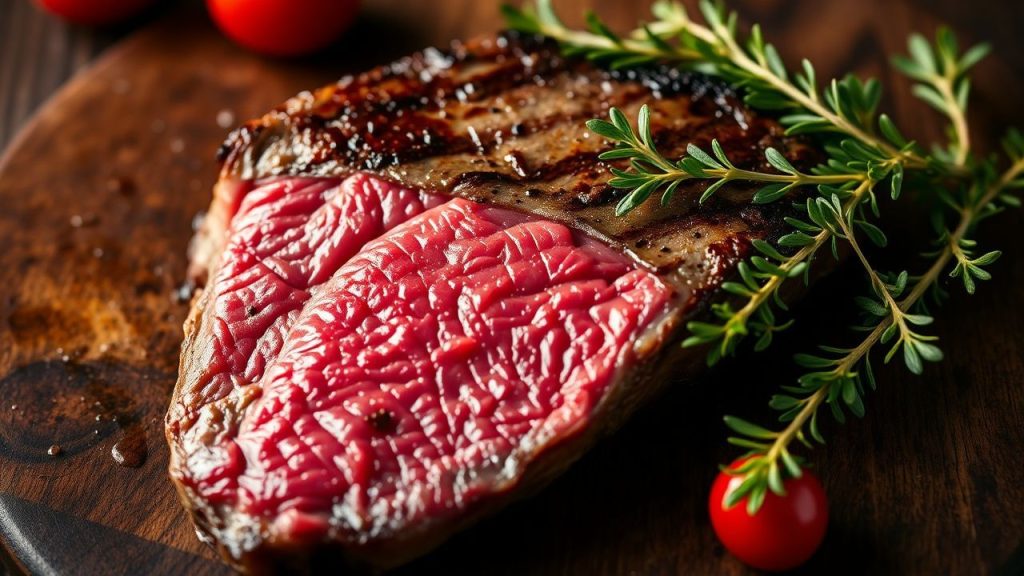
| Nutrient | Per Serving |
|---|---|
| Calories | 620 kcal |
| Protein | 58 g |
| Carbohydrates | 1 g |
| Fat | 45 g |
For a technical reference on meat structure and cooking techniques consult trusted culinary science texts and professional resources. Use measured temperature targets and verified methods to reproduce a reliably juicy steak.
FAQ
What happens inside a steak as it cooks to make it tender and juicy?
Heat denatures muscle proteins and changes texture while collagen softens toward gelatin and intramuscular fat melts. Those concurrent processes add moisture and tenderness.
Controlling the rates and endpoints of those processes yields a tender, juicy steak interior rather than a dry, overcooked center.
How does temperature affect steak tenderness?
Temperature determines protein contraction and collagen transformation. Lower internal targets reduce moisture loss and preserve the soft texture associated with a juicy steak.
Use thermometer readings—125°F rare, 135°F medium-rare, 145°F medium—and allow for a few degrees of carryover during resting for accurate results.
Why is resting essential after cooking?
Resting lets internal temperature equalize and juices redistribute. If you cut too early, juices run onto the plate instead of staying in the meat.
A rest of 8–12 minutes on a warm plate is typically sufficient for common steak sizes and preserves both moisture and texture for a juicy steak serving.
Does marbling change the cooking method?
Marbled cuts need the same fundamental methods but offer more margin for error. Rendered intramuscular fat bastes the meat internally and protects against dryness.
Lean cuts require closer temperature control and sometimes a finishing compound butter or sauce to enhance perceived juiciness.
Which tools and techniques give the most reliable results?
A heavy skillet, an instant-read thermometer, and a timer deliver the best consistency. Aim to sear quickly and finish at a controlled lower heat when needed.
Practice with the same cut and thickness to refine your timing and develop a repeatable approach for a reliably juicy steak outcome.
See also: Steak science