

Garlic Chicken: 7 Ultimate Brilliant Recipes to Make the Best-Ever Creamy Garlic Chicken with Parmesan & Fresh Herbs
Picture a bustling weeknight kitchen where the smell of garlic and warm butter draws everyone to the table. This delicious Garlic Chicken recipe solves dinner panic with restaurant-quality flavor and minimal fuss.
- Garlic Chicken: 7 Ultimate Brilliant Recipes to Make the Best-Ever Creamy Garlic Chicken with Parmesan & Fresh Herbs
- Introduction: The Story of Garlic Chicken
- Ingredients for Garlic Chicken (Metric & Imperial)
- Preparation Method for Garlic Chicken
- Searing Chicken for Creamy Garlic Chicken
- Making the Sauce for Garlic Chicken
- Finishing with Parmesan and Fresh Herbs for Garlic Chicken
- Nutritional Info for Garlic Chicken (Per Serving)
- Expert Pro-Tips for Garlic Chicken
- Restaurant-quality Garlic Chicken Plating and Presentation
- Make-Ahead and Storage Tips for Garlic Chicken
- Conclusion: Perfect Garlic Chicken Every Time
- FAQ
- Fast prep: 30–40 minutes from pan to plate for a satisfying family meal.
- High yield: Feeds 4; leftovers keep well when reheated gently.
- Chef techniques: Searing, deglazing, and emulsion create a silky sauce.
The recipe that follows delivers a balanced sauce of cream, Parmesan, and fresh herbs that complements—and never overpowers—the chicken. This version emphasizes texture and timing to extract the best flavor from simple ingredients.
Introduction: The Story of Garlic Chicken
Garlic Chicken is rooted in European and American home-cooking traditions where garlic and cream became a hallmark of comfort and depth. The technique—high-heat sear, pan sauce, and a finish with cheese and herbs—migrated through regional kitchens and remains a staple for cooks who want fast, impressive results.
With this approach, the goal is to create an emulsion between dairy and pan fond so the sauce clings to the meat. The recipe uses classic ratios and chef-tested timing to make a velvety sauce without separating.
Ingredients for Garlic Chicken (Metric & Imperial)
Measure precisely; small changes in dairy or acid can change texture. Both metric and imperial are listed so you can use a scale or common household tools and keep results consistent.
Use high-quality butter, freshly grated Parmesan, and fresh herbs for best results. Fresh garlic gives a bright punch; roasted garlic can be used for a milder, sweeter profile.
Ingredient List
- 4 boneless, skinless chicken breasts (about 1.0 kg / 2.2 lb)
- Salt and freshly ground black pepper, to taste
- 1/2 cup (60 g) all-purpose flour for light dredging (optional)
- 2 tbsp (30 g) unsalted butter
- 2 tbsp (30 ml) olive oil
- 6 garlic cloves, minced (about 24 g)
- 1 cup (240 ml) low-sodium chicken broth
- 1 cup (240 ml) heavy cream or double cream
- 3/4 cup (75 g) freshly grated Parmesan cheese
- 1 tbsp (15 ml) lemon juice, fresh
- 2 tbsp (8 g) fresh parsley, finely chopped
- 1 tbsp (3 g) fresh thyme leaves or 1 tsp dried thyme
- Pinch of red pepper flakes (optional)
Measuring and Substitutions for Garlic Chicken
Use heavy cream for a true restaurant texture; substitute half-and-half plus 1 tbsp (15 g) butter only if needed. For a gluten-free option, skip the flour dredge and sear directly—the sauce will still thicken with Parmesan and reduction.
Swap Parmesan for Pecorino Romano for a sharper bite, but reduce added salt accordingly. For dairy-free versions, use coconut cream and nutritional yeast—expect a different flavor profile but a similar mouthfeel.
Preparation Method for Garlic Chicken
Follow the sequence: prep, sear, deglaze, reduce, finish. Read all steps before you begin—mise en place speeds execution: have garlic minced, herbs chopped, and cheese grated before the pan hits high heat.
Searing Chicken for Creamy Garlic Chicken
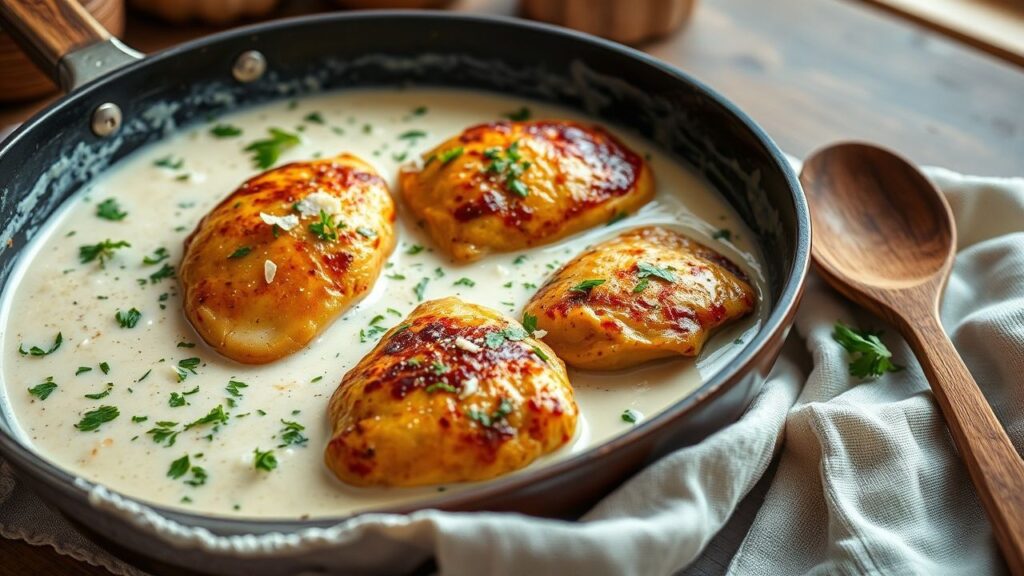
Pat chicken dry and season with salt and pepper; a light flour dredge adds color and slightly thickens the sauce. If breasts are uneven, pound them to an even thickness for uniform cooking. Heat a large skillet over medium-high, add oil plus half the butter, and sear for 3–4 minutes per side until golden. Finish cooking in the pan until internal temperature reaches 74°C (165°F), or transfer to a 180°C (350°F) oven to finish depending on thickness—use a probe thermometer for accuracy.
Transfer chicken to a plate and tent with foil to rest. Resting redistributes juices and helps prevent the sauce from breaking when you reintroduce the meat.
Making the Sauce for Garlic Chicken
Lower heat to medium and add remaining butter. Sauté minced garlic for 30–45 seconds until fragrant—do not brown. Add chicken broth to deglaze, scraping fond with a wooden spoon to dissolve those flavor compounds into the pan.
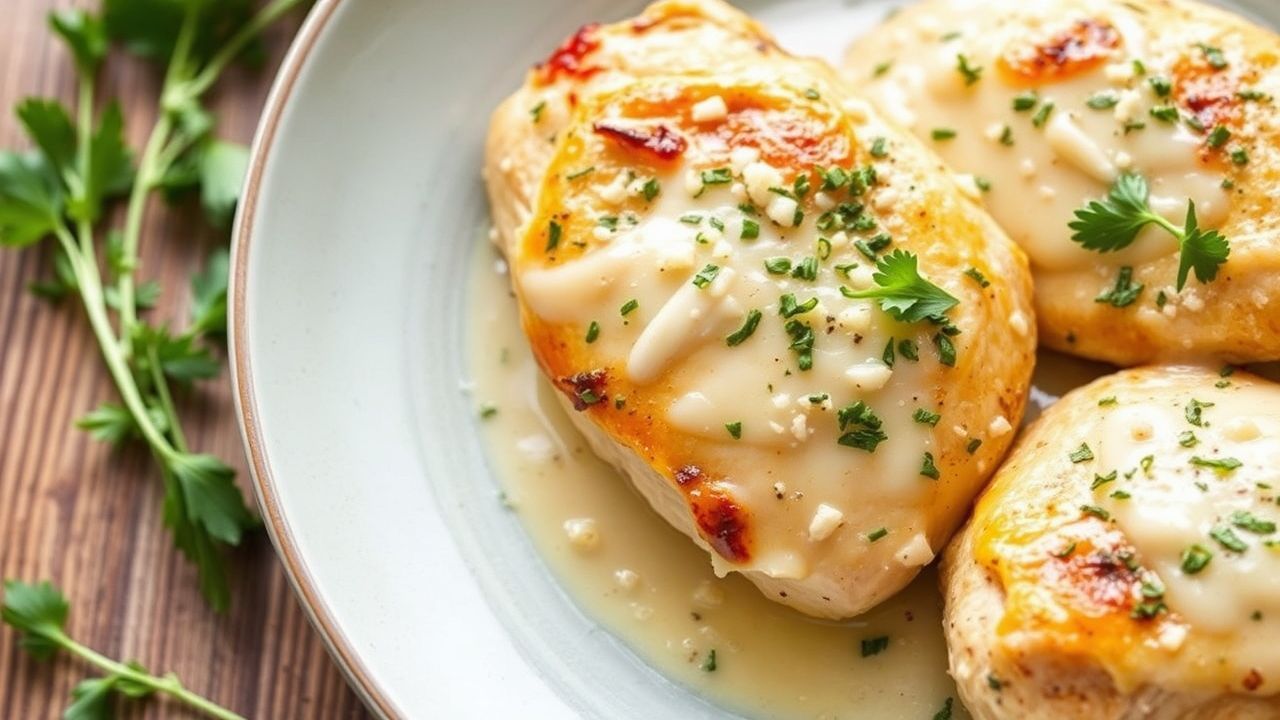
Stir in heavy cream and simmer gently for 3–5 minutes until slightly reduced. Remove the pan from heat and add Parmesan, whisking to create a glossy emulsion without graininess. Return chicken to the pan, spoon sauce over each piece, and simmer 1–2 minutes to marry flavors (keep the heat low to protect the emulsion).
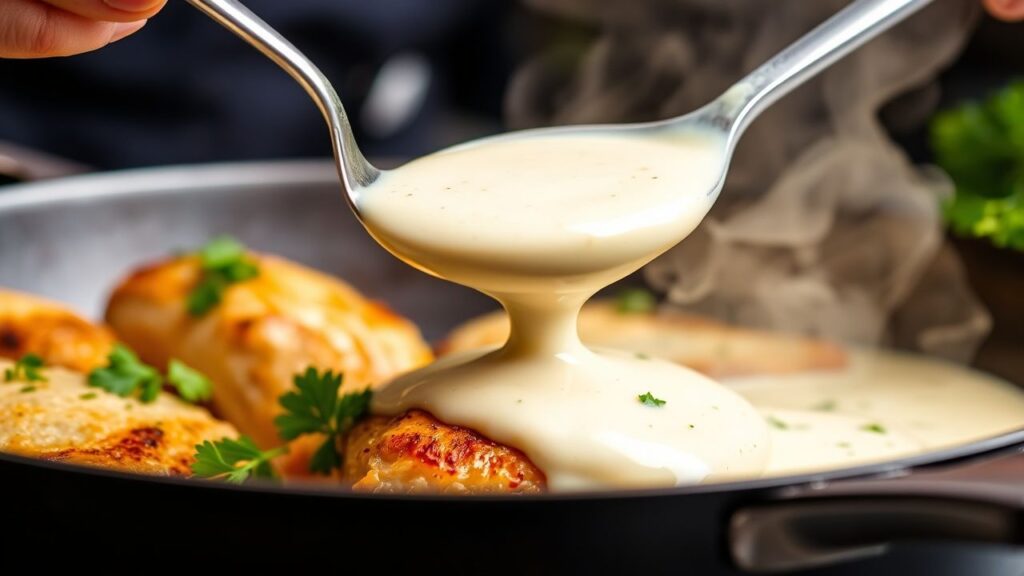
Finishing with Parmesan and Fresh Herbs for Garlic Chicken
Finish with lemon juice, fresh parsley, and thyme to brighten and cut the cream. Taste and adjust salt—Parmesan adds savory salt, so check after it has melted into the sauce.
For texture contrast, finish with a pinch of red pepper flakes or toasted pine nuts. Serve immediately over pasta, rice, or sautéed spinach to absorb the sauce.
Nutritional Info for Garlic Chicken (Per Serving)
The following values are estimates based on four servings. Use exact product labels for precision and to track calories, macros, or sodium for dietary needs. These figures assume the ingredients listed above (heavy cream and freshly grated Parmesan).
Per serving (approximate): Calories 620 kcal; Protein 45 g; Fat 38 g; Carbohydrates 8 g; Fiber 0.5 g; Sodium 620 mg. Adjust by using lighter cream or cutting butter to lower fat and calories.
Nutrient Breakdown and Variations for Garlic Chicken
Using half-and-half reduces total fat by about 25% and calories by roughly 10–15%. Removing the flour dredge cuts carbs slightly but doesn’t materially change flavor. For lower sodium, use low-sodium broth and unsalted butter.
Pregnant cooks should ensure chicken reaches 74°C/165°F and use pasteurized dairy. Elderly or immunocompromised diners benefit from the same internal temperature and careful handling to reduce risk.
When making Garlic Chicken for a dinner party, triple the sauce base and finish in batches to maintain temperature and texture. Have warm plates ready; cold plates rapidly thicken cream sauces and dull aroma.
Expert Pro-Tips for Garlic Chicken
These chef-proven adjustments will lift a home-cook result to a small-restaurant level. They focus on timing, texture, and balancing richness.
Small shifts—like finishing with lemon versus a splash of vinegar—dramatically alter perceived richness, so choose according to your guests and side dishes.
Restaurant-quality Garlic Chicken Plating and Presentation
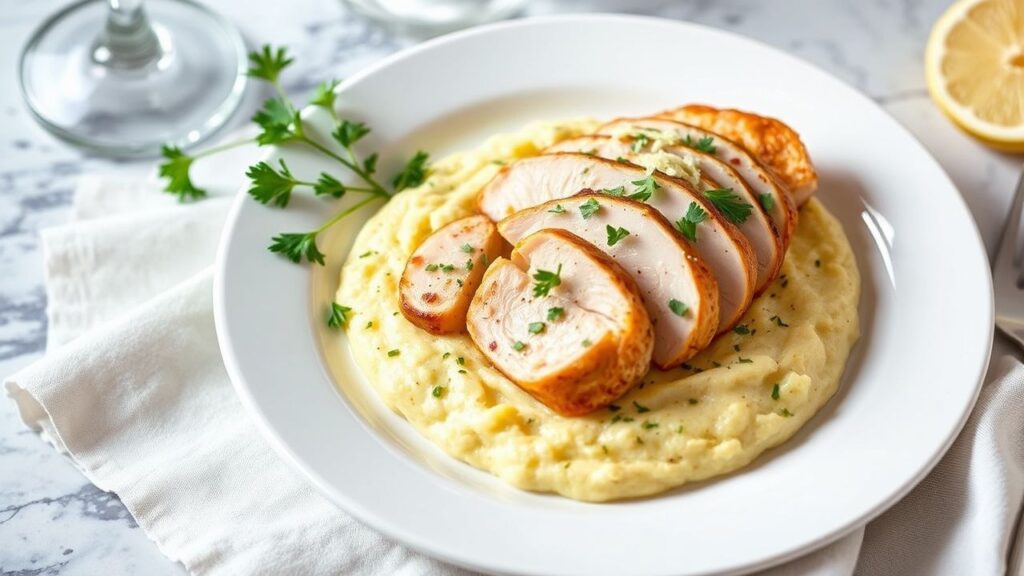
Slice chicken across the grain and nestle over a bed of buttered tagliatelle or creamy polenta to present sauce pools elegantly. Use a microplane for fresh Parmesan and scatter herbs just before serving to maintain color and aroma.
Warm plates to preserve temperature; drizzle a few drops of good olive oil and add a final grind of black pepper. A zest of lemon provides brightness and visual contrast.
Make-Ahead and Storage Tips for Garlic Chicken
Store leftover Garlic Chicken in an airtight container for up to 3 days. Reheat gently over low heat with a splash of chicken broth to revive sauce texture without burning the dairy.
For freezing, remove herbs and dairy before freezing the chicken; assemble sauce fresh when thawed for best results. This preserves the fresh-herb aroma and avoids grainy thawed cream.
Conclusion: Perfect Garlic Chicken Every Time
This Garlic Chicken formula focuses on reliable technique: aggressive sear, controlled reduction, and an emulsified finish. Follow the timing and temperature notes to prevent common faults like dry chicken or split sauce.
With simple ingredients and a few chef-level tricks, you can serve a dish that tastes like a restaurant staple. Use the pro-tips above to tailor richness and color for any occasion.
FAQ
How long should I cook Chicken for Garlic Chicken?
Cook time depends on thickness. For 1–1.5 inch breasts, sear 3–4 minutes per side and finish in the sauce or oven until internal temperature reaches 74°C/165°F. Rest 5 minutes before serving for juicier results.
Can I make Garlic Chicken with thighs instead of breasts?
Yes. Bone-in thighs need a longer sear and finish time; reduce heat after searing and simmer until the internal temperature reads 74°C/165°F. Thighs offer a more forgiving texture and richer flavor.
Why did my Garlic Chicken sauce separate and how do I fix it?
Separation happens when dairy hits high heat or Parmesan is added while the sauce is boiling. To rescue, whisk in a small knob of cold butter off the heat or add a splash of hot broth while whisking vigorously to re-emulsify. Prevention: keep the sauce at a gentle simmer and add cheese off heat.
Can I substitute grated Parmesan with pre-grated cheese?
Freshly grated Parmesan melts more smoothly and tastes brighter. Pre-grated cheeses contain anti-caking agents that can hinder emulsification, so use fresh for the best creamy texture.
Where can I learn more about garlic and its culinary uses?
For historical and botanical context about garlic, see the detailed entry on garlic history on Wikipedia. For inspiration on plating and variations, check culinary features on Savor Voyage and modern recipe adaptations at YumGlow for ideas on side pairings and seasonal herb swaps.
Want to explore variations? Try a lemon-garlic cream with capers for a bright Mediterranean twist, or roast garlic with smoked paprika for a deeper, smoky profile. Each small change keeps the core technique intact while offering new flavor directions.
See also: Garlic Chicken