
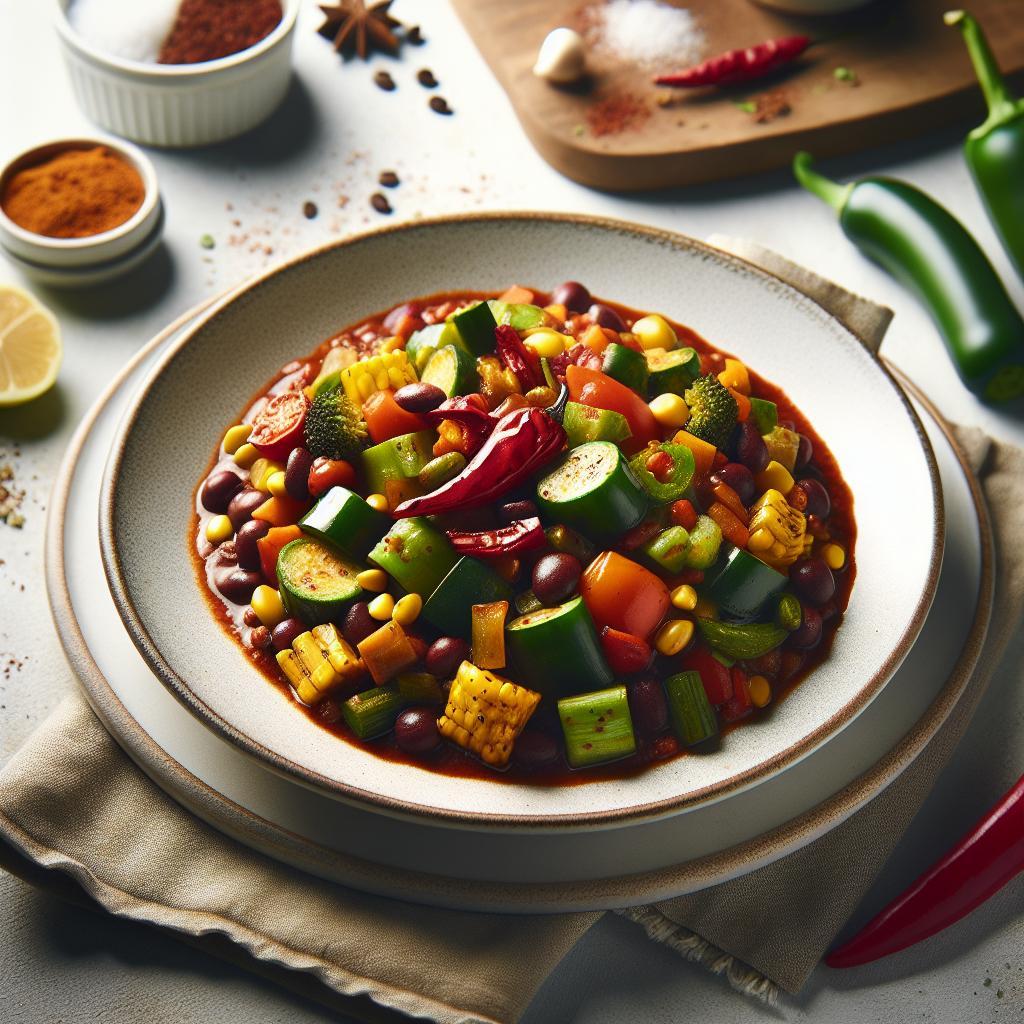

When the chill nudges you toward comfort food, a bowl of chili delivers warmth and satisfaction. This roasted vegetable chili elevates that comfort by turning caramelized vegetables into the recipe’s flavor engine.
- Roasting concentrates natural sugars and adds smoky depth.
- Layered spice technique unlocks aroma without masking vegetables.
- Make-ahead roasting improves texture and speeds weeknight assembly.
Heaping on Flavor with Roasted Veggies as the Star
Roasting transforms vegetables into concentrated, savory elements that anchor this vegetable chili. For example, caramelized sweet potatoes deliver body and natural sweetness that balance acid and heat.
Cut pieces uniformly and roast at high heat to promote Maillard browning. For a technical reference on the dry-heat method, consult roasting (cooking).
Colorful peppers add aroma and texture after a focused roast. When selecting varieties, choose firm bell types for reliable structure; see bell pepper for cultivar context.
Use even-sized cuts so sweet potato, pepper, and onion finish together. To explore sweet potato varieties and their cooking traits, see sweet potato.
Choosing the Perfect Spice Blend to Elevate Your Chili
Start with a core of smoked paprika and ground cumin to build warmth and an earthy base. For spice origin and flavor notes, refer to cumin.
Add supporting notes such as cayenne for heat and a small pinch of cinnamon for rounded depth. Balance is key: spices should amplify roasted vegetables rather than dominate them.
Whenever possible, toast whole spices and grind them before use. Toasting releases essential oils and increases aromatic intensity for a fresher spice bloom.
Bloom the spice blend in oil briefly when sautéing aromatics to extract oil-soluble flavor compounds. This step makes the spice profile lift across the entire pot.
Tips for Meal Prep and Serving Suggestions That Shine
Roast vegetables a day ahead to save time and to let flavors settle; chilled roasted vegetables integrate faster into simmering liquids. Store them airtight in the refrigerator to maintain texture.
When assembling the chili, sauté aromatics and bloom spices before adding beans and tomatoes to ensure even distribution of flavor. This sequence improves the overall balance of the finished vegetable chili.
Serve the chili with contrasting bases like brown rice or creamy polenta. For internal reference on pairing ideas, link to related recipes such as roasted vegetable chili recipe on the site.
Top bowls with fresh cilantro, toasted seeds, or a dollop of yogurt to add temperature and texture contrast. A wedge of lime brightens the smoky elements at service.
For children or spice-sensitive guests, reduce cayenne gradually. Start with half the listed amount, taste, then increase in small increments while simmering.
Prep, Timing, Yield and Difficulty
Prep: 20 minutes. Roasting: 30 minutes. Simmering: 25 minutes. These estimates assume a single sheet tray and a standard oven.
Plan for about 20 minutes active time, then rely on oven and simmering time to do the work. This workflow keeps weeknight cooking realistic and efficient for the vegetable chili.
Yield: Serves 6 hearty portions. Leftovers often concentrate in flavor and taste better the next day after chilling and reheating gently.
Difficulty: Medium. The techniques focus on roasting and spice layering rather than advanced culinary skills. Home cooks with basic knife and sauté experience will succeed.
Ingredients & Instructions
Ingredients
- 2 cups sweet potatoes, peeled and cubed
- 2 cups bell peppers (red and yellow), chopped
- 1 cup zucchini, sliced
- 1 large red onion, sliced
- 3 cloves garlic, minced
- 1 15-oz can black beans, drained and rinsed
- 1 15-oz can kidney beans, drained and rinsed
- 1 28-oz can crushed tomatoes
- 2 tbsp olive oil
- 1 tbsp smoked paprika
- 2 tsp ground cumin
- 1/2 tsp cayenne pepper (adjust to taste)
- 1/2 tsp ground cinnamon
- 1 tsp dried oregano
- 1/2 tsp coriander powder
- Salt and black pepper, to taste
- Fresh cilantro, for garnish
- Optional: Greek yogurt or cashew cream, for serving
- Optional: Toasted pumpkin seeds or crushed tortilla chips, for garnish
- Optional: Lime wedges, for serving
Use canned beans for speed and consistent texture. Alternatively, cook dried beans in advance for better control over firmness and mouthfeel.
If you prefer other legumes, lentils or chickpeas work well; they change texture but integrate with roasted vegetables. For legume family context, see legume.
Instructions
- Preheat your oven to 425°F (220°C). Toss the sweet potatoes, bell peppers, zucchini, and red onion in olive oil, salt, and pepper on a large baking sheet.
- Roast the vegetables until tender and slightly charred, about 25–30 minutes, flipping halfway through to ensure even browning.
- While veggies roast, mix the spices: smoked paprika, cumin, cayenne, cinnamon, oregano, coriander, and a pinch of salt and pepper in a small bowl.
- In a large pot over medium heat, sauté the garlic in 1 tablespoon olive oil until fragrant, about 1 minute, stirring constantly to avoid burning.
- Stir in the spice blend and cook for 30 seconds to bloom the flavors.
- Add the roasted vegetables, beans, and crushed tomatoes to the pot; stir to combine everything thoroughly.
- Bring to a gentle simmer, reduce heat to low, and let the chili cook uncovered for 20–25 minutes, stirring occasionally.
- Adjust the seasoning with salt, pepper, or extra spices as desired.
- Serve hot with your favorite accompaniments and garnishes for a visually appealing and flavorful meal.
Mash a portion of the beans while simmering for a naturally thicker texture if desired. This technique avoids added thickeners and improves mouthfeel.
For internal guidance on roasting technique and follow-up recipes, visit the site guide at roasting techniques.
Tips for Success
- Variation: Swap butternut squash for sweet potatoes or add diced mushrooms for extra umami.
- Substitution: Use canned chickpeas instead of beans for a different texture.
- Make-ahead: Roast ahead and refrigerate to speed weeknight assembly and deepen flavor.
- Texture tip: Mash some beans for creaminess while preserving visible roasted pieces for texture contrast.
Small adjustments to cooking order and roasting intensity deliver consistent results across ovens. Taste and adjust salt near the end of simmering to account for concentration of flavors.
Double the roasted vegetables if you plan to repurpose leftovers into tacos or grain bowls later in the week. Leftovers reheat well and stay versatile.
Serving Suggestions
- Serve over steamed brown rice or creamy polenta for a satisfying base.
- Top with Greek yogurt or cashew cream to mellow heat and add creaminess.
- Garnish with fresh cilantro and toasted pumpkin seeds for color and crunch.
- Accompany with warm whole-grain bread or cornbread for added comfort.
- A squeeze of fresh lime brightens the dish right before eating.
Presentation improves appetite and dwell time. Use contrasting textures and bright garnishes to make each bowl inviting and camera-ready for readers.
Repurpose leftover vegetable chili in tacos, over baked potatoes, or as a warm topping for grain bowls. These options encourage meal planning and reduce waste.
| Nutrient | Per Serving |
|---|---|
| Calories | 320 kcal |
| Protein | 12 g |
| Carbohydrates | 52 g |
| Fat | 7 g |
Nutrition estimates assume standard canned beans and no added sugar. Adjust values when you swap ingredients or change serving sizes for the vegetable chili.
Pairing vegetables with legumes raises protein and satiety while keeping the dish plant-forward and nutrient-dense.
FAQ
What makes this roasted vegetable chili different from traditional chili?
This recipe emphasizes roasted vegetables as the primary flavor source rather than relying on meat browning. Roasted vegs concentrate sugars and add smoky notes that mimic slow-cooked depth.
The result is a hearty, plant-forward bowl that keeps fat and added salt lower while delivering satisfying mouthfeel and complexity.
Which vegetables roast best for this chili?
Root vegetables like sweet potatoes and firmer summer vegetables like bell peppers hold up well to high heat. Cut pieces to similar sizes so they cook evenly and finish together.
Eggplant and mushrooms also work when you want more umami; rotate vegetables seasonally to keep the dish economical and vibrant.
Can I make this chili vegan or gluten-free?
Yes. Use vegetable broth and check canned goods for additives. The core recipe is naturally gluten-free and can be fully vegan by using plant-based toppings.
For allergy concerns, verify labels and avoid cross-contact in shared cookware to ensure safety for sensitive diners.
How do I store and reheat leftovers?
Cool quickly and store in airtight containers in the refrigerator for up to four days. Freeze portions for up to three months for prep convenience.
Reheat gently on the stove with a splash of stock or water to restore silkiness, stirring occasionally to heat evenly.
How can I increase protein without changing the flavor profile?
Add cooked lentils or an extra can of black beans to boost plant protein while keeping the roasted notes dominant. Both options integrate with minimal texture change.
Serve over quinoa for a complete protein grain base; this small swap enhances nutrition while preserving the dish’s familiar flavors.
See also: Vegetable chili
See also: vegetable chili