

Searing Oils: 9 Proven Oils for High-Heat Perfection explains how to select refined searing oils that resist high temperatures and produce a consistent, flavorful crust on proteins and vegetables.
- Prep and Cook Time for Searing Oils
- Yield and Protein Notes
- Difficulty Level
- Ingredients
- Instructions
- Why Searing Oils Matter
- Top Searing Oils for High Heat
- Refined Avocado Oil (Recommended)
- Grapeseed Oil
- Refined Peanut and Safflower Oils
- Refined Canola and Sunflower Oils
- Olive Oil Notes for Seared Dishes
- How to Sear with Searing Oils
- Tips and Cautions
- Serving Suggestions
- Further Reading and Resources
- FAQ
- Choose refined searing oils with smoke points above 400°F to prevent off-flavors.
- Neutral oils preserve the ingredient’s taste; nutty oils add subtle aroma.
- Prep and pan technique—dry proteins, preheat pans, and avoid overcrowding—matter as much as the oil.
- Finish smartly with butter or a delicate finishing oil after the sear for gloss and flavor.
Prep and Cook Time for Searing Oils
Preparation: 5 minutes. Cooking: 10–15 minutes. Use searing oils to reach and hold high surface temperatures for fast caramelization.
Total Time: 20 minutes. Plan mise en place so you add proteins to a fully preheated pan and keep tools ready for immediate basting and resting.
Yield and Protein Notes
This searing method serves 4 people when using four chicken thighs or equivalent proteins. Scale oil volume proportionally for larger batches.
Apply the same oil strategy to steaks, fish fillets, or tofu; adjust sear time to thickness and target internal temperature while using the same heat-stable searing oils.
Difficulty Level
Difficulty: Medium. You must manage pan temperature and timing precisely, but the method is repeatable with practice and the right searing oils.
Practice develops feel for crust formation. Choosing proper searing oils reduces variability and improves predictability across pans and stoves.
Ingredients
Below are recommended searing oils and a basic protein list. Use refined versions for searing and reserve delicate oils for finishing touches.
- 2 tablespoons refined avocado oil (high smoke point, neutral)
- 1 tablespoon grapeseed oil (light, clean flavor)
- 4 boneless skin-on chicken thighs or equivalent protein
- Salt and freshly ground black pepper, to taste
- 4 sprigs fresh thyme (optional)
- 1 clove garlic, smashed (optional)
- 1 tablespoon unsalted butter (for finishing)
Store refined searing oils in cool, dark places to slow oxidation and preserve their smoke-point reliability.
Instructions
Follow these steps to build a crisp, caramelized crust. Timing and minimal disturbance determine success when using searing oils.
- Preheat the skillet: heat a heavy-bottom pan over medium-high until it shimmers. Cast iron or stainless steel maintain steady heat for even browning.
- Dry the protein: pat pieces thoroughly. Surface moisture creates steam and prevents proper Maillard browning.
- Season: salt and pepper each side immediately before cooking to avoid drawing moisture out prematurely.
- Add oil: pour a thin layer of refined avocado or grapeseed oil and swirl to coat; avoid pooling so the oil makes direct contact for fast crust formation.
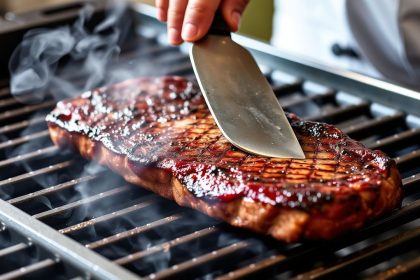
- Sear skin-side down: place protein away from you and resist moving it for 5–6 minutes to let stable contact produce a uniform crust.
- Flip and finish: turn pieces, add butter, thyme, and garlic if using, and baste for 3–5 minutes until the interior reaches safe temperatures.
- Rest: transfer to a warm plate and rest 5 minutes so juices redistribute before slicing and serving.
Why Searing Oils Matter
Choosing the right searing oils lets you reach target surface temperatures without the oil breaking down and creating acrid flavors. High smoke points help protect both taste and pan seasoning.
Moreover, searing oils influence heat transfer and the chemistry of browning. The Maillard reaction progresses cleanly when oils remain stable at searing temperatures.
Top Searing Oils for High Heat
Below are nine practical searing oils ranked for smoke point, flavor neutrality, and cost-effectiveness. Match oil choice to the protein and desired flavor lift.
Use refined variants for searing; keep delicate, unrefined oils for finishing to retain their aromatic profiles.
Refined Avocado Oil (Recommended)
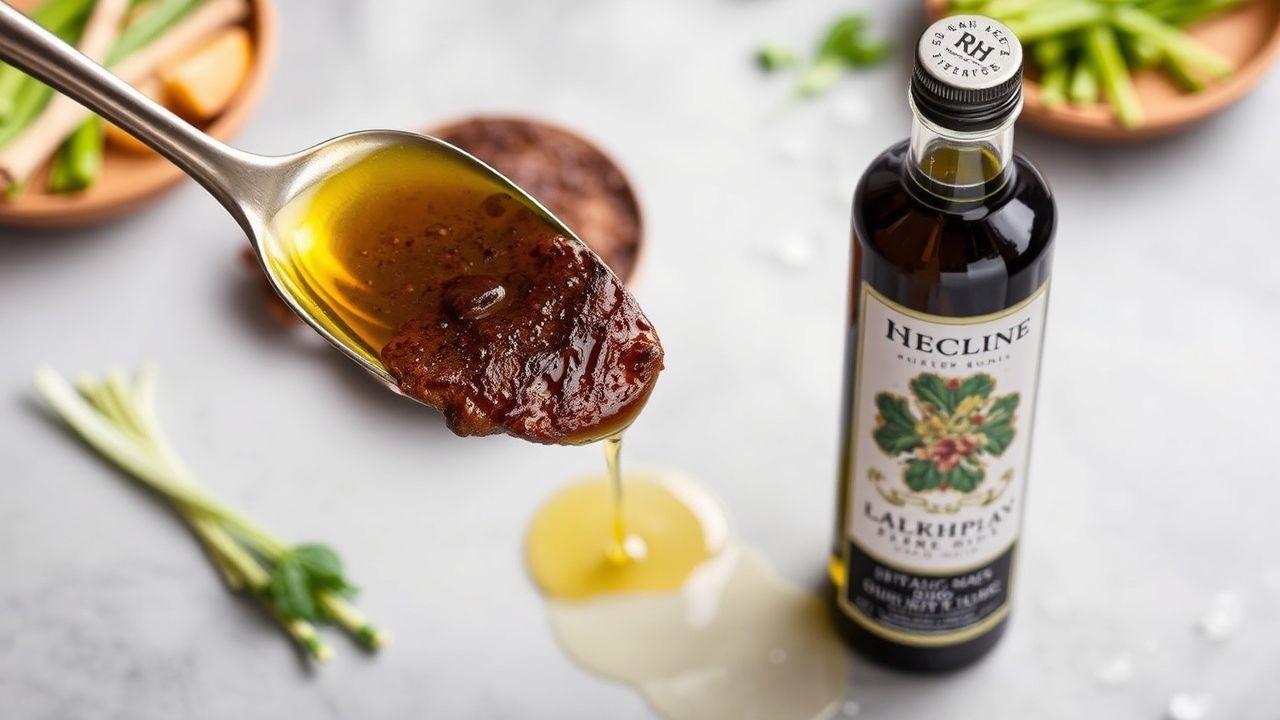
Refined avocado oil offers one of the highest smoke points and a neutral, slightly buttery profile that suits long sears and pan roasting.
It performs predictably in a hot pan and pairs with robust proteins. For background on production, see avocado oil.
Grapeseed Oil
Grapeseed oil provides a light mouthfeel and respectable smoke point. Chefs favor it for quick, high-heat contact browning when a neutral taste is required.
Its clean flavor keeps pan sauces bright and avoids masking subtle ingredients during finishing.
Refined Peanut and Safflower Oils
Refined peanut oil adds a restrained nutty character while still tolerating intense heat, making it a solid option for pan-frying and wok work.
Refined safflower oil remains neutral and cost-effective for high-volume searing. Choose refined forms; unrefined variants smoke at lower temperatures.
Refined Canola and Sunflower Oils
High-oleic canola and refined sunflower oils resist heat and cost less for frequent use. They offer neutral flavors and steady heat transfer for consistent crusts.
When purchasing, look for labels indicating refined or high-oleic formulations to ensure higher smoke points during searing.
Olive Oil Notes for Seared Dishes
Extra virgin olive oil has a lower smoke point and a pronounced flavor, so reserve it for finishing or medium-heat cooking rather than high-temperature searing.
Light or refined olive oil tolerates higher heat and can work for searing. See more on olive oil varieties and processing.
How to Sear with Searing Oils
Three fundamentals control a perfect sear: heat, dryness, and spacing. Master these and the searing oils will complement the technique instead of compensating for errors.
Use a thermometer to confirm surface and internal temperatures. Consistency comes from measured heat management and deliberate oil choice.
Heat: Get the Pan Ready
Start with a hot pan and add oil only once the surface reaches temperature. A properly heated pan requires less oil and minimizes sticking.
Test with a few drops of water; they should dance. If oil smokes immediately, reduce the heat to protect the searing oil’s integrity.
Dry: Remove Surface Moisture
Pat proteins dry; a dry surface browns faster and reduces the period oil spends overheating while moisture evaporates.
Season immediately before searing to avoid drawing moisture out during resting and keep crust formation efficient.
Space: Avoid Overcrowding
Leave room between pieces so the pan temperature recovers after each addition. Overcrowding causes steaming and prevents caramelization.
Work in batches and keep finished items warm in a low oven while completing the rest to preserve texture and crispness.
Tips and Cautions
Smoke point practice: choose searing oils with smoke points above your working temperature, typically above 400°F for aggressive searing.
Refined searing oils resist breakdown better than unrefined oils. Store all oils away from heat and light to slow oxidation and preserve performance.
Use a thin film of oil so the food, not the oil, contacts the pan directly. Excess oil pools and reduces the speed at which the crust forms.
Always keep a lid or splatter screen on hand and never leave an overheated pan unattended. A thermometer reduces guesswork and improves safety during prolonged searing tasks.
Serving Suggestions
Pair seared proteins with bright vegetables and acid to cut through richness. The caramelized crust benefits from contrasts such as lemon, pickled shallots, or herb chimichurri.
Finish with a small pat of butter or a drizzle of delicate finishing oil to add gloss and flavor without dulling the crust formed by your searing oils.
| Nutrient | Per Serving |
|---|---|
| Calories | 320 |
| Protein | 28g |
| Carbohydrates | 0g |
| Fat | 22g |
Further Reading and Resources
Understand how oils behave and why refined searing oils perform better by reviewing technical resources on cooking fats and heat reactions. For general background, see cooking oil.
For technique references and professional tips, consult trusted guides on searing and pan care. For additional study, review the fundamentals of frying processes at frying.
See also: searing oils and searing technique.
FAQ
Why does oil choice matter when searing?
Oil selection affects heat tolerance and flavor transfer. Using proper searing oils lets you reach high surface temperatures without creating burnt flavors or degrading fats.
Stable oils maintain heat transfer efficiency and help form an even crust across the protein surface.
What exactly is a smoke point and why is it crucial?
The smoke point denotes when an oil visibly smokes and begins chemical breakdown. Past that point, oils produce off-flavors and potentially undesirable compounds.
For searing, select oils whose smoke point exceeds the temperature you plan to use, typically above 400°F for robust searing work.
Can blending oils improve high-heat performance?
Blending a high-smoke-point refined oil with a small amount of a flavorful lower-smoke oil can balance heat tolerance and aroma. Add the lower-smoke oil after the main sear to keep its flavor intact.
Keep blends minimal to avoid dropping the effective smoke point of the mix and monitor for early signs of breakdown.
Is extra virgin olive oil suitable for searing?
Extra virgin olive oil generally has a lower smoke point and strong flavor; it suits medium heat and finishing. For high-heat searing, prefer refined or light olive oils if you want olive character without rapid smoking.
Consider flavor impact: robust extra virgin olive oil can mask delicate proteins when used at intense searing temperatures.
How do I tell if an oil is breaking down during cooking?
Watch for continuous smoke, acrid or sour odors, or sticky residues. Those signs indicate oxidation and breakdown; lower the heat or replace the oil immediately.
Using a thermometer and staying present while searing prevents ruined flavor and reduces safety risks when working at high temperatures.
See also: searing oils