

Steaming Veggies: Achieving Perfectly Crisp-Tender Veggies
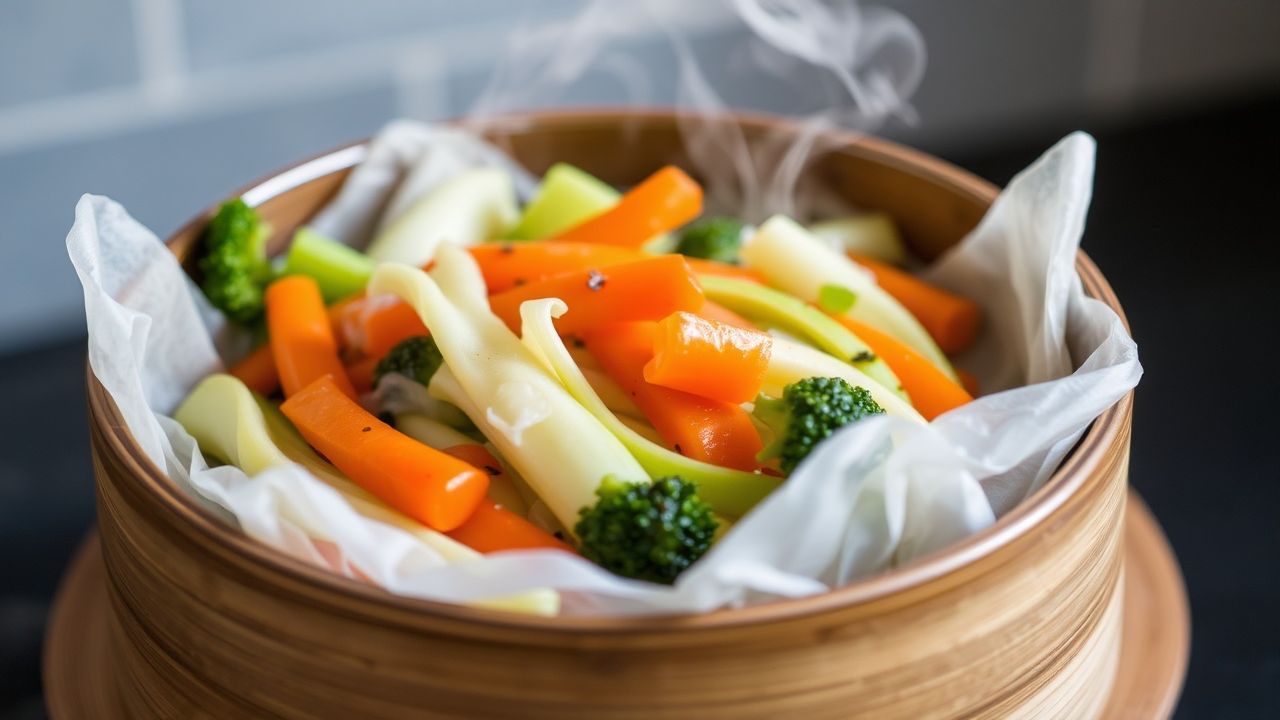
Steaming veggies locks in bright color and a crisp-tender texture when you control cut size, timing, and finish. Use consistent pieces, preheated steam, and quick finishing techniques to avoid limp or soggy results.
- Steaming Veggies: Achieving Perfectly Crisp-Tender Veggies
- Why Steam? Science and Benefits of Steaming Veggies
- Ingredients and Yield
- Prep & Timing: Cut, Group, and Schedule for Steaming Veggies
- Step-by-Step Instructions for Steaming Veggies
- Chef’s Notes: Practical Tips for Consistency with Steaming Veggies
- Flavor Finishes and Serving Steaming Veggies
- Advanced Techniques and Alternatives
- Nutrition Snapshot for Steaming Veggies
- FAQ
- Q: Why choose steaming veggies over boiling or roasting?
- Q: How do I prevent soggy vegetables when steaming veggies?
- Q: Can I steam ahead for meal prep?
- Q: Which vegetables should I steam separately?
- Q: What small tweaks make the biggest flavor difference when steaming veggies?
- Final Notes on Steaming Veggies
- Short steam times preserve color and nutrients.
- Uniform cuts ensure even cooking and predictable doneness.
- Finish hot with fat and acid for glossy flavor and balance.
Why Steam? Science and Benefits of Steaming Veggies
Steaming heats vegetables with moist, rising vapor so they cook without direct water immersion. This reduces nutrient leaching and preserves water-soluble vitamins while keeping texture intact.
Steam transfers heat gently and evenly, which helps maintain cell structure and color. For technical context, see steaming (cooking) and how it differs from boiling and roasting.
Ingredients and Yield
This mix highlights common choices that reach crisp-tender at about the same rate when cut properly. Use broccoli, baby carrots, sugar snap peas, and zucchini to practice timing and sequence.
- 1 cup broccoli florets, cut uniform
- 1 cup baby carrots, peeled
- 1 cup sugar snap peas, trimmed
- 1 medium zucchini, sliced 1/2-inch rounds
- 1 tsp sea salt, 2 tbsp cold unsalted butter, 1 tbsp lemon juice
- 1 tbsp fresh parsley, optional pepper
Yield: Serves 4 as a side. Prep: 10 minutes. Cook: 8–12 minutes depending on density.
Prep & Timing: Cut, Group, and Schedule for Steaming Veggies
Cut vegetables to uniform size so heat penetrates evenly during steaming. Group pieces by density: roots and dense stems first, then florets, and finally tender leaves or shoots.
Use this general timing as a baseline: roots (10–12 minutes), florets (6–8 minutes), and tender greens (2–4 minutes). Adjust by a minute or two based on equipment and personal preference.
Choosing Vegetables
Pick fresh, firm produce for predictable results; avoid limp or bruised pieces that steam unevenly. Dense vegetables like carrots and large florets need longer to reach center temperature than thin slices.
For reference on common produce categories, consult the encyclopedia entry for vegetable. Root crops such as carrot respond differently to steam than airy florets like broccoli.
Step-by-Step Instructions for Steaming Veggies
Use a steamer basket, bamboo steamer, or metal insert above 1–2 inches of boiling water. Bring the water to a steady simmer before adding vegetables so steam is vigorous on contact.
Layer dense items first and add quick-cook pieces later so everything finishes at the same moment. Work quickly when you remove the lid to avoid carryover overcooking.
- Prep veg: Rinse and cut uniform pieces to promote even cooking.
- Boil water: Add 1–2 inches to the pot and heat until simmering, not rolling.
- First batch: Add dense items like carrots and large broccoli florets and steam 4–5 minutes first.
- Add quick-cook veg: Layer in zucchini and snap peas; continue steaming 3–5 minutes until crisp-tender.
- Check doneness: A fork should meet slight resistance; avoid soft, collapsing texture.
- Finish: Immediately transfer to a warm bowl, toss with cold butter and lemon to melt the fat and lock flavor.
Chef’s Notes: Practical Tips for Consistency with Steaming Veggies
Uniform cuts equal uniform cook time, so spend an extra two minutes sizing pieces. Use a kitchen timer and test with a fork rather than relying solely on clock time.
Layer denser vegetables first and add quick-cook items partway through the session. This saves energy and preserves the snap of delicate pieces.
For rapid cooling when preparing salads, plunge steamed items into an ice bath for 30–60 seconds. Shocking stops carryover cooking and preserves bright pigments.
When you need an aromatic lift, add a lemon slice or herb sprigs to the water beneath the basket. Aromatics perfume the steam without wetting the vegetable surface.
Flavor Finishes and Serving Steaming Veggies
Finish steamed vegetables with a small knob of cold butter and a splash of acid such as lemon juice or vinegar. The cold fat melts and creates a glossy coating that carries flavor.
Garnish with toasted seeds, chopped nuts, or fresh herbs for texture and visual contrast. Add flaky salt just before serving to preserve surface crunch.
Advanced Techniques and Alternatives
Combine steaming with blanching to lock color for salads: steam briefly, then shock in ice water. This two-step process helps produce stable, vibrant greens for cold dishes; see blanching (cooking) for background on the method.
Bamboo steamers stack for multi-layer cooking, which suits batch work. Metal baskets fit inside pots and heat quickly; electric steamers give set-and-forget control for busy kitchens.
Tool notes
Choose equipment based on batch size and storage. If you steam often, an electric steamer improves consistency and frees up the stove for other tasks.
Bamboo steamers impart a mild aroma and are ideal for quick-sided dishes, while metal inserts heat fast and are durable for high-use environments. Match the tool to your workflow and cleaning preferences.
Nutrition Snapshot for Steaming Veggies
Steaming minimizes nutrient loss compared with boiling because vegetables avoid direct water contact. Short cook times preserve water-soluble vitamins like vitamin C and protect fiber structure.
A typical side of mixed steamed vegetables is low in calories but provides micronutrients and fiber. For context on vegetable categories and nutrition, reference the vegetable overview.
| Nutrient | Per Serving |
|---|---|
| Calories | 85 kcal |
| Protein | 3 g |
| Carbohydrates | 15 g |
| Fat | 3 g |
FAQ
Q: Why choose steaming veggies over boiling or roasting?
Steaming cooks with moist heat and limits nutrient leaching into water, so vitamin retention is higher. It also keeps vegetables tender without creating a crust or dehydrating surfaces.
For delicate greens and quick-cook items, steaming is gentler and often faster than roasting. The result is a fresher flavor and preserved texture.
Q: How do I prevent soggy vegetables when steaming veggies?
Preheat the steamer water so steam begins immediately upon adding vegetables. Avoid packing pieces tightly and remove vegetables the moment they reach desired firmness.
Drain pooled water and serve immediately, or shock in ice water for salads to stop residual steam from softening surfaces.
Q: Can I steam ahead for meal prep?
Yes. Steam until just under done, shock in ice water, and refrigerate in airtight containers. Reheat briefly by steaming or sautéing to refresh texture.
Label containers and use within 3–4 days to maintain quality and food safety. Proper cooling and storage slow bacterial growth and preserve texture.
Q: Which vegetables should I steam separately?
Group by density: dense roots and large florets benefit from separate steaming or staggered starts to avoid overcooking softer pieces. Tender greens and thin stalks should be added last or steamed separately for a few minutes.
Separating improves precision and prevents softer items from collapsing while denser pieces finish.
Q: What small tweaks make the biggest flavor difference when steaming veggies?
Finish with an acid and a small amount of fat: lemon juice plus butter or olive oil brightens flavor and improves mouthfeel. Add flaky salt just before serving to preserve crunch.
Also try toasting seeds or nuts and sprinkling them on top for texture contrast and deeper flavor. Simple toppings can transform steamed vegetables into a standout side.
Final Notes on Steaming Veggies
Consistent crisp-tender results come from uniform cuts, accurate timing, and immediate finishing. Practice with small batches to dial in your preferred point between raw snap and softness.
For further reading on steam technique and vegetable handling, consult technical references on steaming (cooking) and on individual produce pages such as broccoli and carrot. Happy steaming and enjoy the texture and flavor that precise method brings to your plate.
See also: steaming veggies