
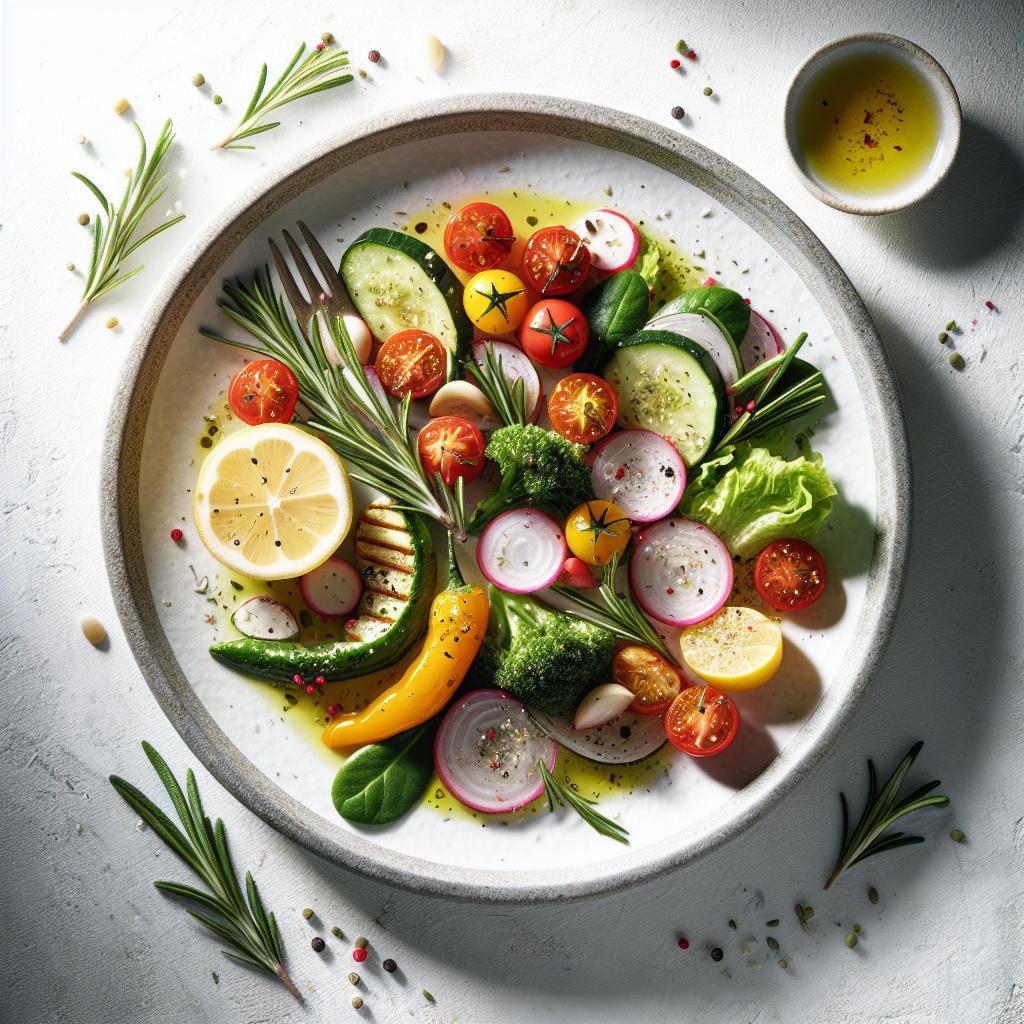

Beneath rosemary’s fragrant sprigs lie distinct piney, woody, and slightly minty notes that chefs and scientists study closely. This herb combines identifiable chemical components with growing conditions to produce predictable aromatic outcomes. Readers will find practical cooking steps and a concise explanation of the chemistry that shapes rosemary’s sensory profile.
- Origin, Terroir, and Rosemary’s Botanical Identity
- Key Aromatic Compounds That Drive Flavor
- Prep and Cook Time
- Yield
- Difficulty Level
- Ingredients
- Instructions
- Chef’s Notes
- Serving Suggestions
- Nutrition Snapshot
- Practical Science Notes
- FAQ
- What compound gives rosemary its piney scent?
- How should I use fresh versus dried rosemary?
- When should I add rosemary during cooking?
- Can I isolate rosemary aroma in a lab?
- How do storage and climate affect flavor?
- In Summary
- Key takeaway: Rosemary’s aroma results from a blend of volatile oils and terpenes.
- Practical tip: Light bruising and moderate heat release more aroma while preserving freshness.
- Storage note: Fresh sprigs last longer when refrigerated in water; dried rosemary concentrates flavor.
Origin, Terroir, and Rosemary’s Botanical Identity
Rosemary originated in the Mediterranean and shows clear links to that region’s climate and soils. Local conditions concentrate certain volatile oils, intensifying particular aroma notes.
Botanically, rosemary appears in authoritative plant references under the common name rosemary. Studying its habitat clarifies why rosemary from dry, sunny sites smells more resinous than those from cooler, wetter gardens.
Key Aromatic Compounds That Drive Flavor
Rosemary’s heady scent comes from a set of volatile molecules rather than one dominant chemical. Those molecules include terpenes and oxygenated compounds that each contribute recognizably different notes.
When chefs and perfumers analyze rosemary, they focus on relative ratios of these compounds because balance, not presence alone, defines the final aroma. For a technical overview of volatile oils, consult the entry on essential oils.
Cineole (Eucalyptol)
Cineole gives a cool, slightly minty and camphorous freshness that many associate with rosemary’s top notes. It vaporizes readily, so it often dominates aroma when rosemary is fresh or when a dish first reaches the table.
Because cineole is highly volatile, quick methods—finishing oils or garnishes—preserve its presence. Understanding volatility helps cooks decide when to add rosemary during preparation.
Camphor
Camphor contributes the herb’s sharper, medicinal edge and adds perceived warmth to savory preparations. Its sensory effect balances cineole and deepens the overall profile when present in modest amounts.
Camphor is a recognizable terpene; for chemical context, see camphor. Its concentration responds to heat and storage, so chefs tweak technique to either highlight or soften this note.
Alpha-pinene and Other Terpenes
Alpha-pinene supplies pine-like, resinous aroma and supports the woody backbone of rosemary’s scent. A family of terpenes interacts to create mouthfeel and retronasal complexity when you taste a dish.
Terpenes form a broad class of compounds important across herbs; the general chemistry is summarized in the terpene reference. Their combined aroma depends on relative abundance and cooking transformations.
Prep and Cook Time
Understanding timing helps preserve volatile aromatics while extracting deeper flavor. Short, high-heat roasting releases oils quickly, while longer slow cooking can mellow sharp top notes into richer, earthy components.
Adjust the listed times to suit your oven and ingredient size. When roasting small potatoes or browning meat, monitor doneness to protect rosemary’s most desirable compounds.
- Preparation: 10 minutes
- Cooking: 15 minutes
- Total Time: 25 minutes
Yield
The recipe framework below serves a standard family portion size and scales easily. Use weight or piece counts for precise adjustments when cooking for larger groups.
Scaling rosemary is more about proportion than exact grams; too much intensifies camphor and can overshadow subtler flavors. Taste as you go when increasing batch size.
- Serves: 4 generous portions
Difficulty Level
This preparation sits at an accessible skill level suitable for home cooks and professional line cooks. Techniques focus on simple roasting and a quick herb marinade to maximize aroma.
The method emphasizes practical steps—light bruising, proper oil ratios, and measured heat—to consistently extract rosemary’s desirable flavor without overcooking.
Ingredients
Use fresh, bright sprigs when available; dried rosemary will concentrate flavor and require reduced quantities. Olive oil acts as an efficient solvent for many essential oils and helps carry aroma through the dish.
Keep seasonings simple to let rosemary’s compounds express themselves clearly. The ingredient list that follows provides a reliable starting point for variation.
- 3 tablespoons fresh rosemary leaves, finely chopped
- 2 tablespoons olive oil, extra virgin
- 1 garlic clove, minced
- 1 teaspoon lemon zest, freshly grated
- 1 teaspoon honey, raw or organic
- Salt and freshly ground black pepper, to taste
- 2 cups baby potatoes, halved
- 1/2 cup low-sodium vegetable broth
Instructions
Follow ordered steps to coordinate oil extraction with heat application. Short, active steps reduce the chance of losing delicate top notes while unlocking deeper aromatic compounds.
Work confidently: prepare ingredients first, then move quickly through the high-heat stages so the volatile oils do not dissipate unnecessarily.
- Preheat the oven to 400°F (200°C). Place halved baby potatoes in a roasting pan in a single layer.
- In a small bowl, whisk together olive oil, fresh rosemary, garlic, lemon zest, and honey. Season lightly with salt and pepper.
- Coat the potatoes with the rosemary marinade, tossing to distribute the oils and aromatics evenly across the surface.
- Pour vegetable broth into the pan to maintain moisture and to help steam the potatoes during the first roasting phase.
- Roast for 15–20 minutes, turning once, until potatoes are golden and tender; heat will mobilize essential oils and create a crisp exterior.
- Remove from oven and rest 5 minutes before serving to let volatile compounds settle and the aroma marry with the potatoes.
Chef’s Notes
Small technique changes create distinct sensory outcomes. Lightly bruising leaves releases more oil; adding rosemary late keeps fresher top notes; adding early yields a rounded, mellow herb character.
Measure by taste. If rosemary tastes too sharp, shorten the contact time or reduce quantity instead of masking it with other strong flavors.
- Variation: Replace potatoes with chicken thighs; adjust baking time and ensure internal temperature reaches safe levels.
- Substitution: If using dried rosemary, reduce to about 1 tablespoon due to concentrated flavor.
- Make-ahead: Prepare the rosemary marinade up to 24 hours ahead; store refrigerated and bring to room temperature before use.
Preserve fresh sprigs by standing them in a glass of water and refrigerating loosely covered; this extends shelf life and maintains aromatic freshness. Dried rosemary stores longer but delivers a different, more concentrated character.
Serving Suggestions
Serve rosemary-roasted potatoes with grilled lamb, roast chicken, or as part of a composed vegetable plate. A final drizzle of high-quality olive oil and a lemon wedge brightens the palate and complements rosemary’s piney notes.
Garnish with a small fresh sprig for visual appeal and an extra aromatic burst right before serving. Simple finishing techniques heighten perceived flavor without adding complexity.
Nutrition Snapshot
This preparation offers moderate calories and balanced macronutrients suitable as a side dish. Use low-sodium broth and minimal added fats to control overall calorie and sodium levels.
The table below provides a per-serving estimate for portion planning. Adjust portion sizes to match dietary needs.
| Nutrient | Per Serving |
|---|---|
| Calories | 180 kcal |
| Protein | 3 g |
| Carbohydrates | 25 g |
| Fat | 7 g |
Practical Science Notes
Cooking alters volatile profiles through evaporation, thermal breakdown, and secondary reactions that form new aroma-active molecules. This is why rosemary tastes different when raw, briefly roasted, or slowly braised.
For detailed botanical and chemical context consult sources on essential oils and plant ecology such as the essential oil article and the Mediterranean Basin overview. These references clarify how environment and processing shape herb aroma.
FAQ
The following questions address common practical and chemical concerns when working with rosemary. Answers draw on culinary experience and established chemical principles.
Use these as quick references when you plan recipes or adjust technique to emphasize specific aromatic characteristics.
What compound gives rosemary its piney scent?
Alpha-pinene and related terpenes supply the pine-like, resinous backbone. Their presence gives rosemary a stable woody note that forms the herb’s core aroma.
How should I use fresh versus dried rosemary?
Fresh rosemary provides brighter top notes; add it later in cooking to preserve volatile oils. Dried rosemary is more concentrated and benefits from longer cooking to rehydrate and release flavor.
When should I add rosemary during cooking?
Add early for depth and a rounded profile; add late for bright, immediate aroma. Use a small final sprinkle for aromatic impact at service.
Can I isolate rosemary aroma in a lab?
Chemists can isolate major constituents like cineole and camphor, but replicating the full sensory signature proves difficult because the aroma depends on many minor compounds and their ratios.
How do storage and climate affect flavor?
Plants from drier, sunnier sites tend to yield stronger, more resinous oils. Postharvest storage also influences volatile retention; cool, humid conditions slow loss, while heat accelerates it.
In Summary
Rosemary’s essence arises from a balanced mixture of volatile oils, terpenes, and environmental factors that together define its recognizable profile. Practical cooking techniques let chefs emphasize fresh top notes or develop deeper, mellow flavors.
Applying these principles improves consistency and creativity in the kitchen. Use measured technique—timing, bruising, and temperature control—to unlock rosemary’s aromatic potential reliably.

See also: rosemary