
By using this site, you agree to the Privacy Policy and Terms of Use.
Accept
CookOrBitCookOrBitCookOrBit
  • Home
  • About Us
  • Ingredient Science
    • Flavor & Aroma
    • Protein Chemistry
    • Sugar & Starch
    • Fats & Emulsions
  • Cooking Techniques
    • Searing & Grilling
    • Baking & Roasting
    • Boiling & Steaming
    • Low & Slow
  • Kitchen Experiments
    • DIY Ferments
    • Flavor Tests
    • Gadget Testing
    • Molecular Gastronomy
  • Food Myths
    • Searing Myth
    • 5-Second Rule
    • MSG Myths
    • Microwave Myths
  • Tools
  • More
    • Extra Picks
    • Quick & Easy
      • Breakfast Ideas
      • Desserts
      • Snacks
      • Soups
    • Global Flavors
      • Asian Street Eats
      • Latin Comforts
      • Mexican Flavors
      • Modern Mediterranean
CookOrBitCookOrBit
  • Home
  • About Us
  • Ingredient Science
  • Cooking Techniques
  • Kitchen Experiments
  • Food Myths
  • Tools
  • More
Search
  • Home
  • About Us
  • Ingredient Science
    • Flavor & Aroma
    • Protein Chemistry
    • Sugar & Starch
    • Fats & Emulsions
  • Cooking Techniques
    • Searing & Grilling
    • Baking & Roasting
    • Boiling & Steaming
    • Low & Slow
  • Kitchen Experiments
    • DIY Ferments
    • Flavor Tests
    • Gadget Testing
    • Molecular Gastronomy
  • Food Myths
    • Searing Myth
    • 5-Second Rule
    • MSG Myths
    • Microwave Myths
  • Tools
  • More
    • Extra Picks
    • Quick & Easy
    • Global Flavors
Follow US
  • Advertising Policy: 10 Practical Rules for Safe, Compliant Ads
  • Contact Us
  • Cookie Policy: Clear Guide for Site Owners
  • Copyright Notice Guide: 7 Essential Rules for Website Owners
  • Disclaimer
  • Privacy Policy
  • Terms of Service
By Fimaw.com
Mastering Meringue: Secrets to a Perfectly Stable Whip
CookOrBit > Blog > Ingredient Science > Protein Chemistry > Mastering Meringue: 10 Pro Secrets for a Perfectly Stable Whip
Protein Chemistry

Mastering Meringue: 10 Pro Secrets for a Perfectly Stable Whip

William J. Kroll
By William J. Kroll
Published: January 12, 2026
Share
SHARE

In the delicate world of desserts, few creations combine elegance and technical challenge like meringue. That glossy cloud of peaks and silken folds looks simple, yet it depends on precise chemistry and technique to become a reliably stable whip.

Contents
  • Prep and Cook Time
  • Yield and Difficulty
  • Ingredients
  • Instructions
  • Tips for Success
  • Serving Suggestions
  • Nutrition
  • Advanced Techniques and Variations
  • Context and Science
  • FAQ
    • What makes meringue fail to whip properly?
    • How long should I whip the egg whites?
    • Why add cream of tartar or vinegar?
    • Can I make meringues on humid days?
    • How do I fix grainy or weepy meringue?
  • Key action: use room-temperature, grease-free equipment for maximum volume.
  • Stability hack: add acid (cream of tartar) and add sugar slowly to lock structure.
  • Finish: dry low for crisp shells or quick bake for pie toppings.

Mastering meringue stability requires understanding how egg proteins, sugar, and air interact. With clear technique and a few controlled variables you can create glossy peaks that hold through transport and serving.

Prep and Cook Time

Preparation: 15 minutes. Plan equipment setup and ingredient measured so you do not waste whipping time.

- Advertisement -

Cooking (Baking/Drying): 1 to 1.5 hours for stand-alone meringues at 110°C (225°F). For pie toppings, a short 8–10 minute blast at 175°C (350°F) gives a golden crust while keeping interior soft.

Yield and Difficulty

This recipe yields about 12 medium meringues or enough to top a 9-inch pie. Adjust piping size to increase or decrease yield without changing the fundamental chemistry.

Difficulty: medium. This technique demands attention to detail, but it rewards consistency once you follow the core rules for protein stabilization and sugar dissolution.

- Advertisement -

Ingredients

4 large egg whites, at room temperature. Egg white protein structure is the backbone of foam; learn the basics at egg white.

1 cup granulated sugar (superfine/caster preferred). Sugar dissolves into the foam and strengthens it; read more on the role of sugar in confections.

  • 1/4 tsp cream of tartar (or 1 tsp white vinegar) to stabilize. See the chemistry of cream of tartar.
  • 1/2 tsp pure vanilla extract (optional).
  • Pinch of salt.

Instructions

Start by ensuring bowls, beaters, and spatulas are perfectly clean and free from grease. Any fat presence interferes with foam formation and reduces final volume.

- Advertisement -

Separate the egg whites carefully, keeping yolk traces away. Use room-temperature whites to whip more quickly and reach full volume.

  1. Begin whipping: Start on medium speed until the mixture goes frothy. Add cream of tartar and salt once bubbles appear; the acid strengthens protein bonds.
  2. Add sugar slowly: When soft peaks form, add sugar one tablespoon at a time. Slow addition prevents grit and encourages the sugar to dissolve fully.
  3. Whip to glossy peaks: Raise speed to high and whip to stiff, glossy peaks. Test by rubbing a small amount between your fingers—it should feel smooth.
  4. Fold flavors: Gently fold in vanilla or extracts with a spatula to preserve the foam structure.
  5. Shape and bake: Pipe or spoon onto parchment. Dry at low heat (110°C / 225°F) for 1–1.5 hours for crisp shells. For pie toppings, quick-bake at 175°C / 350°F for 8–10 minutes to color the peaks.

For troubleshooting techniques and higher-level variations, consult our advanced meringue techniques guide. Also explore recipe variations at meringue recipes for practical examples.

⚠️ Pro-Caution
Pro-Caution: Do not whip egg whites in a bowl that has been washed with oily detergent or stored near fats. Even microscopic grease will ruin foam. Always dry stainless or glass bowls thoroughly and avoid plastic if possible.

Tips for Success

Use fresh or slightly aged eggs depending on your goal. Very fresh eggs give stronger whites, while eggs a few days old can yield larger volume due to lower viscosity.

Control humidity and temperature. High humidity slows drying and can cause weeping; bake meringues on dry low-heat days for best results.

💡 Expert Insight
Expert Insight: For the smoothest finish, dissolve half the sugar in a tiny amount of warm water to create a syrup and add it slowly once the whites reach soft peak. This helps eliminate grit and increases shine.

Whisk choice matters. Use a balloon whisk or the whisk attachment on a stand mixer for the most air incorporation. Manual whisks give you control but require stamina.

A gentle but firm folding technique preserves trapped air while distributing flavor evenly. Fold with a spatula, cutting through the center and lifting the mixture until homogeneous.

Serving Suggestions

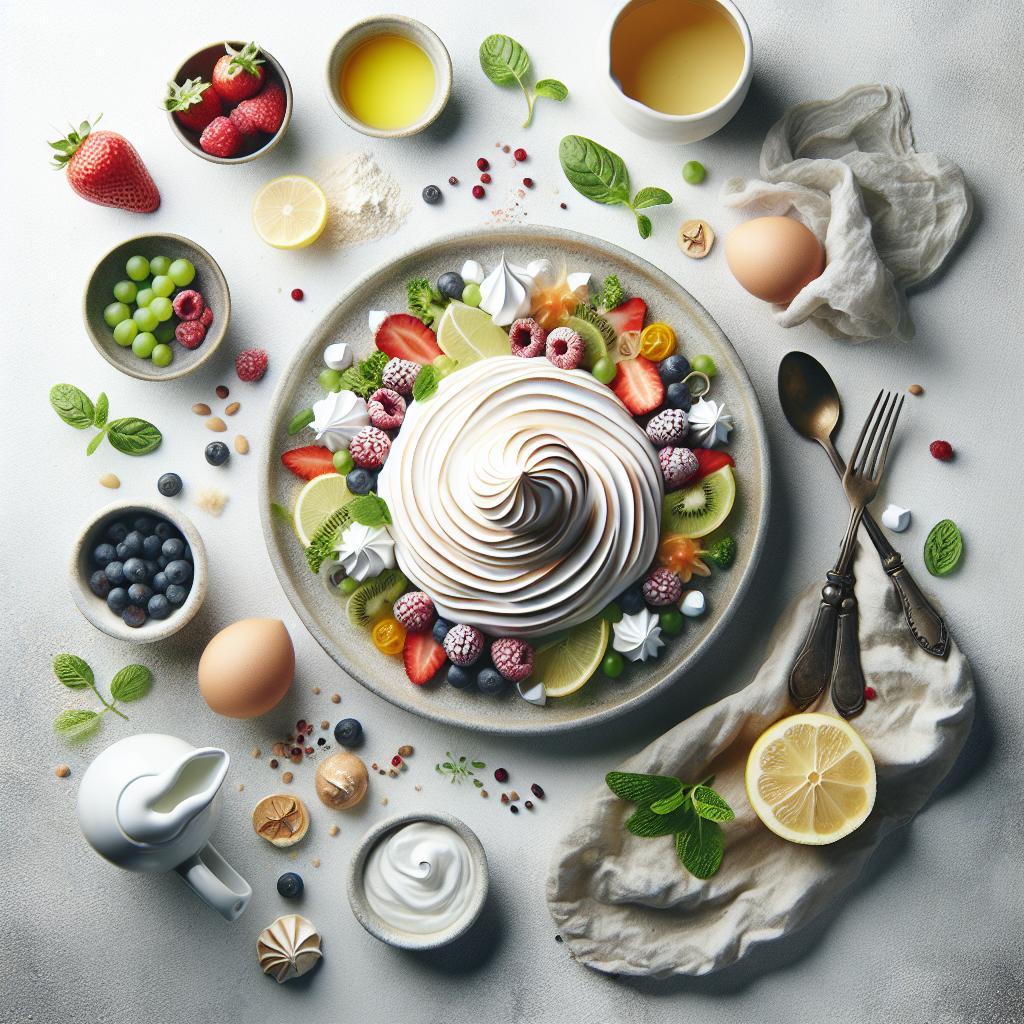
Top a vibrant lemon tart or build a layered pavlova with whipped cream and fresh berries for an impressive dessert. The contrast between crispy shell and soft interior offers superior mouthfeel.

Garnish thoughtfully: toasted nuts, a light dusting of powdered sugar, or a restrained drizzle of dark chocolate add texture and balance. For plated desserts, pipe small quenelles to control portion and presentation.

Nutrition

Per serving (1 medium meringue) the calories come mainly from sugar. A typical serving contains minimal fat and modest protein from egg whites.

Use the nutrition facts to plan portion sizes; meringue’s light texture can mask high sugar content, so serve mindfully when catering to calorie-conscious diners.

Nutrient Per Serving (1 medium meringue)
Calories 70 kcal
Protein 2 g
Carbohydrates 16 g
Fat 0 g

Advanced Techniques and Variations

Explore French, Swiss, and Italian meringue styles to match application and stability needs. Each technique alters when and how sugar and heat enter the system, changing stability and texture.

Swiss and Italian methods use cooked sugar syrup to create a stiffer, more stable foam ideal for buttercreams and piping. For decorative work, these methods give a longer working window and greater weather resistance.

For a deeper procedural breakdown, see our internal resource on advanced meringue techniques. For recipe ideas tailored to each method, consult meringue recipes that scale capacity and timing precisely for pro kitchens.

Context and Science

Meringue formation rests on protein denaturation and reassembly around air bubbles. Heating and acid influence these networks, which is why adding an acid like cream of tartar improves elasticity and sheen.

Read a general overview of the dessert and its history at meringue. For plated presentations and national variations, the pavlova entry offers useful perspective at pavlova (dessert).

FAQ

What makes meringue fail to whip properly?

Failure usually comes from fat contamination, cold egg whites, or dirty equipment. Ensure bowls and beaters are grease-free and use room-temperature whites to trap air efficiently.

How long should I whip the egg whites?

Whip until you reach stiff, glossy peaks that hold shape without collapsing. Stop promptly once you reach this stage to avoid overbeating and graininess.

Why add cream of tartar or vinegar?

Acids stabilize the protein network and improve elasticity. A small amount prevents foam collapse and enhances sheen, which helps peaks hold during baking and transport.

Can I make meringues on humid days?

High humidity slows drying and can cause weeping. If you must bake on a humid day, extend drying time and store cooled meringues in an airtight container with desiccant packets.

How do I fix grainy or weepy meringue?

Graininess often signals overbeating; stop and gently fold in a tiny additional amount of sugar if needed. Weeping results from undissolved sugar or trapped moisture—for baked styles, dry longer at low temperature to eliminate syrup pockets.

Mastering Meringue Stability with Glossy Peaks

As you practice these steps, refine small details: bowl material, sugar granulation, and whisk timing. Controlled repetition builds consistent results and makes professional-level meringue reliably repeatable.

See also: Meringue

Savor Every Bite: 7 Garlic Butter Steak Secrets Revealed
Unlock Indirect Heat: 8 Expert Ways to Cook Juicy Meats
Silky Roasted Garlic Mashed Potatoes — 7 Pro Tips
7-Step Indulgent Creamy Garlic Chicken Gnocchi Recipe
Unlocking Heat Capacity: 7 Practical Strategies for Thermal Energy Storage
TAGGED:andDessert bakingEgg white tipsmasteringmeringueMeringue recipepastry techniquesperfectlysecretsstabilizing meringuethewhipping tips
Share This Article
Facebook Pinterest Whatsapp Whatsapp LinkedIn Telegram Threads
What do you think?
Love0
Sad0
Happy0
Sleepy0
Angry0
Dead0
Wink0
Previous Article Unlocking Rosemary’s Essence: The Science Behind Its Flavors Unlock Rosemary’s Essence: 7 Scientific Secrets Behind Its Flavor
Next Article Whisking Woes: What Happens When Sugar Hits Egg Whites Early? Whisking Woes: 7 Expert Fixes When Sugar Hits Egg Whites Early
Creamy Garlic Chicken with melted Parmesan and fresh herbs on a rustic white plate
Garlic Chicken: 7 Ultimate Brilliant Recipes to Make the Best-Ever Creamy Garlic Chicken with Parmesan & Fresh Herbs
Extra Picks
Colorful bowls of Leftover Couscous transformed into salads, fritters, and stuffed peppers.
12 Amazing Practical Leftover Couscous Ideas: Brilliant Ways to Reuse and Remix
Uncategorized
Colorful jars of spice blends beside steaming couscous with herbs and lemon
7 Ultimate spice blends That Transform Your Couscous — Amazing Best Flavor Boosts
Uncategorized
Bowls of gluten-free couscous alternatives: quinoa, millet, cauliflower, and rice
10 Amazing couscous alternatives: Best Gluten-Free Swaps for Incredible Flavor
Uncategorized

Tags

and art baked baking science baking techniques Baking tips batch cooking beef behind browning techniques butternut squash caramelization cast iron skillet chemistry chicken comfort food Cooking science cooking technique Cooking techniques Cooking tips crafting creamy creamy soup crispy culinary science fish flavor flavor chemistry food food safety Food science for garlic golden Ground turkey hearty heat high-heat cooking high protein meals how instant read thermometer Lean protein magic Maillard reaction make ahead meals make ahead soup mastering meal prep Meal prep recipes meat thermometer microwave microwave cooking moisture control one pot meals Pan searing perfect perfectly Plant based protein Probe thermometer protein denaturation Quick dinners roasted roasted squash roasted tomato soup Roasted vegetables Roasting techniques savor savory science Searing technique Searing techniques secrets slow cooking squash steak steak cooking sweet temperature control the top turkey turkey soup turkey stew ultimate umami cooking umami flavor unlock unlocking unveiling vegetable velvety weeknight dinner Weeknight dinners weeknight meals what when why with your zesty
March 2026
M T W T F S S
 1
2345678
9101112131415
16171819202122
23242526272829
3031  
« Feb    

You Might Also Like

- Unlocking Flavor: The Science Behind Slow Cooking Tough Meat
Protein Chemistry

Unlocking Flavor: 7 Science-Backed Secrets for Slow Cooking Tough Meat

William J. Kroll
William J. Kroll
November 7, 2025
Yeast Uncovered: The Tiny Powerhouse Behind Baking Magic
Baking & Roasting

Yeast Uncovered: 7 Essential Facts Every Baker Needs

William J. Kroll
William J. Kroll
February 10, 2026
- Mastering Chicken: Exploring Poaching Temperatures for Perfe
Boiling & Steaming

7 Expert Steps: Poached Chicken Perfection

William J. Kroll
William J. Kroll
November 1, 2025
Cake vs. Yeast Donuts: Unraveling the Sweet Differences
Baking & Roasting

Cake vs. Yeast Donuts: 7 Powerful Differences Every Baker Should Know

William J. Kroll
William J. Kroll
February 16, 2026
- The Science Behind Crafting the Perfect Casserole Masterpiec
Baking & Roasting

10 Science-Backed Tips to Craft the Perfect Casserole Masterpiece

William J. Kroll
William J. Kroll
November 16, 2025
Crispy & Fluffy: Mastering Easy Air Fryer Blueberry Muffins
Extra Picks

Crispy & Fluffy: 7 Pro Steps for Air Fryer Blueberry Muffins

William J. Kroll
William J. Kroll
December 19, 2025
Follow US
By Fimaw.com © All Rights Reserved.
  • Advertising Policy: 10 Practical Rules for Safe, Compliant Ads
  • Contact Us
  • Cookie Policy: Clear Guide for Site Owners
  • Copyright Notice Guide: 7 Essential Rules for Website Owners
  • Disclaimer
  • Privacy Policy
  • Terms of Service
Welcome Back!

Sign in to your account

Username or Email Address
Password

Lost your password?