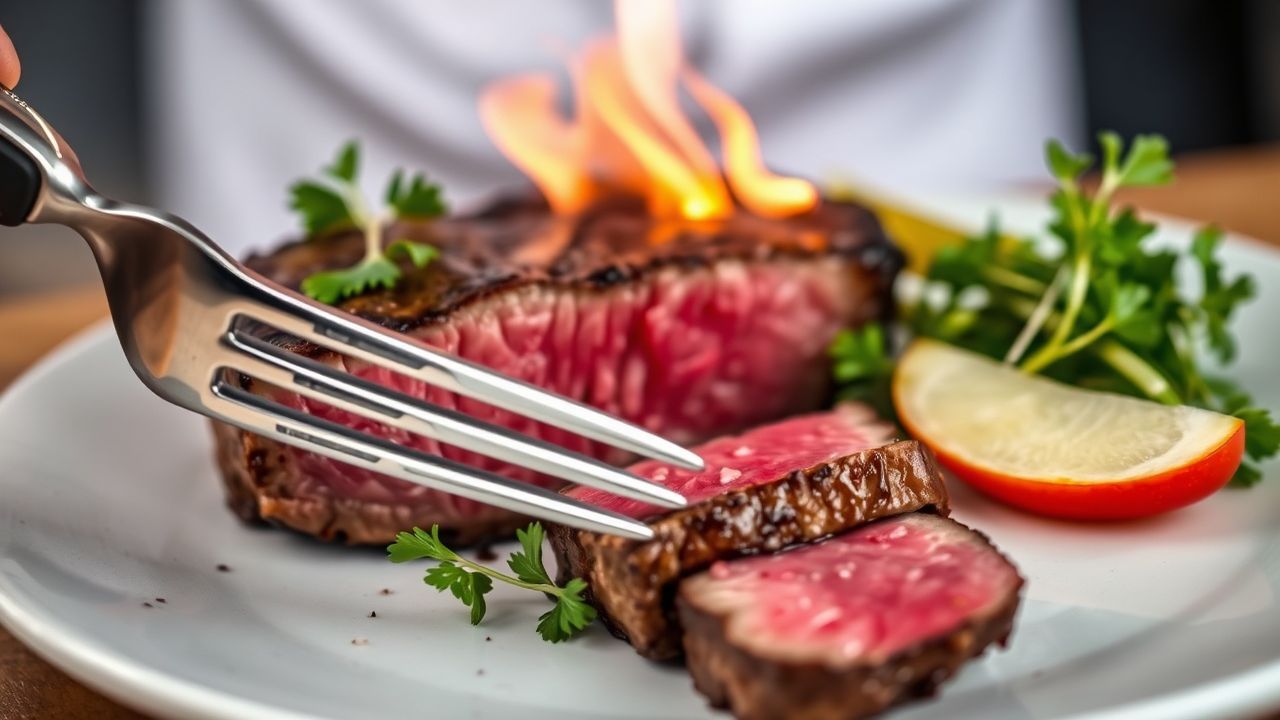

There is precise chemistry and disciplined technique behind every forkful of a perfectly cooked, juicy steak. Heat, muscle structure, and intramuscular fat interact to produce texture, moisture, and flavor that define a superior dining bite. Apply controlled temperatures and methodical timing to repeat that result at home.
- Prep and Cook Time for a Juicy Steak
- Yield and Portions for a Juicy Steak
- Skill Level for a Juicy Steak
- Ingredients for a Juicy Steak
- Instructions for a Juicy Steak
- Science of Juiciness
- Maillard Reaction and Crust Formation
- Connective Tissue, Collagen, and Gelatin
- Muscle Fibers and Temperature Control
- Marbling and Melted Fat
- Tips for Success with a Juicy Steak
- Serving Suggestions
- FAQ
- Temperatures matter: target ranges control protein denaturation and collagen melting.
- Marbling feeds flavor: intramuscular fat melts and bastes the meat internally.
- Sear plus rest: a rapid crust and a proper rest preserve juices and texture.
Prep and Cook Time for a Juicy Steak
Preparation time: 15 minutes. Give the steak time to approach room temperature for even cooking and predictable internal rise.
Cooking time: 10–15 minutes, depending on thickness and doneness target. Use a thermometer rather than the clock to aim for a consistent, juicy steak every time.
- Preparation time: 15 minutes
- Cooking time: 10–15 minutes (depending on desired doneness)
- Resting time: 10 minutes
Fat content and cut thickness influence the exact cook time. Track internal temperature to avoid overcooking and to preserve the best juicy steak texture.
Yield and Portions for a Juicy Steak
Serves: 2 hearty portions. Two 1½-inch ribeye steaks or an equivalent cut will feed two adults with generous portions.
Scale ingredients without changing the technique. The method works for single steaks or a batch; thickness and carryover heat remain the critical variables for a juicy steak outcome.
Skill Level for a Juicy Steak
Skill: Medium. The method focuses on temperature control and timing rather than exotic steps, so consistent results come from repetition and good tools.
With an instant-read thermometer and a heavy skillet, most home cooks can achieve a repeatable juicy steak by following the steps and verifying temperature rather than relying on feel alone.
Ingredients for a Juicy Steak
Keep ingredients simple to highlight meat quality. Use coarse salt, freshly ground pepper, a high-smoke-point oil, butter, and aromatics to support the natural flavor.
Choose steaks about 1½ inches thick for best sear-to-center balance. Pat dry before seasoning to encourage a strong crust and a reliably juicy steak interior.
- 2 ribeye steaks, about 1½ inches thick, room temperature
- 1 tablespoon kosher salt
- 1 teaspoon freshly ground black pepper
- 1 tablespoon high-smoke-point oil (avocado or grapeseed)
- 2 tablespoons unsalted butter
- 3 garlic cloves, lightly crushed
- 2 sprigs fresh rosemary
- Optional: finishing sea salt for serving
Instructions for a Juicy Steak
Follow a clear workflow: season, sear, baste, monitor temperature, then rest. Each step influences internal texture and the overall juiciness of the steak.
Work with a heavy skillet on high heat to develop the crust quickly, then lower heat for basting and finish. Use a calibrated instant-read thermometer for precision and consistent results.
- Prep the steaks: Pat the steaks dry with paper towels. Season both sides generously with kosher salt and black pepper to penetrate and flavor the meat.
- Preheat the pan: Heat a heavy cast-iron skillet over high heat until very hot. A properly hot pan creates the Maillard crust that locks flavor without overcooking the center.
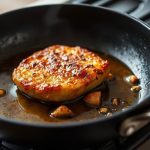
- Sear the steaks: Add the oil and sear without moving for about 3–4 minutes per side to form a deep brown crust. Flip once for an even sear and avoid repeated turning.
- Add aromatics and butter: Reduce heat to medium-low. Add butter, garlic, and rosemary, then tilt the pan and spoon melted butter over the steaks to baste and finish the exterior.
- Monitor internal temperature: Use a thermometer to check doneness: 125°F for rare, 135°F for medium-rare, 145°F for medium. Rely on temperature rather than time alone to protect the juicy steak interior.
- Rest the steaks: Transfer to a warm plate and tent loosely with foil. Rest for 8–12 minutes to allow juices to redistribute via carryover heat.
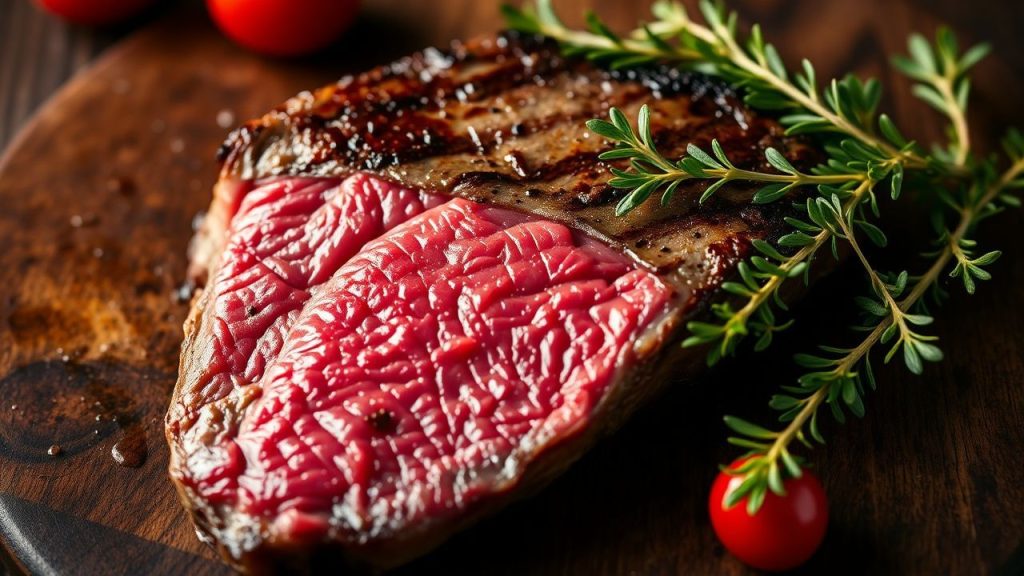
- Slice and serve: Slice against the grain just before serving to preserve tenderness and reveal the juicy interior.
Keep the pan hot enough to sear but not so hot that butter smokes or burns. Adjust the heat while basting to maintain a controlled finish and a consistent juicy steak center.
Science of Juiciness
This section links culinary practice to muscle biology and heat-driven changes that determine a juicy steak. The explanations use industry terminology and measurable thresholds.
Understanding those mechanisms helps you choose temperature targets and timing to protect moisture and tenderness. The science explains why the method works.
Maillard Reaction and Crust Formation
The brown crust forms through the Maillard reaction, a set of chemical reactions between amino acids and reducing sugars. These reactions produce browned color and complex flavor compounds quickly at high heat.
A strong sear improves flavor and texture without requiring prolonged high internal temperatures. Searing creates surface flavor while the interior stays at the target doneness for a juicy steak.
Connective Tissue, Collagen, and Gelatin
Collagen toughens raw muscle but softens to gelatin with heat and time. The conversion follows predictable thermal thresholds, so moderate heat plus brief resting preserves tenderness and moisture.
For quick-cook cuts like ribeye, you rely on partial collagen softening plus fat to deliver tenderness. For tougher cuts, longer low-temperature cooking converts more collagen to gelatin for a different kind of juicy steak experience. See collagen for structural detail.
Muscle Fibers and Temperature Control
Skeletal muscle structure determines how proteins denature as temperature climbs. The arrangement and type of fibers set how the steak reacts to heat and how much moisture it releases.
Controlling internal temperature prevents excessive contraction of proteins and limits moisture loss. For background on muscle anatomy consult skeletal muscle.
Marbling and Melted Fat
Intramuscular fat melts during cooking and redistributes flavor and lubrication inside the meat. That internal basting is central to what consumers perceive as a rich, juicy steak.
Fat chemistry influences mouthfeel and perceived tenderness. For a technical overview of lipids in food see fat. Properly rendered fat helps protect the juicy steak interior while adding flavor.
Tips for Success with a Juicy Steak
Choose marbled cuts: Ribeye and strip deliver predictable juiciness due to intramuscular fat. Tenderloin remains tender but contains less fat and will taste leaner.
Use precise tools: A calibrated instant-read thermometer and a heavy skillet reduce variability and build repeatable habits that produce a consistently juicy steak.
- Consistent thickness: Trim or butterfly irregular steaks to get even cooking and an even juicy interior.
- Dry surface: Pat steaks dry to promote better crust formation and faster searing.
- Reverse sear option: For very even doneness, cook low then finish with a hot sear to protect the center while building a deep crust.
Practice the technique with the same cut and thickness to refine timing for your equipment. Track internal temperatures and record results to build a repeatable track record for a juicy steak.
For more practical guides on searing and finishing, see the hands-on how-to on our site about searing techniques. Use the reverse sear guide to compare outcomes and choose your personal preference for a juicy steak finish.
Related internal resources: Steak science and a practical how-to sear steak guide provide recipe variations and troubleshooting tips tailored to home kitchens.
Serving Suggestions
Serve steaks on a warm plate and finish with a sprinkle of finishing salt to highlight texture. Allow slices to rest slightly before arranging on the plate so the juices settle evenly.
Classic sides include garlic mashed potatoes, grilled vegetables, or a bright salad to cut richness. Pair with a robust red wine or a dark ale if desired to match the meat’s intensity and support the juicy steak flavor.
| Nutrient | Per Serving |
|---|---|
| Calories | 620 kcal |
| Protein | 58 g |
| Carbohydrates | 1 g |
| Fat | 45 g |
For a technical reference on meat structure and cooking techniques consult trusted culinary science texts and professional resources. Use measured temperature targets and verified methods to reproduce a reliably juicy steak.
FAQ
What happens inside a steak as it cooks to make it tender and juicy?
Heat denatures muscle proteins and changes texture while collagen softens toward gelatin and intramuscular fat melts. Those concurrent processes add moisture and tenderness.
Controlling the rates and endpoints of those processes yields a tender, juicy steak interior rather than a dry, overcooked center.
How does temperature affect steak tenderness?
Temperature determines protein contraction and collagen transformation. Lower internal targets reduce moisture loss and preserve the soft texture associated with a juicy steak.
Use thermometer readings—125°F rare, 135°F medium-rare, 145°F medium—and allow for a few degrees of carryover during resting for accurate results.
Why is resting essential after cooking?
Resting lets internal temperature equalize and juices redistribute. If you cut too early, juices run onto the plate instead of staying in the meat.
A rest of 8–12 minutes on a warm plate is typically sufficient for common steak sizes and preserves both moisture and texture for a juicy steak serving.
Does marbling change the cooking method?
Marbled cuts need the same fundamental methods but offer more margin for error. Rendered intramuscular fat bastes the meat internally and protects against dryness.
Lean cuts require closer temperature control and sometimes a finishing compound butter or sauce to enhance perceived juiciness.
Which tools and techniques give the most reliable results?
A heavy skillet, an instant-read thermometer, and a timer deliver the best consistency. Aim to sear quickly and finish at a controlled lower heat when needed.
Practice with the same cut and thickness to refine your timing and develop a repeatable approach for a reliably juicy steak outcome.
See also: Steak science