
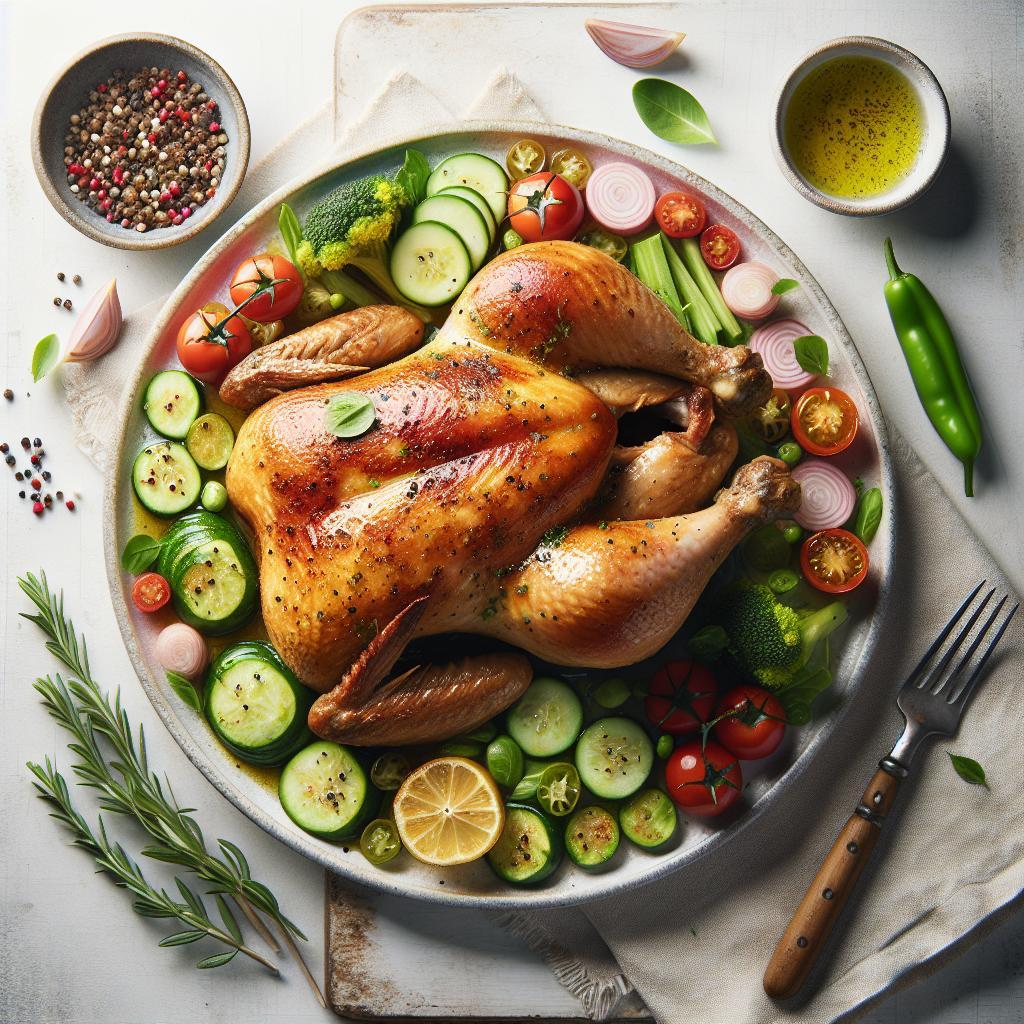

Spatchcock chicken transforms roast timing and texture by flattening a whole bird to speed cooking and expose more skin to direct heat. This method shortens heat penetration paths so you get crisp, browned skin and juicy meat with reliably even doneness.
- Why spatchcock chicken works
- Prep and Cook Time for spatchcock chicken
- Ingredients & Yield for spatchcock chicken
- Technique: Spatchcock Chicken — Spatchcock and Cook
- Tips for Success with spatchcock chicken
- Safety and Handling for spatchcock chicken
- Serving Suggestions for spatchcock chicken
- Nutritional Information for spatchcock chicken
- Q&A about spatchcock chicken
- FAQ
- Faster roast time because the bird lies flat and heats evenly.
- More surface for seasoning so rubs and marinades contact more meat and skin.
- Consistent crisping since larger skin surfaces contact hot air and radiant heat.
- Simple technique that scales from chicken to larger poultry with modest adjustments.
Why spatchcock chicken works
Flattening a bird changes how heat moves through tissue. By reducing the maximum thickness you shorten conductive paths, which speeds the approach to safe internal temperatures while lowering the chance of overcooked breast meat.
This principle rests on classic heat-transfer behavior; for a primer on the physics behind conduction consult the heat conduction entry. Practical kitchen outcomes also rely on the Maillard reaction for browned flavor; see the Maillard reaction for the chemistry that yields savory crusts.
Prep and Cook Time for spatchcock chicken
Plan active prep time at about 15 minutes for the cut and rub, plus 2 to 4 hours if you choose to marinate. Roast time typically falls between 35 and 45 minutes at 425°F (220°C) for a 3.5–4 lb bird; adjust for size and oven behavior.
Use an instant-read thermometer to confirm doneness at the thigh (165°F / 75°C). Thermometry outperforms timers because oven calibration and bird mass vary; always verify core temperature before plating.
Ingredients & Yield for spatchcock chicken
This recipe yields 4 to 6 servings from a 3.5–4 lb whole bird. The exposed surface and reduced cooking time concentrate flavor so portions taste richer than weight alone suggests.
For the best balance between skin crisp and interior juiciness, choose a bird of uniform size. If you prefer, ask your butcher for a pre-spatchcocked poultry to save prep time and reduce handling.
Ingredients
1 whole chicken (3.5 to 4 lbs), spatchcocked
3 tbsp olive oil; 1 tbsp smoked paprika; 1 tsp garlic powder; 1 tsp onion powder; 1 tsp kosher salt; ½ tsp black pepper; ½ tsp cayenne (optional); zest and juice of 1 lemon; 2 tbsp chopped rosemary; 2 tbsp thyme; 1 cup low-sodium broth (pan)
Yield
Estimate 4 to 6 servings depending on appetite and side dishes. Larger breasts typically yield two generous portions while thighs contribute additional platefuls.
Leftovers keep well and make sandwiches, salads, or a quick fried rice. Reserve bones for stock to extract remaining flavor and limit waste.
Technique: Spatchcock Chicken — Spatchcock and Cook
Place the bird breast-side down and use sharp kitchen shears to cut along both sides of the backbone from tail to neck. Remove the backbone, then flip and press the breastbone until the breast flattens audibly.
Tuck wing tips and position the bird skin-side up on a rack set in a rimmed sheet pan. Add a small amount of pan liquid to protect drippings; do not flood the pan or you will steam the skin instead of crisping it.
- Spatchcock the chicken: Remove the backbone and press flat. Practice improves speed and yields a clean, uniform profile.
- Make the rub: Whisk the oil with smoked paprika, garlic and onion powders, salt, pepper, cayenne, lemon zest, rosemary, thyme, and lemon juice. Oil carries fat-soluble flavor and helps the skin brown.
- Apply and rest: Rub both sides, then refrigerate uncovered for 1 hour for drier skin or covered for deeper herb penetration. Dry skin sears and browns faster.
- Cook: Roast at 425°F (220°C) for 35–45 minutes, or sear on direct heat then move to indirect grill zones. Target 165°F (75°C) in the thigh with an instant-read thermometer.
- Rest and carve: Tent loosely and rest 10–15 minutes. Carve along joints and reserve bones for stock.
Tips for Success with spatchcock chicken
Pat the skin very dry and salt early when time allows. Salt draws moisture to the surface, which then dries and promotes a deeply browned, crisp crust when heated.
Control heat with a rack to encourage airflow and use pan liquid sparingly to prevent steaming. On the grill, alternate direct and indirect zones to avoid burnt skin while finishing interior temperature.
- Master the cut: Practice on a single bird or buy pre-spatchcocked poultry to save time.
- Marinate smart: Short marinades punch through quickly on a flattened bird; overnight yields bolder herb notes.
- Thermometer first: Probe the thickest thigh without touching bone for the real reading.
- Rubs and finishes: Try smoked paprika, chipotle, or a lemon-herb glaze to vary the flavor profile.
[LASTLINE_SEP]
After resting, carve with a sharp knife along joints. Reserve pan juices to spoon over slices for finishing flavor and moisture.
Safety and Handling for spatchcock chicken
Always cook poultry to 165°F (75°C) measured in the thigh for safety. Use separate boards and utensils for raw poultry and wash hands thoroughly to prevent cross-contamination.
Chill leftovers promptly and use within 3–4 days refrigerated, or freeze for longer storage. Proper handling reduces food-safety risk and preserves quality.
Serving Suggestions for spatchcock chicken
Pair the bird with roasted root vegetables or a bright chimichurri to cut through richness. Acidic components like lemon or vinegar-based sauces brighten the palate and balance fat.
Garnish with lemon wedges and chopped parsley, and present on a carving board. Reserved pan juices or a light gravy provide an extra layer of savory moisture.
Nutritional Information for spatchcock chicken
Estimate nutrition per serving at about 320 kcal with approximately 40 g protein, 1 g carbs, and 15 g fat when prepared with light oil and skin retained. Values vary with portion size and added fats.
Use a nutrition calculator for precise values based on your specific ingredients and portioning. Adjust for skin removal or added sides when planning dietary needs.
| Nutritional Information (per serving) | Calories | Protein | Carbs | Fat |
|---|---|---|---|---|
| Spatchcocked Chicken | 320 kcal | 40 g | 1 g | 15 g |
Q&A about spatchcock chicken
Spatchcocking applies broadly to whole birds and some large cuts to shorten cook time while improving evenness. The technique scales from domestic chicken to turkey with heat and time adjustments.
For an overview of poultry species and common practices consult the chicken article. To understand the related cutting technique, see the butterflying entry.
FAQ
What exactly is spatchcock chicken and how is it different from butterflying?
Spatchcock chicken refers to removing the backbone and flattening the bird so it cooks evenly. Butterflying is a similar concept applied to other cuts; both reduce thickness but spatchcock often implies removing more structure for a fully flat profile.
How long should I marinate a spatchcock chicken?
Marinate for 2 hours for noticeable flavor enhancement or overnight for deeper penetration. Avoid highly acidic long marinades that can soften protein excessively; refrigerate while marinating for safety.
Can I use the spatchcock method on turkey or other poultry?
Yes. Larger birds benefit from flattening, though you should increase cooking time and reduce peak heat to avoid burnt skin before the interior reaches safe temperature. Allow longer resting time for large birds.
What tools make spatchcock chicken easier?
Sharp kitchen shears, a heavy-duty cutting board, and an instant-read thermometer are essential. A towel under the board prevents slipping; a rimmed pan with a rack encourages airflow around the bird.
Should I remove the skin before cooking a spatchcock chicken?
Keep the skin for best moisture retention and browning. Removing skin reduces crispness and dries the meat faster; if you must remove it, plan to baste or brine to preserve juiciness.
For further technique notes and troubleshooting, consult authoritative roasting resources and experiment with small adjustments for your oven or grill. Practical repetition yields consistent results.
Relevant technical references: roasting, Maillard reaction, and butterflying.

See also: spatchcock chicken