
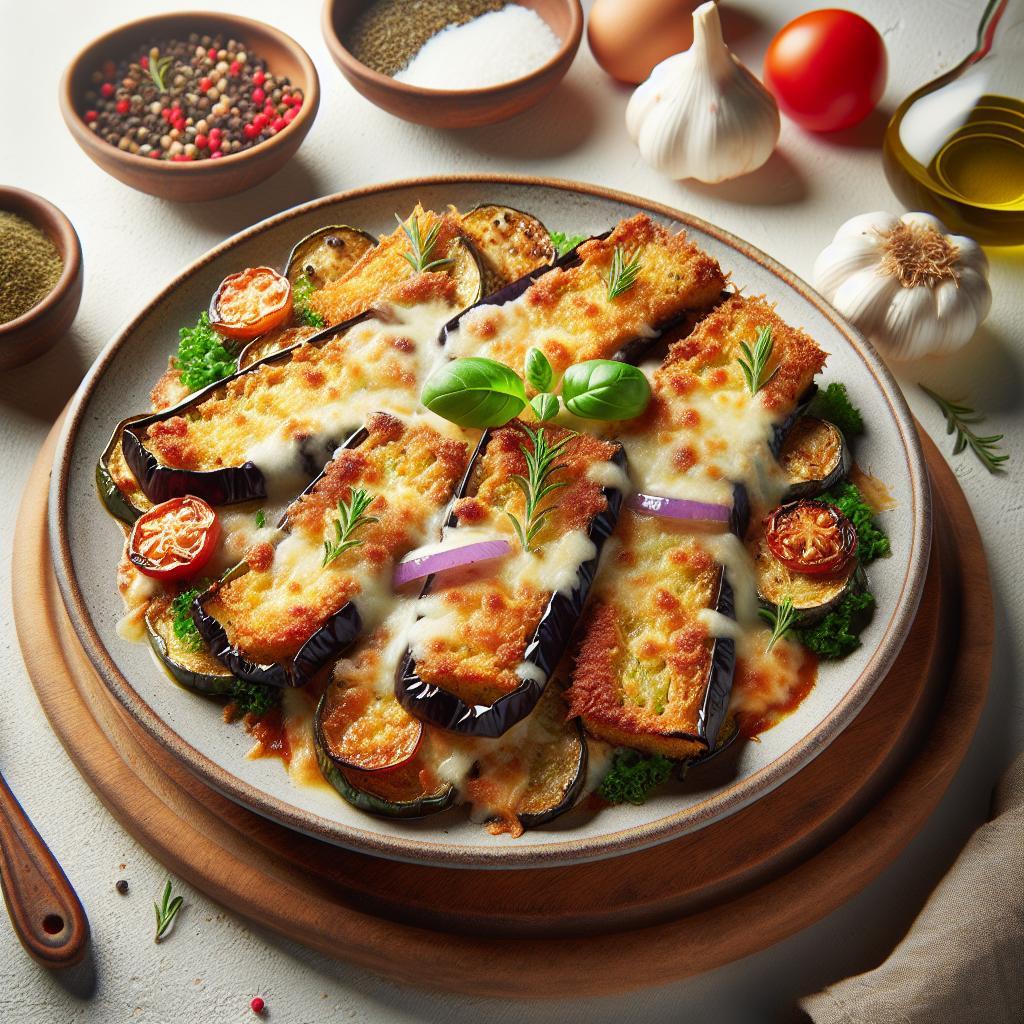

Crispy Delight: Mastering baked Eggplant Parmesan rewards precise technique and quality ingredients. This version keeps the classic flavors while using oven heat and smart breading to deliver a lighter, reliably crisp finish.
- Perfecting the Eggplant Selection and Prep for Ultimate Crispiness
- Crafting the Ideal Breading Blend for a Golden Crunch
- Techniques for Baking to Achieve Tenderness Without Greasiness
- Layering and Sauce Pairings to Elevate Every Bite
- Prep, Timing and Yields
- Tips for Success
- Serving Suggestions
- Nutrition and Variations
- FAQ
- Salt and dry to remove excess moisture and firm the flesh.
- Panko + Parmigiano produces an airy crust that browns in the oven.
- Bake on a rack for full air circulation and even crunch.
- Layer sparingly so sauce does not soften the crumb.
Perfecting the Eggplant Selection and Prep for Ultimate Crispiness
Select firm, youthful fruit with glossy skin and a heavy feel for size. Globe varieties give predictable texture and even slices for a uniform Eggplant Parmesan.
Slice to 1/2-inch rounds and salt both sides to draw out water; rinse and pat dry after 30–45 minutes to leave a drier surface that bonds to breading. For cultivar context, review aubergine.
Crafting the Ideal Breading Blend for a Golden Crunch
Use panko as the structural base: its flakes create air pockets that crisp under dry heat. Lightly toasting panko deepens aroma and improves crunch before mixing with cheese for Eggplant Parmesan.
Blend 2 cups panko with 1 cup finely grated Parmigiano-Reggiano and season with garlic powder, smoked paprika, dried oregano, and black pepper. Refer to panko and Parmigiano-Reggiano for ingredient context.
Techniques for Baking to Achieve Tenderness Without Greasiness
Preheat to high heat (around 425°F / 220°C) to set the crust quickly while letting the interior soften. Arrange coated slices on a wire rack above a baking tray to encourage hot air circulation and a consistent crust on both sides.
Use a light brush or spritz of olive oil to aid browning; moderate application saves calories while improving color and flavor. For oil behavior and smoke points, see olive oil.
After the par-bake, apply a second light spritz of oil to exposed crumbs to boost Maillard browning without adding excess fat. Use a convection setting if available to accelerate dry heat circulation and shorten bake time.
Layering and Sauce Pairings to Elevate Every Bite
Build the casserole with restraint: a thin base of tomato sauce, a single layer of baked eggplant, scattered mozzarella, and a light dusting of Parmesan. Avoid drowning the slices; excess sauce softens the breading and flattens texture in Eggplant Parmesan.
Choose a bright marinara that balances acidity and sweetness so the layers remain lively during the final bake. For style reference, consult marinara sauce.
Allow the assembled casserole to bake at moderate heat (about 375°F / 190°C) until cheese melts and edges bubble. Rest the dish 8–12 minutes before cutting so the layers set and slices hold their shape.
Prep, Timing and Yields
Prep Time: About 1 hour including salting and drying; active time is shorter. Accurate timing prevents a soggy crust and ensures consistent doneness for Eggplant Parmesan.
Cook Time: 30–40 minutes for slices plus a 20–25 minute final bake; yield typically serves six as a main course. Adjust slice thickness or oven temperature for smaller yields.
Ingredients (serves 6)
2 large globe eggplants, sliced to 1/2-inch rounds; 1 cup all-purpose flour; 3 large eggs, beaten. Coating: 2 cups panko breadcrumbs and 1 cup finely grated Parmigiano-Reggiano.
Seasoning: 1 tsp garlic powder, 1 tsp smoked paprika, 1 tsp dried oregano, and ½ tsp cracked black pepper. Finish with 2 cups fresh mozzarella, 3 cups marinara sauce, fresh basil, and olive oil for brushing.
Step-by-step Instructions
1. Lay slices on a rack and salt both sides. Rest 30–45 minutes, rinse, and pat dry to reduce bitterness and moisture for firmer crumb attachment.
2. Set up three stations: flour, beaten eggs, and seasoned panko-Parmesan. Dredge flour, dip in egg, then press into crumbs. Ensure even coverage and press gently so crumbs adhere without crushing the flesh.
3. Bake slices at 425°F/220°C on a wire rack for 12–15 minutes, flip, and bake another 10–12 minutes until golden. Lightly brush oil before the first bake and after flipping to improve color.
4. Assemble a thin layer of sauce in the dish, add half the slices, mozzarella, basil, and sauce; repeat. Top with Parmesan and a small drizzle of olive oil. Reduce oven to 375°F/190°C and bake 20–25 minutes uncovered until bubbly.
Tips for Success
Toast panko lightly in a dry skillet before mixing to increase crunch and add a nutty aroma. Maintain moderate oven heat and avoid overcrowding; slices should not touch for best airflow and browning.
Make ahead by breading and baking slices a day in advance; refrigerate and assemble the casserole just before the final bake. This approach saves service-day time while preserving texture when you briefly re-crisp the crust.
Serving Suggestions
Serve Eggplant Parmesan with a crisp green salad tossed in lemon vinaigrette or sautéed garlic spinach to cut through richness. Garnish with fresh basil and a final shower of finely grated Parmigiano-Reggiano for contrast and savory depth.
Pair the dish with a medium-bodied red wine or sparkling water with lemon to cleanse the palate between bites. For internal recipe cross-reference, see related Eggplant Parmesan recipes and an ingredient note at Parmigiano-Reggiano guide.
Nutrition and Variations
Estimated per serving: roughly 380 kcal with a balance of protein and carbohydrates from cheese and breadcrumbs. Monitor portion size to control calories and trim oil usage where possible to reduce fat content.
For variations, add part-skim ricotta between layers for creaminess or swap mozzarella with provolone or fontina for different melting profiles. Vegetarians and flexitarians will find this baked version hearty without deep-frying.
FAQ
What makes baked Eggplant Parmesan different from fried versions?
Baking replaces deep-frying, so the dish uses less oil and yields a cleaner mouthfeel. Proper breading and high-heat baking produce crispness similar to frying but with lower fat.
How do I achieve the crispiest breading in the oven?
Salt and dry the slices first, use panko mixed with grated hard cheese, and bake on a wire rack with light oil spritzing. High initial temperature helps the crumbs set quickly into a crunchy shell.
Can I prepare components ahead of time?
Yes. Bread and bake slices a day ahead, refrigerate, then assemble and complete the final bake before serving. This method maintains texture while saving active time on service day.
Which cheeses work best in this dish?
Mozzarella provides melt and stretch while Parmigiano-Reggiano adds savory umami. Provolone, fontina, or a ricotta layer will change creaminess and flavor complexity as desired.
How do I keep the dish flavorful while lightening it?
Focus on a quality marinara, fresh herbs, and restrained cheese portions. Baking instead of frying cuts oil; to reduce salt impact, adjust initial salting and use a low-sodium sauce.
See also: Eggplant Parmesan tag
See also: Eggplant Parmesan