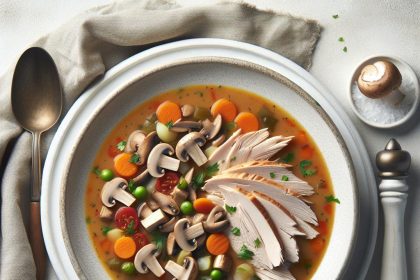

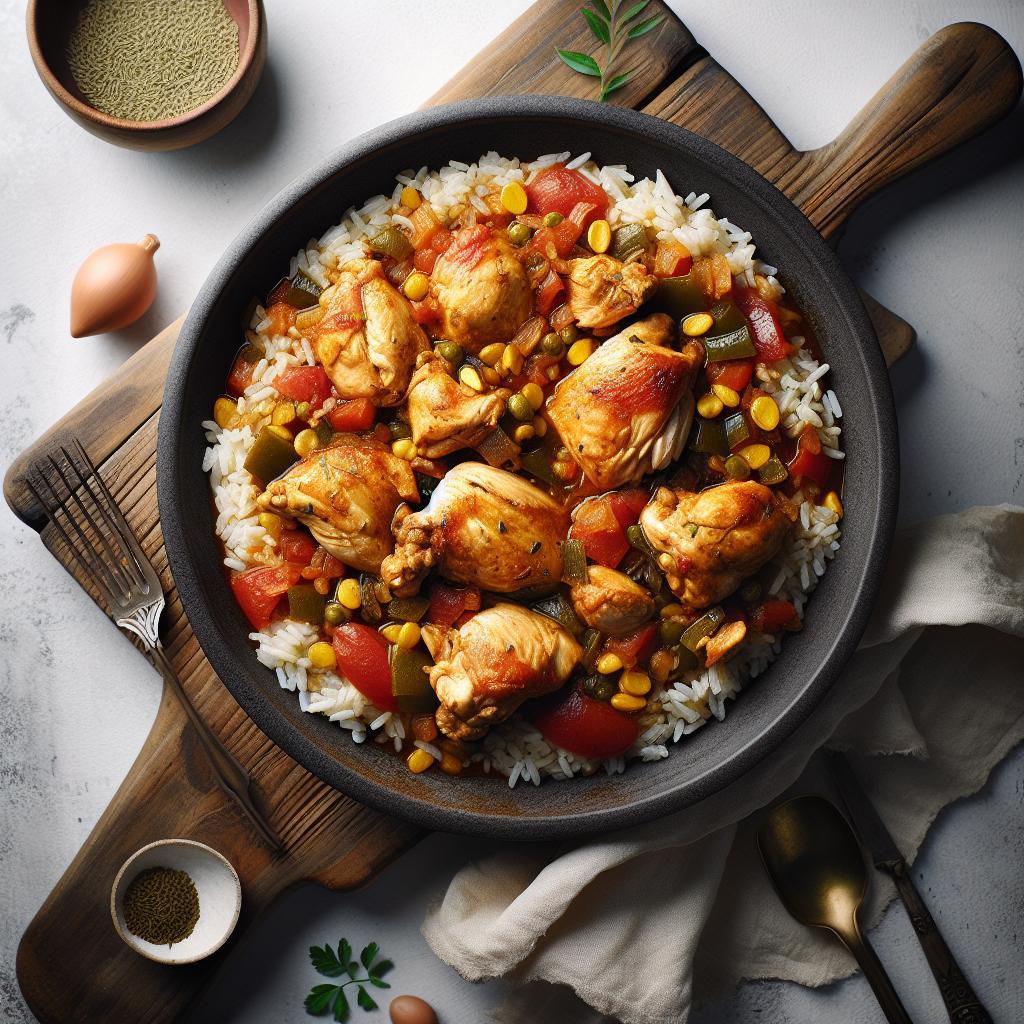

Chicken Stew restores balance on cold nights: tender chicken, long-grain rice and vegetables simmer together in one pot for rich flavor with minimal cleanup.
- Chicken Stew: Prep and Cook Time
- Chicken Stew: Yield
- Chicken Stew: Difficulty Level
- Chicken Stew: Ingredients
- Chicken Stew: Instructions
- Chicken Stew: Tips for Perfectly Tender Chicken and Fluffy Rice
- Chicken Stew: Storage and Reheating
- Chicken Stew: Serving Suggestions
- Chicken Stew: Nutritional Information per Serving
- Chicken Stew: Technique Notes and Ingredient Science
- Chicken Stew: Final Notes
- FAQ
- One-pot ease: Minimal cleanup, maximum flavor.
- Weeknight friendly: Ready in about an hour with straightforward steps.
- Meal-prep winner: Reheats well and deepens in flavor overnight.
- Flexible ingredients: Swap vegetables or herbs to taste without breaking the balance.
Chicken Stew: Prep and Cook Time
Prep: 15 minutes. Gather and chop ingredients, rinse the rice and measure spices before you start to keep the cook flow efficient.
Cook: 45 minutes. Brown the chicken, sweat the vegetables, then simmer until rice is tender and flavors meld. Total workflow remains straightforward and reliable.
Chicken Stew: Yield
This chicken stew yields about 6 hearty portions. Portions assume roughly 1 to 1 1/2 cups per serving depending on appetite and side dishes.
Scale ingredients linearly for larger groups; increase liquid slightly when multiplying the recipe to maintain rice texture and avoid dryness.
Chicken Stew: Difficulty Level
Easy. The method uses basic techniques: sauté, simmer and rest. Home cooks with beginner skills succeed by paying attention to timing and heat.
Timing and heat control matter more than advanced technique. Follow the simmer and rest steps to preserve tender chicken and distinct rice grains.
Chicken Stew: Ingredients
Use quality, fresh ingredients for a clean, comforting flavor. Choosing the right rice and chicken cut changes texture markedly.
Key ingredients include boneless chicken thighs, long-grain white rice and low-sodium broth. Learn more about the biology of chicken and the grain properties of rice to choose optimal components.
- 2 lbs boneless, skinless chicken thighs, cut into chunks
- 1 1/2 cups long-grain white rice, rinsed thoroughly
- 1 large yellow onion, finely diced
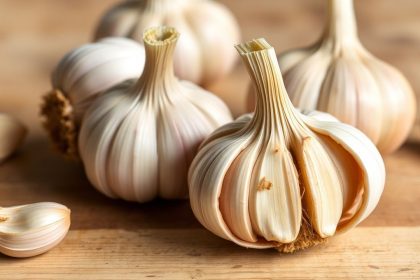
- 3 cloves garlic, minced
- 3 medium carrots, peeled and sliced
- 2 celery stalks, chopped
- 4 cups low-sodium chicken broth
- 1 cup frozen peas, thawed
- 2 tablespoons olive oil
- 1 teaspoon smoked paprika
- 1 teaspoon dried thyme
- 1 bay leaf
- Salt and freshly ground black pepper, to taste
- Fresh parsley, chopped for garnish
Chicken Stew: Instructions
Follow these steps in order for consistent results. Keep a tight lid during rice cooking to trap steam and finish the grain properly.
Below the main sequence, find focused technique notes on browning and simmering. These tips preserve texture and boost flavor for a reliable chicken stew.
- Heat oil in a large, heavy-bottomed pot over medium heat. Season chicken with salt, pepper and smoked paprika. Sear until golden, about 4–6 minutes, turning for even color. Transfer chicken to a plate.
- Sauté vegetables in the same pot: add onion, carrots and celery. Cook gently 7–8 minutes until softened and translucent, stirring to prevent sticking.
- Add garlic and cook 30–60 seconds until fragrant but not browned.
- Return chicken to the pot. Add dried thyme and bay leaf, then pour in the chicken broth. Bring to a gentle boil to deglaze the pan and lift browned bits into the broth.
- Stir in rinsed rice evenly, reduce heat to low, cover and simmer 20–25 minutes without lifting the lid so the rice can steam properly.
- After 20 minutes, check rice for tenderness; stir in frozen peas and adjust seasoning. Cover and cook 5 more minutes to warm peas and finish the grain.
- Remove from heat and let the stew rest, covered, 5 minutes before serving to set texture and allow flavors to settle.
Chicken Stew: Browning the Chicken
Browning creates Maillard flavor compounds that deepen the broth taste. Use a hot pan and do not overcrowd the pot to maintain a good sear.
Remove the chicken before sweating vegetables so you preserve the fond. Deglaze with a splash of broth and scrape the bottom to reincorporate those flavor compounds and enrich the stew.
For the science behind browning see the Maillard reaction, which explains how color and complex flavors form during searing.
Chicken Stew: Simmering and Resting
Maintain a low, steady simmer to avoid breaking down the rice and chicken. High heat can make rice gummy and chicken tough.
Letting the stew rest off heat keeps grains from overcooking and allows meat fibers to reabsorb juices for a tender bite. Resting improves texture and melds seasoning.
Chicken Stew: Tips for Perfectly Tender Chicken and Fluffy Rice
Small technique choices prevent common problems like dry meat or starchy, gluey rice. Proper rice rinse and precise heat control make a big difference.
Use thigh meat for juiciness; if using breast, reduce cook time and monitor texture closely to avoid dryness. Long-grain rice yields distinct grains; adjust ratios and time for other whole grains.
- Rinse rice under cold water until the rinse runs clear to remove surface starch and reduce stickiness.
- Use long-grain rice for distinct grains; convert liquid ratios if using brown rice (longer cook time and more liquid).
- Low and slow simmer preserves texture—adjust heat rather than lid position to manage evaporation.
- Finish with acid like a squeeze of lemon to brighten the broth just before serving.
Chicken Stew: Storage and Reheating
Cool the stew quickly and refrigerate within two hours. Store in shallow, airtight containers for up to 4 days to limit bacterial growth and preserve quality.
When reheating, warm gently on low with a splash of broth to restore moisture. Avoid high heat which can overcook rice and dry the chicken; reheat to at least 165°F (74°C) for safety.
Chicken Stew: Serving Suggestions
Serve the stew in deep bowls and garnish with chopped parsley for color and freshness. A lemon wedge on the side brightens the overall profile and balances fat in the broth.
Pair with crusty whole-grain bread or a crisp green salad to add texture and balance. Fold in kale or spinach at the end for added vitamins and color without extending cook time.
Chicken Stew: Nutritional Information per Serving
This stew offers a balanced macronutrient profile with lean protein, complex carbohydrates and moderate fat from olive oil and chicken. Adjust portion sizes or ingredient swaps to modify calories.
Per serving estimate: 420 kcal, 35 g protein, 40 g carbs, 10 g fat. Use different rice or meat cuts to alter these values predictably.
| Calories | Protein | Carbs | Fat |
|---|---|---|---|
| 420 kcal | 35 g | 40 g | 10 g |
Chicken Stew: Technique Notes and Ingredient Science
Understanding the role of each ingredient helps you adjust the recipe reliably. Thighs deliver collagen and fat that boost mouthfeel and broth body; rice controls texture through starch and absorption.
Rinsing rice removes surface starch; controlling liquid ratio preserves grain integrity. These small facts translate directly to improved texture and consistent results in every pot.
For background on the broader category, see the culinary history of stew, which clarifies why slow, moist-heat methods concentrate flavor.
Chicken Stew: Final Notes
This chicken stew uses simple technique and reliable ratios to produce comforting results. Small decisions—choice of cut, rice type and heat control—drive success more than complicated steps.
Practice the recommended steps twice and you will gain confidence in timing and seasoning, making this one-pot meal a reliable staple for cold nights and busy schedules alike.

FAQ
How can I make this chicken stew gluten-free?
The core ingredients are naturally gluten-free. Use a verified gluten-free broth and check processed seasonings for hidden gluten to ensure safety.
Also monitor cross-contamination if cooking for someone with celiac disease; use clean utensils and surfaces when preparing the stew.
Can I substitute brown rice or other grains in this chicken stew?
Yes. Brown rice requires more liquid and a longer cook time; increase broth and simmer until tender. Barley and farro need adjusted liquid and time or pre-soaking to reduce total cook time.
Test a small batch first to confirm texture, then scale adjustments for full recipes to avoid under- or over-cooking the grain.
Is it possible to make this chicken stew in a slow cooker or Instant Pot?
Yes. For a slow cooker, brown the chicken and sauté vegetables first, then combine and cook on low 3–4 hours. For pressure cooking, use a 1:1.25 liquid-to-rice ratio for white rice and reduce cook time to prevent overcooking.
Follow your device’s manufacturer guidelines for safe pressure release and layering ingredients to maintain texture and prevent burning.
What are the best substitutions for peas or carrots?
Swap peas for green beans or diced zucchini added late in cooking. Replace carrots with parsnips or sweet potato for a different sweetness and texture profile.
Leafy greens like kale or spinach should be stirred in at the end to wilt without overcooking and to preserve color and nutrients.
How should leftovers be reheated to keep quality?
Reheat gently on the stovetop with a splash of broth over low heat, stirring occasionally until steaming through. Microwaving works in shorter bursts on medium power with stirring to avoid hot spots.
Do not reheat repeatedly; portion leftovers to reheat only what you plan to serve to preserve quality and food safety.
For further reading on core ingredients like olive oil, consult reliable sources to understand how small changes affect aroma and mouthfeel.
See also: Chicken Stew