
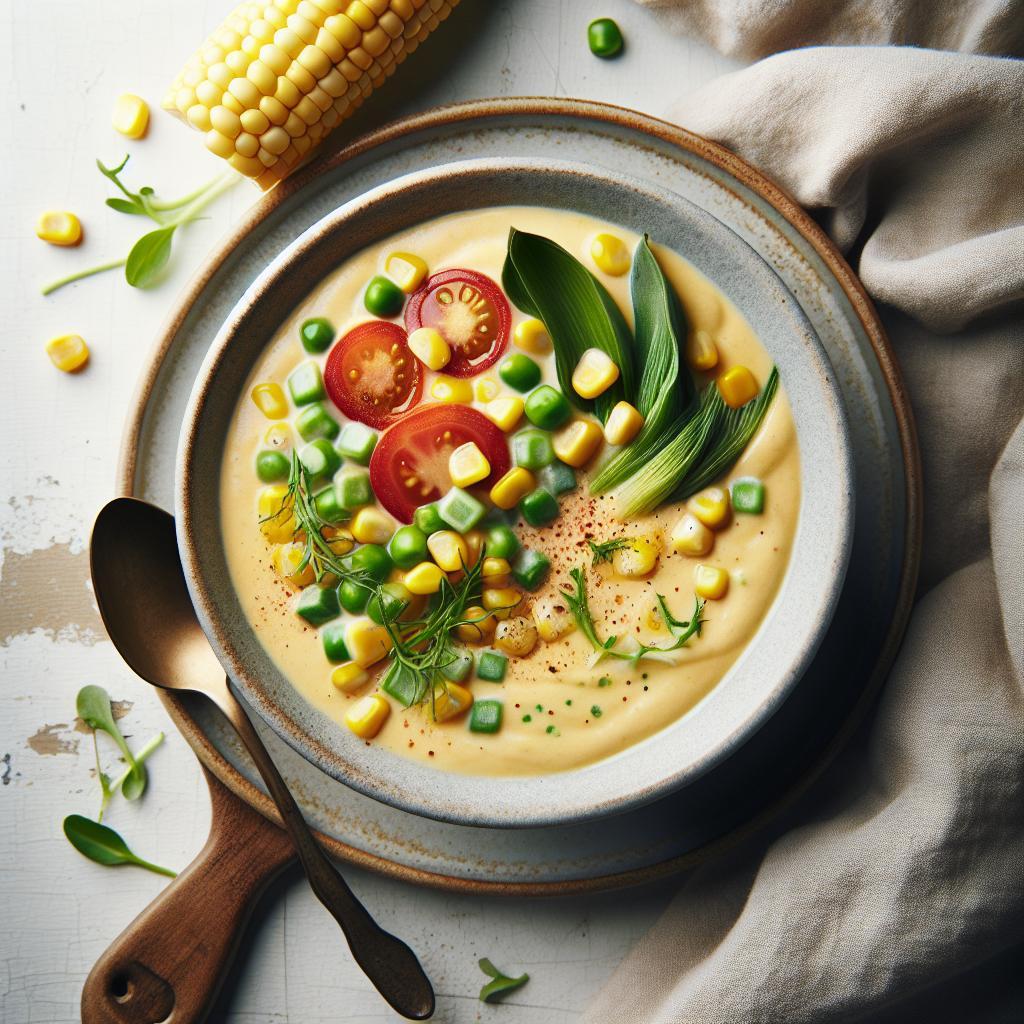

There is something deeply satisfying about a bowl of corn chowder: its velvety mouthfeel, warm aromatics, and layered sweet-savory balance that comfort the palate. This recipe-focused guide explains why the dish works, how to get that signature creaminess, and how to adapt the chowder for different diets and occasions.
- The Heartwarming History Behind Velvety Creamy Corn Chowder
- Prep, Timing, and Yield
- Key Ingredients That Elevate Flavor and Texture
- Step-by-Step Guide to Achieving Perfect Creamy Consistency
- Expert Tips for Customizing Your Corn Chowder to Suit Every Palate
- Variations and Advanced Techniques
- Serving Suggestions and Pairings
- Nutritional Snapshot
- FAQ
- Fast technique: Puree a portion of the base to thicken without heavy roux.
- Flavor boosts: Toasted spices and roasted corn add depth.
- Swaps: Use coconut milk or cashew cream for dairy-free richness.
- Make ahead: Reheat gently and thin with broth to restore texture.
The Heartwarming History Behind Velvety Creamy Corn Chowder
Corn chowder evolved where seafood and farm staples met, combining local produce, potatoes, and cream into one-pot comfort. The classic versions trace strong roots to New England cooking and coastal chowder traditions, where cooks used available ingredients to make filling, warming soups. New England culinary practice favored hearty, creamy bowls that sustained families through colder months.
Chowder as a category reflects a pragmatic, ingredient-forward approach to cooking: stretch a few components into a satisfying meal. See the broader context on chowder to understand regional variations and ingredient choices. That background explains why corn and potatoes became natural partners in this dish.
Prep, Timing, and Yield
Preparation: 15 minutes. Cooking: 35 minutes. This timeline works for busy cooks who want a rich bowl without long simmering. Plan simple mise en place: dice, measure, and set ingredients before you heat the pot.
Yield: Serves 6 generous bowls. Scale easily: double the liquid and maintain the same pot size for larger batches. For leftovers, store cooled chowder in airtight containers and cool quickly to maintain quality.
Key Ingredients That Elevate Flavor and Texture
Fresh or frozen corn provides the sweet, crunchy kernel bursts that define the chowder. Use fresh kernels when in season, or high-quality frozen corn year-round; the botanical name for corn is maize, and variety influences sweetness and texture.
Yukon Gold potatoes add both body and silkiness when partially pureed—choose waxy-to-all-purpose varieties for the best structural balance. For information on the crop, consult the potato page. Heavy cream contributes viscosity and mouth-coating fat that carries flavor; for lighter or dairy-free options, use measured substitutes explained below.
- 4 cups corn kernels (fresh or thawed frozen)
- 2 medium Yukon Gold potatoes, diced
- 1 large onion, finely chopped
- 3 cloves garlic, minced
- 4 cups vegetable or chicken broth
- 1 ½ cups heavy cream (or swap as noted)
- 2 tbsp unsalted butter
- 1 tsp smoked paprika
- Salt and freshly ground black pepper to taste
- Fresh thyme or chives for garnish
Step-by-Step Guide to Achieving Perfect Creamy Consistency
1. Sauté aromatics: Melt butter in a large, heavy-bottomed pot over medium heat. Add onion and garlic and cook until translucent and fragrant, about 4–6 minutes, stirring to prevent browning.
2. Layer flavor: Add smoked paprika and toast briefly for 30 seconds; this releases essential oils and deepens the base. Then add diced potatoes and pour in broth, bringing to a gentle simmer.
3. Simmer potatoes: Cook uncovered until potatoes are fork-tender, about 12–15 minutes depending on dice size. Test a piece: it should yield but still hold its shape to allow partial pureeing.
4. Add corn and cook: Stir in corn kernels and simmer for 8–10 minutes so sugars integrate into the broth. If using roasted corn, add it toward the end to preserve caramelized notes.
5. Create creaminess: Remove one cup of hot chowder and blend until smooth, or use an immersion blender to puree about one-third of the pot right in place. Return the purée to the pot, then gently stir in heavy cream and warm through on low heat. Avoid boiling after cream addition to prevent separation.
6. Season carefully: Add salt and pepper incrementally, tasting after each adjustment to balance sweetness and richness. A final squeeze of acid—lemon or a few drops of vinegar—brightens the finish without altering mouthfeel.
7. Finish and serve: Ladle into bowls and garnish with fresh thyme or chives. For texture contrast, offer toasted bread or crunchy toppings on the side.
Expert Tips for Customizing Your Corn Chowder to Suit Every Palate
Small technique choices make large differences. For a dairy-free yet silky result, substitute half the heavy cream with full-fat coconut milk; the fat profile gives similar viscosity while adding a subtle, complementary sweetness.
To add umami without masking corn, stir in a teaspoon of miso diluted in a tablespoon of hot broth, or add a splash of low-sodium soy sauce during the simmer. These adjustments deepen savory notes without making the chowder taste Asian—use sparingly and taste as you go.
- Lighter option: Swap half the cream for low-fat milk and finish with a knob of butter for sheen.
- Texture: Add diced celery or bell pepper for fresh crunch if desired.
- Spice: A pinch of cayenne or dashes of hot sauce enliven the sweet base.
- Storage: Cool quickly, refrigerate within two hours, and reheat gently over low heat.
For a richer presentation, top each bowl with a small spoonful of crème fraîche or a scattering of sharp cheddar. If you want protein, seared scallops or shredded roasted chicken pair well and keep the soup balanced.
Variations and Advanced Techniques
Roasting corn on the cob concentrates sugars and adds Maillard caramelization that transforms the chowder profile. Remove kernels after roasting and fold them in near the end to retain texture and flavor. For a smoky finish, char a few kernels directly in a hot pan.
For increased body without heavier dairy, use a short simmer and blend a larger fraction of the solids; this technique uses the starch in potatoes as a natural thickener. For a silky vegan finish, blend soaked cashews with a little cooking liquid and stir in as you would cream.
Adjust seasoning after any dairy swap; coconut milk and cashew cream mask salt differently than heavy cream, so taste and compensate. Use finishing acid sparingly to avoid flattening the perceived creaminess.
Serving Suggestions and Pairings
Serve corn chowder in warm bowls to preserve heat and mouthfeel. Offer toasted crusty bread, garlic biscuits, or a crisp green salad dressed with lemon vinaigrette to contrast richness and add freshness.
For garnishes, consider crisp bacon bits, sautéed mushrooms, or a dusting of smoked paprika. If you want to explore other vegetarian bowls, check our internal collection on Hearty Vegetarian Soup Recipes for complementary ideas.
For a roasted-corn focused spin, see our internal guide to roasting and using corn in soups at Roasted Corn Chowder techniques. These internal pages provide step photos and tempo cues that help when scaling quantities.
Nutritional Snapshot
This chowder offers moderate calories and macronutrient balance when served as a main with bread or salad. A standard serving (about 1 cup) provides energy, fiber from corn and potatoes, and satiety from fat and starch.
| Nutrient | Per 1 Serving |
|---|---|
| Calories | 280 |
| Protein | 6 g |
| Carbohydrates | 32 g |
| Fat | 13 g |
FAQ
What gives corn chowder its velvety texture?
Partial pureeing of cooked potatoes and corn creates a thick, silky base without heavy roux or flour. The starch in potatoes binds the broth while cream or a nut-based alternative adds fat that coats the palate.
Can I make corn chowder ahead of time?
Yes. Cool quickly and refrigerate in airtight containers for up to 3 days. Reheat gently over low heat and thin with extra broth if the mixture has thickened.
How do I make corn chowder vegan without losing richness?
Use full-fat coconut milk or blended soaked cashews to replace heavy cream. Add a small amount of nutritional yeast or miso for umami and balance sweetness with a touch of acid at the end.
Is roasted corn worth the extra step?
Yes. Roasting elevates flavor by concentrating sugars and adding caramelized, smoky notes. Add roasted kernels near the end so they keep texture while infusing depth.
What are the best garnishes for contrast?
Bright herbs like chives or thyme cut through richness effectively, while crunchy toppings—crispy bacon or toasted seeds—provide a satisfying textural counterpoint. Use a small acidic drizzle if you want a finishing pop.
Velvety creamy corn chowder rewards small technique adjustments: roast some corn, puree a portion, and season gradually. These steps give a reliably rich, balanced bowl that suits weeks, family dinners, and weekend entertaining.

See also: corn chowder