
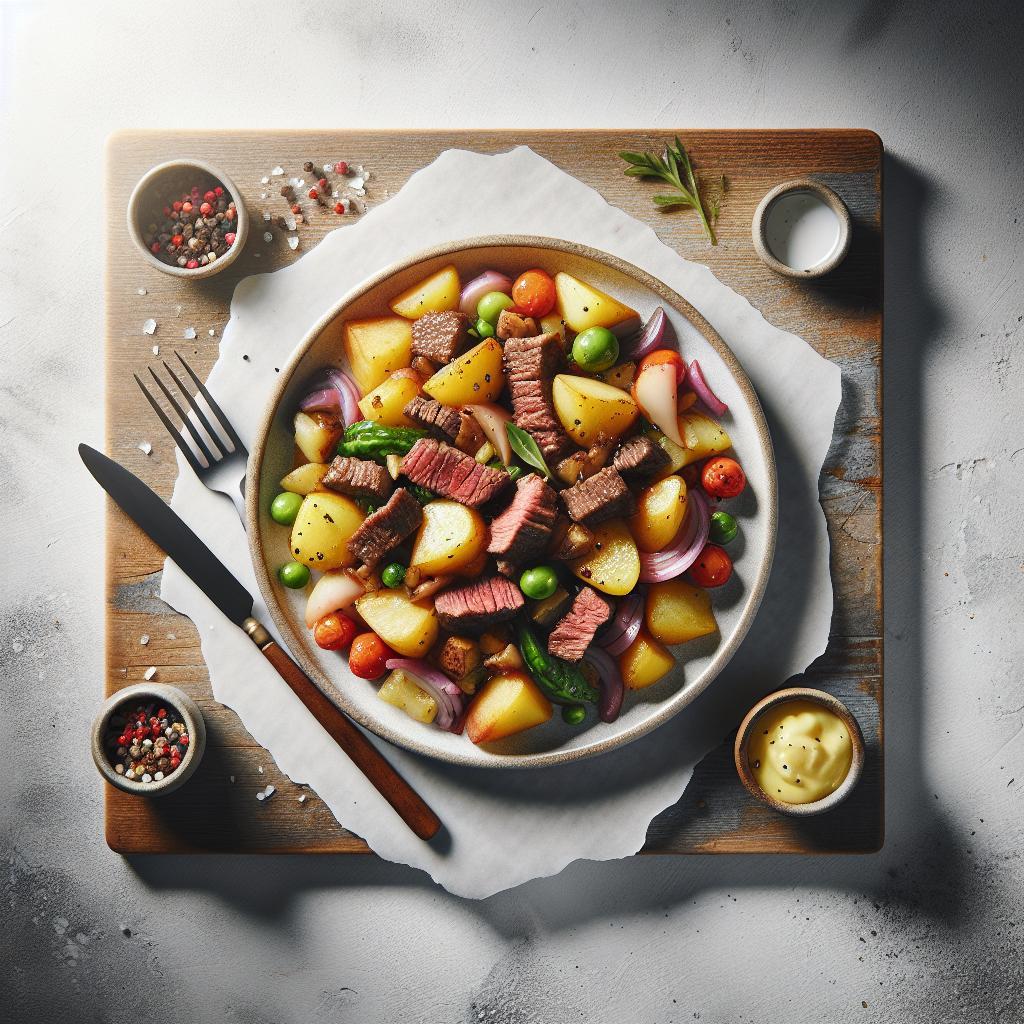

Hearty Beef and Potato Hash delivers a satisfying combination of crisp potatoes and seasoned beef that works for breakfast, lunch, or dinner. This version focuses on texture, balanced seasoning, and straightforward technique so you can reproduce reliable results at home.
- Prep and Cook Time
- Yield
- Difficulty Level
- Ingredients
- Instructions
- Tips for Success
- Safety and Storage
- Serving Suggestions
- FAQ
- How do I make the potatoes extra crispy?
- Can I substitute the beef for something leaner?
- What seasoning variations elevate the dish?
- How should I store and reheat leftovers?
- Why does my hash sometimes turn soggy?
- Final Thoughts
- Key takeaway: Crisp, well-drained potatoes are the foundation of a great hash.
- Key takeaway: Browning the beef without overcooking preserves juiciness and flavor.
- Key takeaway: Simple seasoning and finish herbs elevate depth without masking the core ingredients.
Prep and Cook Time
Preparation: 15 minutes. Cooking: 25 minutes. Total active time is roughly 40 minutes for a skillet-cooked hash.
Plan for a short rest if you make the dish ahead—reheating crisps the edges and tightens flavors. Using a preheated skillet gives you dependable surface contact for browning.
Yield
This recipe serves 4 hearty portions suitable for family meals or meal-prep servings. Adjust quantities in simple multiples for larger groups or to prepare extra for leftovers.
Portion guidance: serve about 1 to 1.25 cups per person alongside an egg or salad to round out the meal. Leftovers reheat well and maintain crispness if revived in a hot pan.
Difficulty Level
Easy to Medium — the technique centers on even potato sizes and controlled browning rather than complicated steps. Home cooks with basic skillet experience will master this quickly.
Key control points include oil temperature and avoiding overcrowding the pan, both crucial for crisp edges and optimal Maillard reaction on the beef. These are simple discipline points rather than culinary tricks.
Ingredients
Use good-quality, straightforward ingredients. The list below is designed to produce a classic, dependable flavor profile without exotic components.
When selecting meat, choose a blend with some fat for flavor; see the note on beef below for why fat percentage matters. For potatoes, start with starchy varieties for best crisping results; refer to the potato reference for background on varieties: potato.
- 1 lb (450g) ground beef, ideally 80/20 for flavor and juiciness (ground beef reference)
- 4 medium russet potatoes, peeled and diced into ½-inch cubes
- 1 large yellow onion, finely chopped
- 2 cloves garlic, minced
- 1 red bell pepper, diced (optional)
- 3 tbsp vegetable or olive oil
- 1 tsp smoked paprika
- 1 tsp ground cumin
- ½ tsp chili flakes (optional)
- Salt and black pepper to taste
- 2 tbsp fresh parsley, chopped
- 2 green onions, sliced thin for garnish
Instructions
Follow these steps with controlled heat and short turns to preserve texture and color. Read the full instructions before starting to time your steps effectively.
Break tasks into stages: par-cook potatoes, brown beef, then combine and finish. This approach prevents soggy potatoes and overcooked meat.
Preparing Potatoes
Place diced potatoes in cold water and rinse until water runs clearer to remove surface starch. Drain and pat completely dry with a kitchen towel to avoid steam during frying.
Preheat a large non-stick or well-seasoned cast-iron skillet over medium-high heat and add 2 tbsp oil. Add the potatoes in a single layer and let them brown without stirring for several minutes to form a deep crust.
Cooking the Beef and Veg
Push cooked potatoes to the side or remove them briefly; add remaining oil and add ground beef. Break the beef into bite-sized pieces and cook until well-browned but still juicy, about 5–7 minutes.
Add onion, garlic, and bell pepper to the beef and sauté until softened, roughly 4–5 minutes. Return potatoes to the pan, season with smoked paprika and cumin, and toss to combine so the spices coat each component.
- Heat control: Maintain a medium-high pan temperature for color, reducing to medium if the pan smokes excessively.
- Season early: Salt the beef during the final minute of browning to help maintain juiciness; finish with a final seasoning adjustment after combining.
- Finish: Cook everything together 3–4 minutes to marry flavors and allow crisp edges to return.
- Garnish: Remove from heat and sprinkle with chopped parsley and sliced green onions for brightness.
Tips for Success
Small technique changes yield the best results: uniform potato dice, dry surfaces, and steady heat make crisping reliable. These points separate a decent skillet hash from a great one.
Use a heavy-bottomed pan to distribute heat evenly and avoid hot spots. If you want a smoky finish, add a pinch more smoked paprika but taste before adding more.
- Choose starch: Russets crisp best due to high starch content.
- Dry well: Moisture prevents browning; towel-dry thoroughly.
- Control crowding: Work in batches if necessary to maintain contact with the pan surface.
- Alternatives: Use leaner meats with a touch of butter or oil added late to compensate for reduced fat.
When you parboil, keep water just boiling rather than a rolling boil to avoid breaking down cubes. After boiling, shock in ice water to stop cooking and then dry thoroughly before frying.
Safety and Storage
Handle ground meat safely—store raw beef at refrigeration temperature and cook promptly. Cool leftovers to room temperature for no longer than two hours before refrigerating.
Reheat leftovers in a hot skillet rather than microwave if you want to preserve crisp texture. Use the refrigerator within 3–4 days for best quality and food safety.
Serving Suggestions
Serve hot from the skillet for rustic presentation. A fried or poached egg nestles on top and adds richness that enhances each bite.
Complement the hash with a light salad or sliced avocado to balance richness. Toasted crusty bread also pairs well and helps scoop up any remaining pan juices.
| Nutrient | Per Serving |
|---|---|
| Calories | 420 |
| Protein | 28g |
| Carbohydrates | 35g |
| Fat | 18g |
Internal Link: For a fresh side, discover our Simple Garlic Green Beans to complement this dish beautifully.

FAQ
How do I make the potatoes extra crispy?
Cut potatoes into even ½-inch cubes, rinse off excess starch, and dry thoroughly to remove surface moisture. Use a hot pan and avoid crowding so each piece gets direct contact with the skillet.
Optionally parboil for 3–4 minutes then cool and dry before frying; this shortens pan time and ensures a tender interior with a crisp exterior.
Can I substitute the beef for something leaner?
Yes. Lean ground turkey or bison work well; add a tablespoon of oil or butter during cooking to maintain mouthfeel. Mushrooms or plant-based crumbles offer a vegetarian option with robust flavor when seasoned properly.
When substituting, adjust cook times slightly; lean proteins cook faster and can dry out if overcooked, so monitor color and moisture.
What seasoning variations elevate the dish?
Classic accents include smoked paprika and cumin for warmth; a splash of Worcestershire or a pinch of cayenne adds savory depth and subtle heat. Fresh herbs like parsley or chives at the end brighten the plate.
For a Southwestern twist, add black beans and a squeeze of lime at the finish. For a herbed British-style hash, use thyme and finish with a dollop of mustard or HP-style sauce.
How should I store and reheat leftovers?
Cool leftovers within two hours and store in an airtight container in the refrigerator for up to four days. Reheat on the stove in a hot skillet with a splash of oil to restore crisp edges rather than microwaving.
To freeze, portion into airtight containers and freeze up to 3 months; thaw overnight in the refrigerator and refresh in a skillet before serving.
Why does my hash sometimes turn soggy?
Sogginess usually results from excess moisture—either from potatoes that were not dried or from overcrowding the pan that traps steam. Ensure potatoes are dry and fry in batches if needed to maintain temperature.
Also avoid adding salt too early to starchy components; salt draws moisture out. Season at the end or when combining components to retain crispness.
Final Thoughts
Hearty Beef and Potato Hash is a straightforward, technique-focused dish that rewards attention to texture and seasoning. With a few applied principles—dry potatoes, proper heat, and balanced seasoning—you get consistent, flavorful results.
Use the expert tips above and adapt seasonings to your taste to make this version your own. The recipe scales well and stores cleanly for high-quality leftovers, making it a practical staple for many home cooks.
See also: beef hash