
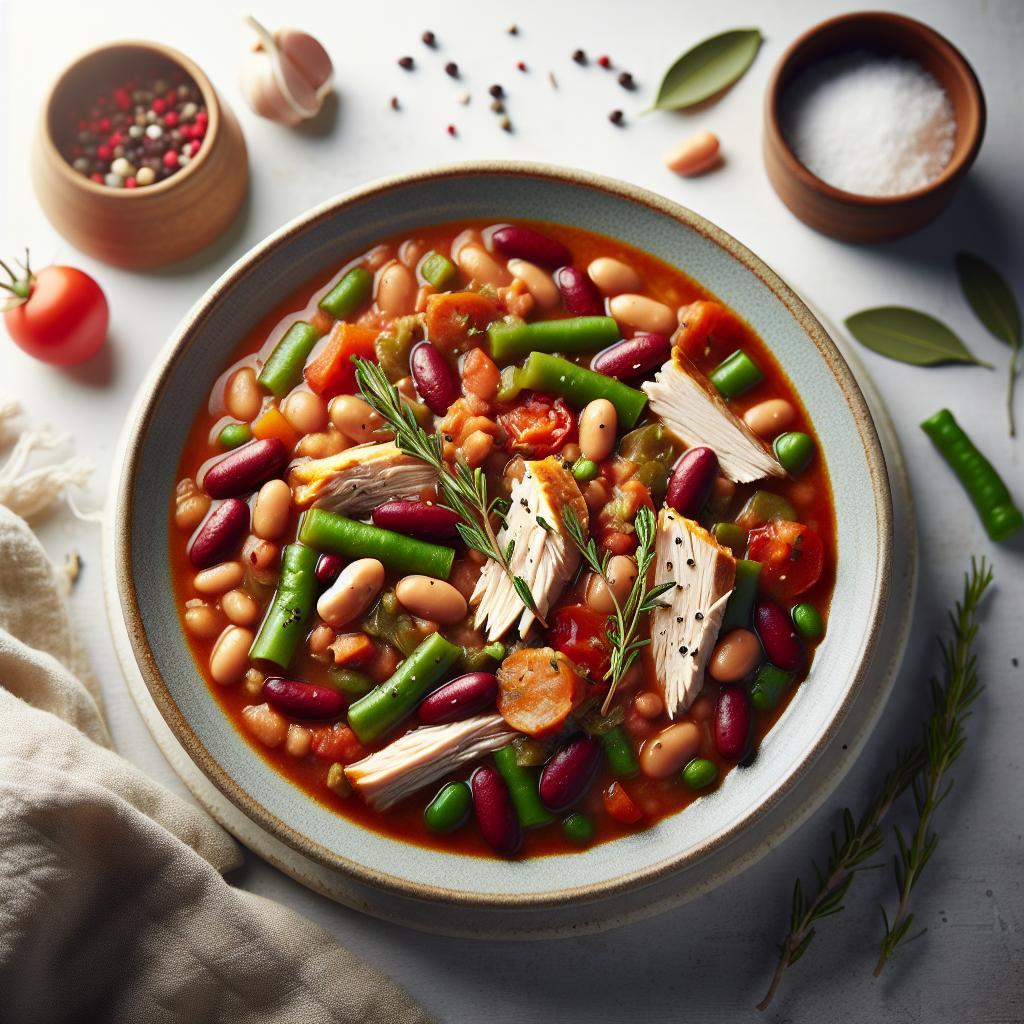

turkey stew brings together lean ground turkey, tender beans, and a savory broth for a reliable, satisfying meal that performs well for family dinners and meal prep. The method focuses on layer-building techniques — sweat, brown, deglaze, then simmer — to produce a thick, spoonable stew rather than a thin soup.
- Overview of turkey stew
- Key Cooking Times and Yield for turkey stew
- Ingredients and Functional Roles in turkey stew
- Step-by-Step Guide for turkey stew
- Expert Tips for turkey stew Texture and Flavor
- Customizations and Substitutions for turkey stew
- Serving Suggestions for turkey stew
- Nutrition, Storage, and Safety for turkey stew
- Ingredient Notes and Science for turkey stew
- Nutrition Facts
- FAQ
- High-protein, high-fiber: Balanced one-pot meal for sustained satiety.
- Meal prep friendly: Improves after resting and freezes cleanly for portions.
- Flexible ingredients: Swap beans or root vegetables without losing texture.
- Flavor layering: Browning and patient simmering yield depth with minimal salt.
Overview of turkey stew
This turkey stew uses ground turkey and beans as primary protein sources, creating a satisfying texture with less saturated fat than many red-meat stews. Use low-sodium broth and controlled seasoning to manage sodium per serving while preserving bold flavor.
The recipe relies on classical stove-top techniques: sweating aromatics, browning protein to develop Maillard flavors, deglazing to capture fond, and a slow simmer to marry components. The end result is a thick stew ideal for cold nights or sturdy grain bowls.
Key Cooking Times and Yield for turkey stew
Preparation Time: 20 minutes. Set out aromatics, measure spices, and have lids and tools at hand to keep active time efficient. Mise en place prevents rushed browning and missed seasoning steps.
Cook Time: Roughly 1 hour 15 minutes including gentle simmer; active attention is minimal after the deglaze. Yield: Six generous servings—good for family meals or portioned meal prep.
Ingredients and Functional Roles in turkey stew
Use 1 lb of ground turkey for lean protein and 1 cup dried beans (or 2 cups cooked/canned) for body and fiber. Choose dark meat turkey for juicier texture or white meat for lower calories; both supply complete amino acids and work in stew matrices.
Vegetables such as onion, carrot, celery, and bell pepper provide aromatic sugars and texture. Canned tomatoes add necessary acidity to cut through richness, while smoked paprika and bay contribute warm, smoky notes. For background on beans and their varieties see beans. For context on turkey as an ingredient see turkey.
Step-by-Step Guide for turkey stew
Follow a straightforward order: soak beans (if using dried), sweat aromatics, brown the turkey, deglaze with tomatoes and broth, add beans, then simmer until tender. Each stage builds a discrete layer that compounds into a cohesive final stew.
Work in batches when necessary to avoid overcrowding the pan; proper contact ensures browning. Use a heavy-bottomed pot for even heat distribution and stir during browning and early simmer to free fond and prevent scorching.
Prepare the Beans
If you use dried beans, soak them overnight in cold water for even hydration and shorter cook times. Drain and rinse before cooking to remove surface solids and reduce some indigestible oligosaccharides.
Canned beans speed the process—rinse to lower sodium and add late in the cook to avoid over-softened skins. For more on bean characteristics, consult the reference on beans.
Sauté Aromatics and Brown Turkey
Heat 2 tablespoons olive oil over medium and sweat onions, carrots, celery, and bell pepper until softened and translucent. Sweating extracts sugars for a rounded, slightly sweet base that supports savory seasoning.
Add garlic, smoked paprika, thyme, oregano, and bay leaf and cook briefly to bloom the spices. Then add ground turkey and brown thoroughly, breaking it into small pieces for even texture and consistent mouthfeel.
Deglaze and Simmer
Pour in canned diced tomatoes with their juices and 4 cups low-sodium chicken or turkey broth to deglaze the pot, scraping the fond with a wooden spoon. Add beans and bring the mixture to a gentle, controlled simmer.
Cover and simmer on low for about an hour, checking occasionally for tenderness and liquid levels. Remove bay leaf and adjust seasoning late; finishing salts and acids read best at the end of the cook.
Expert Tips for turkey stew Texture and Flavor
Small technique changes yield big differences. Brown the turkey fully to generate Maillard complexity; that savory surface contributes umami and depth without adding extra salt. If the pot is crowded, brown in batches to preserve color.
For body, mash a few beans toward the end of the cook to thicken naturally. For a richer mouthfeel, finish with a tablespoon of extra-virgin olive oil off heat or a small knob of butter for sheen and flavor balance.
To layer heat, add crushed red pepper flakes during the spice bloom. For a subtle umami lift, splash reduced-sodium soy or tamari near the end to amplify savory notes without masking primary flavors.
Customizations and Substitutions for turkey stew
Swap cannellini for kidney beans, navy beans, or chickpeas according to texture and availability. Note: firmer beans need slightly longer simmering, while canned varieties should be added late to avoid disintegration.
Add root vegetables such as diced sweet potato or turnip for extra body and natural sweetness. For a lower-calorie dish, increase the vegetable ratio and use turkey breast while monitoring for dryness.
Serving Suggestions for turkey stew
Serve the stew in warm bowls and garnish with chopped fresh parsley or a light lemon zest to add brightness and lift richness. A drizzle of quality olive oil and freshly cracked pepper finishes the dish cleanly.
Complement with whole-grain crusty bread, garlic toasts, or a simple green salad for acidic contrast and texture. For grain bowls, spoon stew over brown rice or barley for an extra-filling option. See related recipes in our site collection: turkey stew recipes and regional variations under turkey stew tag.
Nutrition, Storage, and Safety for turkey stew
This stew balances macronutrients: lean protein from turkey, complex carbohydrates and fiber from beans, and vitamins from vegetables. Using low-sodium broth keeps sodium predictable and lets herbs and acids provide perceived saltiness.
Cool stew quickly and refrigerate within two hours in shallow airtight containers. Store refrigerated up to three days, or freeze portions for up to three months to preserve quality.
Reheat gently on the stovetop until steaming through. Avoid repeated reheating cycles; reheat only the portion you plan to serve to maintain texture and food safety.
Ingredient Notes and Science for turkey stew
Beans supply soluble fiber and resistant starches that support steady blood glucose responses and prolong satiety. Turkey provides complete amino acids and typically less saturated fat than equivalent red meats, supporting a lean protein profile.
Smoked paprika contributes aromatic phenolics and a smoky tone without liquid smoke. Olive oil adds monounsaturated fat and tactile richness when used judiciously. For background on stewing technique consult the entry on stew, and for olive oil properties see olive oil.
Nutrition Facts
| Nutrient | Per Serving |
|---|---|
| Calories | 320 kcal |
| Protein | 32 g |
| Carbohydrates | 28 g |
| Fat | 8 g |
FAQ
How do I prevent beans from becoming mushy?
Soak dried beans and monitor simmer time closely. Add canned beans late in the cook and maintain a gentle simmer rather than a rolling boil to preserve bean skins and texture.
Can I use turkey breast instead of dark meat?
Yes. Turkey breast reduces fat and calories but dries faster. Shorten browning time and add small amounts of healthy fat or extra liquid to maintain succulence during simmering.
Is this stew suitable for meal prep?
Absolutely. Flavors meld overnight and the stew often tastes better the next day. Cool completely, portion, and refrigerate within two hours for up to three days or freeze for longer storage.
How can I thicken the stew without flour?
Mash a portion of beans against the pot side during the last 10 minutes or reduce uncovered to concentrate liquids. Both techniques thicken naturally without added starches.
What beans hold up best when simmered for a long time?
Kidney, cannellini, and navy beans typically maintain shape under extended simmering. Adjust soak time and monitor during simmer to retain desired texture.

See also: slow-simmer stews
See also: turkey stew