

Sourdough muffins deliver the familiar nooks-and-crannies of an English muffin with layered flavor from a lively starter. This recipe prioritizes measured weights, controlled hydration, and a griddle finish to reproduce consistent texture and taste.
- Prep and Cook Time for sourdough muffins
- Yield for sourdough muffins
- Difficulty Level for sourdough muffins
- Ingredients & Measurements for sourdough muffins
- Instructions for sourdough muffins
- Tips for Success with sourdough muffins
- Serving Suggestions for sourdough muffins
- Nutrition & Storage for sourdough muffins
- Q&A about sourdough muffins
- What makes sourdough English muffins different?
- Why do nooks and crannies form?
- Can I use different flours?
- Is griddling required?
- Practical Notes and Internal Resources
- FAQ
- Natural fermentation deepens flavor and improves keeping quality for sourdough muffins.
- Hydration and handling control the crumb openness and the signature nooks.
- Griddle cooking forms the classic crust while preserving a tender interior.
Prep and Cook Time for sourdough muffins
Starter readiness requires regular feeds until the starter becomes active and bubbly; plan 4–6 hours after a refresh at warm room temperature. A predictable peak shortens overall bake-day variability.
Dough mixing, bulk fermentation, shaping, and final proof typically take 3–6 hours of elapsed time depending on room temperature and starter vigor. Griddling and finishing take another 15–25 minutes.
Yield for sourdough muffins
This formula yields roughly eight medium-sized sourdough muffins suitable for splitting with a fork. Cutter size and dough weight determine final yield; weigh rounds for bakery-level consistency.
Consistent portions ensure even cooking and similar crumb across a batch. For absolute repeatability, use a digital scale and mark dough weights for future bakes.
Difficulty Level for sourdough muffins
Skill level: intermediate. Bakers should understand starter maintenance, dough hydration, and gentle handling to protect gas bubbles and form nooks.
Key competencies include judging starter peak and timing the final proof. Tools that help: kitchen scale, bench scraper, and an accurate surface thermometer.
Ingredients & Measurements for sourdough muffins
Use fresh ingredients and accurate weights. Below are clear metric quantities for home bakers converting from volume to weight.
Adjust minor variables rather than ingredient ratios when temperature or flour absorbency changes to keep the method consistent.
- 120 g active sourdough starter (fed and at peak)
- 240 g all-purpose flour
- 120 ml whole milk, warmed to about 29°C (85°F)
- 25 g unsalted butter, melted and cooled
- 12 g granulated sugar
- 5 g fine sea salt
- Cornmeal for dusting
- Additional flour for light dusting when shaping
Instructions for sourdough muffins
Follow these measured steps to emphasize fermentation and texture. Observe the dough rather than following strict minutes when variables differ.
Work in stages and keep hands and tools lightly floured to avoid over-handling the dough and collapsing interior gas pockets.
- Feed starter: Refresh starter 4–6 hours before mixing, or use it at peak activity when it doubles and is bubbly. A reliable peak yields consistent rise.
- Mix: Dissolve starter, warmed milk, and sugar; add sifted flour and salt. Stir to a shaggy mass and rest 10–20 minutes to allow full hydration.
- Knead and develop gluten: Knead by hand 8–10 minutes or use a low-speed mixer until dough is smooth and elastic. Strong gluten traps gas and builds the open crumb.
- Incorporate butter: Add cooled melted butter and knead briefly until evenly distributed; fat tenderizes the crumb and extends shelf life.
- Bulk fermentation: Place dough in a lightly oiled bowl and ferment at room temperature until it increases by ~50%. Perform a gentle stretch-and-fold halfway through.
- Pre-shape and rest: Turn dough out, pat into a 1-inch slab, and rest 15 minutes to relax the gluten for cleaner cuts.
- Shape and dust: Use a 3-inch cutter to stamp rounds; reroll scraps once. Dust both sides with cornmeal to create texture and prevent sticking on the griddle.
- Final proof: Place rounds on parchment, cover loosely, and proof 45–60 minutes until puffy but not collapsed. Avoid overproofing, which flattens nooks.
- Cook on the griddle: Heat a heavy skillet over medium-low. Cook 6–8 minutes per side with a lid to trap steam; flip once bottoms turn golden. Slow cooking gives the classic crust without drying the interior.
- Cool and split: Cool on a rack to set the crumb, then split with a fork to reveal the nooks and crannies preferred for butter and toppings.
Tips for Success with sourdough muffins
Hydration control is central: target 65–70% hydration for a manageable but extensible dough. Too wet makes shaping messy; too dry tightens the crumb.
Room temperature affects timing: cooler rooms deepen flavor while warmer rooms accelerate fermentation. Adjust proof times rather than ingredient ratios to compensate.
For more on wild-yeast fermentation, consult key background reading such as sourdough and how fermentation shapes flavor at fermentation. These sources explain microbial activity that creates taste and gas.
Serving Suggestions for sourdough muffins
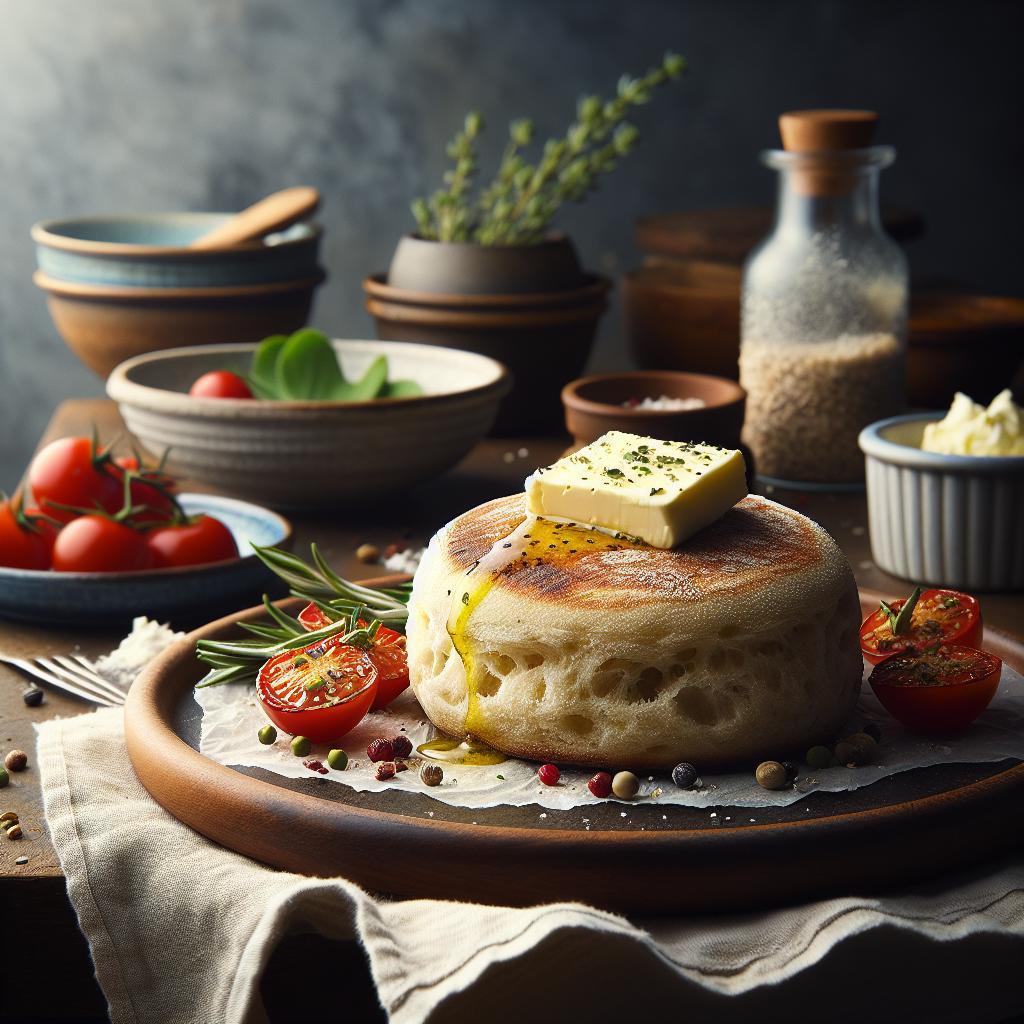
Toast halves lightly and smear with room-temperature butter for a classic experience that highlights the open crumb. The nooks hold fat and spreads, giving pleasing contrast in each bite.
For savory builds, top with smashed avocado and a poached egg or smoked salmon and cream cheese. Bold flavors pair well with the mild tang of sourdough muffins.
Nutrition & Storage for sourdough muffins
Store cooled muffins in an airtight container at room temperature up to three days. For longer storage, slice and freeze; reheat directly from frozen in a toaster for best texture.
Each muffin contains roughly 150 kcal with moderate protein and carbohydrate. Freeze portions to preserve texture and streamline meal prep.
| Nutrient | Per Muffin |
|---|---|
| Calories | 150 kcal |
| Protein | 5 g |
| Carbohydrates | 28 g |
| Fat | 3.5 g |
Q&A about sourdough muffins
This short Q&A clarifies technique points and expectations for the recipe. Each answer focuses on practical troubleshooting and observable cues.
References below point to core fermentation and flour science information for deeper reading.
What makes sourdough English muffins different?
They rely on a wild-yeast culture instead of only commercial yeast, producing a tangy flavor and chewier texture. Wild fermentation alters acid profile and shelf life.
For technical context, review how wild cultures work in sourdough research and descriptions.
Why do nooks and crannies form?
Open pockets result from retained gas during fermentation combined with gentle shaping. Proper gluten development and careful griddling preserve these air pockets.
Gluten structure plays a mechanical role; read more about protein networks at gluten.
Can I use different flours?
Yes. All-purpose flour works well, while higher-protein flours deliver more structure and larger pockets. You can add whole-grain flours up to 20–30% without sacrificing texture if you adjust hydration.
Understanding flour types helps predict absorption and crumb behavior; basic flour science is summarized on Wikipedia under relevant articles.
Is griddling required?
Griddling forms the thin, crisp crust associated with English muffins and handles the flat shape efficiently. You can finish in a moderate oven for slightly different crust characteristics.
For stylistic background on the product, consult the historical and descriptive entry for English muffin.
Practical Notes and Internal Resources
Track your variables: starter activity, ambient temperature, and dough texture. Adjust proof times based on those observations to reproduce the result consistently.
For related recipes and variations, see internal resources: sourdough muffins tag and a companion guide at sourdough English muffin recipe. Use batch notes to refine timings between bakes.
FAQ
The following concise FAQ answers common production and troubleshooting questions. Use it as a quick reference while you bake.
Each answer provides clear steps or checks you can perform in real time.
How do I know my starter is ready?
A ready starter doubles and shows a network of bubbles within 4–6 hours of feeding at warm room temperature. It smells pleasantly acidic, not sharply sour.
Can I speed up the process?
Yes. Slightly warming the environment shortens proof times or adding a pinch of instant yeast (about 0.5 g) increases reliability. Note that speed reduces fermentation-derived complexity.
Why did my muffins turn out dense?
Common causes are underdeveloped gluten, low hydration, or underproofing. Check elasticity and allow a fuller final proof next time to let gas expand the crumb.
How do I get uniform browning?
Preheat the griddle thoroughly and use medium-low heat to promote even color. Rotate the pan if your heat source has hot spots and monitor surface temperature.
Can I add seeds or herbs?
Yes. Fold seeds or finely chopped herbs into the dough before shaping. Keep additions light to preserve dough structure and the classic crumb.
Final note: consistent weighing, observing starter activity, and controlled proof times yield repeatable, bakery-quality results. Track each variable and refine small adjustments across bakes to shorten the feedback loop between observation and consistent outcomes.

See also: sourdough muffins
See also: sourdough muffins