

There is a reason Greek gyros remain a global favorite: bright citrus, fragrant oregano, and cool, creamy tzatziki form a balanced flavor profile that satisfies both the palate and the memory. This recipe focuses on reliable technique—marinade chemistry, heat control, and assembly—to produce consistent, restaurant-quality chicken gyros at home.
- Key takeaway: Marinate longer for deeper flavor and tender meat.
- Key takeaway: Properly drained cucumber and strained yogurt prevent watery tzatziki.
- Key takeaway: High-heat sear plus brief resting yields juicy, browned chicken.
Prep and Cook Time
Preparation: 20 minutes. Marinating: 4 hours or overnight. These windows let acid and aromatics penetrate the meat for improved texture and flavor.
Cooking: 15 minutes. Total: Approximately 4 hours and 35 minutes including marinating. Plan ahead for the best result and reduced stress at cook time.
Yield
Serves 4 hearty portions, ideal for family meals or a small gathering. Portion controls let you scale this recipe up without changing the core technique.
Leftovers reheat well; consider serving sliced gyro chicken over a grain bowl for meal prep. This keeps the flavors vibrant while reducing waste.
Difficulty Level
Medium. The techniques are straightforward but require attention to timing and heat. They reward careful cooks with authentic flavor and texture.
If you follow the sequence—marinate, sear, rest, and assemble—you achieve consistent results. Each step protects moisture and boosts flavor.
Ingredients
This ingredients list separates components so you can prep efficiently. Use quality olive oil and full-fat Greek yogurt for the best mouthfeel and aroma.
References: learn about the traditional gyro on gyro and the role of yogurt-based sauces via tzatziki.
For the Marinated Chicken
- 1.5 lbs boneless, skinless chicken thighs, trimmed and halved
- 3 tbsp extra virgin olive oil
- 3 cloves garlic, minced
- Juice and zest of 1 lemon
- 2 tsp dried oregano
- 1 tsp ground cumin
- 1 tsp smoked paprika
- Salt and freshly ground black pepper, to taste
For the Creamy Tzatziki Sauce
Use strained full-fat Greek yogurt for a thick base. If your yogurt is loose, strain it in a cheesecloth-lined sieve for 1-2 hours to remove excess whey.
- 1 cup Greek yogurt (full-fat, strained)
- 1/2 English cucumber, finely grated and drained
- 2 cloves garlic, grated
- 1 tbsp fresh dill, finely chopped
- 1 tbsp extra virgin olive oil
- 1 tbsp lemon juice
- Salt and pepper to taste
For Assembly
Choose soft, pliable flatbread so the gyro folds without cracking. A lightly charred surface adds texture and aroma.
- 4 large pita breads or flatbreads (pita bread)
- 1 small red onion, thinly sliced
- Handful of ripe cherry tomatoes, quartered
- Fresh parsley or dill for garnish
Instructions
Follow these sequential steps for controlled results. Each action protects moisture and builds the gyro profile from base to finish.
Keep mise en place: have sauce chilled, vegetables sliced, and pita warmed before slicing the chicken. This speeds assembly and prevents soggy bread.
1. Marinate the Chicken
Whisk olive oil, lemon juice, garlic, oregano, cumin, paprika, salt, and pepper in a medium bowl. Add chicken and toss to coat thoroughly.
Cover and refrigerate for at least 4 hours or overnight. Longer marination allows acid and aromatics to tenderize fibers and infuse flavor.
2. Prepare the Tzatziki
Grate the cucumber, then press it in a sieve or towel to remove water. Excess moisture dilutes the sauce and can make the pita soggy.
Combine cucumber with Greek yogurt, garlic, dill, olive oil, lemon juice, salt, and pepper. Chill for at least 1 hour so flavors meld and the sauce thickens.
3. Cook the Chicken
Heat a heavy skillet or grill pan to medium-high. Sear chicken 5–6 minutes per side until well browned and 165°F internal temperature.
Avoid overcrowding the pan to preserve caramelization. Rest the chicken 5 minutes before slicing thinly against the grain.
4. Warm and Assemble
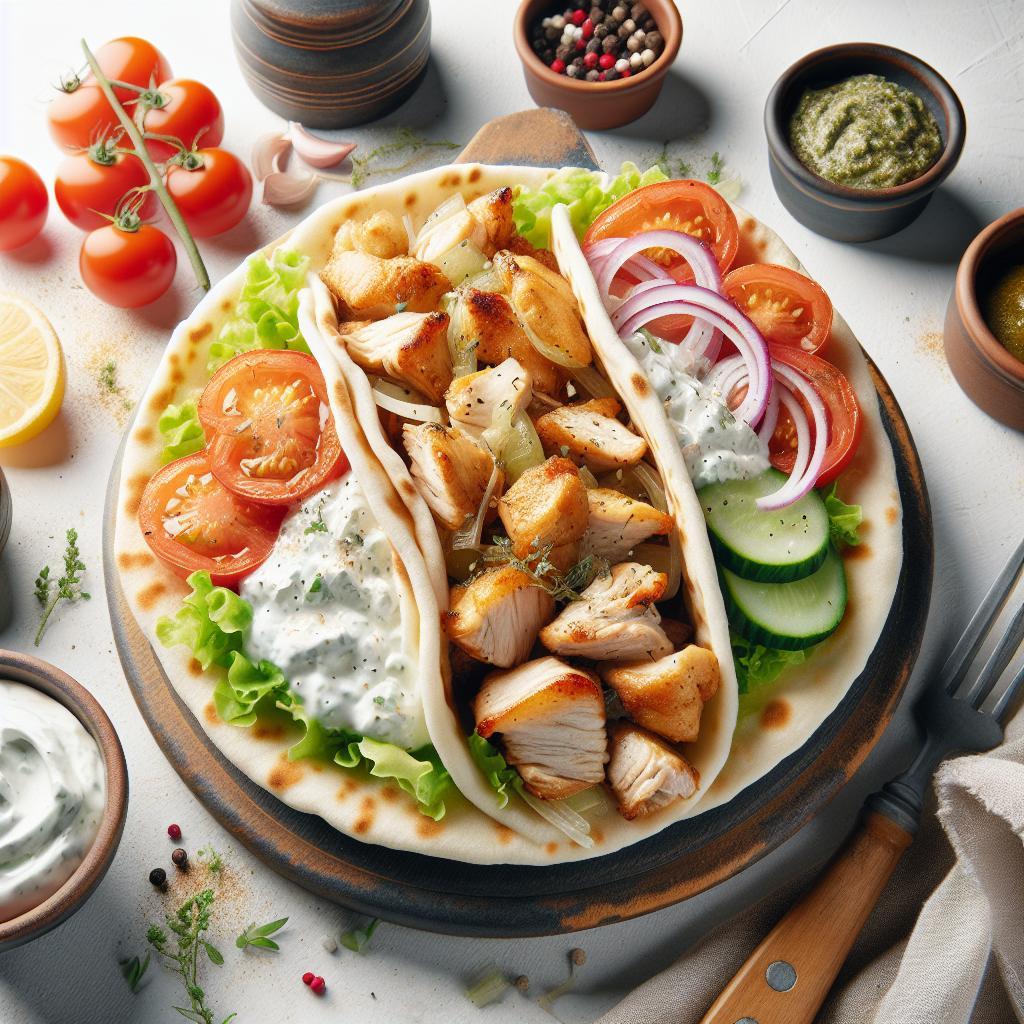
Toast pita briefly on a dry skillet or over a low flame to make it pliable. Spread tzatziki first to create a moisture barrier.
Layer sliced chicken, onions, tomatoes, and herbs. Fold and serve immediately for the best textural contrast between warm meat and cool sauce.
Tips for Success
Small technique choices create big differences. Use thighs for reliable juiciness; if you prefer white meat, adjust cook time and monitor temperature closely.
Drain shredded cucumber thoroughly. Also, strain yogurt when you seek an extra-dense tzatziki texture that clings well to the pita and chicken.
- Use fresh herbs: Fresh dill brightens the sauce more than dried herbs.
- High heat for sear: Sear quickly to lock juices, then rest briefly before slicing.
- Plan ahead: Marinate overnight when possible for deeper flavor penetration.
Allow at least one hour between finishing the tzatziki and assembling. Chilled sauce contrasts the hot chicken and brightens the overall plate.
After the warning, keep the tzatziki chilled until service to maintain food safety and optimal texture. Yogurt-based sauces can soften if left at room temperature too long.
Serving Suggestions to Elevate the Experience
Serve gyros alongside a crisp Greek salad for balance and acidity. For an internal pairing, link to an internal recipe like classic Greek salad to guide readers toward a complementary side.
For crunch, offer baked potato wedges seasoned with oregano. Provide an internal option such as crispy potato wedges so readers can expand the meal without leaving your site.
Garnish with lemon wedges for optional brightness. A pinch of smoked paprika or a drizzle of extra-virgin olive oil adds a finishing note that ties the dish together.
Nutrition
This recipe balances protein with moderate carbs from pita and healthy fats from olive oil and yogurt. Adjust portions and bread type to match dietary goals.
Per serving estimates provide a practical baseline to plan meals and track macronutrients when preparing multiple servings.
| Nutrient | Per Serving |
|---|---|
| Calories | 420 kcal |
| Protein | 38 g |
| Carbohydrates | 30 g |
| Fat | 18 g |
Background and Provenance
Gyros trace their modern form to Greek street-food traditions that adapt vertical rotisserie cooking. The concept parallels other wrapped meats in Mediterranean cuisines.
Explore the wider context of Greek cuisine to understand how regional ingredients like olive oil and lemon shape flavor conventions. Also review olive oil production basics at olive oil.
FAQ
What makes this chicken gyro recipe authentic?
The recipe uses classic aromatics: lemon, garlic, and oregano. These ingredients replicate the herb-forward profile typical of Greek street gyros.
Additionally, using full-fat strained yogurt for tzatziki and warming pita before assembly creates the traditional temperature and texture contrasts.
How long should I marinate the chicken?
Marinate at least 4 hours for noticeable flavor and tenderization. Overnight marination produces a deeper, more integrated taste.
Do not exceed 24 hours for citrus-heavy marinades, as acids can start to change the meat texture if left too long.
Can I use chicken breast instead of thighs?
Yes. Chicken breast works but requires shorter cooking time and lower heat to avoid drying. Pound breasts to even thickness for uniform doneness.
If you prefer thighs, they tolerate higher heat and yield more forgiving results due to slightly higher fat content.
How can I make tzatziki thicker and less watery?
Strain yogurt overnight and compress grated cucumber thoroughly. Salt the cucumber lightly, let sit, then squeeze out moisture with a towel before mixing with yogurt.
Use fresh dill and freshly grated garlic for the most dynamic flavor. Chill the sauce so it firms up and melds properly before serving.
How do I store leftovers safely?
Store components separately when possible: keep chicken in an airtight container and tzatziki refrigerated. Properly chilled, both last 3–4 days.
Assemble only what you plan to eat immediately to protect pita texture. Reheat chicken gently to avoid overcooking while preserving juiciness.
For further reading on related topics, consult these Wikipedia articles: Gyro, Tzatziki, and Pita bread.
Opa! Serve immediately and enjoy the balanced contrast of seared chicken and cooling tzatziki. This technique-driven approach produces gyros that honor tradition while remaining accessible to home cooks.
See also: Chicken Gyro