

Cracking the Code: The Chemistry Behind Perfect Boiled Eggs treats the boiled egg as a technical problem solved by temperature, time, and simple chemistry. Understanding those variables gives you control over texture, peelability, and appearance every time.
- Control temperature to tune whites and yolks precisely.
- Adjust pH or aging for easier peeling.
- Use an ice bath to stop cooking and protect yolk color.
Prep and Cook Time
Plan for minimal hands-on time and consistent results by prepping eggs and tools in advance. Remove eggs from the refrigerator 10–20 minutes before cooking to reduce thermal shock when they hit hot water.
Start your simmer and use a timer to hit repeatable doneness. Typical timings span from soft to hard, and maintaining a stable temperature matters more than aggressive boiling.
- Preparation: 5 minutes
- Cooking: 6–12 minutes (target depends on desired doneness)
- Total: 11–17 minutes
Yield
This method scales linearly: a medium pot comfortably accommodates 6–8 large eggs in a single layer. Crowding changes water flow and temperature stability, so use multiple pots or larger vessels for bigger batches.
Store extras in the fridge and peel just before serving when possible. For salads or deviled eggs, cook to firm yolks; for toast or ramen, aim for jammy yolks.
Difficulty Level
Boiling eggs rates as easy, but precision yields professional results. Small adjustments in temperature and timing turn inconsistent eggs into reliably great ones.
With a thermometer and a timer you reproduce results across batches. Even novices can learn to control texture within a few tries.
Ingredients
Use simple ingredients; the chemistry is in the egg itself and the cooking environment. Select large eggs for predictable cooking curves and consider slight aging if peelability matters.
Optional additives to the water can help with cracking or peeling, but they do not change core protein chemistry. Keep ice and a bowl ready to build a shock-cooling bath.
- 4 large eggs
- Cold water to cover eggs by ~1 inch
- 1 tsp baking soda or vinegar (optional) to help with peeling
- Ice water bath for rapid cooling
Instructions
Follow a controlled-simmer approach rather than a full rolling boil to protect tender whites. Rapid agitation inside the shell causes textural degradation and increases shell breakage.
Keep each step deliberate: bring water to a simmer, lower eggs in gently, time precisely, then cool rapidly. Use a slotted spoon to avoid jarring the shells when placing eggs in or out.
- Bring eggs to room temperature: Let eggs sit 10–20 minutes to reduce cracking risk.
- Prepare water: Fill a medium pot with cold water and heat to a gentle simmer (about 85–95°C). Add baking soda or vinegar if you prefer easier peeling.
- Lower eggs carefully: Use a slotted spoon and place eggs into simmering water to avoid sudden shocks.
- Maintain a gentle simmer: Aim for a steady temperature rather than rolling boil so proteins coagulate slowly and evenly. Whites set around the lower temperature range; yolks require slightly higher heat.
- Time by desired doneness:
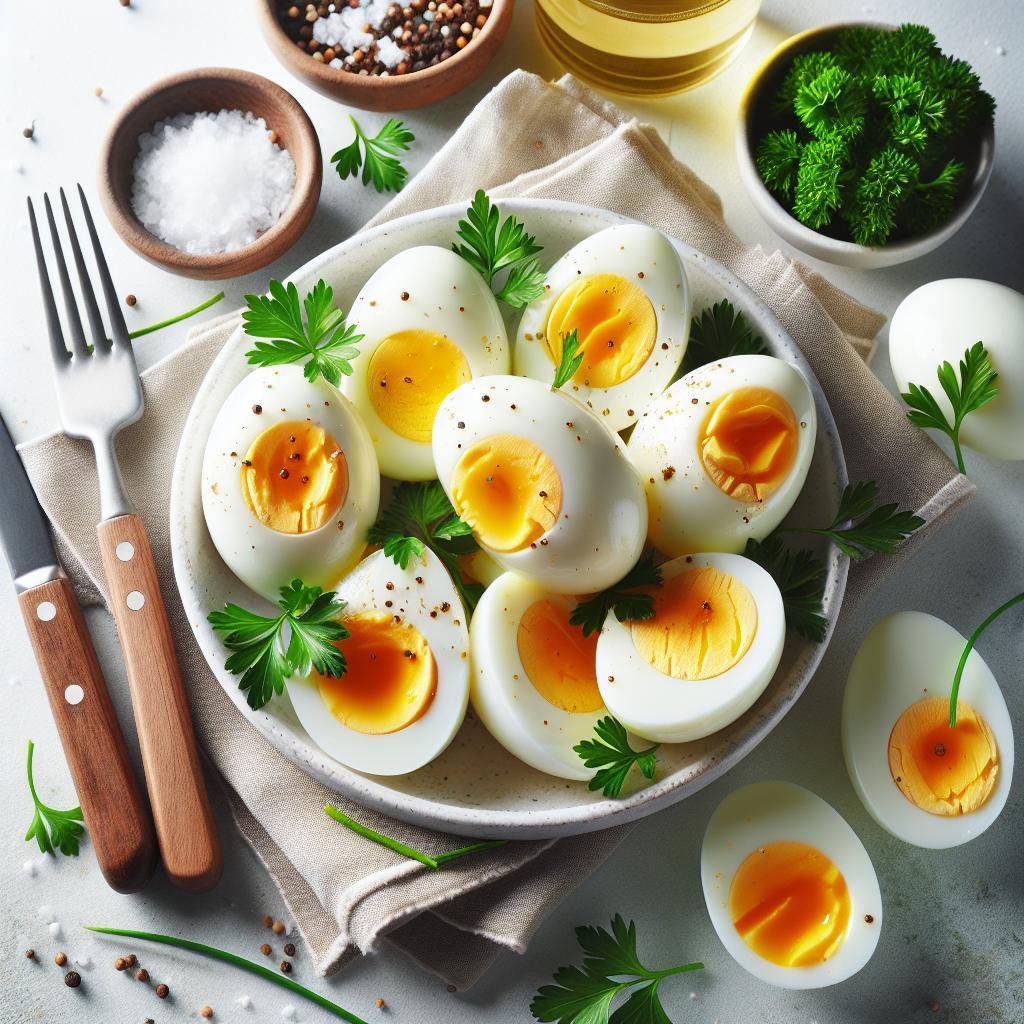
- 6 minutes: soft-boiled, jammy yolk with set whites
- 8 minutes: medium, custard-like yolk
- 10–12 minutes: hard-boiled, fully set yolk
- Ice bath: Transfer eggs immediately to an ice water bath for at least 5 minutes to halt cooking and shrink the interior slightly for easier peeling.
- Peeling: Tap and roll to crack the shell, peel from the wider end, and rinse under cool water to remove small shell fragments.
After cooling, peel eggs just before serving to preserve surface moisture. If you must store peeled eggs, keep them moist in an airtight container and use within 24 hours.
Tips for Success
Understand what happens inside the egg: heat unfolds proteins and they re-form into a network that traps water and fat. Read about protein denaturation in detail on protein denaturation.
Older eggs generally peel more easily because their pH shifts over time, loosening the membrane. For technical context, review egg structure on egg composition.
- Avoid rolling boil; maintain a steady simmer for tender whites.
- Add a small amount of baking soda to raise pH or a dash of vinegar to help seal cracks.
- Cool quickly to stop chemical reactions and preserve yolk color and texture.
- Use older eggs when easy peeling is a priority for salads or deviled eggs.
Protein specifics matter: egg whites are rich in albumin proteins, which coagulate at lower temperatures than yolk proteins. Match time and temperature to the coagulation ranges for desired texture.
Serving Suggestions
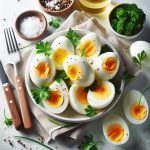
Present halved eggs with a sprinkle of flaky salt, cracked pepper, and smoked paprika for visual contrast and flavor lift. Fresh herbs or microgreens add color and a bright finish.
Pair jammy eggs with buttered toast or ramen for richness; use hard-boiled eggs in salads, sandwiches, or deviled eggs. Explore our related recipes for plating ideas: Perfect Deviled Eggs and Egg Cooking Tips.
Q&A
Common questions center on the green ring, texture control, and peeling techniques. Short answers help you troubleshoot quickly and improve outcomes.
The greenish ring forms when iron in the yolk reacts with sulfur from overcooked whites, producing iron sulfide. You avoid it by using lower temperatures and stopping cooking promptly.
In Summary
Perfect boiled eggs come from controlled heat, precise timing, and a few simple tricks. Think of cooking eggs as applied kitchen chemistry: manage variables and reproduce results.
Practice with your stovetop and a thermometer, and keep notes on water level, pot size, and timing for consistent outcomes. Small adjustments yield meaningful improvements in texture and peelability.

FAQ
How do I avoid the green ring around yolks?
Cook at lower temperatures and remove eggs from heat at the recommended times. Rapid cooling in ice water halts reactions that produce the green ring.
Why do older eggs peel more easily?
As eggs age, pH increases and the membranes loosen from the shell, which aids peeling. Store eggs a few days before boiling if peelability is important.
Can I add salt or vinegar to the water?
Yes; salt slightly raises boiling point and can help if a crack forms, while vinegar helps coagulate whites if an egg leaks. These are minor aids and do not replace temperature control.
What temperature makes a yolk jammy?
Yolks begin to thicken at higher temperatures than whites; short cook times at a controlled simmer produce jammy yolks. Use a timer and test a single egg to dial in exact minutes for your equipment.
How should I store boiled eggs?
Unpeeled, cooled hard-boiled eggs last about one week in the refrigerator. Peel just before serving for best texture and appearance.
For deeper reading on egg chemistry and food safety, consult detailed sources on pH and Salmonella.
See also: boiled eggs