


12 Ultimate Moroccan Couscous Recipes: Amazing Best Traditional & Modern Twists
Have you ever tasted a dish that carries centuries of culture and technique in a single spoonful, like Moroccan Couscous? That helps explain why this grain-based meal remains central to everything from Moroccan family feasts to Michelin kitchens. The guide below blends history, recipes, technique, nutrition, and tested chef strategies to master both authentic and inventive versions.
- Why Moroccan Couscous Matters: Cultural and Culinary Context
- Moroccan Couscous Ingredients: Traditional and Modern Lists
- Preparation Method: Step-by-Step Moroccan Couscous Technique
- Detailed Nutritional Info: Moroccan Couscous (per serving)
- Expert Pro-Tips to Elevate Moroccan Couscous
- Traditional vs Modern Moroccan Couscous: Comparison
- Serving, Pairings, and Plating Moroccan Couscous
- Complete Recipe: Classic Moroccan Couscous (Chef’s Format)
- FAQ
- What makes Moroccan Couscous different from regular couscous?
- Can I make a gluten-free Moroccan Couscous?
- How long does cooked Moroccan Couscous keep?
- Is it authentic to add new ingredients like roasted squash or kale?
- What wine or beverage pairs best with Moroccan Couscous?
- Conclusion
- Deep cultural roots: Couscous as a communal ritual and seasonal staple.
- 15+ chef-tested techniques: Steaming, infusing, and pairing for texture and aroma.
- Practical recipes: Classic Berber meat and vegetable stews plus modern plant-forward twists.
- Nutrition & plating: Per-serving macros and restaurant-ready presentation tips.
Why Moroccan Couscous Matters: Cultural and Culinary Context
The history of Moroccan Couscous spans North African Berber traditions, seasonal harvests, and communal celebrations. Families passed down steaming techniques and spice blends through generations, creating regional variations tied to festivals and religious observances.
Today, professional kitchens respect those roots while experimenting with new proteins, grains, and plating. For a concise primer, consult Couscous on Wikipedia which summarizes origins and spread across the Mediterranean.
Moroccan Couscous Ingredients: Traditional and Modern Lists
This ingredients section provides exact metric and imperial measures for a classic Moroccan couscous serving 6. Substitutions for modern variations follow for quick adaptation.
Two clear lists appear below: the classic stew and the couscous grain itself. Use the measured list to build consistent results in home and professional kitchens.
Classic Moroccan Couscous Stew (serves 6)
- 1.5 kg lamb shoulder, bone-in, cut into chunks — 3.3 lb
- 900 g mixed root vegetables (carrots, turnips, pumpkin) — 2 lb
- 2 large onions, finely chopped — 300 g — 10.5 oz
- 4 cloves garlic, crushed
- 1 tsp saffron threads, soaked in 30 ml warm water
- 2 tbsp Ras el Hanout — 30 ml (approx)
- 1 tsp ground turmeric, 1 tsp ground ginger, 1 tsp paprika
- Salt and freshly ground black pepper to taste
- 60 ml olive oil — 4 tbsp
- 1.5 L water or light stock — 6 cups
- Fresh cilantro and flat-leaf parsley for finish
Moroccan Couscous Grain (base) — yields 6 servings
- 600 g couscous semolina — 3 cups
- 450 ml water or stock, simmering — 1.9 cups
- 30 g butter or 30 ml olive oil — 2 tbsp
- 1 tsp salt
- Optional: 100 g chickpeas, cooked — 1/2 cup

Preparation Method: Step-by-Step Moroccan Couscous Technique
The method below separates the stew and couscous workflows so timing aligns. Begin the stew first; traditional steaming and layering create the signature texture and aroma.
Follow chef notes to balance moisture and perfume. Each step emphasizes active technique: browning, deglazing, controlled simmering, and multiple steam phases for light, separate grains.
Step 1 — Building the Stew
Heat olive oil in a heavy pot. Brown lamb pieces in batches to build fond, then remove and set aside. Sear onions until translucent, then add garlic and spices; toast briefly to bloom aromatics.
Return meat to pot, add saffron water, stock, and seasonings, then bring to a gentle simmer. Skim any foam, cover, and cook 60–90 minutes until lamb is tender but not falling apart; add vegetables in the last 30 minutes to avoid overcooking.
Step 2 — Preparing the Couscous Grains
Place semolina in a large bowl, sprinkle with 1 tsp salt. Slowly pour hot water or stock while fluffing with a fork to hydrate evenly. Add butter or oil and let rest 5–8 minutes, then fork-fluff again.
For restaurant texture, steam the couscous in a couscoussier basket over simmering stew for 15–20 minutes. Remove, fluff with olive oil, and return to steam for a second 10–12 minute phase if needed. This two-stage steaming yields airy, separate grains.
Chef’s Notes on Texture
If you lack a couscoussier, use a large metal sieve over a covered pot of simmering liquid; avoid direct contact with water. The steam, not boiling, cooks the semolina to the ideal bite.
For a lighter result, incorporate 50 g cooked quinoa or cauliflower rice into the finished couscous while tossing gently. This modern twist reduces glycemic load without losing mouthfeel.
Detailed Nutritional Info: Moroccan Couscous (per serving)
This nutritional profile reflects a traditional lamb and vegetable stew above with couscous grains and moderate olive oil. Values are approximate and depend on portion sizes and specific cuts of meat.
Per serving (1 of 6):
- Calories: ~620 kcal
- Protein: 34 g
- Fat: 22 g (Saturated fat: 6 g)
- Carbohydrates: 64 g (Fiber: 6 g, Sugars: 8 g)
- Sodium: 680 mg (varies by added salt and stock)
For a plant-forward version using chickpeas and roasted vegetables with olive oil, expect calories near 480 kcal and higher fiber (10–12 g) per serving.
Expert Pro-Tips to Elevate Moroccan Couscous
Restaurant-quality couscous depends on seasoning layers, timing, and presentation. Focus on aroma early; toast whole spices lightly then grind to freshen spice blends.
Finish with a bright acid (lemon juice), fresh herbs, and a drizzle of high-quality olive oil to lift the dense stew and highlight the grains.
Use saffron sparingly but intentionally — bloom it in warm stock then add to both stew and couscous for cohesive flavor. When using beef or chicken, reduce cooking time to avoid dryness.
Traditional vs Modern Moroccan Couscous: Comparison
Traditional Moroccan Couscous emphasizes communal preparation, coarse semolina, and long steaming that bonds family techniques to texture. The dish is celebratory and seasonal by design.
Modern interpretations shorten cooking, swap proteins, or add grains like farro and quinoa. These adaptations trade ritual for speed and meet contemporary dietary trends without discarding essence.
Pros of Traditional
Deeply layered flavors from slow braising. Textural contrast from multiple steam phases. Cultural authenticity that supports ritual serving and large gatherings.
Traditional spice blends like ras el hanout offer complexity not easily replicated by single spices, creating signature Moroccan warmth and umami.
Pros of Modern Twists
Faster weeknight versions that preserve key flavors. Plant-based and gluten-aware adaptations increase accessibility. Creative plating suits restaurant service and social media presentation.
Modern versions often use higher-acid finishing or fermented condiments for brightness, compensating for quicker cooking methods.
Serving, Pairings, and Plating Moroccan Couscous
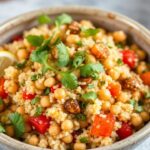
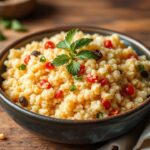
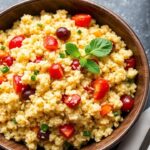
Serve Moroccan Couscous family-style on a large platter: spread couscous in a nest, create a well, spoon stew and vegetables over the center, and garnish with herbs and roasted nuts. This presentation honors tradition and enhances the eating experience.
Fresh mint tea or a light, fruity red wine pairs well. For non-alcoholic options, preserved lemon and olive tapenade on the side refresh the palate between bites.
Complete Recipe: Classic Moroccan Couscous (Chef’s Format)
Below is the concise chef-friendly recipe integrating the ingredient lists and methods into a single flow. Follow the timing cues for simultaneous stew and steaming.
Start the stew 90 minutes before serving; begin the first couscous hydration during the final 30 minutes so steaming finishes just before plating.
Ingredients (serves 6)
- 1.5 kg lamb shoulder (3.3 lb), chopped
- 600 g couscous semolina (3 cups)
- 900 g mixed root veg (2 lb)
- 2 large onions (300 g), 4 cloves garlic
- 1 tsp saffron, 2 tbsp Ras el Hanout
- 1.5 L stock (6 cups), 60 ml olive oil
- 30 g butter, salt, pepper, fresh herbs
Method
1. Brown lamb in batches, set aside. Sauté onions, garlic, and spices. Add meat, saffron water, stock and simmer 60–90 minutes. Add vegetables 30 minutes from the end.
2. Hydrate couscous with hot stock, rest 8 minutes, fluff. Steam in a couscoussier 15–20 minutes, fluff and steam again 10–12 minutes. Finish with butter and olive oil, adjust salt.
Nutritional Info
Per serving approximate: 620 kcal, 34 g protein, 22 g fat, 64 g carbs. Adjust when using chicken or chickpeas as main protein.
Expert Pro-Tips
Use warm stock for hydration, not boiling — too hot breaks semolina structure. Toast nuts and toss them with a pinch of salt prior to garnish for crunch harmony.
For a clean plating, spoon stew into the center of a couscous mound and sprinkle micro-herbs and lemon zest around the edge.
FAQ
What makes Moroccan Couscous different from regular couscous?
Traditional Moroccan Couscous pairs steamed semolina with a layered meat-and-vegetable stew and specific spice blends like ras el hanout. The cooking technique emphasizes multiple steam phases to achieve light, separate grains, unlike quick-cook instant couscous which hydrates directly in hot water.
Can I make a gluten-free Moroccan Couscous?
Yes. Substitute with steamed millet, quinoa, or cauliflower rice to mimic texture and serve with traditional stew. Note texture differences: quinoa is nuttier and cauliflower is lower calorie, so adjust seasoning and liquid accordingly.
How long does cooked Moroccan Couscous keep?
Store cooled couscous and stew separately in airtight containers; couscous holds 3–4 days in the refrigerator while the stew is best within 3 days. Reheat gently with reserved braising liquid to restore moisture.
Is it authentic to add new ingredients like roasted squash or kale?
Authenticity evolves regionally. Adding seasonal vegetables like roasted squash or braised kale respects the spirit of the dish while adapting to modern palates. Balance flavors and textures to maintain the core identity of Moroccan Couscous.
What wine or beverage pairs best with Moroccan Couscous?
Pair with a medium-bodied fruity red such as Grenache or Syrah for lamb versions; lighter chicken or vegetable couscous suits a crisp rosé. Non-alcoholic: mint tea or citrus-infused water brightens rich, spiced flavors.
Conclusion
Moroccan Couscous updates are both respectful and inventive: preserve steaming technique, layer spices, and use fresh finishing components to tie authentic and modern plates together. The structural approach in this guide helps cooks reproduce consistent, high-quality results.
Adopt one traditional method and one modern twist per service to learn contrasts quickly. With practice, timing becomes intuitive and the dish rewards creativity with memorable depth and texture.
See also: Moroccan Couscous