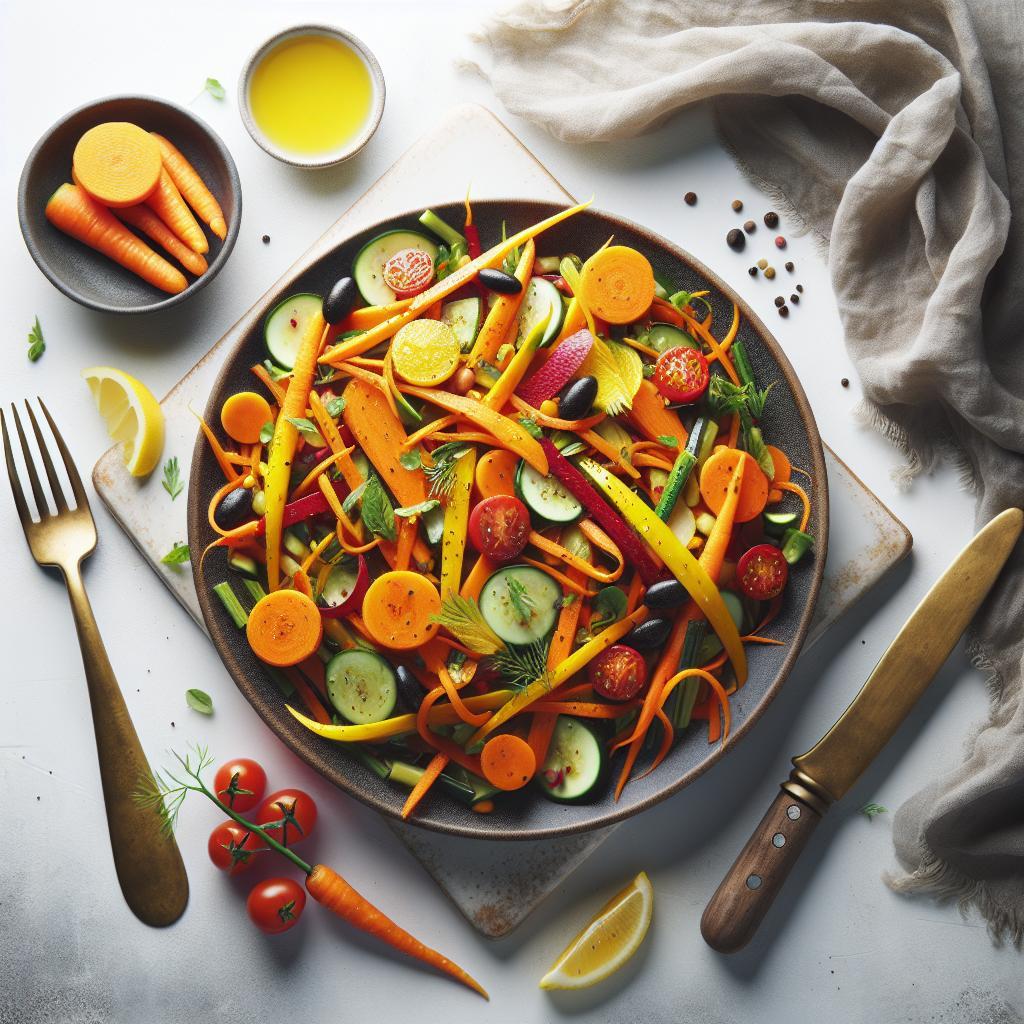

Zesty Moroccan Carrot Salad brightens any menu with bold spice, citrus, and crunchy almonds. This proven recipe pulls simple carrots into a layered, aromatic dish that complements grilled proteins and grain bowls alike.
- Prep and Cook Time
- Yield and Difficulty
- Ingredients
- Instructions
- Tips for Success
- Serving Suggestions and Pairing Tips
- Nutrition Overview
- Context and Culinary Notes
- Q&A
- What makes Moroccan carrot salad distinct from other carrot salads?
- Can I prepare this salad ahead of time?
- Is orange blossom water necessary?
- How can I adapt the salad for dietary needs?
- What dishes pair best with this salad?
- The Conclusion
- Quick prep: Ready in about 25 minutes, ideal for weeknights.
- Layered flavors: Cumin, cinnamon and orange blossom water add authentic depth.
- Versatile pairing: Works with grilled meats, couscous, or vegetarian mains.
Prep and Cook Time
Preparation: 15 minutes. The prep focuses on shredding carrots evenly to ensure consistent texture and dressing absorption. Use a box grater, mandoline or julienne peeler for best results.
Cook Time: 10 minutes. Toasting almonds and briefly warming spices in the dressing improves aroma and mouthfeel. Total time from start to finish is about 25 minutes.
Yield and Difficulty
This recipe yields serves 4 as a vibrant side dish. It scales easily: multiply proportions for larger gatherings while keeping spice ratios steady to preserve balance.
Difficulty: Easy. The technique relies on basic knife and pan skills, making it accessible to home cooks and useful for culinary students mastering spice pairing.
Ingredients
Choose fresh, firm carrots and quality extra-virgin olive oil for the best flavor profile. The ingredient list emphasizes balance: acid, fat, sweet, and spice to highlight carrot sweetness while adding savory complexity.
Core ingredients include grated carrots, citrus, olive oil, honey or a vegan alternative, toasted nuts, fresh herbs, and warm spices. Optional orange blossom water gives an authentic aromatic lift used in North African cuisine.
- 4 large carrots, peeled and grated or julienned
- 2 tbsp olive oil (extra virgin for fruity depth)
- 1 tbsp fresh lemon juice
- 1 tbsp honey (substitute maple syrup for vegan)
- 1 tsp ground cumin
- 1/2 tsp ground cinnamon
- 2 cloves garlic, finely minced
- 1/4 cup fresh cilantro, chopped
- 1/4 cup fresh flat-leaf parsley, chopped
- 1/4 cup toasted slivered almonds
- Salt and freshly ground black pepper, to taste
- 1 tsp orange blossom water (optional)
Instructions
Follow the sequence to preserve texture and flavor: prepare raw elements first, toast nuts second, then mix the dressing and combine. Resting the salad briefly concentrates flavor without making carrots soggy.
Read through all steps before you start. The method uses gentle tossing and a short chill to let spices bloom and herbs remain fresh.
Step-by-step
- Prepare the carrots: Wash and peel carrots. Shred or julienne into uniform strips to maximize surface area and dressing coverage.
- Toast the almonds: Heat a dry skillet over medium and toast slivered almonds until golden, about 3–4 minutes. Stir constantly to avoid burning, then transfer to a plate to cool.
- Mix the dressing: Whisk olive oil, lemon juice, honey, minced garlic, cumin, cinnamon and orange blossom water. Season with salt and pepper to taste; warm spices marry best when combined with acid and oil.
- Combine: Place grated carrots in a large bowl, pour dressing over them, and toss thoroughly so each strand is coated. Proper tossing ensures consistent flavor in every bite.
- Add herbs and almonds: Fold in cilantro and parsley, then scatter toasted almonds on top for crunch. Serve immediately or chill 20–30 minutes for a cooler, melded profile.
Tips for Success
Pick carrots with firm texture and deep orange color for natural sweetness and best mouthfeel. Freshly ground spices lift the aroma; pre-ground spices can work but use fresher ones when possible.
Adjust sweetness and acidity to taste when you whisk the dressing. Start with measured amounts and tweak small increments—this preserves the recipe’s intended balance.
For texture contrast, add pomegranate seeds or roasted chickpeas as a garnish. These elements add color and a pleasing pop in every forkful.
Serving Suggestions and Pairing Tips
This salad pairs exceptionally well with grilled proteins or grain dishes. Try it alongside spiced lamb chops or a simple roast to provide a bright, cleansing counterpoint to richer mains.
It also complements couscous- or quinoa-based bowls; the citrus and herbs contrast pleasantly with warm grains. For a complete mezze spread, combine several salads for varied textures and flavors.
Garnish with extra herbs, a dusting of smoked paprika, or a few more toasted almonds to lift visuals and repeat flavor notes. Presenting in a clear bowl showcases the vivid orange and green contrast.
When pairing, consider acidity: this salad’s lemon juice and optional orange blossom lift fatty meats and roasted vegetables. Balancing the plate reduces palate fatigue during a multi-course meal.
Nutrition Overview
Estimated values per serving: approximately 120 kcal, 2 g protein, 15 g carbs and 7 g fat. Carrots deliver vitamin A precursors and fiber while olive oil provides monounsaturated fats.
For specific dietary needs, adjust honey or replace with maple syrup for a vegan option. Salt reduction and nut substitutions can tailor the salad to allergy and sodium requirements.
| Nutrient | Amount per Serving |
|---|---|
| Calories | 120 kcal |
| Protein | 2 g |
| Carbohydrates | 15 g |
| Fat | 7 g |

Context and Culinary Notes
Moroccan carrot salad reflects North African spice layering where heat, sweetness, citrus, and floral notes coexist. Ingredients like orange blossom water and cinnamon appear across traditional preparations to add aromatic complexity.
For background on Moroccan culinary traditions and spice usage, review the cultural overview on Moroccan cuisine. To understand the spice profile of cumin, consult cumin and for orange blossom water, see orange flower water.
Carrot varieties influence sweetness and texture; the botanical details are summarized on the carrot page. Fresh herbs like cilantro (see coriander) deliver aromatic lift and color contrast.
Q&A
The following questions address common technique and serving choices for this salad. Each answer focuses on practical kitchen applications and substitutions to maintain the recipe’s integrity.
Read the Q&A to troubleshoot texture, scaling, and pairing decisions. These clarifications help keep the salad balanced across variations and dietary needs.
What makes Moroccan carrot salad distinct from other carrot salads?
Moroccan versions emphasize warm spices—cumin and cinnamon—and citrus elements rather than creamy dressings. This creates a flavor profile that is bright, aromatic, and suited to pairing with savory mains.
The use of floral notes such as orange blossom water or a hint of preserved lemon is common and differentiates it from more generic carrot salads.
Can I prepare this salad ahead of time?
Yes, you can; however, for optimal texture, store the salad chilled without nuts for up to 24 hours. Add toasted almonds just before serving to preserve the crunch.
If you anticipate longer storage, keep the dressing separate and toss right before serving to maintain carrot crispness and herb vibrancy.
Is orange blossom water necessary?
Orange blossom water is optional but authentic, offering a subtle floral lift. If unavailable, a small splash of orange juice will contribute citrus brightness without the floral nuance.
Use it sparingly—typically 1 teaspoon for this recipe—since too much can impart a perfumed quality that overpowers other elements.
How can I adapt the salad for dietary needs?
For vegan diets, swap honey for maple syrup or agave. To reduce sodium or nut exposure, omit nuts and increase seeds or roasted chickpeas for crunch and protein.
For low-FODMAP adaptations, reduce garlic and increase herb and citrus to retain flavor complexity without irritating ingredients.
What dishes pair best with this salad?
It pairs with grilled or roasted meats and complements grain dishes. Try it with couscous bowls or alongside a simple roasted chicken to balance richer mains.
The salad also fits well within a mezze selection, offering a bright, acidic component that cleanses the palate between richer preparations.
The Conclusion
Zesty Moroccan Carrot Salad offers a fast, flavorful side that scales from weeknight dinners to festive spreads. Its balance of citrus, warm spice and fresh herbs makes it a reliable complement to a wide range of mains.
Follow the seven-step method for consistent texture and flavor, and use the tips to adapt the recipe to dietary needs or presentation goals. This salad remains a practical way to showcase simple ingredients with confident seasoning.
See also: Carrot Salad