
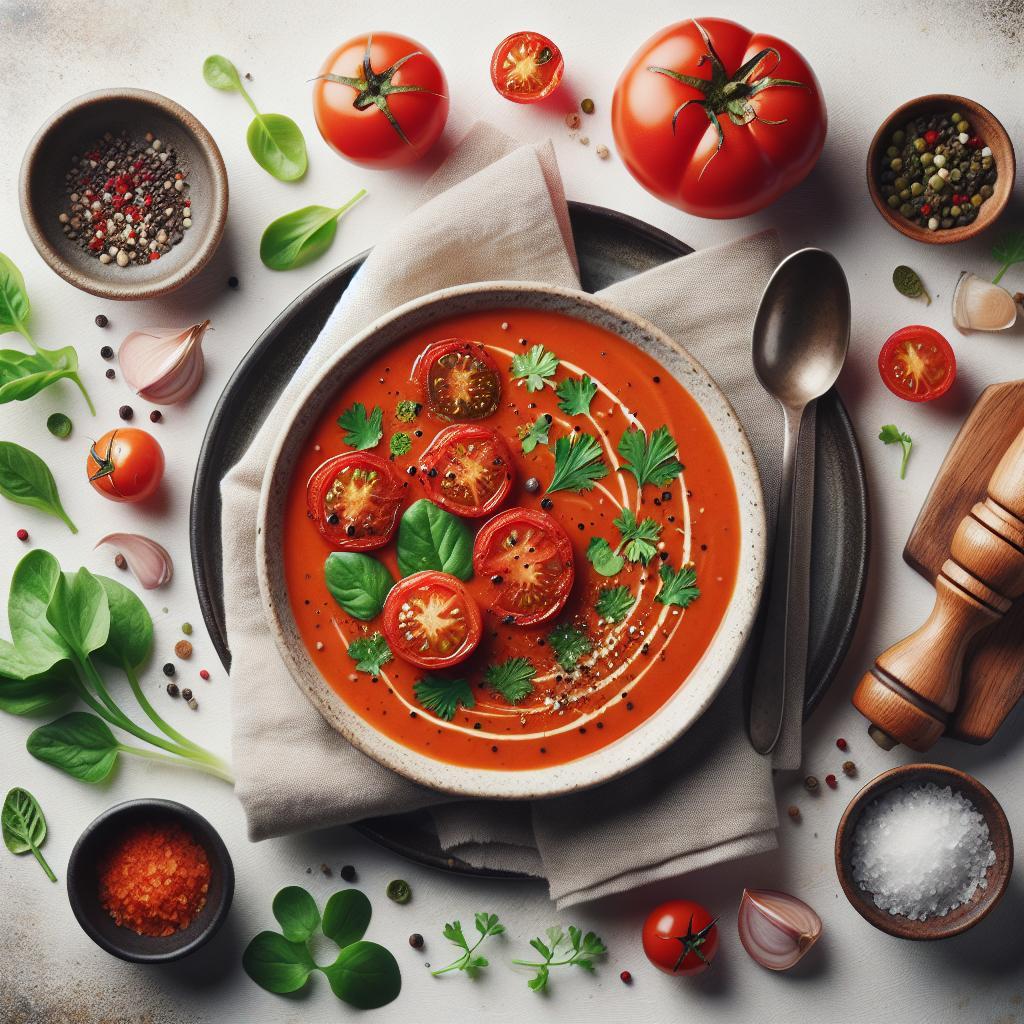

Roasted tomato soup elevates the familiar bowl into a richer, more layered experience by concentrating sweetness and adding a smoky edge. Roasting tomatoes and aromatics first captures caramelized notes and builds an umami backbone that makes the soup sing.
- The Art of Roasting Tomatoes for Maximum Flavor
- Why Browning Matters: Maillard and Caramelization
- Essential Ingredients to Elevate Your Tomato Soup
- Step-by-Step Guide to Making Perfectly Cozy Roasted Tomato Soup
- Creative Toppings and Pairings to Enhance Your Bowl
- Recipe Details
- Tips for Success
- Nutritional Snapshot
- FAQ
- Roast for depth: Caramelization concentrates sugars and enhances savory compounds.
- Use meaty tomatoes: Roma or plum varieties give body and reduce excess water.
- Finish with fat: Olive oil or cream carry flavor and create a silky mouthfeel.
- Strain for texture: Passing the puree through a fine sieve yields a restaurant-quality finish.
The Art of Roasting Tomatoes for Maximum Flavor
Roasting transforms tomato chemistry by driving moisture off and enabling surface browning reactions that raw or boiled tomatoes cannot match. These changes produce both concentrated sweetness and savory compounds that deepen the bowl.
Start with ripe, firm fruit; meaty types concentrate flavor under oven heat. For background on tomato varieties and structure see Tomato. Aim for even browning without full charring—excessive blackening adds bitterness.
Why Browning Matters: Maillard and Caramelization
Browning creates complex aroma molecules. The Maillard reaction between amino acids and sugars yields savory, roasted notes; caramelization of sugars adds sweet, nutty tones.
Control temperature and time to favor these reactions. For the science, consult Maillard reaction and Caramelization for concise explanations of the processes you leverage while roasting.
Essential Ingredients to Elevate Your Tomato Soup
Ingredient choice determines texture, aroma, and balance. Focus on a short, high-quality list: ripe tomatoes, aromatics, a fat to carry flavors, and a liquid to set body.
Professionals emphasize quality oil and fresh produce. Use extra-virgin olive oil for finish and cooking; its flavor and stability are documented in sources like olive oil. Keep ingredient amounts proportional when scaling for service.
- 3 pounds ripe Roma tomatoes, halved
- 4 cloves garlic, smashed
- 1 medium yellow onion, diced
- 3 tablespoons extra-virgin olive oil
- 1 teaspoon sea salt, adjust to taste
- ½ teaspoon freshly cracked black pepper
- 1 teaspoon fresh thyme or rosemary leaves
- 2 cups vegetable broth (low sodium)
- 1 tablespoon tomato paste (optional)
- ½ cup full-fat coconut milk or heavy cream
- 1 teaspoon granulated sugar (optional)
Step-by-Step Guide to Making Perfectly Cozy Roasted Tomato Soup
Follow a clear workflow that separates roasting, sweating, simmering, and finishing. This sequence preserves aromatics and extracts maximum flavor from each component.
Preheat the oven to 400°F (200°C). Arrange halved tomatoes cut-side up on a lined baking sheet and scatter smashed garlic and herbs between pieces. For a deeper roast, use a rimmed sheet and leave space between tomatoes to encourage airflow.
- Drizzle 2 tablespoons olive oil over tomatoes, season with sea salt and cracked black pepper, toss gently.
- Roast 35–40 minutes until edges caramelize and flesh softens; stir once midway for even browning.
- Sweat diced onion in the remaining 1 tablespoon olive oil over medium heat until translucent and golden, about 6–8 minutes.
- Cook tomato paste with onions for 1–2 minutes to deepen sugars and remove any raw edge.
- Combine roasted tomatoes and garlic with the onions, pour in vegetable broth, and deglaze the pan to collect fond.
- Simmer gently 15 minutes to marry flavors; then blend until silky using an immersion blender or in batches in a countertop blender.
- Finish with coconut milk or cream and a small pinch of sugar if needed; warm gently—avoid boiling after adding dairy.
- Adjust seasoning and serve hot with chosen garnishes.
For additional texture control, pass the blended soup through a fine sieve to remove seeds and husks. This extra step yields a restaurant-standard mouthfeel and a cleaner presentation.
If you want a quick reference to similar roasting methods, see the internal guide on roasting technique which covers pan spacing and rack placement for even color.
After you blend and strain, reheat the soup gently to serving temperature. Rapid boiling after adding dairy will separate fats and create a grainy texture.
Creative Toppings and Pairings to Enhance Your Bowl
Toppings add contrast: a bright herb, a crunchy seed, a fatty swirl, or an acidic drizzle can all lift the finished soup. Combine textures so each spoonful offers balance.
Use finishing touches deliberately to increase interest and encourage longer table engagement. Small add-ons change perception of richness and make the bowl look elevated.
- Fresh basil chiffonade for herbal brightness
- Toasted pumpkin seeds for crunch
- Swirls of basil pesto or chili oil for concentrated flavor bursts
- Shaved aged Parmesan or a dollop of Greek yogurt for tang and richness
- Crisped sourdough croutons or garlic naan for dipping
- Microgreens or edible flowers for color and elegance
Pair the soup with a simple green salad dressed with lemon vinaigrette to cut richness. For vegan service, use coconut milk and nutritional yeast instead of dairy and cheese.
For plating inspiration and pairing variations see the internal collection at Tomato Soup recipes which lists complementary sides and garnishes used in casual and fine-casual service.
Recipe Details
Prep and cook windows help you schedule the recipe for weeknight service or batch production. Timing affects texture; roast and simmer within recommended ranges for predictable results.
Preparation: 15 minutes. Roasting: 40 minutes. Simmering & blending: 25 minutes. Total time: ~1 hour 20 minutes. These windows allow Maillard and caramelization processes to develop without breaking down acidity control.
Yield: Serves 6 hearty bowls. Difficulty: Easy to Medium—suitable for home cooks seeking elevated flavor with manageable technique. Scale linearly by weight and keep oil and salt ratios consistent.
Tips for Success
Small technique choices yield significant improvements. Control roast time, select tomato varieties wisely, and balance acidity with fat or a touch of sugar when required.
Resting the soup overnight often improves harmony as flavors meld further. For a smoother mouthfeel, strain the puree and reheat gently before service; adjust seasoning after resting since salt perception changes with time.
- Choose fully ripe but firm tomatoes to avoid a watery soup.
- Allow slow caramelization—don’t rush the roast.
- If too acidic, add a pinch of sugar or a splash of coconut milk to balance.
- Try smoked paprika as a thyme substitute for warm, smoky character.
Nutritional Snapshot
This roasted tomato soup typically yields a light, nutrient-rich bowl with modest calories. Tomatoes supply vitamin C and lycopene; using low-sodium broth controls overall salt intake.
Per serving estimate: ~150 kcal, 3 g protein, 18 g carbs, 8 g fat. For dietary planning consult reliable nutrition references and adjust fats and salt to meet your needs. The savory sensation you perceive is linked to umami compounds amplified by roasting and reduction.
| Nutritional Info (per serving) | Calories | Protein | Carbs | Fat |
|---|---|---|---|---|
| Roasted Tomato Soup | 150 kcal | 3 g | 18 g | 8 g |
FAQ
What makes roasted tomato soup different from regular tomato soup?
Roasting concentrates tomato sugars and creates caramelized edges that add depth. Those roasted compounds combined with a proper simmer and finish produce a richer, smokier profile than a boiled soup.
Which tomatoes work best for roasting?
Choose meaty varieties like Roma or plum that have less free water and more flesh. These types hold structure and caramelize rather than collapse into a watery puree.
Can I make a creamy texture without dairy?
Yes. Blend roasted tomatoes with cooked potato, cauliflower, or soaked cashews for natural creaminess. Coconut milk also gives a rich mouthfeel while keeping the dish vegan-friendly.
How far ahead can I prepare the soup?
You can roast tomatoes a day ahead and refrigerate them in an airtight container. The soup often tastes better the next day as flavors meld; reheat gently and adjust seasoning before serving.
What pairs best with roasted tomato soup?
Classic pairings include grilled cheese, garlic bread, or a crisp green salad with lemon vinaigrette. For a lighter option, choose a simple grain bowl or a sandwich with pickled elements to cut richness.
Ready to serve: follow precise technique, respect timing, and finish thoughtfully to turn humble tomatoes into a standout soup. These method-focused steps deliver consistent results whether cooking for family or small dinner service.
See also: Tomato Soup
See also: tomato soup