
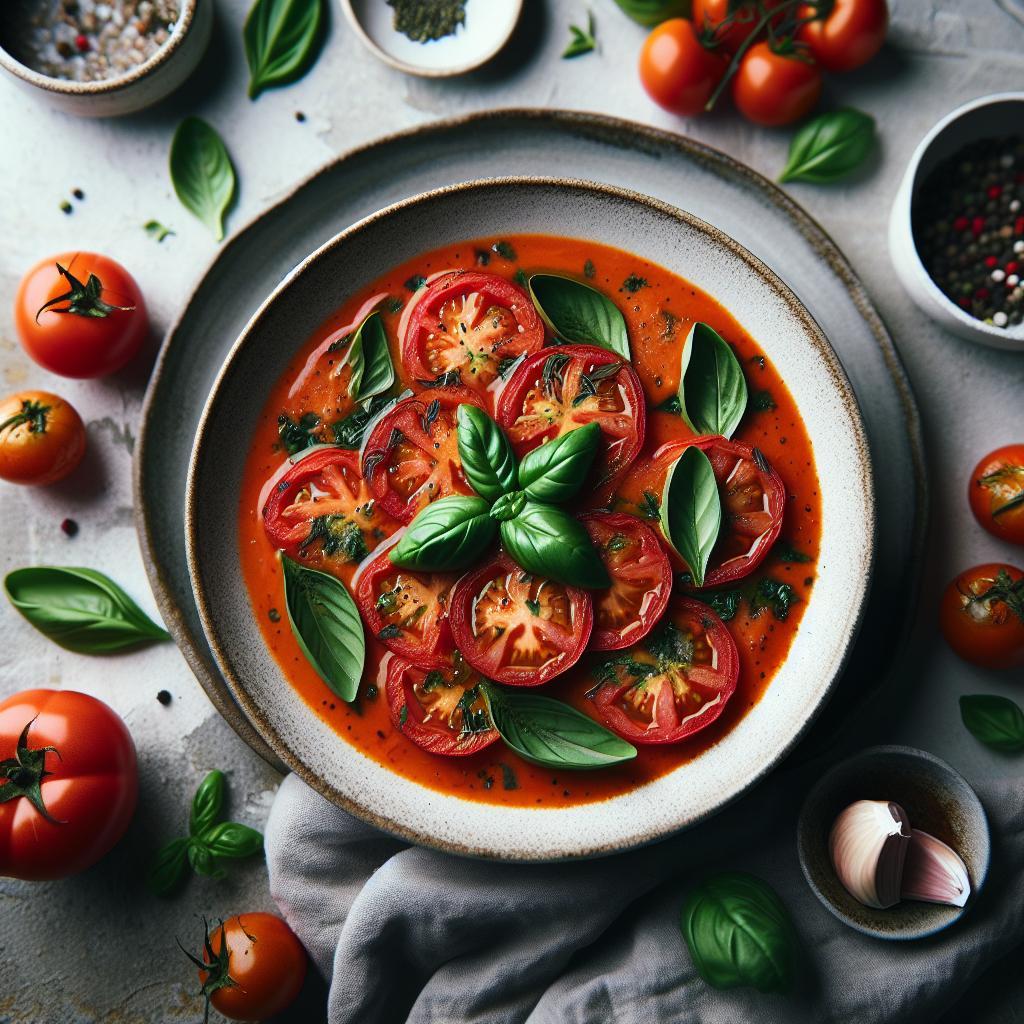

There is something deeply satisfying about a warm bowl of roasted tomato soup that balances sweet, savory, and herbal notes. This roasted tomato basil soup uses slow roasting and a focused basil infusion to build layered flavor and a silky mouthfeel that tastes richer than its simple components.
- Prep and Cook Time
- Yield and Difficulty
- Ingredients
- The Art of Roasting Tomatoes for Maximum Tomato Soup Flavor
- Crafting the Perfect Basil Infusion for Tomato Soup
- Balancing Creaminess and Acidity in Tomato Soup
- Serving Suggestions and Pairings for Tomato Soup
- Step-by-Step Instructions
- Chef’s Notes: Tips for Success
- Nutritional Information
- FAQ
- Can I use canned tomatoes instead of fresh?
- How do I make this soup vegan without losing creaminess?
- How do I store leftovers safely?
- What is the best way to adjust acidity in tomato soup?
- Can I make this gluten-free?
- Insights and Conclusions
- Roast for depth: Slow-roasting concentrates sugars and adds caramelized complexity.
- Basil timing matters: Add most basil late to preserve aroma and avoid bitterness.
- Texture control: Use an immersion blender for a velvety finish or reserve chunks for a rustic profile.
- Vegan swap: Coconut cream or blended cashews deliver creaminess without dairy.
Prep and Cook Time
Preparation: 15 minutes. Roasting: 40 minutes. These times optimize caramelization without drying the fruit.
Simmering and finishing: 20 minutes. Altogether you will spend about 1 hour 15 minutes from start to table with minimal active hands-on time.
Yield and Difficulty
This recipe yields about 6 generous bowls, suitable for family meals or a small dinner party. The method scales well: double the tomatoes and broth to serve more people.
Difficulty level: Medium. The techniques are straightforward, but attention to roasting and seasoning delivers professional results.
Ingredients
Gather fresh, quality ingredients for maximum flavor. Use ripe tomatoes, good olive oil, fresh basil, and a reliable vegetable broth for the best outcome.
- 3 lbs ripe Roma tomatoes, halved
- 4 tbsp extra virgin olive oil
- 1 large yellow onion, finely chopped
- 4 cloves garlic, minced
- 2 cups vegetable broth
- 1 cup fresh basil leaves, loosely packed
- 1/2 cup heavy cream (or coconut cream for dairy-free)
- 1 tbsp tomato paste
- 1 tsp sea salt (adjust)
- 1/2 tsp freshly ground black pepper
- 1 tsp sugar (optional)
- Fresh basil leaves for garnish
The Art of Roasting Tomatoes for Maximum Tomato Soup Flavor
Roasting drives browning reactions and sugar concentration to deepen the tomato’s profile. Arrange tomatoes cut-side up with space between them so heat circulates evenly and juices concentrate.
Roast at 400°F (200°C) until edges caramelize and juices concentrate. This focused roasting step produces the savory-sweet backbone of the tomato soup and complements the fresh herb notes.
For technical context, consult the Roasting process on roasting and consider how Maillard chemistry shapes flavor via the Maillard reaction.
Crafting the Perfect Basil Infusion for Tomato Soup
Basil contributes volatile oils that provide the soup’s signature perfume. Add most basil during the final simmer to release aroma without stressing the leaf into bitterness.
For a smoother, integrated herb note, briefly simmer basil in broth before pureeing. Save some leaves for garnish to preserve fresh color and a burst of aroma at service.
Reference basil varieties and aromatic profiles on the basil page when selecting Genovese versus Thai basil for different flavor directions.
Balancing Creaminess and Acidity in Tomato Soup
Roasted tomatoes deliver natural acidity that brightens the dish. Counterbalance this acidity with gradual additions of cream or an emulsifying ingredient like blended white beans for a dairy-free option.
Stir cream in off heat and gently rewarm to prevent curdling. If the tomato soup reads too tart, small adjustments with sugar or a splash of balsamic vinegar tame acidity while preserving tomato clarity.
Use top-quality fats, such as extra virgin olive oil, to build mouthfeel and carry flavor.
Serving Suggestions and Pairings for Tomato Soup
Serve hot with a swirl of cream and a scattering of fresh basil leaves for contrast. Add crunchy elements like toasted pine nuts or artisan croutons for texture contrast.
Pair the tomato soup with grilled cheese made from sharp cheddar or creamy mozzarella for a classic combination. For lighter menus, a crisp green salad with lemon vinaigrette refreshes the palate.
Step-by-Step Instructions
Follow the sequence for dependable, repeatable results. Read all steps before you begin to time the roasting and finishing phases effectively.
Organize mise en place: chop onions, measure broth, and pick basil so you maintain control during hot steps and keep the timeline tight.
Preparation
Preheat oven to 400°F (200°C). Arrange halved Roma tomatoes cut-side up on a baking sheet, drizzle with 2 tablespoons olive oil, and season with salt.
Roast until deeply caramelized, about 35–40 minutes. Avoid overcrowding; good spacing ensures even browning and consistent flavor concentration for the tomato soup base.
Cooking and Finishing
Meanwhile, heat remaining olive oil in a large saucepan over medium heat. Sauté chopped onion until translucent, then add garlic and tomato paste and cook briefly to awaken aromatics.
Add roasted tomatoes with their juices and 2 cups vegetable broth, then stir in 1 1/2 cups basil leaves. Simmer 15 minutes to build the infusion, then purée with an immersion blender until smooth.
Return to heat, stir in heavy cream gradually, and rewarm without boiling. Adjust salt and pepper to taste and finish with a few torn basil leaves for fresh contrast.
- Preheat oven and roast tomatoes cut-side up at 400°F (200°C) until caramelized.
- Sauté onion, add garlic and tomato paste, cook until fragrant.
- Add roasted tomatoes and broth; simmer and add basil.
- Blend to desired texture, then finish with cream and final seasoning.
- Serve hot with basil garnish and optional toasted pine nuts or croutons.
Chef’s Notes: Tips for Success
Tomato selection: Choose firm, ripe Roma or plum tomatoes for balanced acidity and sweetness. Overripe fruit can become overly watery when roasted and dilute the tomato soup concentration.
Make-ahead: Roast tomatoes a day ahead and refrigerate. Reheat with broth to speed service without losing flavor and preserve the roasted character of the soup.
Nutritional Information
This soup delivers a moderate calorie count and a comforting fat profile from olive oil and cream. It also supplies vitamins A and C from tomatoes and basil, and can adapt to lower-fat or vegan diets.
Per serving: approximately 180 kcal, 3g protein, 14g carbs, 12g fat (estimates vary with ingredient substitutions). These estimates change when you swap cream for coconut cream or cashew purée in the tomato soup.
| Per Serving | Calories | Protein | Carbs | Fat |
|---|---|---|---|---|
| Roasted Tomato Basil Soup | 180 kcal | 3g | 14g | 12g |
FAQ
Can I use canned tomatoes instead of fresh?
Yes. High-quality canned whole tomatoes work well, especially out of season. However, fresh roasted tomatoes give a brighter aroma and a more layered roasted character to the tomato soup.
How do I make this soup vegan without losing creaminess?
Substitute heavy cream with coconut cream or soaked, blended cashews. Also, blending a portion of white beans adds body and protein without altering the savory profile of the tomato soup.
How do I store leftovers safely?
Cool to room temperature, then refrigerate in an airtight container for up to four days. Freeze portions for up to three months and reheat gently on the stove to preserve texture.
What is the best way to adjust acidity in tomato soup?
Taste and adjust with a pinch of sugar or a splash of balsamic vinegar. Add gradually and re-taste, because small amounts shift the balance significantly.
Can I make this gluten-free?
Yes. The soup is inherently gluten-free. Just pair it with gluten-free bread or avoid croutons if you require a strict gluten-free meal.
Insights and Conclusions
Roasting transforms tomatoes into a concentrated flavor base while a careful basil infusion lifts the tomato soup with fresh, aromatic notes. The technique yields a restaurant-quality bowl that remains approachable at home.
Follow timing and seasoning guidelines, experiment with texture and cream alternatives, and scale the recipe confidently. With minimal effort, you can produce a memorable, flavorful tomato soup that showcases simple, seasonal ingredients.

See also: Tomato soup and Roasted tomato basil
See also: Tomato Soup