
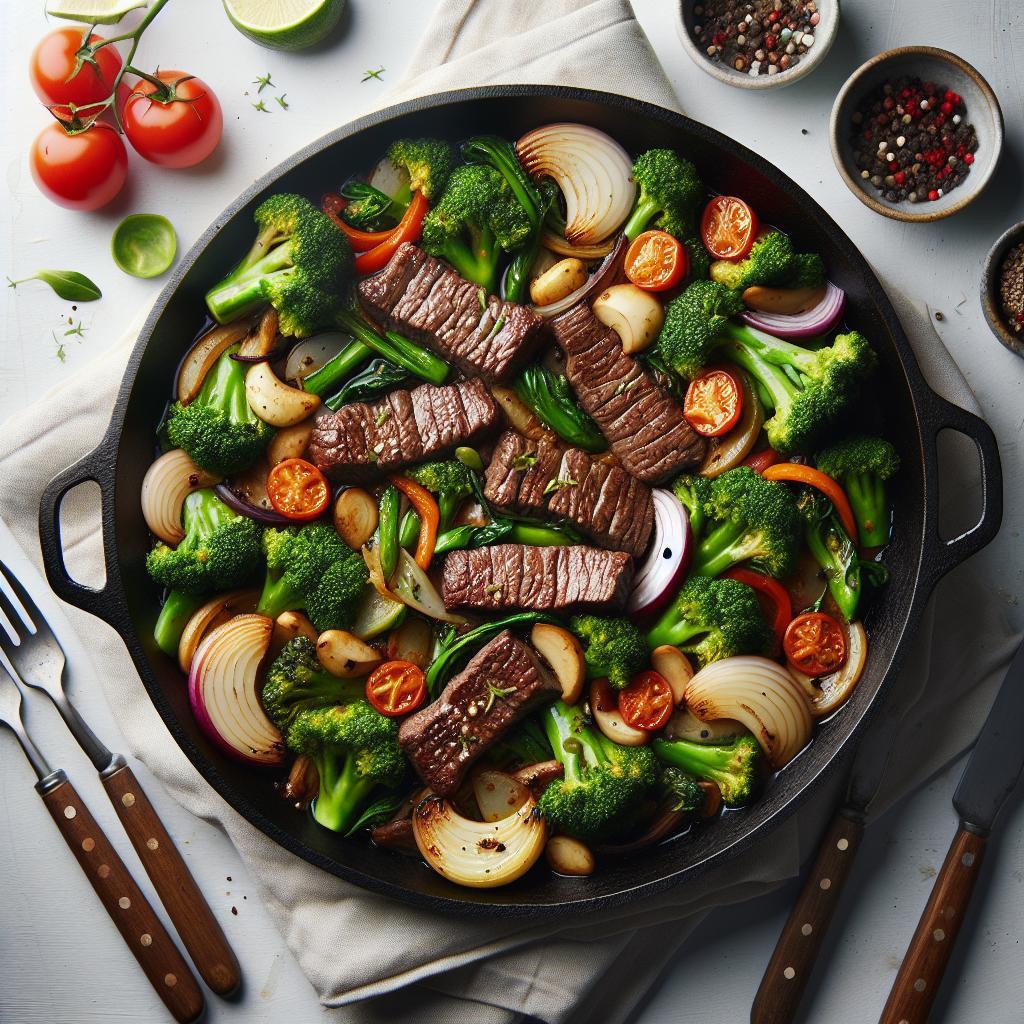

Sizzling Beef & Broccoli Skillet: A Flavor-Packed Beef Feast
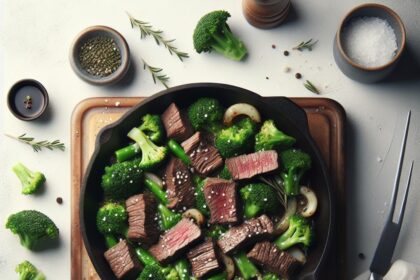
This skillet recipe centers on thinly sliced beef seared at high heat and crisp broccoli tossed in a glossy umami sauce for a quick restaurant-style dinner at home. The method borrows from classic stir-frying technique and emphasizes fast cook windows to preserve color and bite.
- Ready in 35 minutes: Quick prep and rapid cook time ideal for weeknights.
- Restaurant-style finish: High-heat searing for caramelized crust and a clingy sauce.
- Simple mise en place: Blanch and sear to keep broccoli bright and beef tender.
Prep and Cook Time
Prep Time: 15 minutes. Efficient mise en place shortens active cook time and keeps the pan hot for an optimal sear on the beef.
Cook Time: 20 minutes. Once the pan is hot, the skillet sequence moves quickly—have sauce and slurry ready before you start.
Yield and Difficulty
This recipe yields four generous servings and fits well into family meal rotation or a small dinner party menu. It scales easily: double the beef and broccoli, sear in batches to avoid crowding the pan and losing heat.
Difficulty: Easy to Medium. The key technical points are thin slicing and high-heat control; both are manageable with a sharp knife and a heavy skillet. Follow the timing cues to preserve texture.
Ingredients
Use fresh, minimally processed components for best results. Prioritize lean, thinly sliced beef and firm, vibrant broccoli for a satisfying texture contrast.
Gather these items before you start to keep the workflow smooth: a sharp knife, a large heavy skillet, and a small bowl for the cornstarch slurry.
- 1 lb beef sirloin or flank, thinly sliced against the grain
- 4 cups fresh broccoli florets, washed and dried
- 2 tbsp vegetable oil, divided
- 3 cloves garlic, minced
- 1 tbsp fresh ginger, grated
- 1/4 cup low-sodium soy sauce or tamari
- 2 tbsp oyster sauce (or mushroom sauce for a veggie-forward option)
- 1 tbsp cornstarch mixed with 2 tbsp cold water (slurry)
- 1 tbsp honey or maple syrup
- 1/2 tsp crushed red pepper flakes (optional)
- 1/4 cup beef broth or water
- Sesame seeds and thinly sliced green onions for garnish
Instructions
Follow a staged approach: prep, blanch, sear, build the sauce, then finish. Each stage moves quickly, so keep tools and ingredients within reach.
These instructions break the workflow into short windows. Maintain a hot pan for proper Maillard development on the beef and a quick blanch to retain broccoli color.
Prepare the Beef
Remove the beef from the refrigerator and pat slices dry with paper towels; surface moisture prevents a good sear. Season lightly with salt and freshly ground black pepper to accentuate natural beef flavor without masking the sauce.
Slice thin and against the grain to shorten muscle fibers and yield a tender bite after quick cooking. If needed, freeze the beef for 10–15 minutes to firm it for cleaner slicing.
Blanch the Broccoli
Bring a pot of heavily salted water to a rolling boil and blanch florets for 1–2 minutes until they turn bright green and are just crisp-tender. Immediately plunge the broccoli into an ice bath to halt cooking and set the color.
Drain and dry the broccoli thoroughly before returning it to the skillet. Excess water will dilute the sauce and reduce gloss; drying preserves a shiny coating on the finished dish.
Sear the Beef
Heat 1 tablespoon of oil in a large heavy skillet or cast-iron pan until shimmering and near smoking. Add beef in a single layer and let it sear without moving for 2–3 minutes to develop color, then flip and cook 1–2 minutes more.
Work in batches to avoid overcrowding; crowded meat steams rather than sears. Remove seared beef to a warm plate and tent loosely to keep heat while you make the sauce.
Make the Sauce
Return the skillet to medium heat and add remaining oil. Sauté garlic and ginger briefly—20–30 seconds—until fragrant but not browned to avoid bitterness.
Add soy sauce, oyster-style sauce, honey, and broth, stirring to combine. Increase heat slightly and slowly whisk in the cornstarch slurry to create a glossy sauce that clings to beef and broccoli.
Reintroduce and Finish
Return the beef and drained broccoli to the skillet and toss gently to coat with sauce. Heat through for 1–2 minutes so flavors marry while the broccoli retains bite.
Remove from heat, then garnish with sesame seeds and sliced green onions for texture and aroma. Serve immediately over rice or noodles to capture every drop of sauce.
Tips for Success
Small refinements yield big results: dry the meat, control pan temperature, and time the blanch precisely to maintain crunch and color. These steps build layered texture and flavor quickly.
Adjust seasoning just before serving; a light squeeze of citrus or a teaspoon of toasted sesame oil brightens the finished dish. Taste the sauce and tweak acidity or sweetness as needed.
Selecting the Beef
Choose flank, skirt, or sirloin for lean cuts that handle quick, high-heat searing. Marbled cuts like ribeye add flavor but release more fat; drain excess if using fattier cuts.
For recipe variations and additional beef techniques, see our internal collection of beef recipes and the skillet searing guide. These pages show practical adjustments for different cuts and pan types.
Serving Suggestions and Sides to Elevate Your Skillet Feast
Serve the skillet over steamed jasmine or basmati rice to soak up the sauce and balance the savory profile. The rice acts as a neutral base that highlights the beef and broccoli.
Alternatively, toss hot garlic butter noodles with scallions for a richer accompaniment or present a crisp cucumber salad dressed with sesame and rice vinegar to cut richness with acidity.
Nutritional Info
Estimated nutrition per serving varies by cut of beef and specific ingredients, but a typical portion delivers high protein, moderate fat, and controlled carbohydrates. This recipe supports balanced meal plans emphasizing protein and vegetables.
To reduce sodium, use low-sodium soy alternatives, tamari, or coconut aminos and swap oyster sauce for a mushroom-based umami sauce. These swaps reduce salt while keeping savory depth.
| Nutritional Info (Per Serving) | Calories | Protein | Carbs | Fat |
|---|---|---|---|---|
| Sizzling Beef & Broccoli Skillet | 320 kcal | 32 g | 15 g | 12 g |
Technique Notes and Science
High-heat searing relies on the Maillard reaction to build complex savory flavors and a crisp crust on the beef. Control the pan temperature so you get surface browning without burning the aromatics.
The blanch-and-shock method preserves broccoli color and texture; rapid cooling stops enzyme activity and prevents overcooking. For deeper context on the chemistry of browning, consult the Maillard reaction and its role in seared meats.
FAQ
What cut of beef works best for this skillet?
Flank and skirt steak work very well because they cook quickly and hold flavor. Sirloin offers a balance of tenderness and beef flavor; slice thin against the grain to minimize chew.
How do I get the broccoli bright green and crisp?
Blanch in heavily salted boiling water for 1–2 minutes, then plunge into an ice bath to stop cooking. Drain and pat dry thoroughly before adding to the skillet so the sauce stays concentrated and glossy.
Can I make this gluten-free?
Yes. Substitute regular soy sauce with tamari or coconut aminos and replace oyster sauce with a verified gluten-free mushroom sauce. These swaps keep the savory profile intact while removing gluten.
How should I reheat leftovers to preserve texture?
Reheat gently on the stovetop over medium-low heat with a splash of water or broth to loosen the sauce. Avoid high heat, which can dry the beef and overcook the broccoli; a brief stir-fry finish restores gloss and warmth.
Can I swap the broccoli for another vegetable?
Yes. Broccolini, green beans, or snap peas make good substitutes. Adjust blanch time for denser vegetables and add them to the skillet in the correct sequence to preserve bite and color.
For additional background on the primary ingredients, see the Wikipedia entries on beef, broccoli, and soy sauce for sourcing and composition details.

See also: internal guide to beef broccoli recipes for variations and batch-cook strategies.
See also: beef