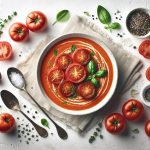


Soulful Sips begins with fire, time, and chosen fruit. Roasting intensifies tomato flavor and builds a smoky backbone that a plain simmer cannot match.
This piece explains the technical steps and practical tweaks that make a silky, well-balanced roasted tomato soup every time. You will find precise tips, safety notes, and serving ideas from a culinary professional.
- Key takeaway: Roasting concentrates sugars and flavor through caramelization and Maillard chemistry.
- Key takeaway: Balance acidity with a splash of vinegar, a pinch of baking soda, or well-timed fats.
- Key takeaway: Simple swaps make the recipe vegan or gluten-free without losing texture or depth.
- Key takeaway: Proper roasting, blending, and resting lift soup from good to restaurant-quality.
The Science Behind Roasted Tomato Soup: Unlocking Depth and Flavor
Roasting transforms tomatoes by reducing water and concentrating soluble solids. That concentration increases perceived sweetness and texture, producing a fuller mouthfeel.
Two chemical processes matter most: caramelization and the Maillard reaction. Caramelization breaks down sugars at high heat, while Maillard reactions generate savory, roasted notes when amino acids react with reducing sugars.
Tomato varietal and ripeness determine roasting behavior. Use firm, ripe tomatoes to avoid excessive water loss and bitterness.
For context on the ingredient itself, review the botanical and culinary profile of the tomato. Understanding that profile informs how you pair acid, fat, and aromatics.
Recipe Overview
Prep and Cook Time
Plan about 1 hour 20 minutes from start to serving. Roasting takes the largest share of that time and rewards patience.
Active hands-on time is roughly 25 minutes for chopping, sautéing aromatics, and blending. Resting and a brief simmer help flavors marry.
- Preparation: 15 minutes
- Roasting: 40 minutes
- Simmering and blending: 25 minutes
- Total: Approximately 1 hour 20 minutes
Yield
This recipe yields about six generous portions. It scales well: double the ingredients for a crowd, roast in multiple trays for even heat.
Leftovers refrigerate and freeze predictably, which makes this soup a reliable make-ahead staple for weeknight dinners or batch cooking.
Difficulty Level
Difficulty rates as medium for home cooks who know basic knife and stovetop skills. The technique emphasizes timing rather than advanced methods.
With clear organization and mise en place, a motivated home cook can achieve restaurant-caliber results on a first attempt.
Ingredients
Ingredient choice matters. Opt for firm, ripe plum or Roma tomatoes for concentrated flesh and fewer seeds.
Use quality olive oil, a low-salt vegetable broth, and fresh herbs to build a clean flavor base before finishing touches add complexity.
- 3 pounds ripe Roma tomatoes, halved
- 2 tablespoons extra virgin olive oil
- 1 large yellow onion, chopped
- 4 cloves garlic, whole and unpeeled
- 1 medium carrot, peeled and diced
- 1 stalk celery, diced
- 1 teaspoon kosher salt
- ½ teaspoon freshly ground black pepper
- 1 teaspoon smoked paprika
- 2 cups vegetable broth, low sodium
- 1 tablespoon balsamic vinegar
- Fresh basil leaves for garnish
- Optional: pinch of red chili flakes for subtle heat
Instructions
Roasting and Building Flavor
Preheat the oven to 425°F (220°C). Arrange halved tomatoes cut-side up on a rimmed baking sheet and lightly oil them for even browning.
Scatter whole garlic, diced carrot, and celery on the tray. Roast 35–45 minutes until tomatoes collapse and edges caramelize; the garlic should be soft and golden.
Finishing on the Stovetop
Sauté chopped onion in a large pot with a splash of olive oil. Cook until translucent and tender, about 5 minutes.
Squeeze the roasted garlic from their skins into the pot. Add the roasted tomatoes and vegetables, pour in the vegetable broth, and simmer 15 minutes to marry flavors.
Blending and Seasoning
Puree the soup using an immersion blender or in batches in a countertop blender. Strain if you prefer an ultra-smooth texture.
Return the soup to the pot, stir in balsamic vinegar, then adjust salt and pepper. Reheat gently before serving; avoid vigorous boiling after adding vinegar or dairy.
- Preheat oven: 425°F (220°C). Halve tomatoes and coat with oil, salt, pepper, and smoked paprika.
- Roast: Add garlic and diced root vegetables to the tray. Roast 35–45 minutes until caramelized.
- Sauté aromatics: Cook onion until soft. Add a pinch of chili flakes if desired.
- Combine and simmer: Transfer roasted items to pot, add broth, and simmer 15 minutes.
- Blend: Puree until silky. Finish with balsamic and taste-adjust.
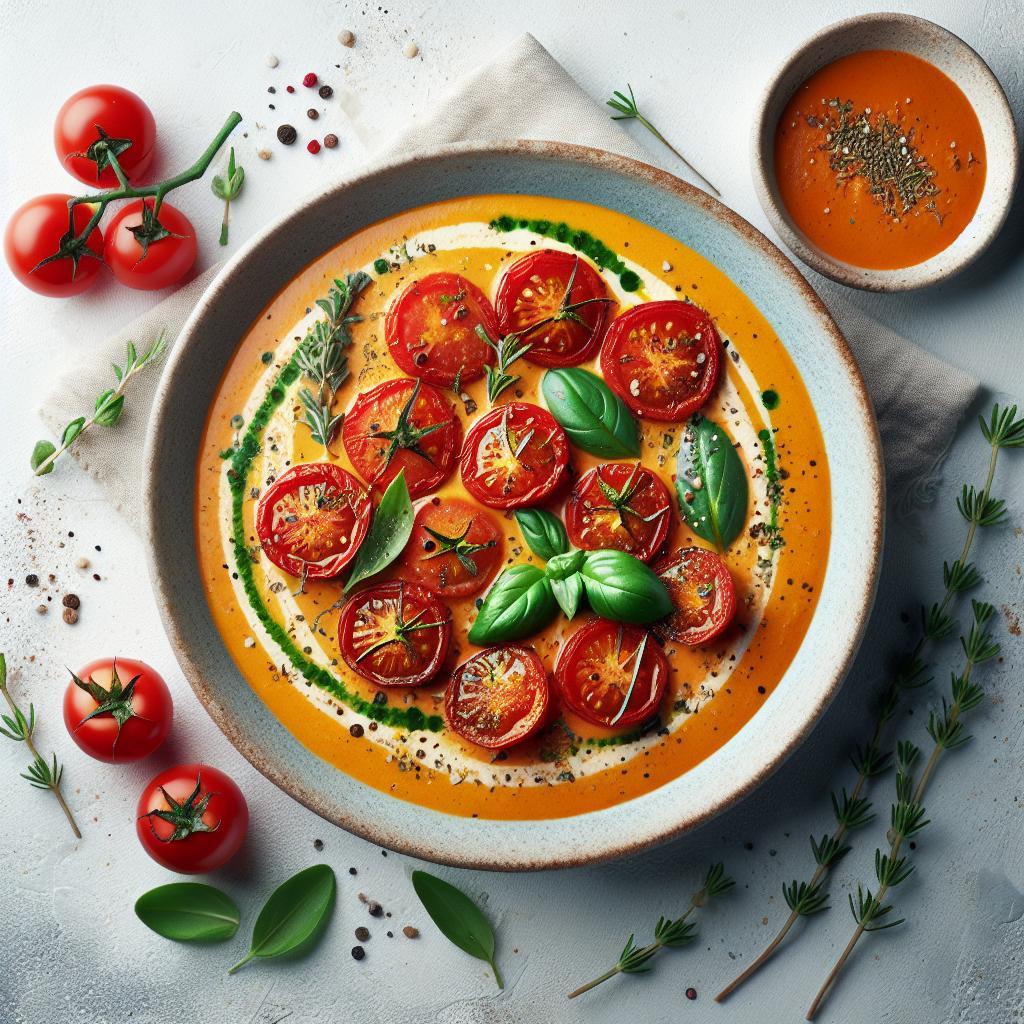
- Serve: Garnish with basil or a drizzle of olive oil and enjoy hot.
Tips for Success: Crafting Your Signature Blend
Small technical fixes produce consistent results. Trim excess moisture and avoid overcrowding the roasting sheet for even caramelization.
Adjust texture by choosing to strain for velvet or keep rustic bits for body. Both approaches work; choose by preference.
- Roast a halved red bell pepper with tomatoes for extra sweetness.
- Swap Roma tomatoes for heirloom varieties to vary color and nuance.
- Stir in a splash of coconut milk or cashew cream for a dairy-free creaminess.
Let the soup rest off heat for a few minutes after blending to let volatile aromatics settle. Resting sharpens perceived balance.
Food Safety and Storage
Cool soup quickly and refrigerate within two hours to prevent bacterial growth. Store in shallow containers for rapid cooling.
Reheat gently to preserve texture. Freeze in portioned, airtight containers for up to two months and thaw in the fridge overnight before reheating.
Serving Suggestions and Pairings
Pair the soup with grilled sourdough for contrast or a crisp salad for brightness. Textural contrasts lift the whole dish.
Garnish with a drizzle of olive oil, torn basil leaves, or toasted pine nuts for texture. These finishes emphasize the soup’s smoky-sweet core.
Nutrition Notes
The soup provides moderate calories mainly from vegetables and olive oil. It supplies fiber, vitamin C, and a small protein contribution.
Adjust fat and sodium to suit dietary needs. Use low-sodium broth and limit added oil for a leaner version without sacrificing mouthfeel.
| Nutrition (Per Serving) | Amount |
|---|---|
| Calories | 150 kcal |
| Protein | 3 g |
| Carbohydrates | 18 g |
| Fat | 7 g |
FAQ
What makes roasted tomato soup different from simple tomato soup?
Roasted tomato soup gains depth from concentrated sugars and char. Roasting alters flavor chemistry, producing savory and sweet notes that a raw-simmered base lacks.
Those browned edges and softened flesh change texture, delivering a richer, more complex mouthfeel than plain tomato purée.
How does roasting change tomato flavor?
Roasting drives off water and concentrates solids, so the tomato tastes sweeter and more savory. Maillard reactions and caramelization create new aromatics and color.
The result is less acidic brightness and more rounded, layered flavor that stands up to creamy or smoky additions.
Which tomatoes should I use for the best roast?
Choose plum or Roma tomatoes for roasting because they have denser flesh and fewer seeds. They hold up under high heat and caramelize consistently.
For variety, add a few heirlooms for color and nuance, but maintain primarily paste-type fruit for texture control.
Can I make the soup vegan or gluten-free?
Yes. Use vegetable broth and plant-based creamers like coconut milk or cashew cream to keep the soup vegan. Avoid croutons or use gluten-free bread for serving.
Ingredient swaps preserve the texture and richness while maintaining a clear dietary profile for guests with restrictions.
How do I fix a too-acidic tomato soup?
Add a small pinch of baking soda during blending to neutralize excess acidity. Taste and add incrementally to avoid flattening the flavor.
Alternatively, balance with a dash of sugar or a small splash of cream or oil to round acidity without masking tomato character.
See also: Tomato Soup