
By using this site, you agree to the Privacy Policy and Terms of Use.
Accept
CookOrBitCookOrBitCookOrBit
  • Home
  • About Us
  • Ingredient Science
    • Flavor & Aroma
    • Protein Chemistry
    • Sugar & Starch
    • Fats & Emulsions
  • Cooking Techniques
    • Searing & Grilling
    • Baking & Roasting
    • Boiling & Steaming
    • Low & Slow
  • Kitchen Experiments
    • DIY Ferments
    • Flavor Tests
    • Gadget Testing
    • Molecular Gastronomy
  • Food Myths
    • Searing Myth
    • 5-Second Rule
    • MSG Myths
    • Microwave Myths
  • Tools
  • More
    • Extra Picks
    • Quick & Easy
      • Breakfast Ideas
      • Desserts
      • Snacks
      • Soups
    • Global Flavors
      • Asian Street Eats
      • Latin Comforts
      • Mexican Flavors
      • Modern Mediterranean
CookOrBitCookOrBit
  • Home
  • About Us
  • Ingredient Science
  • Cooking Techniques
  • Kitchen Experiments
  • Food Myths
  • Tools
  • More
Search
  • Home
  • About Us
  • Ingredient Science
    • Flavor & Aroma
    • Protein Chemistry
    • Sugar & Starch
    • Fats & Emulsions
  • Cooking Techniques
    • Searing & Grilling
    • Baking & Roasting
    • Boiling & Steaming
    • Low & Slow
  • Kitchen Experiments
    • DIY Ferments
    • Flavor Tests
    • Gadget Testing
    • Molecular Gastronomy
  • Food Myths
    • Searing Myth
    • 5-Second Rule
    • MSG Myths
    • Microwave Myths
  • Tools
  • More
    • Extra Picks
    • Quick & Easy
    • Global Flavors
Follow US
  • Advertising Policy: 10 Practical Rules for Safe, Compliant Ads
  • Contact Us
  • Cookie Policy: Clear Guide for Site Owners
  • Copyright Notice Guide: 7 Essential Rules for Website Owners
  • Disclaimer
  • Privacy Policy
  • Terms of Service
By Fimaw.com
Unlocking the Chemistry Behind Perfect Canned Dulce de Leche
CookOrBit > Blog > Cooking Techniques > Low & Slow > 7 Science-Proven Steps to Master Perfect Canned Dulce-Leche
Low & Slow

7 Science-Proven Steps to Master Perfect Canned Dulce-Leche

William J. Kroll
By William J. Kroll
Published: February 10, 2026
Share
SHARE

Perfect canned dulce-leche begins with controlled chemistry: sugars, milk proteins, and time. Home cooks who learn the reactions gain repeatable texture, predictable color, and stable flavor.

Contents
  • Why the Chemistry Matters
  • Key Reactions: Maillard Reaction and Caramelization
  • Milk, Proteins, and pH Control
  • Recipe Details
    • Ingredients
    • Instructions
  • Prep and Cook Time, Yield, Difficulty
  • Tips for Success
  • Safety and Canning
  • Common Faults and How Chemistry Explains Them
  • Serving Suggestions
  • Conversions and Measurements
  • FAQ
    • What exactly is dulce-leche and why does it thicken?
    • Why does baking soda help, and how much should I use?
    • Is canned dulce-leche different from open-pot homemade dulce-leche?
    • How can I fix grainy or separated dulce-leche?
    • Where can I learn the technical background for these reactions?
  • Key takeaway: Slow heat and controlled pH steer Maillard pathways and careful caramelization.
  • Safety: Follow tested canning and sterilization protocols to prevent spoilage and ensure shelf stability.
  • Technique: Use a heavy-bottomed pan, track temperature cues, and favor visual checks over fixed time.
  • Result: Consistent stirring plus modest alkali yields smooth, glossy dulce-leche suitable for jars.

Why the Chemistry Matters

The texture and depth of canned dulce-leche arise from a few predictable chemical events. Proteins unfold, sugars react, and water leaves the system, producing a thick, spreadable matrix.

Understanding those events reduces guesswork. Therefore, deliberate control of pH, heat intensity, and evaporation makes results repeatable across batches and pots.

- Advertisement -

Key Reactions: Maillard Reaction and Caramelization

The dominant browning and flavor development come from the Maillard reaction. This pathway involves reducing sugars reacting with amino groups on milk proteins to form brown pigments and complex flavor compounds.

At higher local temperatures, sugar molecules also undergo caramelization. Both processes act together: Maillard provides savory, roasted notes while caramelization adds nutty, toasty sweetness.

Milk, Proteins, and pH Control

Milk supplies casein and whey proteins that denature and interact as heating concentrates solids. These proteins help build viscosity by forming a colloidal network when water evaporates.

- Advertisement -

Small additions of alkali shift reaction pathways by raising pH and accelerating the Maillard series. For background on the proteins involved, consult milk protein resources to understand how amino groups participate in browning.

Recipe Details

The recipe below produces roughly two cups of finished dulce-leche and gives predictable control points for color and viscosity. Quantities and technique prioritize stability and flavor over speed.

When scaling, keep the milk-to-sugar ratio roughly constant and extend simmer time as needed. Also, use a wide, heavy pan to encourage consistent evaporation and reduce scorching risk.

- Advertisement -

Ingredients

4 cups whole milk (about 960 ml). 1 1/2 cups granulated sugar (≈300 g). 1/4 teaspoon baking soda (≈1.25 ml). Add 1 teaspoon vanilla at the finish and a pinch of salt to balance flavor.

Measure with a scale for repeatability. Also, use fresh, full-fat milk for best mouthfeel; skim or low-fat milk alters the protein and fat balance and will thin mouthfeel.

Instructions

Combine milk, sugar, and baking soda in a heavy-bottomed saucepan and dissolve the sugar fully before heat. Start on medium until the mixture moves uniformly, then reduce to a steady low simmer.

Maintain a gentle simmer with surface ripples; avoid rapid boiling to prevent curdling and foaming. Stir frequently early, and increase scraping frequency as the mix thickens; expect 2 to 2.5 hours depending on pot surface area and heat control.

Prep and Cook Time, Yield, Difficulty

Preparation Time: 10 minutes. Cooking Time: 2 to 2.5 hours at a low, consistent simmer. Time varies with pot geometry and burner output.

Yield: Approximately 2 cups (480 ml). Difficulty: Medium — the recipe demands attention and frequent stirring but no special equipment.

Tips for Success

Use a wide, heavy-bottomed stainless pot to distribute heat and shorten evaporation time. A wider surface area speeds concentration and reduces the need for prolonged high heat.

Control temperature instead of toggling heat sharply; steady simmer reduces crystallization and curdling risk. Also, scrape the bottom and sides regularly to prevent local scorching.

💡 Expert Insight
Expert Insight: A thin-shelled stainless-steel pot with a thick base balances responsiveness with even heat. If tiny sugar crystals appear as the batch cools, rewarm gently and whisk or blend briefly to restore smoothness.

Safety and Canning

Home canning of high-sugar dairy products requires strict adherence to tested procedures. The sealed jar environment changes heat transfer compared with open-pot methods, so follow validated processing times for similar-density products.

For an authoritative overview of container processing and safety concepts, consult the general canning reference at canning. Always confirm times and pressures from local extension guides when in doubt.

⚠️ Pro-Caution
Pro-Caution: Never attempt pressure canning or sealed heating of dairy-based recipes without following published extension service protocols. Improper processing may lead to contamination or unsafe products.

Common Faults and How Chemistry Explains Them

Grainy dulce-leche usually indicates sugar crystallization. Local supersaturation, contamination with seed crystals, or abrupt cooling can trigger crystallization during or after cooking.

Thin or watery results typically mean insufficient evaporation or incomplete Maillard progression. Therefore, extend gentle heating, use a wider pan, and watch for a glossy, spoon-coating stage rather than relying on exact times alone.

Serving Suggestions

Use dulce-leche as a spread, a sauce, or a baking swirl. It pairs well with neutral creams, fruits, and baked goods where its toasted-sugar notes enhance without overpowering.

For plating, spoon warm dulce-leche over ice cream, fold into batters, or layer it in cheesecakes. Finally, a few flakes of sea salt or toasted nuts heighten contrast and mouthfeel.

Conversions and Measurements

Keep metric measures for accuracy: 4 cups milk ≈ 960 ml; 1 1/2 cups sugar ≈ 300 g; 1/4 teaspoon baking soda ≈ 1.25 ml. Use a scale for repeatable results.

Small ratio changes alter texture and timing. For example, increasing sugar speeds color development and can require more stirring to avoid scorching; changing milk fat shifts mouthfeel and thickening behavior.

FAQ

What exactly is dulce-leche and why does it thicken?

Dulce-leche is reduced, sweetened milk cooked until sugars and proteins form a viscous, spreadable network. Thickening comes from water evaporation and protein-sugar interactions that raise viscosity and create a colloid.

Heat concentrates solids and enhances molecular interactions; hence, the mixture becomes spreadable as it cools and sets.

Why does baking soda help, and how much should I use?

Baking soda raises pH slightly and favors Maillard pathways, which accelerates browning and deepens color. Use only small amounts: roughly 1/4 teaspoon for the 4-cup milk batch to avoid off-flavors.

Too much alkali can break down proteins and produce a thin texture or a soapy taste. Always measure precisely and test small batches when altering alkali levels.

Is canned dulce-leche different from open-pot homemade dulce-leche?

Canned products often receive uniform, prolonged heat inside sealed containers and may include stabilizers in commercial versions. Home open-pot methods rely on evaporation and direct control, which can yield a fresher, more flavorful result when done correctly.

For safety, follow validated home-canning protocols. When sealed properly, jars can keep for months, but store refrigerated after opening.

How can I fix grainy or separated dulce-leche?

Reheat gently and whisk to dissolve sugar crystals; an immersion blender smooths batches quickly. If separation occurs, slow rewarming and vigorous whisking typically recombine the matrix.

Prevention works best: maintain a steady low simmer, avoid seed crystals, and cool slowly to reduce nucleation and crystallization events.

Where can I learn the technical background for these reactions?

Consult primary resources on the Maillard reaction and caramelization for mechanistic details. Also review the milk protein literature for protein participation in browning.

Finally, pair reading with hands-on practice and validated canning guides to build reliable, safe results in home production.

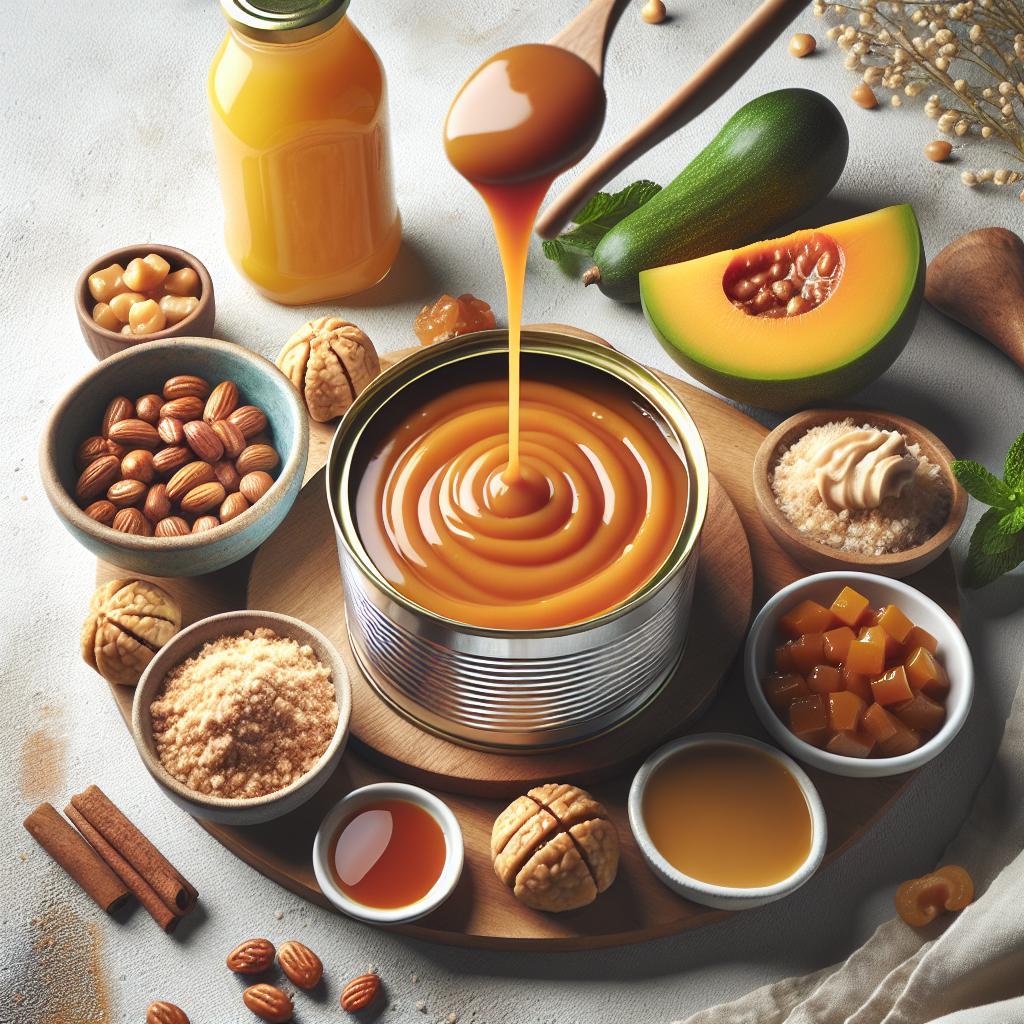
Perfect canned dulce de leche

See also: dulce-leche

7 Proven Chemistry Tips for Perfect Slow‑Baked Potato Gratin
Wet Chicken Skin: 7 Expert Tips for Crisp
Crafting Creamy Magic: 9 Expert Steps to Make Milk Kefir
Flip Steak More Often: 7 Expert Reasons
7 Proven Facts: Does Salt Speed Boiling Water?
TAGGED:andcanned caramelcaramelizationchemistrydulcehome canningMaillard reactionmilk chemistryMilk proteinspH controlrecipe scalingstovetop caramelstovetop techniquetheunlocking
Share This Article
Facebook Pinterest Whatsapp Whatsapp LinkedIn Telegram Threads
What do you think?
Love0
Sad0
Happy0
Sleepy0
Angry0
Dead0
Wink0
Previous Article Twist and Shout: Mastering the Art of Perfect Pretzels Twist and Shout: 7 Expert Steps to Perfect Pretzels
Next Article Crafting Classic Sourdough English Muffins: A Step-by-Step Guide 7-Step Mastery: Crafting Classic Sourdough Muffins (English Muffins)
Creamy Garlic Chicken with melted Parmesan and fresh herbs on a rustic white plate
Garlic Chicken: 7 Ultimate Brilliant Recipes to Make the Best-Ever Creamy Garlic Chicken with Parmesan & Fresh Herbs
Extra Picks
Colorful bowls of Leftover Couscous transformed into salads, fritters, and stuffed peppers.
12 Amazing Practical Leftover Couscous Ideas: Brilliant Ways to Reuse and Remix
Uncategorized
Colorful jars of spice blends beside steaming couscous with herbs and lemon
7 Ultimate spice blends That Transform Your Couscous — Amazing Best Flavor Boosts
Uncategorized
Bowls of gluten-free couscous alternatives: quinoa, millet, cauliflower, and rice
10 Amazing couscous alternatives: Best Gluten-Free Swaps for Incredible Flavor
Uncategorized

Tags

and art baked baking science baking techniques Baking tips batch cooking beef behind browning techniques butternut squash caramelization cast iron skillet chemistry chicken comfort food Cooking science cooking technique Cooking techniques Cooking tips crafting creamy creamy soup crispy culinary science fish flavor flavor chemistry food food safety Food science for garlic golden Ground turkey hearty heat high-heat cooking high protein meals how instant read thermometer Lean protein magic Maillard reaction make ahead meals make ahead soup mastering meal prep Meal prep recipes meat thermometer microwave microwave cooking moisture control one pot meals Pan searing perfect perfectly Plant based protein Probe thermometer protein denaturation Quick dinners roasted roasted squash roasted tomato soup Roasted vegetables Roasting techniques savor savory science Searing technique Searing techniques secrets slow cooking squash steak steak cooking sweet temperature control the top turkey turkey soup turkey stew ultimate umami cooking umami flavor unlock unlocking unveiling vegetable velvety weeknight dinner Weeknight dinners weeknight meals what when why with your zesty
April 2026
M T W T F S S
 12345
6789101112
13141516171819
20212223242526
27282930  
« Mar    

You Might Also Like

Savor the Flavor: Beef Keema with Peas Recipe Guide
Extra Picks

Savor the Flavor: 7 Pro Tips for Beef Keema with Peas Recipe Guide

William J. Kroll
William J. Kroll
January 25, 2026
Crafting Zesty Fermented Mustard Using Whey Magic
DIY Ferments

7 Bold Steps to Craft Zesty Fermented Mustard with Whey

William J. Kroll
William J. Kroll
January 12, 2026
بيضة مسلوقة ناعمة في ماء مع سحر الخل، شرح علمي لطهي مثالي
Protein Chemistry

Vinegar Magic: 7 Tested Steps for Perfect Poached Eggs

William J. Kroll
William J. Kroll
August 29, 2025
Brighten Mornings with Zesty Lemon Blueberry Overnight Oats
Extra Picks

5 Bright Morning Boosts: Zesty Lemon Blueberry Overnight Oats

William J. Kroll
William J. Kroll
January 17, 2026
Hearty Chicken and Rice Soup: Comfort in Every Bowl
Extra Picks

7 Pro Tips for Hearty Chicken Soup

William J. Kroll
William J. Kroll
February 17, 2026
Unlock Flavor: How to Make Roasted Garlic Hummus Dip
Extra Picks

Unlock Flavor: 7 Steps to Make Roasted Garlic Hummus Dip

William J. Kroll
William J. Kroll
February 10, 2026
Follow US
By Fimaw.com © All Rights Reserved.
  • Advertising Policy: 10 Practical Rules for Safe, Compliant Ads
  • Contact Us
  • Cookie Policy: Clear Guide for Site Owners
  • Copyright Notice Guide: 7 Essential Rules for Website Owners
  • Disclaimer
  • Privacy Policy
  • Terms of Service
Welcome Back!

Sign in to your account

Username or Email Address
Password

Lost your password?