
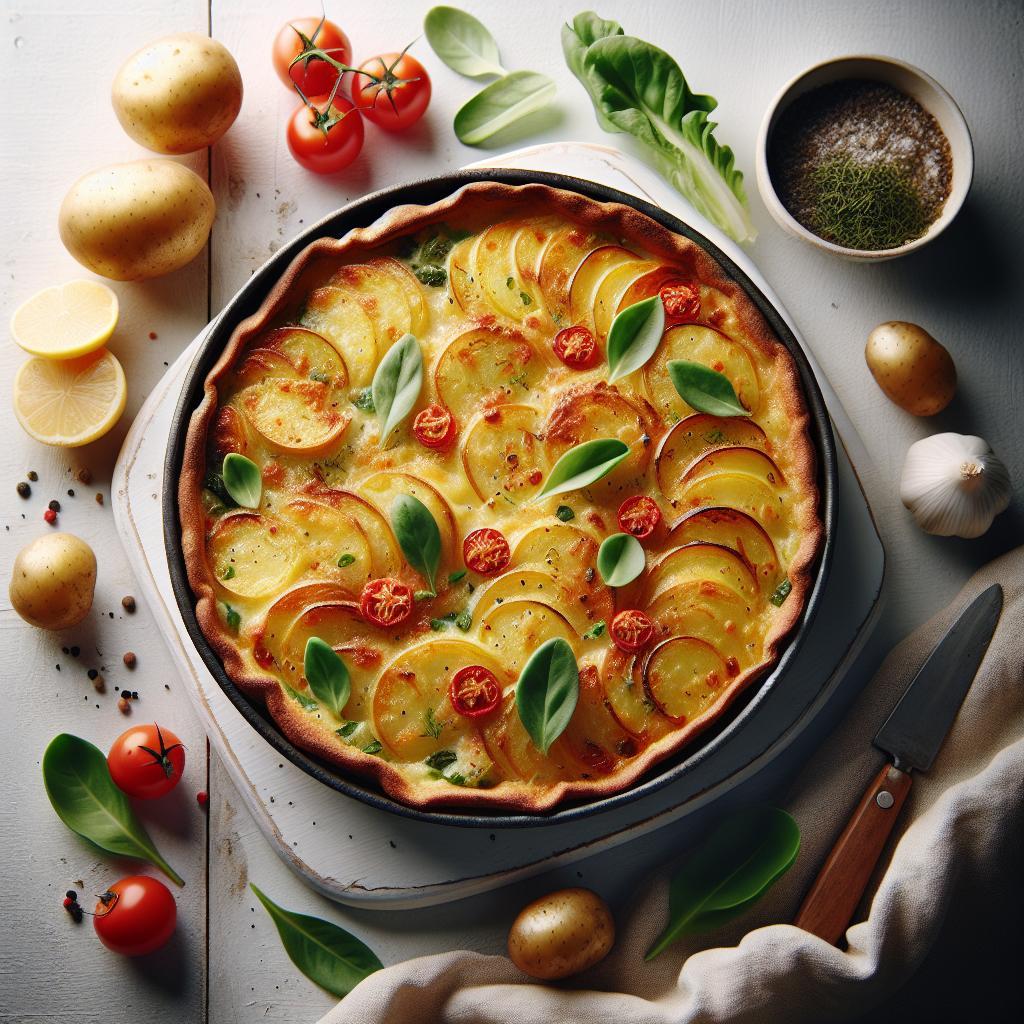

The slow-baked potato gratin owes its texture and flavor to precise chemical changes. Heat, time, and ingredient ratios control starch swelling, fat distribution, and browning to produce creamy, sliceable layers.
- Slow, low heat promotes even starch gelatinization and prevents a gummy interior.
- Fat coats starch to create a velvety mouthfeel and inhibit toughness.
- Layering maximizes surface contact for uniform cooking and flavor infusion.
- Finishing heat creates Maillard browning for an aromatic crust.
Core Chemistry Overview
Potato structure and dairy interaction determine the final texture. The native granules inside potato cells absorb liquid and swell; controlled gelatinization gives the gratin its creamy body.
For background on the tuber, review the potato physiology and uses on Potato on Wikipedia. Those basics explain why variety choice matters.
Prep and Cook Time
- Preparation: 20 minutes
- Cooking: 90 minutes (slow bake for optimum texture)
- Total Time: 1 hour 50 minutes
Slow baking at 300°F (150°C) provides gentle, even heat and gives starch granules time to gelatinize without overcooking the exterior. That slow schedule also concentrates flavors while limiting moisture loss too quickly.
Allowing a final uncovered phase of higher surface heat encourages Maillard reactions. Read about the Maillard process at Maillard reaction on Wikipedia to understand crust development.
Yield
Serves 6 generously when paired with simple sides. The recipe scales linearly; increase liquid proportionally for larger dishes to maintain the same creamy set.
Resting time after baking is part of the yield strategy: it reduces runniness and improves sliceability, so each portion holds together for plating.
Difficulty Level
Medium — this recipe rewards careful attention to technique rather than advanced tools. Precise slicing, even layering, and controlled temperature are the key skills.
Use a mandoline or a sharp knife and steady hands to ensure uniform 1/8-inch slices. Consistent thickness yields consistent gelatinization and texture across the dish.
Ingredients
2 pounds Yukon Gold potatoes, peeled and sliced 1/8-inch thick
2 cups whole milk; 1 cup heavy cream; 2 cloves garlic, minced; 4 tbsp unsalted butter, melted; 1 ½ tsp kosher salt; ½ tsp black pepper; ¼ tsp nutmeg; 1 cup Gruyère, grated; 2 tbsp Parmesan, finely grated; thyme to finish.
Choose a medium-starch potato like Yukon Gold for balance between structure and creaminess. Higher-starch varieties thicken more, while waxy ones hold shape longer.
For dairy context, review cream properties at Cream (food) on Wikipedia. The fat fraction and protein behavior determine emulsification and mouthfeel.
Instructions
Custard Preparation
Preheat oven to 300°F (150°C). Butter a 9×13-inch baking dish thoroughly for even browning and to prevent sticking.
Combine whole milk, heavy cream, minced garlic, salt, pepper, and nutmeg in a mixing bowl. Whisk gently to homogenize the liquid without over-aerating; a calm custard reduces bubble formation during bake.
Layering and Baking
Arrange a single overlapping layer of potato slices across the dish to maximize surface contact and uniform heat transfer. Sprinkle a light layer of Gruyère and drizzle a tablespoon of melted butter to ensure even fat distribution.
Repeat layers until nearly full, reserving some cheese for the finish. Pour the custard over the potatoes so the liquid settles between slices and replace evaporating moisture during the slow bake.
Bake and Finish
Cover tightly with foil and bake 75 minutes to allow starch gelatinization and protein setting. The covered phase traps steam, which aids gentle heat penetration and uniform texture development.
Remove foil, top with Parmesan and remaining Gruyère, then bake uncovered 15 minutes to encourage Maillard browning. Rest 10 minutes before serving so the custard tightens for clean slices.
Resting and Serving
Resting lets residual heat finish the gel matrix without excess moisture. Serve warm so the fat remains soft but the slices hold shape.
For plating, garnish with thyme for aromatic lift and pair with crisp salads or roasted proteins to balance richness.
[having_space_to_isolate_tip_warning]
After salting and drying, build your layers promptly to keep the slices from oxidizing. Oxidation affects color more than texture, so trim any discolored edges if needed.
Use the recommended slow-bake schedule. If you need a crisper top, only raise heat for the final uncovered phase for short bursts to control interior doneness.
Tips for Success
Slice uniformly: consistent thickness leads to consistent gelatinization. A mandoline yields the most repeatable slices for predictable results.
Balance fat and liquid: fat coats starch granules, producing silkiness, while liquid supports swelling. Small adjustments to cream and milk change firmness and richness.
Control evaporation: cover during most of the bake to retain moisture for starch swelling, then uncover to form a browned crust. The timing of this switch defines texture contrast.
Cheese choice matters: melting, flavorful cheeses with moderate fat complement texture without making the sauce greasy. Reserve some cheese for browning to layer flavors.
Serving Suggestions
Present the gratin as a centerpiece for seasonal dinners or as a side to roasted meats. Fresh herbs brighten the dish and cut the palate weight of dairy.
Pair with green salads, pickled vegetables, or lean proteins to offset richness. A small drizzle of browned butter on each portion adds aroma and a toasty finish.
| Nutrient | Per Serving |
|---|---|
| Calories | 360 |
| Protein | 12 g |
| Carbohydrates | 29 g |
| Fat | 22 g |

Science Details: Starch and Emulsions
Starch governs thickening and mouthfeel. As granules absorb water and heat, they swell and leach amylose, which increases viscosity and sets the custard structure.
Explore starch fundamentals at Starch on Wikipedia to understand how potato type changes behavior during baking.
Fat works as an emulsifier in combination with dairy proteins; it coats granules and smooths texture. Proteins denature with heat and help the mixture gel while preventing separation when proportioned correctly.
Temperature control matters: slow, steady heat optimizes gelatinization and minimizes syneresis (liquid weeping). Good technique ensures the fats and proteins create a cohesive, stable matrix around swollen starch.
Expand practical skills with related content in our site guides: Classic French Casseroles and Kitchen Technique Guides. These internal pages provide complementary recipes and method primers.
FAQ
How does slow baking improve gratin texture?
Slow baking lets heat penetrate gradually, allowing starch granules to swell uniformly. That slow process avoids overcooking the surface while the interior sets, producing a consistently creamy texture.
Which potato variety works best?
Choose medium-starch potatoes like Yukon Gold for a balance of creaminess and structural integrity. Higher-starch Russets will thicken more but can break down if sliced too thinly or cooked too long.
Can I reduce the fat without losing texture?
Yes. Substitute part of the cream with whole milk and slightly reduce butter, but expect a lighter mouthfeel. Maintain enough fat to coat starch granules so the custard remains smooth.
Why does my gratin become watery sometimes?
Watery gratins usually result from excess surface moisture or under-gelatinized starch. Lightly salting and resting potato slices, or patting them dry before layering, reduces surface water and prevents runniness.
How do I get a crisp, browned top without drying the interior?
Finish uncovered for 10–15 minutes at a slightly higher temperature to trigger Maillard reactions on the surface. This step creates a crust while the covered bake has already set the interior texture.
By understanding how starch, fat, and heat interact, you gain predictable control over the gratin outcome. Apply these chemical principles to adapt the dish, whether you seek extra creaminess, firmer slices, or a more pronounced crust. Practical technique plus informed ingredient choices yield repeatable, exceptional gratins every time.
See also: potato gratin