
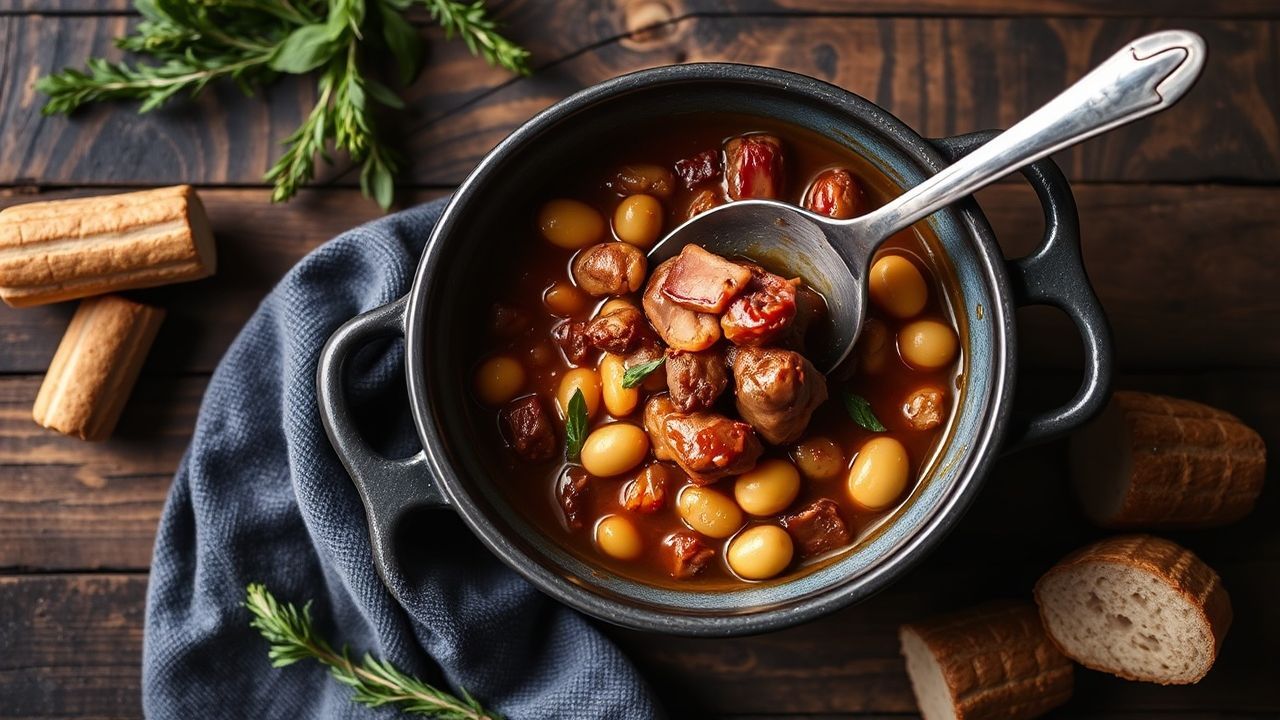

Cassoulet stands among the great slow-cooked dishes of France: white beans, layered meats, and a golden gratin top. This dish rewards technique, time, and controlled heat to build deep, savory layers.
- What is cassoulet?
- Prep and Cook Time
- Yield
- Difficulty Level
- Ingredients
- Instructions
- Tips for Success
- Serving Suggestions
- Nutrition and Portioning
- Further Reading and Reference
- Q&A
- What is cassoulet, and where did it originate?
- How does slow cooking change meats and beans?
- Why is the crust important?
- Do I have to soak beans?
- Can I adapt cassoulet for a slow cooker?
- In Retrospect
- Slow heat builds texture: collagen converts to gelatin, enriching mouthfeel.
- Layering matters: beans absorb fat and aromatics when assembled thoughtfully.
- Maillard crust: a brief high-heat finish adds aroma and crunch.
- Resting: lets juices redistribute for balanced bites.
What is cassoulet?
Cassoulet is a traditional French bean casserole from Languedoc built on long, low cooking and rich, cured meats. It combines tender legumes with duck, pork, and sausage to deliver concentrated savory flavor.
The dish links culinary technique with simple chemistry: slow heat breaks down collagen and starch, while controlled browning produces aroma compounds. For background on the regional tradition, see cassoulet on Wikipedia.
Prep and Cook Time
Plan time deliberately: cassoulet benefits from hours, not minutes. Soak beans overnight and allow slow simmering to build depth.
Account for active work and passive cooking. The schedule below reflects common practice for a classic home oven or stovetop approach.
- Preparation: 40 minutes active
- Cooking: 3 to 4 hours low heat (plus bean soaking)
- Total: roughly 5 hours from start to finish
Yield
This recipe yields about six generous portions, enough for a family meal or a dinner party. Portions will vary with serving size and side dishes.
Make-ahead works well: flavors meld overnight, improving on day two. Reheat gently with a splash of stock to restore moisture.
Difficulty Level
Expect an advanced-level project for cooks new to long braises or confit handling. Precision in timing and seasoning matters more than fancy technique.
However, each step is repeatable and forgiving when you monitor liquid levels, skimming excess fat, and resting the casserole properly before serving.
Ingredients
Use quality staples: dried white beans, pork shoulder and belly, duck legs, and a flavorful stock. Each ingredient plays a structural or flavor role in the final casserole.
Substitutions are possible, but focus on fattier cuts and long-cooking components so the dish achieves classic mouthfeel and depth.
- 500g dried Tarbais or cannellini beans, soaked overnight and drained
- 2 duck legs, confit or fresh
- 300g pork shoulder, 1-inch cubes
- 200g pork belly, rind removed and cubed
- 150g Toulouse-style or similar sausage, thick rounds
- 1 large onion, finely chopped
- 3 garlic cloves, minced
- 2 carrots, diced
- 2 sprigs fresh thyme
- 2 bay leaves
- 1 small bouquet garni tied with parsley and thyme
- 1 L chicken or poultry stock, low sodium preferred
- 100g fresh breadcrumbs for the gratin topping
- 2 tbsp duck fat or olive oil
- Salt and freshly ground black pepper, to taste
Instructions
Follow a clear sequence: hydrate beans, brown meats, assemble, then slow-cook. Each phase concentrates flavor in different ways.
Pay attention to texture targets: beans should be tender but intact; meats should yield easily and remain moist after reheating.
- Prepare the beans: After soaking, rinse the beans. Place in a pot with fresh water, bring to a gentle boil, then simmer about 1 hour until just tender. Drain and set aside. For information on bean categories and behavior, see beans on Wikipedia.
- Sear the meats: Heat duck fat in a heavy casserole over medium heat. Brown pork shoulder and pork belly cubes until golden, about 6–8 minutes. Remove and reserve. Browning develops Maillard compounds that add savory depth.
- Sauté aromatics: Add onion, carrots, and garlic to the pot. Cook gently until translucent and fragrant, about 4–5 minutes. Deglaze with a splash of stock, scraping browned bits from the base.
- Combine ingredients: Return pork to the pot, add sausage slices and duck legs, and nestle beans among the meats. Tuck in the bouquet garni, thyme, and bay leaves.
- Infuse flavors: Pour in stock to just cover the beans and meats. Season lightly because confit and sausages can be salty. Bring to a gentle simmer, then lower the heat.
- Slow cook: Partially cover and simmer on low for 3–4 hours. Stir occasionally and skim foam or excess fat. Collagen conversion produces gelatin, which enriches the cooking liquid and mouthfeel.
- Create the crust: In the last 45 minutes, set oven to 180°C (350°F). Sprinkle breadcrumbs across the surface to form a crunchy top. Bake uncovered until the crust browns. The rapid surface heat produces Maillard browning; for context see Maillard reaction.
- Rest and serve: Let rest 10–15 minutes before spooning. Resting lets juices redistribute so each serving retains moisture and balance.
Tips for Success
Small adjustments change outcomes significantly: bean type, render of fat, and final gratin technique alter texture and aroma. Aim for consistency in each step.
Beans: Tarbais beans hold shape and become creamy internally. When unavailable, use cannellini but reduce simmer time slightly to avoid collapse.
- Meat selection: Favor fatty cuts; they release umami and lubricate the beans during long cooking.
- Skimming: Remove excess fat selectively to keep broth clear while retaining enough for mouthfeel.
- Make-ahead: Cassoulet often improves after a day in the fridge. Reheat gently with a splash of stock to refresh texture.
When you brown meats, use moderate heat. Excessive heat can char rather than develop savory browning, leading to bitter notes.
Serving Suggestions
Serve cassoulet in shallow, rustic dishes to display the browned crust. Offer a simple green salad to cut richness and refresh the palate.
Pair with structured reds such as Cahors or Malbec, or moderate-bodied wines that balance fat and acidity. Garnish lightly with chopped parsley or thyme for brightness.
Nutrition and Portioning
Estimate nutritional values per serving for menu planning. Ingredients and portion size will change exact numbers, but the table below reflects a common composition.
| Nutrient | Per Serving |
|---|---|
| Calories | 680 kcal |
| Protein | 42g |
| Carbohydrates | 45g |
| Fat | 32g |
Further Reading and Reference
Explore historical context and technique to refine practice. Classic sources and culinary science explain why slow, low heat produces superior gelatin and texture.
Read about related techniques like confit and traditional braising to understand how preserved meats and long cooking interact in cassoulet.
For additional recipes that thrive under prolonged cooking, browse our internal collections: slow-cooker recipes and a focused duck confit guide to master preservation and flavor.
Q&A
What is cassoulet, and where did it originate?
Cassoulet originates from the Languedoc region of France and combines beans with pork and preserved duck or goose components. It developed as a rural, resourceful dish that concentrates flavor through long cooking.
Regional variations exist, but the core principle remains the same: slow heat plus fatty proteins creates intense savory depth.
How does slow cooking change meats and beans?
Slow cooking breaks down connective tissue into gelatin, which thickens and enriches the braising liquid. Beans absorb fat and aromatic compounds, gaining flavor from surrounding ingredients.
Maintaining a gentle simmer prevents beans from disintegrating and keeps meats tender and moist.
Why is the crust important?
The crust delivers contrasting texture and aroma by concentrating Maillard reaction products on the surface. It adds to perceived complexity in each bite.
Brief exposure to higher heat or oven finishing crisps the top while preserving the soft interior beneath.
Do I have to soak beans?
Soaking hydrates beans and reduces cooking time. It also helps with even texture and reduces some oligosaccharides that can cause digestive discomfort.
If short on time, use a quick-soak method: boil 2 minutes, remove from heat, and soak one hour before draining and proceeding.
Can I adapt cassoulet for a slow cooker?
Yes. Use low setting and monitor liquid; slow cookers trap steam so you may need less stock. Finish under the broiler or in a hot oven to form the crust.
For more slow-cook adaptations, see our slow-cooker recipes collection for technique adjustments and timing guides.
In Retrospect
Cassoulet rewards careful attention: technique over haste, and quality ingredients over shortcuts. Understand each step to control texture and flavor.
Practice the sequence—bean prep, controlled browning, slow simmering, and a warm gratin finish—and you will produce reliable, deeply flavored results every time.
See also: Cassoulet