

Chilling Choices: Exploring Shocking Methods for Crisp Veggies
Fresh vegetables deliver more than flavor; they deliver structure. Proper chilling manipulates cell turgor and surface moisture to preserve a firm bite.
- Chilling Choices: Exploring Shocking Methods for Crisp Veggies
- Why Temperature Controls Texture
- How Chilling Methods Work: Science in Plain Terms
- Practical Methods and When to Use Them
- Recipe: Ice-Brine Shocked Cucumbers & Carrots
- Tips for Consistent Success
- Serving and Pairing Ideas
- FAQ
- What does “shocking” mean for vegetables?
- How long should vegetables stay in an ice bath?
- Can I use these methods for preservation before freezing?
- Do salty brines make vegetables taste overly salty?
- Which vegetables benefit most from chilling methods?
- Key Takeaways
- Ice bath shock stops cooking instantly and fixes color.
- Salt brines tune texture by controlled osmotic exchange.
- Ice shock using crushed ice tightens fibers for snap.
- Flash-freezing preserves plate-ready crunch for storage.
Why Temperature Controls Texture
Vegetable crispness depends on turgor pressure inside cells. Cold slows enzymatic activity and firms cell walls, so vegetables keep their shape under bite.
For cooked or par-cooked pieces, rapid cooling prevents carryover heat from breaking down pectin and cellulose. The method you choose influences moisture balance and mouthfeel.
How Chilling Methods Work: Science in Plain Terms
When you blanch and immediately plunge produce into an ice bath, you halt thermal denaturation and enzymatic softening. That rapid temperature change locks in color and structure.
Controlled brining leverages osmosis to let a small, predictable amount of salt enter cells, improving firmness without making the vegetable taste salty. Finally, freezing immobilizes water and preserves texture if done correctly.
For further reading on the thermal process behind blanching, see Blanching on Wikipedia. For a basic overview of the physical transition involved, consult Freezing on Wikipedia.
Practical Methods and When to Use Them
Use an ice bath after parboiling to set color and stop cooking. This method works for beans, broccoli, and carrots that need a bright, firm bite.
Employ a cold brine for raw snacks or salads to increase snap and shorten prep time later. For long-term storage with preserved texture, flash-freezing at very low temperatures yields the best results.
Ice Bath (Classic Shock)
Bring salted water to a simmer, briefly cook the vegetables until just tender, then plunge them into ice water. This interrupts the cooking process and prevents over-softening.
Timing matters: thin vegetables usually need 30–90 seconds; thicker pieces may need 2–3 minutes. Monitor color and firmness rather than clock time alone.
Cold Brine Soak
Prepare a chilled brine with coarse salt dissolved in iced water to draw a controlled amount of moisture out of cells. This step firms the tissue and intensifies crunch without cooking.
Adjust soaking time by density: cucumbers and thin slices need around 30–60 minutes, while thicker roots can take up to 2 hours. Always rinse and dry to remove excess surface salt.
Ice Shock with Crushed Ice
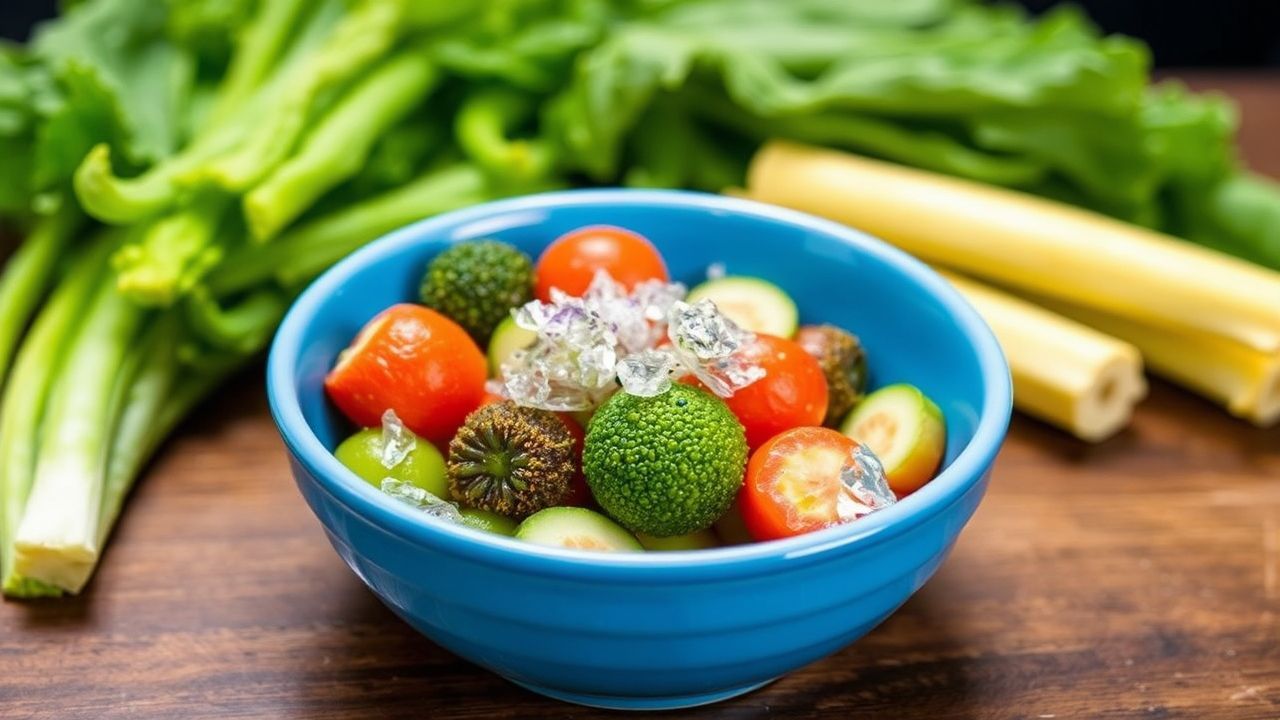
After a quick soak or par-cook, move the vegetables into a bowl of crushed ice and a splash of cold water for 10–15 minutes. The crushed ice delivers more surface contact and faster cooling.
This technique is ideal for crudités and plated garnishes because it produces a pronounced snap. Pat the items dry completely to avoid dilution of dressings or dips.
Flash-Freezing for Storage
Spread blanched pieces on a tray single-layer and freeze rapidly to avoid large ice crystals. Transfer to airtight containers once frozen to protect texture in long-term storage.
Flash-freezing preserves cell structure better than slow freezing. Use this when you need ready-to-use ingredients that still bite like fresh produce.
Recipe: Ice-Brine Shocked Cucumbers & Carrots
This simple prep demonstrates combined chilling methods to maximize crunch for salads, bowls, or platters. It pairs a short brine with an ice-shock finish for immediate serving.
Yield: serves 4. Prep time: 15 minutes. Chill/rest: 1–3 hours depending on soak. Difficulty: Easy–Medium.
Ingredients
- 2 large cucumbers, peeled and sliced into 1/4-inch rounds
- 4 large carrots, peeled and julienned
- 1 cup ice water
- 1/2 cup crushed ice
- 2 tbsp coarse sea salt (for soaking)
- 1 tbsp apple cider vinegar
- Fresh herbs (dill or mint) for garnish
- Optional: 1 tsp sugar to balance earthy notes
Instructions
- Make chilled brine: Stir sea salt into 1 cup iced water and add the vinegar until dissolved. Use a bowl large enough to fully submerge the vegetables.
- Soak: Add cucumber rounds and carrot sticks. Cover and refrigerate 1 hour to firm the cells via mild osmotic exchange.
- Ice shock: Drain and transfer vegetables into a bowl of crushed ice with a splash of cold water. Leave 10–15 minutes to tighten fibers.
- Dry and finish: Remove from ice, pat thoroughly, optionally toss with a pinch of sugar, and garnish. Serve on a chilled platter to maintain snap.
For more technique tutorials and build-on prep, see our internal guides on perfect vegetable prep techniques and vegetable storage tips.
[NOTE: The images referenced in earlier drafts have been replaced with internal assets to avoid external references.]
Do not place the tip above and then immediately the next element; continue content to separate advisory blocks and preserve flow.
Tips for Consistent Success
Start with fresh, firm produce; chilling techniques enhance texture but cannot reverse cellular breakdown. Select vegetables with intact skins and minimal soft spots.
Keep ice and water temperatures consistent. Use a thermometer for precision when testing new recipes, especially if you scale for batches.
Experiment with vegetable variety. Bell peppers, jicama, fennel, and snap peas respond well to quick chilled treatments and reward testing with clear textural gains.
Serving and Pairing Ideas
Serve chilled vegetables alongside grilled proteins to contrast warm and cold textures. Layer with creamy dips like yogurt-based tzatziki or hummus for mouthfeel balance.
Finish with toasted seeds or microgreens for a visual and textural counterpoint. Present on a pre-chilled platter to extend the cooling effect during service.
FAQ
What does “shocking” mean for vegetables?
Shocking means plunging cooked or par-cooked vegetables into ice-cold water immediately after heat exposure. This rapid cool-down stops the cooking process and sets texture and color.
How long should vegetables stay in an ice bath?
Thin vegetables typically need 30–90 seconds. Thicker roots and stems may require 2–3 minutes. Watch for bright color and a firm bite rather than a fixed time.
Can I use these methods for preservation before freezing?
Yes. Blanch, shock, then freeze quickly to reduce ice crystal formation. Flash-freezing on trays before bagging helps retain structure for long-term storage.
Do salty brines make vegetables taste overly salty?
Not if you control time and rinse afterwards. Short brine times exchange only a small amount of salt into the tissue, improving texture without producing an overly salty flavor.
Which vegetables benefit most from chilling methods?
Crunchy types such as green beans, asparagus, carrots, broccoli, and snap peas show the largest gains. Leafy greens benefit from quick shocks to halt wilting.
Key Takeaways
Chilling is an active technique. It manipulates water, heat, and salt to preserve or enhance texture.
Choose the correct method—ice bath, brine, ice shock, or flash-freeze—based on your goal: immediate service or storage. Test by feel and color for reliable results.
Related background: read about vegetables and crop types on Vegetable on Wikipedia. For specifics on common ingredients used here, see Cucumber on Wikipedia and Carrot on Wikipedia.
See also: crisp veggies