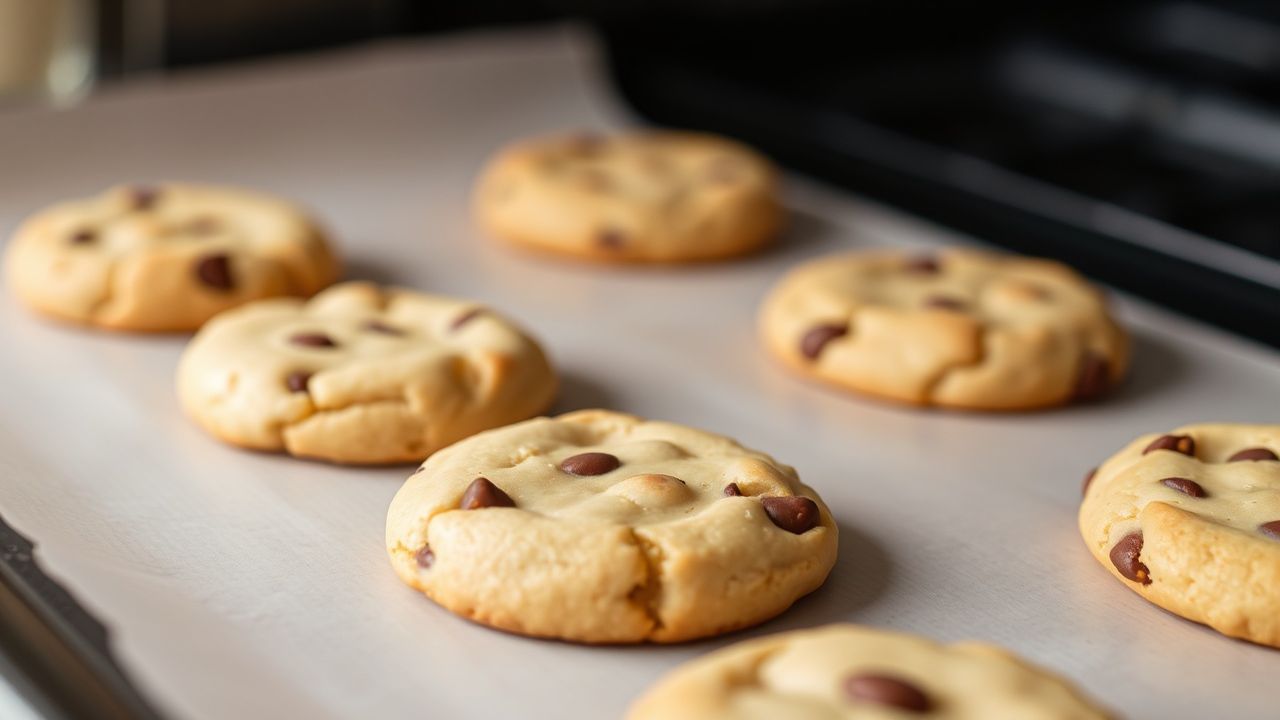

Why Are My Cookies Flat and Greasy? Baking Fixes Explained
Pulling out a tray of shiny, flat cookies is frustrating, but the causes are specific and fixable.
- Why cookies go flat and greasy
- Ingredient ratios and measuring
- Common leavening and structure factors
- Technique fixes: mixing, butter temperature, and chilling
- Oven temperature and baking variables
- Quick corrective actions you can apply now
- Recipe adjustments that prevent greasiness
- Practical baking checklist
- Serving and finishing touches
- FAQ
- Measure precisely: small ingredient shifts change spread and sheen.
- Control fat temperature: butter state governs spread in the oven.
- Oven accuracy matters: an off thermometer changes how cookies set.
- Short fixes: chill dough, add a tablespoon of flour, or tweak sugar ratios.
Why cookies go flat and greasy
Cookies flatten and develop a greasy surface when too much fat or too little structure lets melted butter pool on the tray.
That pooling happens because butter melts quickly in heat; meanwhile sugar liquefies, thinning the dough and letting fats rise to the surface during baking. Read about the properties of butter for why fat state matters and see the chemistry of sugar for how it affects spread.
Ingredient ratios and measuring
Precise ratios make the difference between a controlled spread and a puddle of grease. All-purpose flour provides structure; if you under-measure, that structure is missing.
Use a scale where possible. Measuring by weight avoids the air-pocket variability of cup measures and helps you maintain the required protein-to-fat balance. Learn about flour types and choose the right one for cookies.
Common leavening and structure factors
Leavening agents change texture and rise. Baking soda (sodium bicarbonate) reacts during baking and affects how quickly edges set.
Always check freshness of baking soda and baking powder; stale leavening yields odd textures and excessive spread. For the chemistry involved, consult sodium bicarbonate.
Technique fixes: mixing, butter temperature, and chilling
Mixing method changes how fat incorporates. Creaming butter and sugar traps air that helps lift cookies; overbeating can break the emulsion and free fat, causing greasiness.
Control butter temperature: use softened, not melted butter for most drop cookies. If your recipe calls for melted butter, accept the thinner spread or add extra flour to compensate.
Butter temperature
Softened butter should yield when pressed but not smear. If butter is too warm, it won’t hold air or structure, so cookies spread early in the bake.
If your kitchen is hot, briefly chill shaped dough before baking. That keeps fats firm and slows melt-time in the oven, so edges set before fats run.
Mixing and sugar balance
Brown sugar holds moisture and encourages chew; white sugar encourages spreading and crispness. If you want thicker cookies, reduce granulated sugar slightly or increase brown sugar fraction.
Avoid overmixing once flour is added. Stirring until just combined preserves a tender crumb and prevents gluten overdevelopment, which can change texture unpredictably.
Oven temperature and baking variables
Ovens often run hot or cold; even a 10–20°F (5–10°C) error changes how butter melts versus how edges set. Get an oven thermometer and verify target temperature before you bake.
An oven that is too cool lets dough spread before the structure sets, creating thin, greasy cookies. Conversely, too-hot ovens rapidly brown edges but can leave centers underdone depending on pan and rack placement. Review practical guidance about conventional kitchen ovens.
Quick corrective actions you can apply now
If dough is already mixed and feels greasy, chill it for at least 30 minutes; chilling solidifies fat and slows spreading. This is the fastest, least invasive fix for a wet dough.
If chilling doesn’t help, add one tablespoon of flour per cup of dough and mix gently. That small addition increases structure without drying the cookies. For step-by-step troubleshooting, see our internal guide on how to fix flat cookies, and verify oven settings with our baking oven calibration checklist.
Recipe adjustments that prevent greasiness
Swap a portion of butter for a firm fat to alter melt characteristics. Substituting 1–2 tablespoons of vegetable shortening for butter reduces surface oil while preserving texture.
Adding a tablespoon of cornstarch to the dry mix increases tenderness and reduces spread. Cornstarch binds some moisture and helps stabilize edges as cookies bake.
Practical baking checklist
Use a standard checklist each time you bake: weigh ingredients, confirm butter state, preheat and verify oven temperature, and chill dough when required. Repeatable workflow yields repeatable cookies.
Space balls of dough at least 2 inches apart and use the same scoop for uniform sizing. Uniform portions bake evenly, so edges and centers finish at the same time rather than leaving fat to pool on underbaked centers.
Serving and finishing touches
Finish cookies fresh from the oven with a light sprinkle of flaky salt to highlight sweetness and distract from any slight surface sheen. A simple garnish elevates perception of texture.
For chewier cookies, remove from the oven when edges are set but centers still look slightly underbaked; carryover heat will finish the middle without producing excess oil on the surface.
FAQ
Why do some cookies look shiny on top?
Shiny tops come from fat rising and creating a glossy layer as it melts and pools on the surface. High sugar content that liquefies during baking will amplify the effect.
To reduce shine, lower the total fat slightly, chill dough before baking, or use a small percentage of shortening to change melting behavior.
Will using more flour make cookies dry?
Adding too much flour will make cookies dense and dry, but small, measured increases (1 tablespoon at a time) can restore structure without harming texture. Measure by weight for accuracy.
Prefer gradual adjustments and test-bake one or two cookies before altering a whole batch to avoid overcorrection.
Can I fix a wet dough without changing flavor?
Yes. Chilling is the least flavor-altering option. It firms fats and tightens dough without adding new ingredients, preserving your intended taste profile.
If further correction is needed, add neutral flour or a small cornstarch addition; both affect flavor minimally while improving body.
How does sugar type influence greasiness?
Granulated sugar melts cleanly and encourages spreading, whereas brown sugar holds moisture and yields chew. A higher proportion of brown sugar can reduce excessive spreading and surface oil.
If your cookies are consistently greasy, try swapping one to two tablespoons of granulated sugar for brown sugar to test the effect on spread and shine.
What should I check first if every batch turns out flat?
Check three things in order: ingredient measurement (weigh flour), butter state (soft but not oily), and oven temperature (use a thermometer). These are the fastest diagnostics to run between batches.
Also test a small tray with chilled dough; if chilled dough behaves, the issue is likely butter temperature or ambient heat during dough handling.
Further reading: consult our internal troubleshooting page how to fix flat cookies for recipes and controlled-test approaches. Try one corrective move at a time so you can identify which change produced the improvement.
Happy baking: apply one technique at a time, document results, and you will consistently rescue flat, greasy cookies into thick, chewy successes.
See also: flat cookies