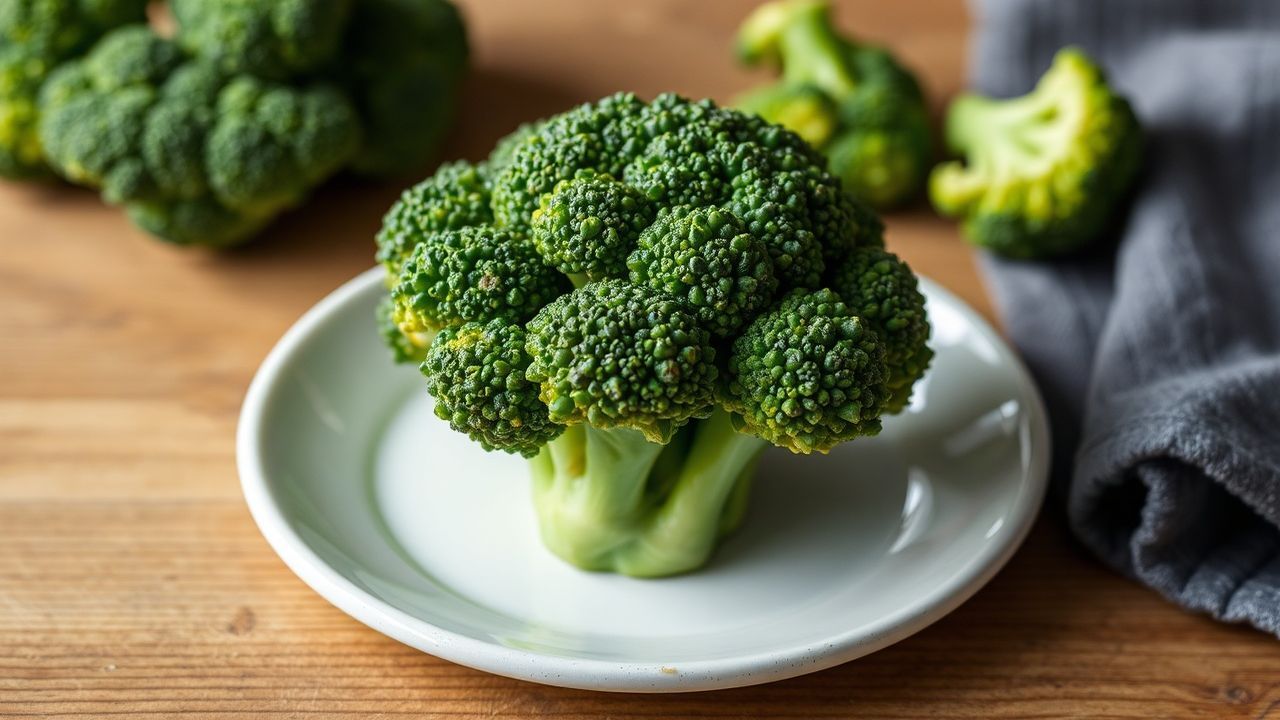

There is an art to achieving truly perfect microwaved broccoli — a tender, vibrant green bite that preserves flavor and nutrition. The process depends on controlled heat, a little water, and an understanding of how plant cells and enzymes behave under microwave steam.
- Why the chemistry matters
- Prep and Cook Time
- Yield
- Difficulty Level
- Ingredients
- Instructions
- Tips for Success
- Serving Suggestions
- Nutritional Snapshot
- FAQ
- Why does microwaving keep broccoli so green?
- What compounds change during microwaving?
- Does microwaving destroy nutrients?
- Can microwaving increase antioxidant availability?
- Any final technique tips?
- Concluding Remarks
- Short steam, low water: preserves color and nutrients.
- Uniform florets: ensure even heat penetration and texture.
- Acid and fat after cooking: enhance flavor and nutrient absorption.
- Timing matters: 3–4 minutes on medium power is a reliable baseline.
Why the chemistry matters
Broccoli chemistry centers on pigments and sulfur compounds that respond rapidly to heat. Key players include chlorophyll, which gives the green color, and enzyme systems that transform precursors into bioactive compounds.
Apply heat too fast or use too much water, and chlorophyll degrades and water-soluble vitamins leach out. The microwave offers a rapid, low-water pathway that limits those losses when you control the variables carefully.
Prep and Cook Time
Prep time: 5 minutes. Trim and cut the head into uniform florets to equalize cooking. Uniform size prevents small pieces from overcooking while larger pieces remain tough.
Cook time: 3–4 minutes on medium power (50–60%). Use a vented lid or microwave-safe cover so steam builds gently. Adjust time by 15–30 seconds for larger batches or stronger microwaves.
Yield
This method yields a vibrant side that serves 4 when starting with one large head of broccoli (about 4 cups of florets). The florets retain bite and visual appeal suitable for plated dishes or salads.
To scale, increase the cooking time in 30-second increments; avoid large time jumps to keep texture consistent. Test a single floret to confirm doneness before serving the whole batch.
Difficulty Level
Easy. This technique suits home cooks at every skill level: it uses common kitchen tools and a simple timing protocol. You only need a microwave-safe bowl, a lid or vented wrap, and a teaspoon measure.
Focus on two variables: water amount and power setting. Control those, and you control color retention, texture, and nutrient preservation consistently.
Ingredients
Prepare the ingredients before heating to streamline the process. Keep measurements precise because small changes in water or acid affect the chemistry and final texture.
- 1 large head of broccoli, cut into uniform florets (about 4 cups)
- 2 tablespoons water
- 1 tablespoon extra virgin olive oil
- 1 teaspoon freshly squeezed lemon juice
- ½ teaspoon sea salt
- Freshly ground black pepper, to taste
- Optional garnish: toasted almonds, grated hard cheese, or red chili flakes
Substitutions are straightforward: a neutral oil replaces olive oil, and rice vinegar can stand in for lemon juice if you prefer. Keep the water small — that conserves soluble vitamins.
Instructions
Follow the steps precisely to control enzyme activity and minimize nutrient loss. The microwave works by exciting water molecules; that produces steam inside the florets and yields rapid, even heating when you use a cover.
- Rinse and trim: Rinse florets briefly under cold water and shake off excess. Pat dry lightly; surface water increases heat transfer but too much water dilutes nutrients.
- Arrange and add water: Place florets in a microwave-safe bowl and add exactly 2 tablespoons of water. This small volume creates steam without leaching water-soluble vitamins.
- Cover and cook: Cover with a vented lid or microwave-safe wrap. Microwave on medium (50–60%) power for 3–4 minutes; check at 3 minutes for the preferred bite.
- Finish with acid and oil: Drain any residual water immediately, then sprinkle lemon juice and salt. Drizzle oil and toss to coat for improved mouthfeel and fat-assisted absorption of fat-soluble micronutrients.
- Rest briefly: Let the covered bowl sit for 1–2 minutes so residual steam evens the cook. Serve warm or cool quickly for salads.
Microwave heating softens cell walls and makes certain antioxidants more bioavailable. For background on microwave technology and how it heats food, consult the microwave oven overview.
Tips for Success
Cut florets to similar size to ensure even energy absorption and consistent texture across the batch. If you prefer very crisp florets, reduce the time by 15–30 seconds; if you like them tender, add 15–30 seconds.
Use medium power rather than high; high power raises temperature quickly and can degrade chlorophyll and volatile aromatics. Moderate energy preserves color and keeps flavor bright.
Serving Suggestions
Microwaved broccoli pairs well with lean proteins like grilled chicken or seared fish. Add toasted nuts or a hard cheese to introduce texture contrast and savory balance.
For bowls and salads, cool florets quickly and toss with a vinaigrette. See related techniques in our internal guides: microwave vegetable techniques and vegetable nutrition guide for storage and reheating tips.
Nutritional Snapshot
Per serving, a typical microwaved broccoli side provides low calories with a solid protein contribution and beneficial micronutrients. Short, low-water cooking preserves vitamin C and folate relative to boiling.
Broccoli contains glucosinolate precursors that convert to bioactive isothiocyanates such as sulforaphane. Proper timing and gentle heat maximize this conversion without excessive degradation.
| Nutrient | Per Serving |
|---|---|
| Calories | 65 |
| Protein | 4.5 g |
| Carbohydrates | 7 g |
| Fat | 4 g |
FAQ
Why does microwaving keep broccoli so green?
Microwave steaming minimizes water contact and shortens cook time, so the chlorophyll molecules remain stable longer. Less agitation and lower exposure to boiling water reduce pigment breakdown.
Keeping the lid on concentrates steam and raises the internal temperature gently, which limits the chemical reactions that produce dull, olive tones.
What compounds change during microwaving?
Broccoli contains glucosinolates that convert to isothiocyanates under enzymatic action. These transformations contribute to aroma, taste, and certain health-related effects.
Heat inactivates enzymes if too intense, so short, moderate heating preserves beneficial conversions and avoids off-flavors from overcooked sulfur compounds.
Does microwaving destroy nutrients?
No—when done correctly. Short microwave steaming preserves water-soluble vitamins better than boiling because fewer nutrients leach into cooking water. Fat-soluble nutrients also benefit from the brief heat exposure.
Overcooking, however, will degrade heat-sensitive vitamins. Use modest power and check texture early to prevent losses.
Can microwaving increase antioxidant availability?
Yes. Heat softens plant cell walls and releases bound antioxidants, making them easier to absorb. The brief exposure that microwaving provides often increases extractable antioxidant activity compared with long, wet cooking.
Pairing with a small amount of oil further improves absorption of fat-soluble phytonutrients and vitamins.
Any final technique tips?
Let chopped broccoli rest 30–40 minutes before heating to allow myrosinase activity for sulforaphane formation. Then steam briefly in the microwave and finish with acid and oil to preserve color and enhance flavor.
For a technical primer on steaming and heat transfer in vegetables, consult the steam entry for core principles that apply to this low-water method.
Concluding Remarks
Microwave steaming offers a reproducible, efficient path to broccoli that looks vibrant, tastes fresh, and retains key nutrients. The method depends on measured water, correct power, and close timing.
Practice with your microwave to find the precise time that matches your preferred texture. Once dialed in, this approach delivers a quick, nutritious side that complements many meals.
For more practical guidance, see our internal resources on microwave vegetable techniques and vegetable nutrition.
See also: Microwaved broccoli