
Mastering Poached Chicken: Temperatures for Perfection
Poaching yields reliably tender results when you control heat and time precisely. Gentle, steady heat lets proteins set slowly so juices stay in the meat rather than on the cutting board.
- Mastering Poached Chicken: Temperatures for Perfection
- Why poach chicken? Benefits of poached chicken
- Key safety and science for poached chicken
- Ideal poaching temperatures for poached chicken
- Step-by-step poaching guide for poached chicken
- Tools and precision
- Tips for success
- Serving suggestions
- Make-ahead and storage
- Nutrition snapshot
- References and further reading
- FAQ
- Poaching preserves moisture by cooking below boiling point.
- Target temperatures guide doneness more reliably than clock time.
- Flavor comes from the poaching liquid and a brief rest after cooking.
Why poach chicken? Benefits of poached chicken
Poached chicken delivers a uniform texture that slices cleanly for salads, sandwiches, and composed plates. You keep added fat low while preserving lean protein and mouthfeel.
Chefs use poached chicken when they need predictable results across portions. The method reduces moisture loss compared with high-heat cooking and gives a neutral base that accepts sauces and dressings well.
Key safety and science for poached chicken
Food safety requires poultry reach a safe internal temperature to destroy bacteria but avoid overcooking. The widely accepted safe internal target for chicken is 165°F (74°C), which you should confirm with a thermometer to ensure safety while preserving texture.
Control both liquid and internal temperature to balance safety with tenderness. For background on handling and pathogen control, consult food safety guidance.
Ideal poaching temperatures for poached chicken
Keep the poaching liquid below a rolling boil. A consistent liquid temperature between 160°F and 180°F (71–82°C) holds the meat in a zone where proteins coagulate slowly and juices remain locked in.
Lower settings inside that band give silkier breast meat, while the higher end shortens cook time for thicker or bone-in pieces. Use a probe to stabilize the liquid temperature rather than guessing by eye.
Temperature by cut
Different cuts require slight changes because thickness and bone alter heat transfer. Boneless breasts cook faster; bone-in thighs need higher liquid temperatures and longer time to reach the same internal target.
Confirm doneness with an instant-read or probe thermometer at the thickest point. Focus on internal temperature rather than total time to avoid dry meat or undercooking.
Boneless, skinless breasts
Maintain the liquid at about 165–170°F (74–77°C). Expect roughly 15–22 minutes depending on thickness; stop when the thickest spot reads 165°F.
For consistent slices, chill briefly after resting to firm the protein for cleaner cuts when serving salads or platters with poached chicken.
Bone-in thighs and whole pieces
Hold the liquid nearer 170–180°F (77–82°C) so heat penetrates bone and connective tissue. Typical times run 25–35 minutes, but always verify with internal temperature rather than a clock.
Allow extra time for large pieces and expect carryover heat to raise internal temperature a few degrees during the rest period.
Step-by-step poaching guide for poached chicken
Work with room-temperature chicken for the most even cook. Trim fat, pat pieces dry, and season lightly before they go into the liquid.
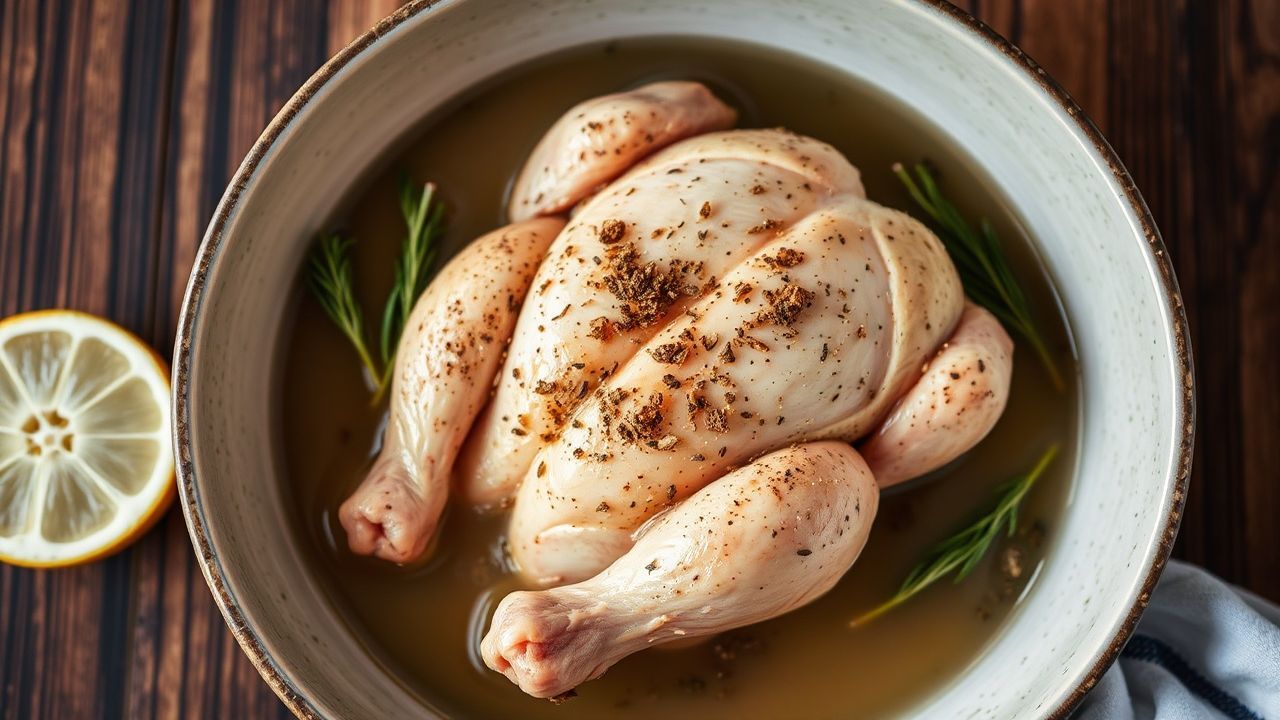
Use a wide pot so pieces lay in a single layer and stay submerged. Add aromatics and enough liquid to cover the meat completely and keep the lid mostly on to stabilize temperature.
- Build the poaching liquid: Use low-sodium broth or water with lemon, garlic, onion, and thyme to flavor the liquid.
- Heat to target: Bring liquid just below boil, then reduce heat to hold between 160–180°F (71–82°C).
- Submerge gently: Add chicken and maintain small bubbles or faint steam; avoid rolling boil.
- Monitor internal temp: Use a digital probe to confirm 165°F (74°C) at the thickest point.
- Rest and hold: Remove and rest under foil 5 minutes for carryover heat and juice redistribution.
For recipe ideas and plating tips that pair well with poached chicken, see internal resources such as our poached chicken recipes and the technique primer on poaching basics. These internal pages provide tested recipes and timing charts that match the guidance here.
Tools and precision
A reliable digital probe or instant-read thermometer is essential for consistent poached chicken. Use an immersion circulator for sous-vide level precision if you need tight temperature control across many portions.
Compare poaching and sous-vide: both use low, steady heat, but sous-vide seals meat in a bag and requires specialized equipment. For a concise technical overview, consult sous-vide.
Tips for success
Do not overcrowd the pot; pieces should not touch too closely so each portion receives even heat. Work in batches when cooking multiple servings for consistent results.
Season the liquid rather than only the meat so the poached chicken picks up balanced flavor. Keep the lid mostly on to reduce evaporation and temperature drift.
[TI P]Expert Insight: For consistent slices, chill poached chicken briefly after resting, then slice cold. This firms the proteins slightly and yields cleaner cuts for salads and platters.[/TIP]
Adjust salt after poaching when the juices settle back into the meat. Taste the liquid after cooking to learn how much flavor the chicken released.
Carryover heat can raise internal temperature by a few degrees, so remove the chicken as it reaches 162–163°F if you intend a 165°F final after resting.
Serving suggestions
Sliced poached chicken suits composed salads, cold platters, sandwiches, and light pasta dishes. The neutral profile accepts bright dressings and herb sauces without overpowering the protein.
For a bright finish, serve poached chicken with a lemon vinaigrette or herb salsa and a crunchy element like toasted nuts. Pair with steamed greens or a simple grain for a balanced plate.
Make-ahead and storage
Poached chicken stores well when cooled quickly. Refrigerate within two hours and use within three days for best quality and safety.
For longer storage, shred and freeze in portioned bags for soups or casseroles. Label containers with date and use within three months for optimal texture.
Nutrition snapshot
Poached chicken retains lean protein while keeping added fat low when you trim visible fat. It fits nutrition-focused plans by providing high-quality protein with minimal added calories.
The approximate macronutrient profile for a 6 oz boneless, skinless breast poached without added fat is roughly 220 calories, 36 g protein, 2 g carbohydrates, and 5 g fat. Adjust portions and sauces to match meal targets.
References and further reading
For background on poaching as a cooking method, consult the general overview at poaching (cooking). For poultry-specific context, review poultry.
Practice precise temperature control and rest time to dial in the exact liquid temperature and timing that match your desired result for each cut of poached chicken.
FAQ
What makes poaching different from roasting or grilling?
Poaching cooks meat gently in liquid rather than exposing it to dry air or direct flame. That approach keeps muscle fibers from seizing and helps the poached chicken retain moisture.
Why control the liquid temperature rather than boiling?
Boiling forces proteins to seize and expel juices, producing dry, tough meat. A controlled simmer between 160–180°F preserves moisture and yields tender poached chicken.
How do I know when poached chicken is done?
Always verify with an instant-read or probe thermometer. The safe internal target is 165°F (74°C). The meat should feel slightly springy and be opaque throughout.
Can I poach frozen chicken?
You can, but expect extra time and less predictable heat distribution. For even results, thaw first so the heat penetrates consistently across the piece for proper poached chicken texture.
What liquids work best for flavor?
Low-sodium broth, water with aromatics, or a blend of stock and a splash of wine all work well. The poaching liquid transfers subtle flavor; avoid overpowering aromatics that mask the meat.
See also: poached chicken