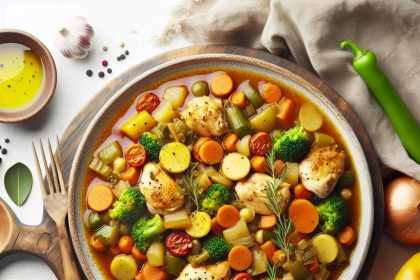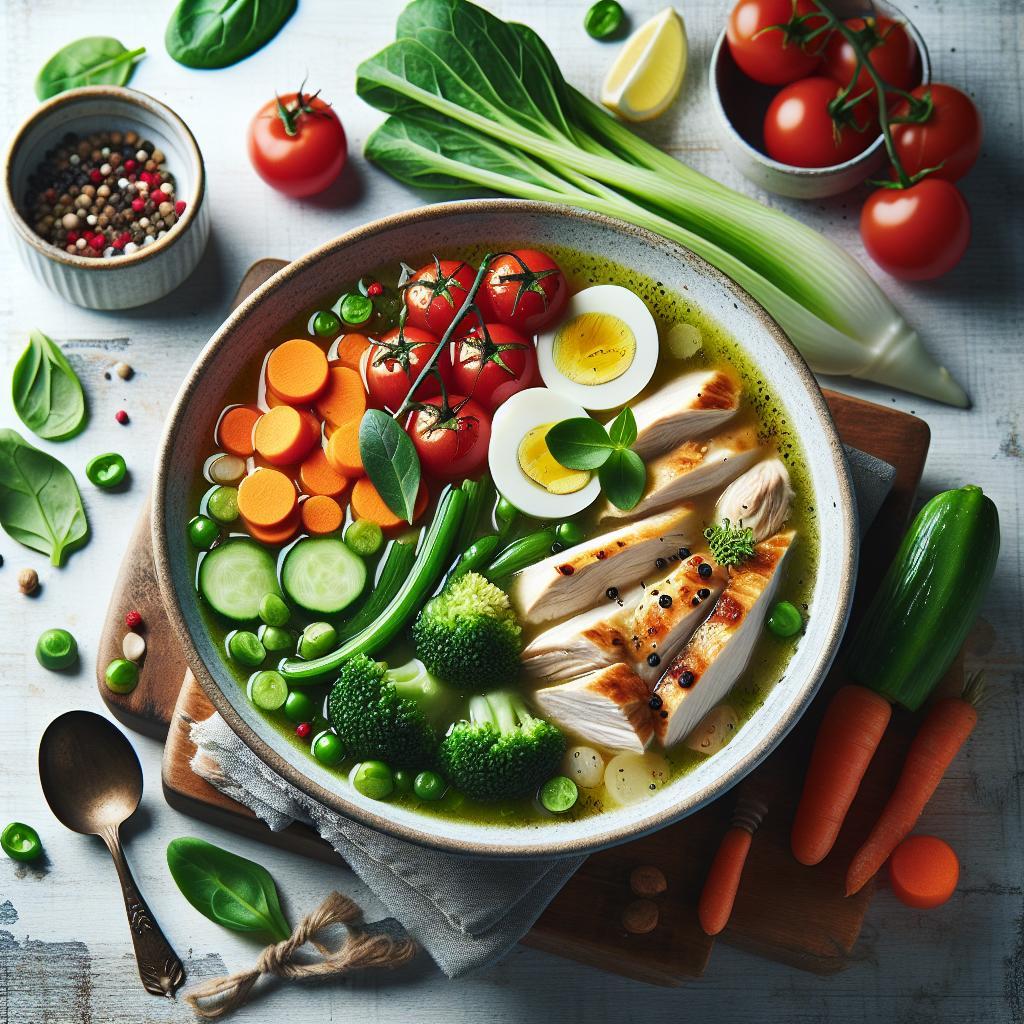

Chicken soup in the form of this Wholesome Chicken Veggie Soup combines lean protein, seasonal vegetables, and a clear savory broth for an everyday bowl that comforts and fuels. This one-pot recipe scales well, stores easily, and fits meal prep routines for busy cooks who want balanced dinners.
- Introduction: Why This Chicken Soup Works
- Prep and Cook Time for Chicken Soup
- Yield: Servings from This Chicken Soup Batch
- Difficulty Level: How Tough Is the Chicken Soup?
- Ingredients for This Chicken Soup
- Instructions: Step-by-Step Chicken Soup Method
- Chef’s Notes & Tips for Success with Chicken Soup
- Serving Suggestions and Storage Tips for Daily Nourishment
- Nutrition Snapshot for This Chicken Soup
- Variations and Meal-Prep Ideas for Chicken Soup
- Common Questions (FAQ)
- Is this soup suitable for daily meals?
- Can I substitute chicken breast for thighs?
- How can I make this soup vegetarian?
- What is the best way to reheat the soup?
- Can I freeze the soup with potatoes and greens?
- Final Thoughts on Chicken Soup
- Comforting and nutritious: high-protein, vegetable-rich one-pot meal.
- Easy prep: 15 minutes active work, under an hour total cook time.
- Make-ahead friendly: improves after resting; freezes well for future meals.
- Simple swaps: adapt protein and produce to dietary needs.
Introduction: Why This Chicken Soup Works
This chicken soup uses boneless, skinless chicken and a mix of root and tender vegetables to deliver complete amino acids and fiber in a single bowl. The approach emphasizes gentle simmering and timely vegetable additions to preserve texture and nutrients.
The technique draws on clear-broth cooking principles used in classical stocks and soups. For background on the category, consult soup for culinary context and definitions.
Prep and Cook Time for Chicken Soup
Preparation: 15 minutes. Cooking: 45 minutes. These times fit into an hour-long window for straightforward weeknight cooking.
Active prep centers on trimming, chopping, and quick browning to build Maillard flavor. Simmer time tenderizes proteins and concentrates broth without clouding it.
Yield: Servings from This Chicken Soup Batch
This batch yields 6 generous bowls, enough for a family meal or two dinners with leftovers. Portions provide a balanced ratio of protein to vegetables for a single-serving nutrient profile.
Scale ingredients linearly to serve more or fewer people while maintaining the same cook times and sequence. Proper cooling and portioning affect storage life and food safety.
Difficulty Level: How Tough Is the Chicken Soup?
Easy — the recipe uses basic stove-top skills such as sautéing and simmering. Cooks with beginner to intermediate experience will find the steps clear and forgiving.
Key technique points include controlling heat to avoid burning aromatics and skimming foam for a clear broth. Proper knife prep speeds the process and ensures uniform vegetable doneness.
Ingredients for This Chicken Soup
Gather fresh produce and quality broth for the best result. Use trimmed boneless pieces for lean protein and low-sodium broth to control sodium intake.
- 1 ½ lbs boneless, skinless chicken thighs, trimmed and cut into bite-sized pieces
- 2 tablespoons extra virgin olive oil
- 1 medium yellow onion, finely chopped
- 3 cloves garlic, minced
- 3 large carrots, peeled and diced
- 2 stalks celery, chopped
- 1 medium zucchini, diced
- 1 cup green beans, chopped into 1-inch pieces
- 6 cups low-sodium chicken broth
- 1 bay leaf
- 1 teaspoon dried thyme
- 1 teaspoon dried rosemary, crushed
- 1 medium russet potato, peeled and cubed
- 1 cup kale, roughly chopped (stems removed)
- Salt and freshly ground black pepper, to taste
- 2 tablespoons fresh parsley, chopped (for garnish)
- Juice of ½ lemon (optional, for brightness)
Choose oil and greens intentionally: extra virgin olive oil adds fruity notes while kale contributes fiber and vitamins. For more on olive oil and leafy greens, see olive oil and kale.
Instructions: Step-by-Step Chicken Soup Method
Follow the steps in order to layer flavors. Keep actions precise and active so you can move through the recipe without hesitation.
- Warm the olive oil in a large Dutch oven over medium heat. Add the onion and sauté until translucent, about 5 minutes, stirring so it softens but does not brown.
- Add the garlic and cook for 1 minute until fragrant, keeping heat moderate to prevent burning.
- Raise heat to medium-high and add the chicken pieces. Sauté until the exterior turns opaque, about 5–7 minutes; pieces will finish cooking in the broth.
- Stir in carrots, celery, and potato cubes so they toast lightly against the hot pot; that browning adds depth to the final broth.
- Pour in the chicken broth, then add the bay leaf, thyme, and rosemary. Bring the mixture to a gentle simmer to maintain a clear broth.
- Lower heat and simmer uncovered for 30 minutes to develop flavor and tenderize chicken and root vegetables.
- Add zucchini, green beans, and kale, then simmer another 8–10 minutes until vegetables are tender but still vibrant.
- Season with salt and freshly ground black pepper to taste. Stir in lemon juice to brighten the bowl just before serving.
- Remove the bay leaf and ladle into bowls. Garnish with chopped parsley and a drizzle of olive oil for sheen and aroma.
Chef’s Notes & Tips for Success with Chicken Soup
Small technique choices make a noticeable difference in clarity and mouthfeel. Light browning and tight temperature control yield a layered, clean broth.
Avoid overcooking delicate greens; add them late to preserve color and nutrients. If you prefer a richer mouthfeel, substitute part of the broth with homemade stock.
Roasting root vegetables beforehand is optional to concentrate sugars and deepen finish. If you roast, add them after the initial simmer so they finish cooking evenly without turning mushy.
To thicken the broth naturally, mash a few potato cubes into the liquid and stir. This technique improves texture without adding dairy or commercial thickeners.
Serving Suggestions and Storage Tips for Daily Nourishment
Serve the soup with whole-grain bread or a crisp salad to round out the plate. Garnishes such as toasted seeds or grated hard cheese add texture and umami.
Cool soup quickly before refrigerating to reduce bacterial growth and preserve quality. Store in airtight containers for up to 3–4 days in the fridge or freeze portions for up to 3 months.
Nutrition Snapshot for This Chicken Soup
The nutritional table below reflects a common portion size for balanced meals. Calorie and macronutrient values vary by exact ingredient brands and portion sizes.
| Nutrient | Per Serving |
|---|---|
| Calories | 280 |
| Protein | 28g |
| Carbohydrates | 18g |
| Fat | 8g |

The primary protein in this bowl is chicken; choosing thighs or breasts changes texture and fat content. For a species overview and cut guidance, see chicken and consider how cut choice affects cooking time.
Variations and Meal-Prep Ideas for Chicken Soup
Swap in white beans or cubed tofu to extend servings and add plant-based protein. Use seasonal vegetables to keep the bowls interesting through the year.
For a heartier meal, add cooked whole grains like brown rice or barley at serving time. If freezing, omit delicate greens and add them fresh when reheating to maintain texture.
Common Questions (FAQ)
Is this soup suitable for daily meals?
Yes. This chicken soup delivers lean protein and a wide range of vegetables, making it a balanced option for regular rotation. Vary side grains and vegetable choices to avoid repetition and cover nutritional gaps.
Can I substitute chicken breast for thighs?
Absolutely. Chicken breast reduces fat and calories but cooks faster and can dry out if overcooked. Monitor simmer time and remove breast pieces as soon as they reach safe internal doneness to preserve juiciness.
How can I make this soup vegetarian?
Use a full-bodied vegetable stock and add plant proteins such as cannellini beans or cubed firm tofu. Retain aromatics, herbs, and vegetable order to maintain depth of flavor and mouthfeel.
What is the best way to reheat the soup?
Reheat gently on the stove over medium-low heat, stirring occasionally to warm evenly. Add a splash of broth or water if the soup thickens during storage; avoid high heat which can break down texture.
Can I freeze the soup with potatoes and greens?
Yes, but texture may change: potatoes can become softer and greens may lose vibrancy. If texture is critical, freeze without delicate greens and add them fresh when reheating.
Final Thoughts on Chicken Soup
This chicken soup offers reliable nourishment, simple technique, and flexible ingredients for daily use. Use the method as a template: change vegetables by season, swap proteins, and adjust herbs to create new bowls from the same base technique.
Small, deliberate tweaks keep the recipe fresh and help maintain a regular rotation of healthy meals. For more related recipes and meal-prep guides, see internal pages with additional chicken soup ideas and meal planning resources.
See also: related chicken soup recipes and meal prep ideas for soups
Additional reference on tuber usage and texture adjustment: potato.